
 Worksheets
Forestry Science | Forest Ecology & Populations
Total questions: 74
Worksheet time: 1hrs 10mins
Which of the following is correct?
There is as much carbon on earth as when it was formed
Carbon is being created whenever it is recycled
Carbon is lost every time it is recycled
Carbon changes to different forms and is never recovered
What does NOT produce carbon dioxide?
Photosynthesis
Burning Fossil Fuels
Animal respiration
Plants decaying
Combustion is another word for __________.
Transportation
Respiration
Fossil Fuels
Burning
TRUE or FALSE?
All of the carbon in existence is continually recycled in the carbon cycle.
True
False
Organisms that do not decompose can be buried and become what?
water
nutrients
air
fossil fuels
Carbon can be found in...
The atmosphere
Soil
Fossil fuels
All of the above
Which of the following removes carbon from the atmosphere?
Combustion
Respiration
Photosynthesis
Death
What is the role of decomposers in an Ecosystem?
They recycle matter and nutrients to form fossil fuels
They are burn and release as carbon dioxide
Decomposers are responsible to turn oxygen into carbon dioxide
They recycle energy back to the sun
Gas that makes up 78% of our atmosphere.
Oxygen
Nitrogen
Hydrogen
Carbon Dioxide
Plants and animals cannot use nitrogen directly from the air.
True
False
Which of these nitrogen cycle processes converts atmospheric nitrogen to a soil form of nitrogen that is usable by plants?
nitrogen fixation
nitrification
denitrification
ammonification
Bacteria fix nitrogen from the atmosphere into a form plants can use.
True
False
How nitrogen is "fixed" into useable form for plants...
through action of bacteria only
through lightning only
through action of bacteria & lightning
through photosynthesis
This is NOT a part of the phosphorus cycle.
Phosphate is incorporated into sedimentary rocks
Phosphate bound to soil
Atmospheric phosphate
Phosphate is absorbed from the soil by plants
Once inorganic phosphate has been released by weather of rocks, which of the following might be it's next step in the phosphorus cycle?
it can become part of surface water and runoff into the ocean, and eventually become new rock at the bottom of the ocean through the process of sedimentation
it can become part of the soil and be taken up by plant roots and used to make lipids, ATP, nucleic acids and other cellular molecules
it can become part of groundwater and leech into the ocean, and eventually become new rock through the process of sedimentation
all of the answers are possible pathways for phosphorus
Nitrogen and carbon are cycled on a global scale. Why does phosphorus cycling tend to occur more locally?
it primarily involves the weather of rocks, which are mostly stationary
it only involves land animals that cannot swim across oceans to transport the nutrient
it occurs in areas where cloud formation is low, so it rarely gets trapped in water vapors
all of the answers are correct

What point on the graph represents the carrying capacity?
A
B
C
D

What type of growth is represented behind?
exponential
logistics
a good kind
representative
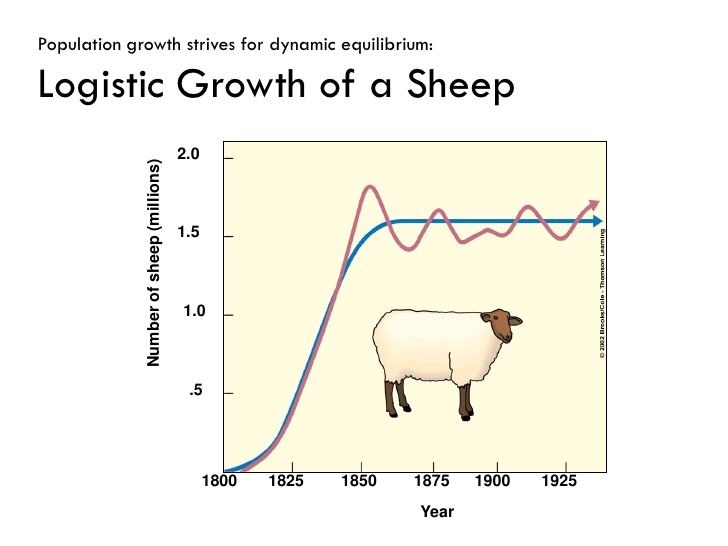
What is the carrying capacity for this sheep population?
1.8 million
1.25 million
1.6 million
1.o million
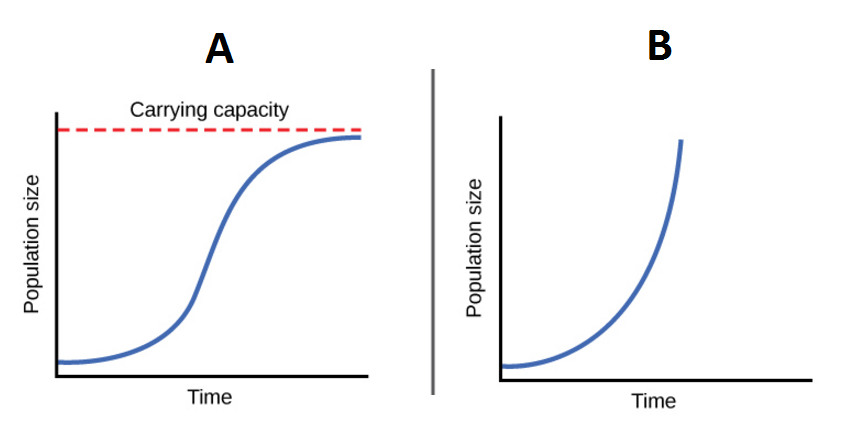
What type of growth model is shown in image A?
Exponential
Logistic
Logistic growth has 3 phases. In Phase 1, the population grows rapidly. In Phase 2, population grows slowly. In Phase 3, growth stops. What causes growth to stop in the 3rd phase of logistic growth?
Emigration
Immigration
Exponential Growth
Carrying Capacity
Which of the following are examples of a density independent factors?
forest fire
seasonal cycles
storms
disease
Which of the following are density dependent factors?
competition for resources
predation
disease
natural disasters
Which kind of growth does the human population follow? It is described as a J-shaped curve.
Exponential Growth
Logistic Growth
Outstanding Growth
Minimal Growth

which statement sounds accurate based on the graph data.
The zebra and lions do not affect each other
when lions population increases, so does the zebra population
When the zebra population increases, it causes the lion population to also increase
when zebra populations go down, the zebra population goes up.
Any thing or organism that regulates the size of a population of another organism is known as __________.
a limiting measure
a limiting factor
factorization
materialization of precipitation
PREDATION is a form of interaction where......
the organism that benefits is the predator
the organism that benefits is the prey
both organisms benefit
neither organism benefits

What type of growth is this graph representing
Logistical Growth
Exponential Growth

What type of growth is this graph representing?
Logistical Growth
Exponential Growth
A condition that occurs when two or more organisms compete for the same resources
competition
predation
parasitism
mutualism
Biotic or Abiotic factor that restricts the growth of the population
carrying capacity
limiting factor
abiotic factor
biotic factor

In the graph to the right, what is the population of deer at the carrying capacity of the environment?
3
7
70
40
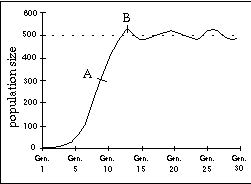
What is the carrying capacity of the graph?
around 500
more than 500
less than 500
around 600

What is the carrying capacity of the following graph?
1000
8000
800
600
What will happen if all of the frogs in a population die?
The frogs' predators will decrease and the frogs' prey will increase
The frogs' predators will increase and the frogs' prey will decrease
We better all pray because there isn't anymore frogs.
What is the carrying capacity for this sheep population?
1.8 million
1.25 million
1.6 million
1.o million
What point on the graph represents the carrying capacity?
A
B
C
D
Food, water, sunlight, shelter, and space are resources that are __________.
limiting factors
wet
messy
found in rocks
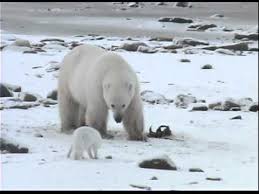
Two arctic fox are fighting with a polar bear for a sea lion carcass. One fox distracts the bear while the other eats. What type of limiting factor is the polar bear?
Predator-Prey Relationships
Competition
Herbivory Effect
Weather

A group of elephants gets stuck in mud at the edge of the river from a recent mud slide. A lion waits for an elephant to get tired before it attacks. What is the limiting factor to the elephant population?
Predator-Prey Relationships
Natural Disaster
Herbivory Effect
Competition
When resources are not available a population will _____________ in size.
Increase
Decrease
Stay the same
Parasites and diseases will ______________ the size of a population, so the are examples of limiting factors.
Increase
Decrease
Stay the same
In many desert ecosystems, days are hot and nights are cold. Water is scarce, so animals seek water wherever possible. The spines of a cactus are actually leaves adapted to conserve water. The cactus plants have also adapted to live in thin, sandy soil. Which of the following is a biotic component of a desert ecosystem?
the thin, sandy soil
the wide temperature range
the scarcity of water
the spiny cactus leaves

What happens if a population grows past its carrying capacity?
The population keeps growing
The population starts to die off
The entire species will go extinct
The carrying capacity just increases

If a disease destroying barley plants in a field swept through an ecosystem, what would happen to the barley eating bird population in the the field ?
The bird population would stay the same
The bird population would infinitely increase
The bird population would decrease

What describes how varied living things are in a specific area?
stability
biodiversity
equilibrium

Which of the following ecosystem is the most biodiverse?
a desert
a stream
a rice field
tropical rain forest

Which of the following best describes the relationship between biodiversity
and stability of ecosystem?
Increased biodiversity increases the stability of an ecosystem.
As biodiversity increases, stability of the ecosystem decreases.
A less diverse ecosystem keeps more resources in the ecosytem.
An ecosystem with low biodiversity is better able to recover from natural disasters.

The cutting down of trees on a large scale in Brazil is an example of ______.
Carbon-oxygen cycle
Erosion
Deforrestation
Grazing

Does deforestation contribute to global warming?
No, trees aren't that important
Sometimes because only the cutting down of Maple trees contributes to global warming
No, deforestation adds methane to the atmosphere, which makes the Earth cooler
Yes; less trees means less CO2 is turned into oxygen.
The Amazon is mostly located in ________, near the equator.
Brazil
Canada
Denmark
Antarctica
The Amazon stores about a quarter of the world’s
salt.
carbon.
oxygen.
nitrogen
Combustion can occur when fuel is combined with:
wood
carbon
oxygen
water
A series of progressive changes in the composition of an ecological community over time
Climax Community
Primary Succession
Ecological Succession
Species Richness
A measure of both species richness and relative number of species.
Species diversity
Species richness
Biodiversity
Keystone species
an area that was previously occupied by living things is disturbed, then re-colonized following the disturbance.
Pioneer species
Ecological succession
Climax community
Secondary succession
newly exposed or newly formed rock is colonized by living things for the first time. Certain hardy plants and lichens with few soil requirements, called pioneer species, colonize the area first.
Climax community
Primary succession
Ecological succession
Secondary succession
A species that has a disproportionately large effect on community structure relative to their abundance.
Pioneer Species
Invasive Species
Keystone Species
Foundation Species
all living things and their physical environments within a particular area
Community
Invasive Species
Ecosystem
Biodiversity
After a volcanic eruption, volcanic rock is present (but no soil). Which of the following states the most likely order of succession that would be seen?
Lichens → Shrubs → Grasses → Trees
Lichens → tree → shrubs→Grasses
Grasses → Lichens → Shrubs → Trees
Lichens → Grasses → Shrubs → Trees

Primary or secondary ecological succession?


Primary succession occurs in an area that has:
soil
no soil
some soil
none of these
___ are the first organisms to colonize an area and begin the process of ecological succession.
foundational organisms
introductory organisms
primary organisms
pioneer species
What is the main difference between primary and secondary ecological succession?
Primary begins WITHOUT soil; Secondary begins WITH soil
Primary is the first state and secondary is the second stage
Primary builds plant community; secondary builds animal community
Primary begins WITH soil; Secondary begins WITHOUT soil
What is an example of a disturbance that could bring about secondary succession?
Humans cut down many trees in a small region
A volcanic eruption covers a village in lava.

During a forest fire most vegetation (plants) burn. Which ecological succession will take place after a forest fire?
Primary
Secondary
As ecological succession progresses, a pioneer community gradually changes into a climax community. What typically happens during this process?
The number of species increases
The number of species decreases
The organisms in an area decrease in size
The organisms in an area can no longer find food
Which of the following types of organisms would be present during the pioneer community stage of ecological succession?
Lichens and mosses
Grasses and shrubs
Small trees and wildflowers
Tall trees and thick brush
Which
As an ecosystem transitions from a grassland to a forest, grasses will begin to -
adapt to life in the forest.
be replaced by other plants.
multiply to establish dominance.
relocate to a nearby grassland.
What are the two types of ecological succession?
Primary and Secondary
Environmental and Natural
Habitat and Community
Population and Community

