Font size
 Worksheets
Evolution & Classification Test Review
Total questions: 33
Worksheet time: 1hrs 17mins

Similar structures with different purposes found in different species are known as _____
vestigial structures
DNA
homologous structures
the fossil record
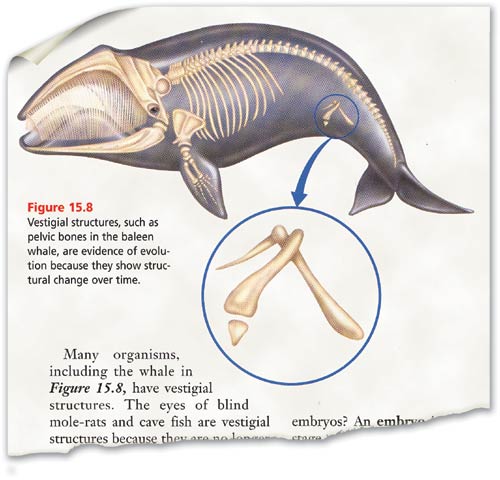

Similarities in bone arrangements, like those in the picture, support the hypothesis that...
these organisms are not well adapted
these organisms share a common ancestor
these organisms all share the same DNA sequences
these organisms are members of the same species

What type of evidence is shown with the diagram above?
Molecular
Anatomical
Embryological
Fossil
Homologous Structure
Same structure different function
Embryology
Comparing embryological development of different species
Molecular Comparisons
Comparing DNA and amino acid sequences of different species
Vestigial Structures
Structures in the body of an organism that no longer work.
Fossil Records
Shows development of species from simple

This makes an organism more suited to its environment
species
lifespan
adaptation
mutation
Evolution
Natural Selection
Extinction
Artifical Selection
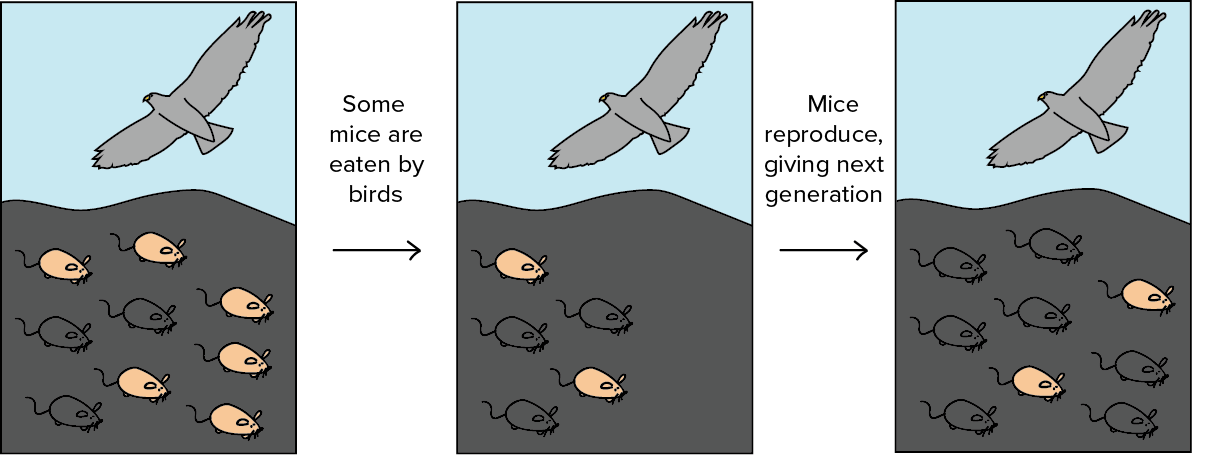
The light mice can reproduce more successfully than the dark mice
The hawks eat more dark mice than light mice because the dark mice taste better
The hawks eat more light mice than dark mice because they can see the light mice more easily
The hawks eat more dark mice than light mice because they can see the dark mice more easily
the movement of genes into or out of a population
Gene Flow
Random chance; small population
Genetic Drift
A sudden change in one or more characteristics due to a change in a gene
Mutation
Occurs due to physical difference as a result of a genetic difference
Non-Random Mating
The movement of organisms from one place to another
Migration
Which of the following does not show genetic drift?


Blue catfish are going extinct. A dam in a lake full of blue catfish bursts due to poor engineering and kills some of the blue catfish. This is an example of:
Natural Selection
Gene Flow
Mutation
Genetic Drift

Green rhinocerous beetles are some of the biggest beetles to exist on Earth. A green rhinocerous beetle leaves its group and wonders over to another group that only has red rhinocerous beetles and mates with the red beetles. This is an example of:
Gene Flow
Genetic Drift
Mutation
Migration


Why are advantageous traits more likely to be passed onto offspring?
Because they are more likely to survive and reproduce.
Because they come from dominant alleles.
Because they come from recessive alleles.
Because the organism knew it needed that trait, survives, and passes it on.

Within families, organisms are placed into groups called...
Genus
Kingdom
Class
Phylum
The more classification levels that two organisms share,
the closer together on earth they live.
the easier it is to tell them apart.
the more related they become because of many shared characteristics.
the more distance is between them due to lack of shared characteristics.
An organism's scientific name is based on how it is classified. Which of the following levels of classification determine the name?
kingdom & phylum
class & species
domain & order
genus & species
Which is NOT a eukaryote?
Plants
Animals
Archaea
Protists
Which of the following is NOT a unicellular kingdom?
Prokaryotes
Protists
Archaea
Fungi
Which list of characteristics describes organisms classified as animals?
autotrophic, multicellular, prokaryotic
multicellular eukaryotic, heterotrophic
unicellular, eukaryotic, heterotrophic
multicellular, eukaryotic, autotrophic
The 2-part naming system developed by Linneus is known as:
Dichotomous key
Binomial nomenclature
Taxonomy
Classification

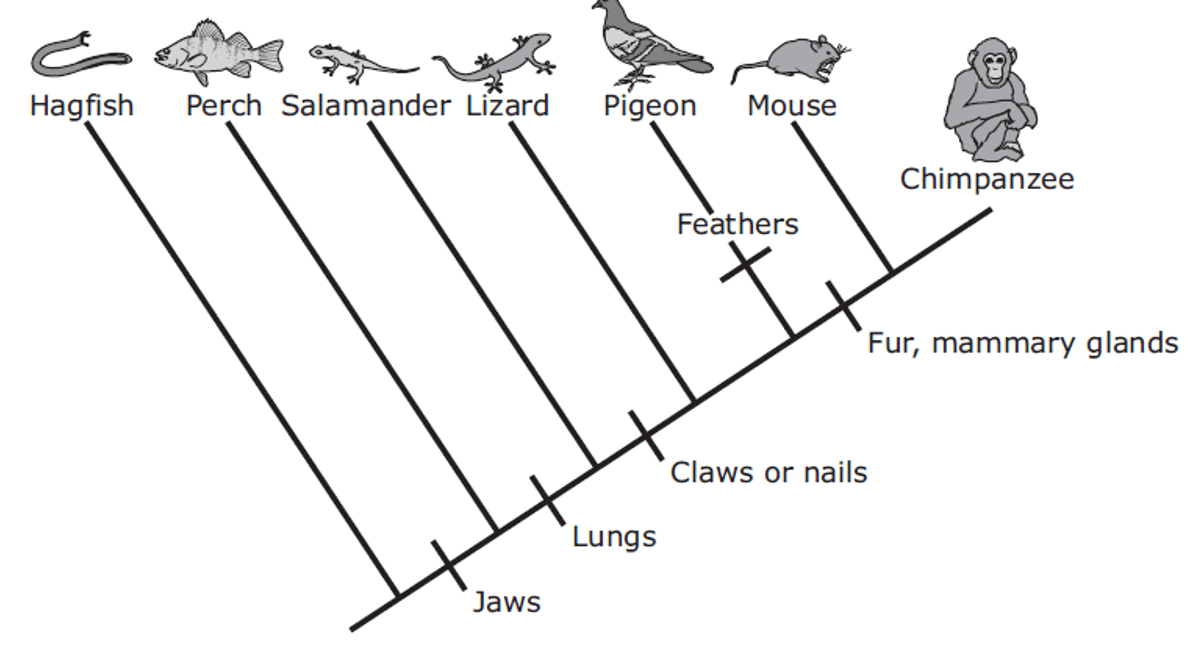


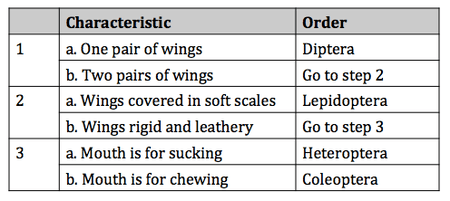
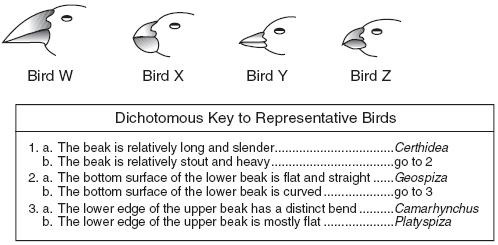
Which organism goes in the B position?