
 Worksheets
United States of America - The Laws of the Land
Total questions: 136
Worksheet time: 2hrs 5mins
Which is not one of the rights listed in the First Amendment?
Speedy Trial
Speech
Religion
Petition
What right is listed in the Second Amendment
Right to a trial by jury
Right to free speech
Right to Bear Arms
Right to vote at the age of 18
What is the 3rd Amendment
Prohibition
Citizens do no have to house soldiers in home
Income Tax
Direct election of US Senators
What is the fourth Amendment?
abolished slavery
18 year olds can vote
Women get the right to vote
No unreasonable search or arrest
What is the 5th Amendment?
Individuals cannot sue a state in federal court
Rights of the accused, (no double jeopardy, witness against yourself), can be found in which Amendment?
Women's Suffrage
No cruel or unusual punishment
What is the sixth Amendment?
Right to a Speedy Trial
Right to trial by jury
repeal prohibition
President can only serve two terms
What is the 7th Amendment
Presidents serve only 2 terms
No poll tax
Right to trail by jury
Abolish Slavery
What is the 8th Amendment?
No Cruel or Unusual Punishment
Rights to the people
Rights to the states
No housing of soldiers
What is the 9th Amendment?
Rights reserved to the States
Abolished Slavery
Defines Citizenship
Citizens still have rights not listed in the Constitution
What is the 10th Amendment?
Rights to the States
Right to bear arms
Rights to the people
Changed date the President takes office to Jan 20th.
What is the 11th Amendment?
Individuals living in one state cannot sue another state in Federal Court
Congress cannot accept a pay raise until the next term
Income Tax
Repeal prohibition
What is the 12 Amendment?
President and Vice President are elected on one ticket--but elected separately in the Electoral College
Defines Citizenship
President can only serve 2 terms
abolished slavery
What is the 13th Amendment?
Women get the right to vote
Trail by jury
No cruel or unusual punishment
Abolished Slavery
What is the 14th Amendment?
Income Tax
define Citizenship as persons born or naturalized in the U.S.
Prohibition
Women get the right to vote
What is the 15th Amendment?
Cannot prevent a person from voting because of race, color, or creed: African American males right to vote
Repeal prohibition
Right to a speedy and public trial
No unreasonable search or seizure
What is the 16th Amendment?
Freedom of Speech, Religion, Press, Petition, and Assembly
Prohibition
Income Tax
No poll tax
What is the 17th Amendment?
Popular Election of Senators
Washington D.C. receives 3 Electoral votes
Rights of the Accused
Income Tax
What is the 18th Amendment?
No Poll Tax
Abolished Slavery
Right to a trial by jury
Prohibition
What is the 19th Amendment?
Abolished Slavery
Women's Suffrage
President can serve only 2 terms
18 year olds get the right to vote
What is the 20th Amendment?
No Poll Tax
Income Tax
President takes office on January 20th, instead of March 4th
Right to bear arms
What is the 21st Amendment?
Repeal Prohibition
DC receives 3 Electoral votes
Popular Election of U.S. Senators
Abolished Slavery
What is the 22nd Amendment?
18 years olds get the right to vote
Women get the right to vote
Repeal prohibition
President can serve only 2 terms
What is the 23rd Amendment?
Abolish Slavery
Washington D.C. receives 3 Electoral Votes
President can serve only two terms
Congress cannot accept pay raise until next term
What is the 24th Amendment?
Right to a speedy trail
Freedom of Religion
No Poll Tax
Right to bear arms
What is the 25th Amendment
Right to bear arms
Freedom of Petition
Abolish Slavery
Presidential Succession (who becomes president if the president dies/resigns etc)
What is the 26th Amendment?
Income Tax
18 year olds get the right to vote
President can only serve two terms
No unreasonable search or arrest
What is 27th Amendment?
Right to bear arms
Popular election of U.S. Senators
Congress cannot accept a pay raise until next term
President takes office on January 20th
Large states at the Constitutional Convention prefered which plan?
New Jersey Plan
Virginia Plan
Madison Plan
New York State Plan of Union
The plan that combined the New Jersey & Virginia Plans and created our legislative branch was called
The Good Compromise
The Connecticut Compromise
The Great Compromise
The New Virginia Plan
The 3/5 compromise dealt with what topics?
representation & slavery
representation & federal hate crimes
Southern aggression
Northern aggression
The first part of the Constitution is called the
introversion
preamble
"we the people..."
articles
Which part of the constitution has the bill of rights
the articles
the amendments
the preamble
which part of the constitution outlines the functions of the government, specifically the three branches?
NY Times articles
The articles
The amendments
NY state legislature
Ratify means:
to add
to disagree respectfully
to put in place
to move
The executive branch _____________ the laws
enforces
executes
creates
debates in the House of Representatives
The judicial branch ____________ the laws
makes
marks
adds to
interprets
the legislative branch creates the laws, but before they are laws, they start as what?
bills
giants
warriors
celtics
the sharing of powers between state and federal governments is called
state power
federal power
federalism
sectionalism
According to article ___ of the constitution is a living document that can be amended over time
IV
V
I
VI
The commander in chief of the armed forces currently is
Donald Trump
Barack Obama
George Bush
Joe Biden
Congress has the power to...
Borrow money
collect taxes
regulate trade
declare war
How many votes does all of Congress need to override a presidential veto?
3/5
1/3
1/2
2/3
What is the "Supreme Law of the Land?"
The Declaration of Independence
The Articles of Confederation
Shays' Rebellion
The Constitution
The excerpt above is taken from the -


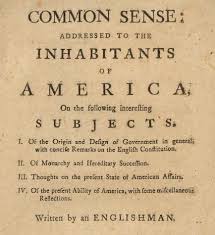

Which word best describes the statement:
the people and the government agree to act within laws
separation of powers
social contract
consent of the governed
John Locke wrote that people have "natural rights". What are natural rights that he described?
The right to life and religion
The right to life, liberty and property
The right to own slaves
The right to choose your own religion
What other court can override a Supreme Court decision?
Constitutional
Federal
Circuit
None
Supreme Court justices are appointed by the president, but must be approved by...
the House
the Senate
the Courts
the Voters
The Supreme Court's power to basically overturn a law that is ruled to be unconstitutional, is called....
judicial efficacy
administrative justice
supreme power
judicial review
The Supreme Court will take cases from states which pose "substantial federal questions." This means...
challenging state law
unsettled district decisions
nation-wide implication
all of the above
Why is it important for the court to be constrained to the facts of the case?
to keep judges' personal opinions out of decision-making
to keep judges' personal politics out of decision-making
to ensure that the plaintiff receives a fair assessment
The case established the Court’s power of judicial review. The Court had the duty of interpreting the law. If the court identifies a law in conflict with the Constitution, the law is invalid.
Marbury V. Madison
Tinker v. Des Moines
Hazelwood School District v. Kuhlmeier
Miranda v. Arizona
Ruled that the First Amendment applies to students in school. Case made it clear that students have rights.
Hazelwood School District v. Kuhlmeier
Miranda v. Arizona
Gideon v. Wainwright
Tinker v. Des Moines
Ruled that suspects must always be informed of their rights before interrogation. Police must read suspects their “Miranda Rights”
Miranda v. Arizona
In Re Gault
Gideon v. Wainwright
Tinker v. Des Moines
Ruled that racial segregation did not violate right to “equal protection,” (14th Amendment). Facilities provided to each were “separate but equal.” Segregation strengthened across south.
Brown v. Board of Education
Plessy v. Ferguson
Gideon v. Wainwright
In Re Gault
Ruled racially segregated public schools violated “equal protection.” Facilities provided to African-Americans inferior, not equal. First step toward ending racial segregation in South.
Brown v. Board of Education
Plessy v. Ferguson
Gideon v. Wainwright
In Re Gault
Which was an outcome of the U.S. Supreme Court decision in Brown v. Board of Education (1954)?
Administrators may limit the content of students publications.
Public school districts that segregate deny equal protection.
Students have a reduced expectation of privacy in school.
Criminal defendants have the right to an attorney.
The power of the judicial branch to review the actions of the executive and legislative branches and determine whether or not they are unconstitutional (this includes laws passed by Congress); the U.S. Supreme Court case Marbury v. Madison established this power
judicial review
executive review
legislative process
due process
Which case included steamboats, New York, New Jersey and interstate commerce?
Heart of Atlanta v US
New York Times v US
Gibbons v Ogden
Roper v Simmons
In Supreme Court, Who Did Dred Scott Sue?
John F.A. Sanford
Roger B. Taney
John Emerson
Mrs. Emerson
Which Of The Following Was In The Final Ruling in Plessy V. Fergueson?
Slavery Could Never Legally End
Slaves Were Property And Not Citizens And Could Not Sue In Court
Slavery Helped The Economy
Slaves Were Essential To A Healthy Life
What did the Supreme Court decide in the Korematsu V. US case?
Because the United States was at war, racial discrimination is constitutional
Racial discrimination is unconstitutional
The president should be impeached
Korematsu was right to deny the executive order
States must pay for public defenders as a result of which U.S. Supreme Court case?
District of Columbia v. Heller
Gideon v. Wainwright
Hazelwood v. Kuhlmeier
Miranda v. Arizona
According to the situation of the Engle Vs. Vitale case, where did the prayers take place?
School
Store
House
Work
Which Landmark Supreme Court Case dealt with privacy rights at school?
NJ v TLO
Texas v Johnson
Gideon v Wainwright
Brown v Board of Education
Precedent is defined as past decisions made in a court of law.
True
False
During Reconstruction, the 13th, 14th and 15th amendments were ratified. What issues did these amendments address?
Rights for Women
Readmission of the states to the Union
Rights of former slaves
Presidential impeachment hearings
How did the Brown v Board of Education influence the Civil RIghts Movement?
By discouraging activists from protesting
by guaranteeing scholarships to minority college students
by providing a basis for achieving equality in other areas
by eliminating social barriers associated with hiring pracitces
This court case defined freedom of speech in schools for students?
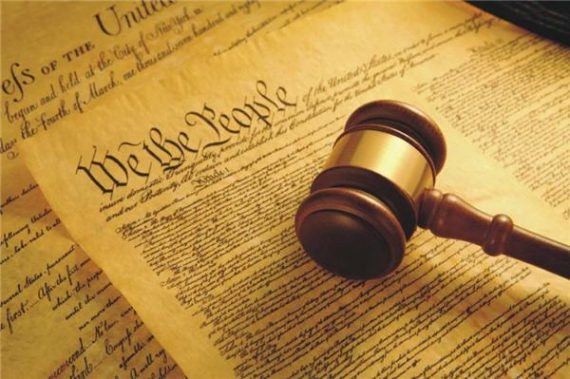
What is it called when the U.S. Supreme Court decides whether something is legal or illegal (unconstitutional)?
supreme court review
due process
segregation
judicial review
Suspects cannot be questioned (interrogated) until they are informed of their rights (right to remain silent, right to an attorney, etc.)
Brown v Board of Education
Miranda v Arizona
Tinker v Des Moines
Bush v Gore
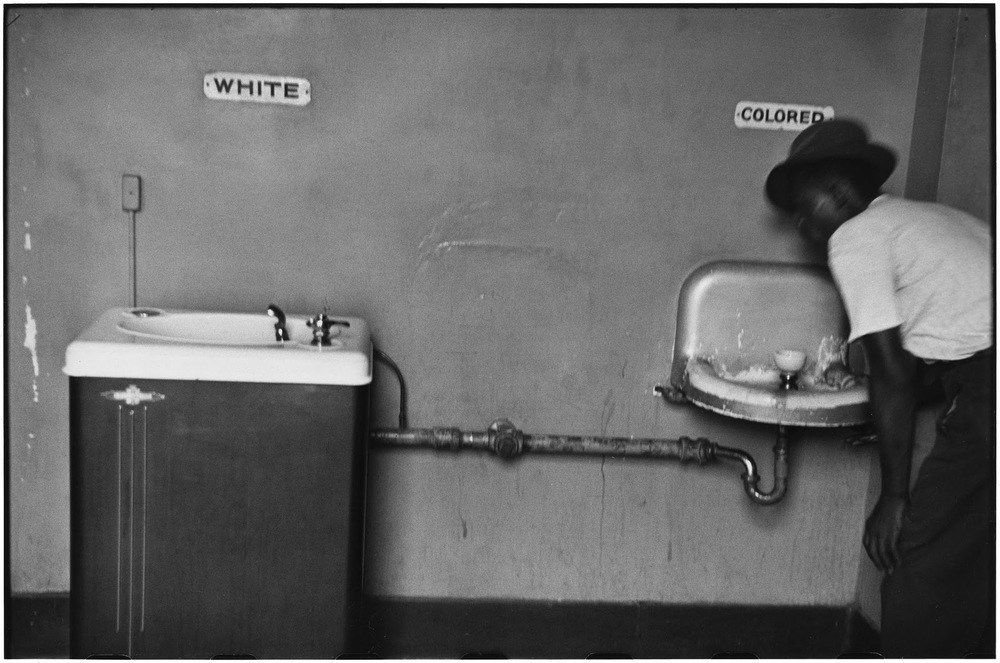
Established “Separate but Equal”, which provided separate public facilities for both whites and blacks as long as they were equal.
District of Columbia v Heller
In Re Gault
Brown v Board of Education
Plessy v Ferguson
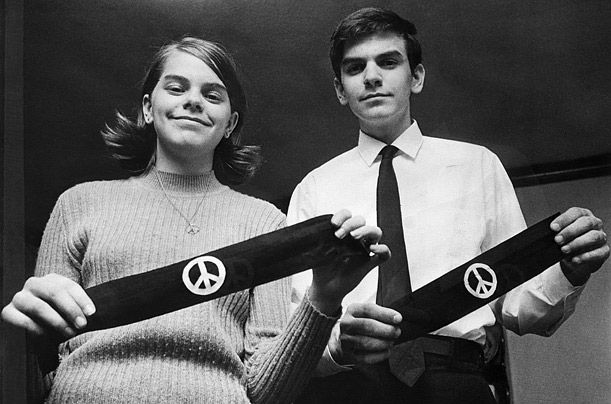
Students have the right to free speech at school as long it doesn’t disrupt school activities. (wearing black armbands in protest)
In Re Gault
District of Columbia v Heller
Hazelwood v Kuhlmeier
Tinker v Des Moines
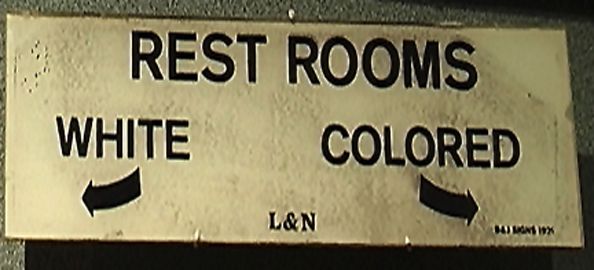
Legal or social separation of races.
Segregation
Lobbying
Boycotting
Which constitutional principle is applied when police inform suspects of their rights?
due process of law
eminent domain
double jeopardy
trial by jury


Which of the following was an outcome of the Brown v. Board decision?
Segregation was deemed legal in the south
Schools that segregate were found to deny equal protection
Jim Crow was no longer allowed to be used as a character
School were allowed to segregate but businesses were not
Which of the following ideas BEST describes what protection we have from the case Miranda v. Arizona?
Self- incrimination
Right to counsel
Freedom of speech
Freedom of expression
What is due process?
people who are accused of crimes do not have to testify
people who are accused of crimes must be read their rights
people who are accused of crimes must be treated fairly
people who are accused of crimes deserve to go to jail
What did the Supreme Court decide?
Because the United States was at war, racial discrimination is constitutional
Racial discrimination is unconstitutional
The president should be impeached
Korematsu was right to deny the executive order
True or False: Fred Korematsu planned to disobey the executive order and refused to relocate.
True
False
In response to the attack on Pearl Harbor and growing distrust of Asian Americans, what did President FDR do?
Required a "loyalty test" for all Americans
Sent spies to Germany to find Hitler
Kicked all Japanese Americans out of the United States
Issued an Executive Order forcing Japanese Americans into internment camps

Which court case determined that segregation of Mexican American students in TEXAS was illegal?
Mendez v. Westminster
Delgado v. Bastrop
Edgewood v. Kirby
White v. Regester

-Supreme Court case in which justices agreed that a Negro must be admitted at the University of Texas School of Law
Plessy v. Ferguson
Brown v. Board of Education
Sweatt v. Painter
Sherman Antitrust Act

Hernandez v. Texas determined that...
Mexican Americans had equal protection under the law
Mexican Americans could have a jury of their peers
Schools had to change financing policies.
Segregation was illegal.
Which court case extended protection against discrimination to Hispanics
Hernandez v. Texas
Lopez v. Texas
Miranda v. Texas
None of the above
Also known as the Robin Hood plan, this legislation enacted by the U.S. state of Texas in 1993 provides court-mandated equitable school financing for all school districts in the state. The law "recaptures" property tax revenue from wealthy school districts and distributes the money to those in property-poor districts.
White v. Regester
Edgewood ISD v. Kirby
Wisconsin v. Yoder
Hernandez v. Texas
Texas case ending discrimination against poor school districts, redistributes property taxes equally across the state from richer districts to poorer districts.
Edgewood ISD v. Kirby
Wisconsin v. Yoder
Hernandez v. Texas
White v. Regester
This court case alleged that the voting districts as drawn in Texas contained impermissible deviations from population equality and that the plan’s multi-member districts were constitutionally invalid because they diluted the voting strength of racial and ethnic minorities.
Edgewood ISD v. Kirby
Hernandez v. Texas
Wisconsin v. Yoder
White v. Regester
This was the first case in which Mexican-American lawyers had appeared before the US Supreme Court.
The ultimate effect of this ruling was that the protection of the 14th Amendment was ruled to cover any national or ethnic groups of the United States for which discrimination could be proved.
White v. Regester
Wisonsin v. Yoder
Hernandez v. Texas
Edgewood ISD v. Kirby
A 1947 federal court case that challenged Mexican remedial schools in Orange County, California. In its ruling, the United States Court of Appeals for the Ninth Circuit held that the forced segregation of Mexican American students into separate "Mexican schools" was unconstitutional and unlawful.
Mendez v. Westminster
Delgado v. Bastrop ISD
Edgewood ISD v. Kirby
Brown v. Board of Education
A U.S. Supreme Court case that successfully challenged the "separate but equal" doctrine of racial segregation established by the 1896 case Plessy v. Ferguson. The case was influential in the landmark case of Brown v. Board of Education four years later.
The case involved a black man who was refused admission to the School of Law of the University of Texas on the grounds that the Texas State Constitution prohibited integrated education.
Sweatt v. Painter
Wisonsin v. Yoder
Hernandez v. Texas
White v. Regester

