
Font size
 Worksheets
Exam 1 review
Total questions: 50
Worksheet time: 38mins
According to the course tips, are students encouraged to labor over every image included in the material?
Yes, they should study every image in detail
No, they don't need to labor over every image
Yes, but only the images in red
No, they should ignore all images
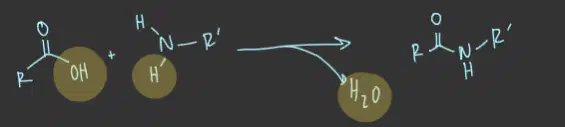
What type of reaction is shown at the top of the image where water (H2O) is a product?
Hydrolysis
Dehydration synthesis
Condensation
Oxidation-reduction
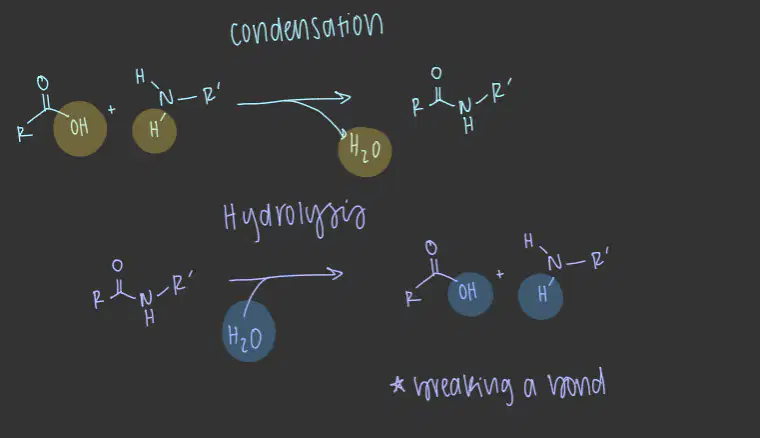
What is the main difference between the reactions labeled "condensation" and "hydrolysis" in the image?
Condensation reactions use water, while hydrolysis reactions produce water.
Condensation reactions produce water, while hydrolysis reactions use water.
Condensation reactions break bonds, while hydrolysis reactions form bonds.
Condensation reactions involve oxygen, while hydrolysis reactions involve nitrogen.

According to the image, what is the result of the hydrolysis reaction?
Formation of a single molecule
Release of energy
Breaking of a bond
Removal of a hydroxyl group
What does a positive change in enthalpy (ΔH) indicate about a reaction?
The reaction is exothermic.
The reaction is endothermic.
The reaction is spontaneous.
The reaction is at equilibrium.
What does a positive change in entropy (ΔS) signify in a system?
The system is losing freedom.
The system is gaining energy.
The system is gaining freedom.
The system is releasing heat.
Which of the following best describes a negative Gibbs Free Energy (ΔG)?
The reaction is non-spontaneous.
The reaction is at equilibrium.
The reaction is endothermic.
The reaction is spontaneous and exergonic.
The equation ΔG = ΔH - TΔS is used to calculate what property of a chemical reaction?
Equilibrium constant
Reaction quotient
Gibbs Free Energy
Activation energy
What does the reaction quotient (Q) compare to determine the direction of a reaction?
Q compares to the rate constant (k).
Q compares to the activation energy (Ea).
Q compares to the equilibrium constant (Keq).
Q compares to the enthalpy change (ΔH).
Which of the following is NOT a weak force involved in molecular structure
Covalent
Hydrogen bonding
van der waals
Ionic bonding
The molecular structure of water is —-, which contributes to it’s polarity
(a)
Ice can have a maximum of - H bonds, while liquid water can have a maximum of 3 H bonds
3,4
2,4
4,3
4,2
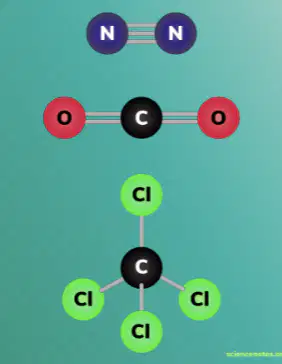
These molecules would dissolve in water
True
False
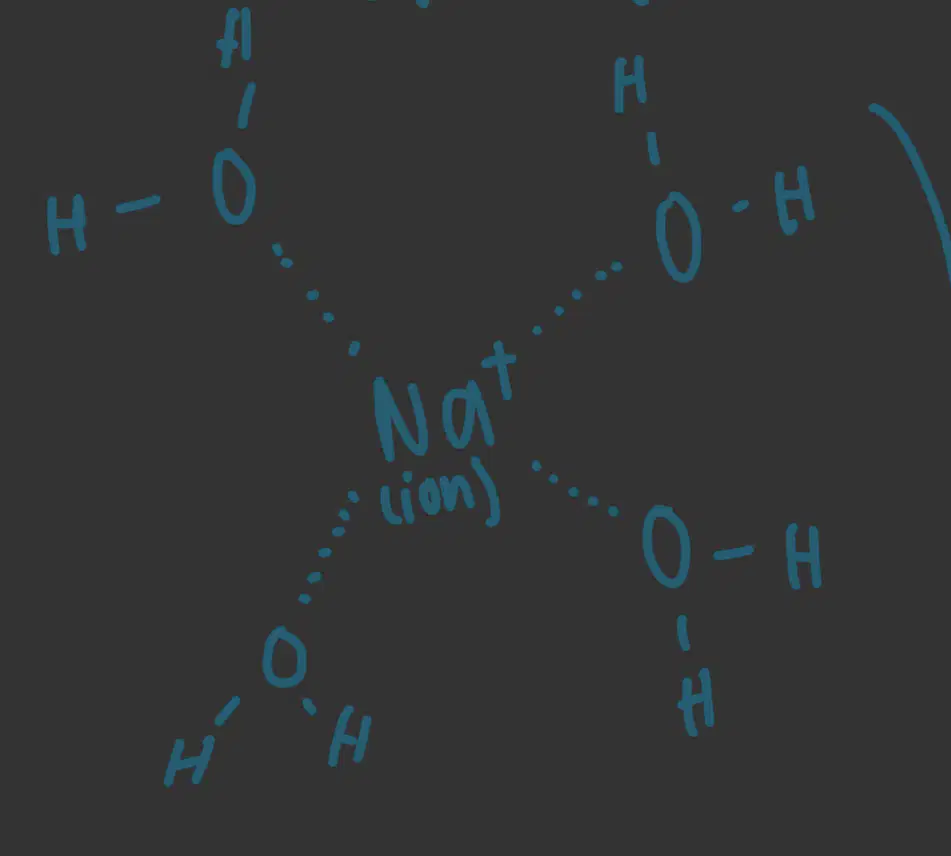
This phenomena is known as
Nonpolar aggregate
Common ion effect
Zone of proximal water
Hydration shell
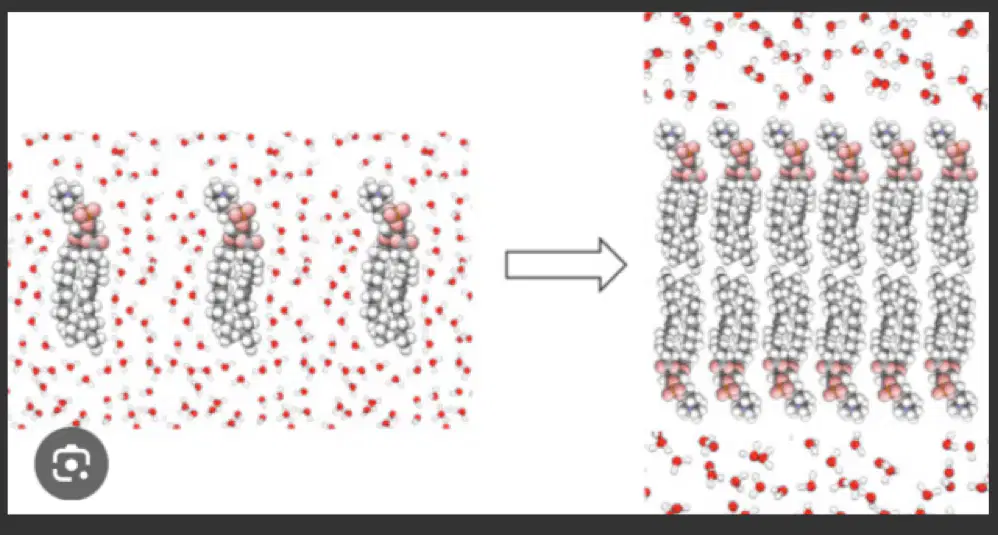
The lipid bilayer shown above is victim to the —— effect
Nonpolar
Hydrophobic
Polar
Osmotic
The hydrophobic effect is driven by
(a)
— substances hide their hydrophilic components and expose their hydrophilic components
(a)
pH=
log [H+]
-log[H+]
log[OH]
-log[OH]
In terms of protons, acids —- while bases ——-
donate, accept
accept, donate

Ka=
[HA]/[A-][H+]
[A-]/[HA]
[A-][H+]/[HA]
Write out the Henderson-hasslebalch equation

pH= pKa when
(a)
A —— serves to resist changes in pH when strong acid or base is added
(a)
When the pH is less than the pKa, a species is
Protonated
Deprotonated
When the pH is greater than the pKa, a species is
Protonated
Deprotonated
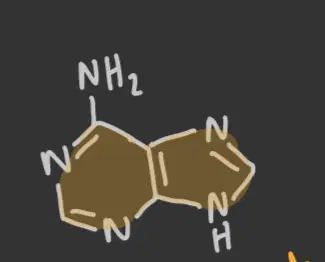
identify
(a)
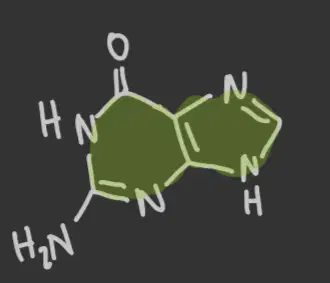
Identify
(a)
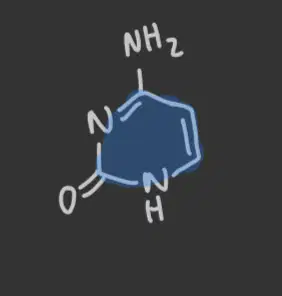
Identify
(a)
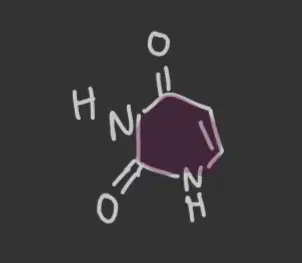
Identify
(a)
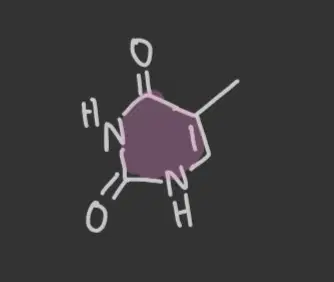
Identify
(a)
Select the correct components of a nucleoside
Phosphate group
Nitrogenous base
Ribose/deoxyribose
The nucleoside 5’ triphosphate used for ENERGY is
(a)
The nucleoside 5’ triphosphate used for PROTEIN SYNTHESIS is
(a)
The nucleoside 5’ triphosphate used for LIPID SYNTHESIS is
(a)
The nucleoside 5’ triphosphate used for CARB METABOLISM is
(a)
A dehydration reaction, used in phosphoryl group transfer, is spontaneous
True
False
The peak absorbance of UV light is —- nm
(a)
The —- form of nucleotides predominates in our bodies
Keto
Enol
DNA is read in the —— direction, and
linked in the —— direction
3’-5’
5’-3-
3’-5’
3’-5’
5’-3’
5’-3’
5’-3’
3’-5’

given top strand is “A”, bottom is “B”
A
B
— discovered pairing data
— used X-ray diffraction to view DNA
—- realized the diffraction picture was a helix with bases inside
— discovered H bonds hold DNA strands together
— found that the keto form of nucleotides predominates at pH 7
Watson
Crick
Chargaff
Franklin
Donahue
Chargaff
Franklin
Crick
Watson
Donahue
Donahue
Crick
Watson
Franklin
Chargaff
Chargaff
Franklin
Watson
Crick
Donahue
— are part of hnRNA that get out out via RNA splicing
(a)
Which type of RNA carries amino acids to ribosomes?
*3’ end holds the amino acid via an ester linkage
(a)
Which is more susceptible to hydrolysis?
Ribose
Deoxyribose
Type II restriction enzymes require ATP
True
False

Cutting here via restriction enzyme would leave — ends
Sticky
Blunt
Select all that are needed for DNA synthesis
Deoxynucleoside triphosphates
Mg2+
Template strand
Nucleases to remove mismatched bases
How can you end DNA synthesis?
dNTP
ddNTP
DNA polymerase
Mg2+
Diffusion of solvent from areas of [high solute] to [low solute]
(a)
Diffusion of solutes from areas of [high solute] to [low solute]
(a)
![[Chem1] Test Review - Unit 3 Atomic Structure](https://cf.quizizz.com/image/image-loader.svg)
