
 Worksheets
Human Impact
Total questions: 20
Worksheet time: 43mins
A community is concerned about the water quality of a nearby lake. Increased sedimentation in the lake is endangering the native habitat. The increased sedimentation is most likely caused by which of the following?
trees planted along the shore of the lake
construction of homes along the lake
the amount of sunlight on the lake
the amount of fish in the lake
Salt water is an abundant resource but unusable for irrigation and drinking. As demands on freshwater sources increase, the use of desalination processes to remove salt from ocean water is increasing. A concern of desalinating water is the large amounts of recovered salts that are returned to the ocean. Which of the following describes the most likely impact of desalination on the surrounding ocean environment?
Methane gas would pollute the ocean environment as shoreline organisms begin to die and decay.
Alteration in ocean salt levels would cause loss of species and unbalanced populations in marine food webs.
Nonrenewable resources in the ocean environment would become depleted and upset the ecosystem's balance.
Increased levels of salts and minerals in the ocean would result in overpopulation of marine bivalves due to strengthened shells.
The main human activity that adds to an individual's carbon footprint.
usage of alternative energies (wind, solar, etc)
respiration and growth
photosynthesis by plants
usage of fossil fuels for energy

The total set of carbon emissions caused by an individual.
carbon cycle
carbon handprint
carbon footprint
carbon summary
The clean, relatively low-cost energy source from the Sun is referred to as
solar energy.
magnetic energy.
energy efficient.
wind power.
Invasive species alter the ecosystem by __________in number quickly,this leads to _____ food for the native species.
increasing, less
declining,more
We live in a desert. What type of biodiversity do we have here?
High biodiversity
Low biodiversity

This is an example of
High species diversity
Low species diversity
High genetic diversity
High ecosystem diversity
What is Global Warming?
Increasing temperature in Earth's atmosphere
Decreasing temperature in a city
Increasing rain rates in Earth
Decreasing temperature rates
Which 2 greenhouse gases contribute the MOST to global warming of Earth?
N2O and H2O
O3 and H2O
CO2 and CH4
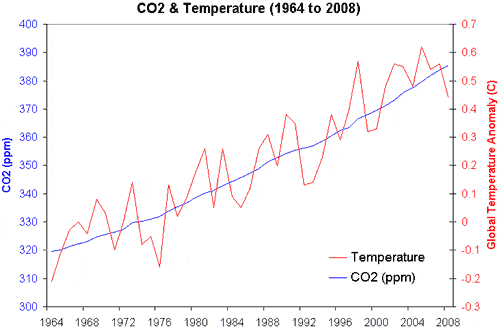
The graph below shows CO2 emissions and temperatures from 1909 to 1949. What conclusion is best supported by the graph?
There is no relationship between carbon dioxide concentrations and temperatures
As carbon dioxide concentrations increase, temperatures increase
As carbon dioxide concentrations increase, temperatures decrease
As carbon dioxide concentrations decrease, temperatures increase
What is the greenhouse effect?
A natural process where gases trap heat in the atmosphere.
A man-made process where gases trap heat in the atmosphere.
A natural process where the ocean traps heat in the atmosphere.
A man-made process where the ocean traps heat in the atmosphere.
Which of these is NOT a greenhouse gas?
Carbon Dioxide
Nitrous Oxide
Oxygen Gas
Methane

Carbon Dioxide, CO2, comes from
Burning fossil fuels
Cold water
Animal manure
Plastic


