
 Worksheets
Human Hair Structure Quiz
Total questions: 36
Worksheet time: 22mins
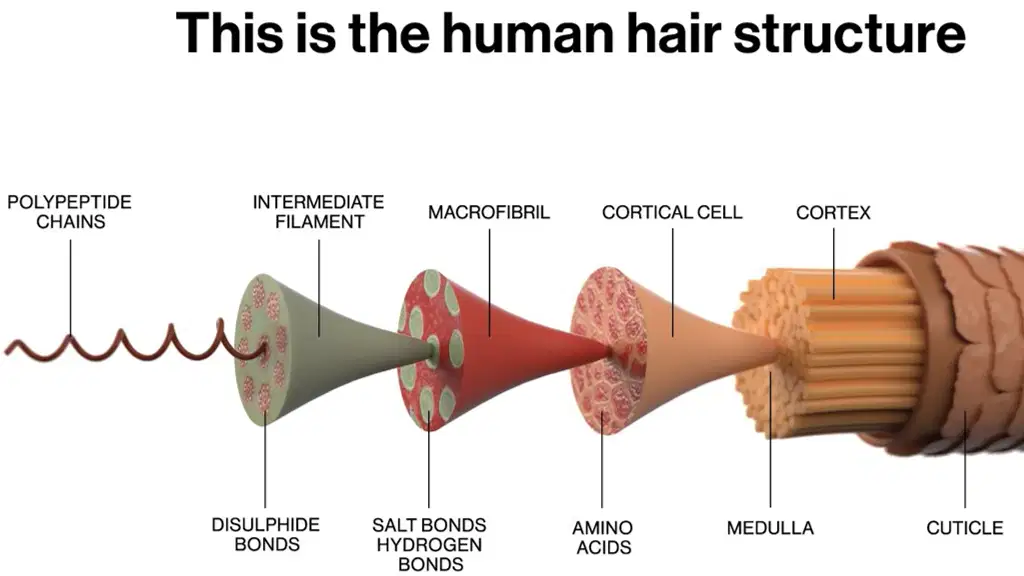
What is the outermost layer of the human hair structure called?
Medulla
Cortex
Cuticle
Intermediate Filament
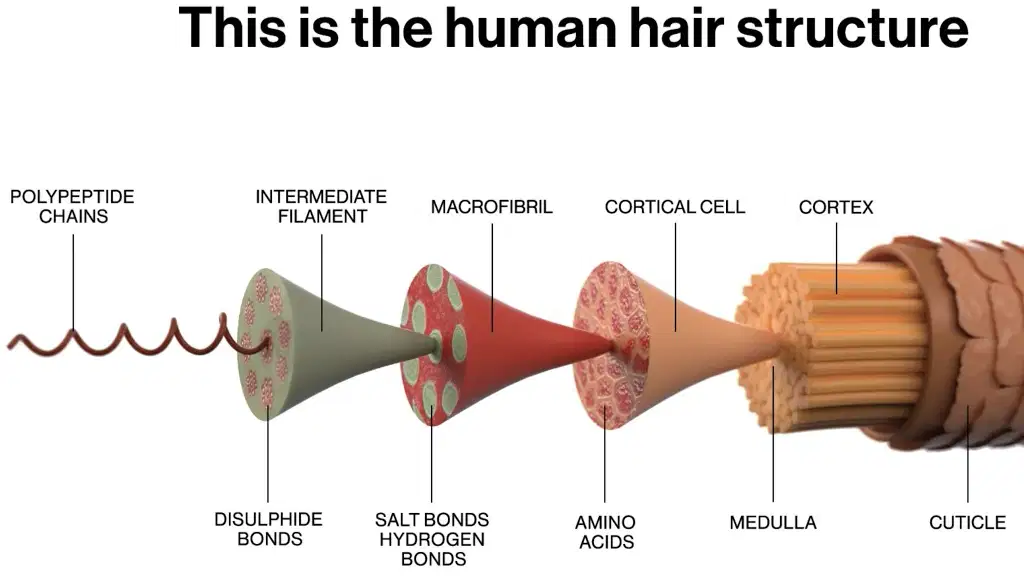
Which part of the human hair structure contains the polypeptide chains?
Medulla
Macrofibril
Intermediate Filament
Cortical Cell
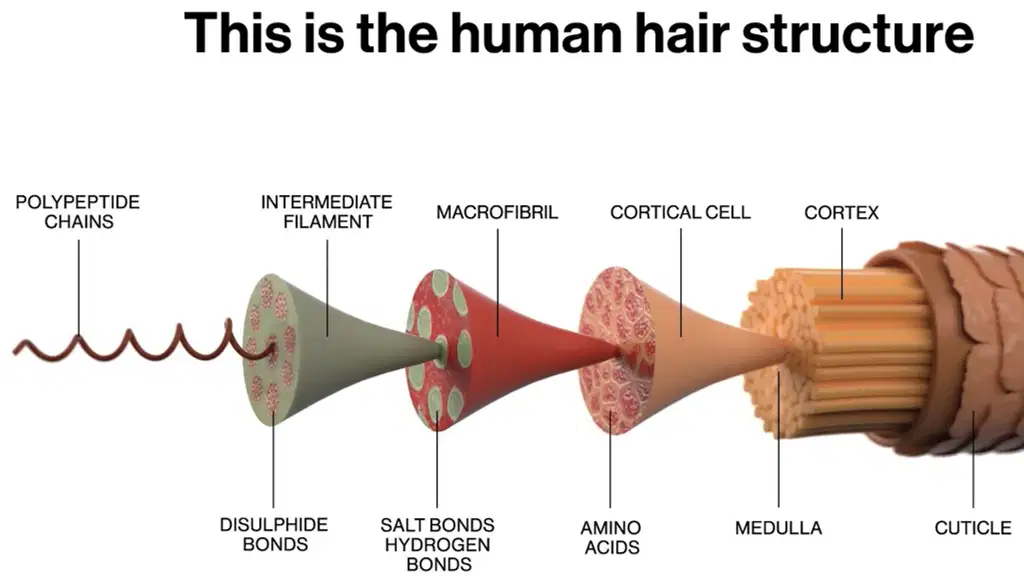
What type of bonds are found between the polypeptide chains in the human hair structure?
Ionic Bonds
Disulphide Bonds
Covalent Bonds
Hydrogen Bonds
What is the primary protein found in human hair?
Keratin
Collagen
Elastin
Fibroin
What is the function of the cuticle in the human hair structure?
Provides color to the hair
Protects the inner layers of the hair
Provides elasticity to the hair
Provides strength to the hair
Which part of the human hair structure is responsible for its color?
Medulla
Cortex
Cuticle
Macrofibril
What is the role of keratin in the human hair structure?
Provides color to the hair
Provides strength and structure to the hair
Provides elasticity to the hair
Protects the inner layers of the hair

If a hair were a pencil, which structure corresponds to the paint on the surface?
If a hair were a pencil, which structure corresponds to the wood?
If a hair were a pencil, which structure corresponds to the lead?
The ability of hair to stretch and return to its original length without breaking is referred to as hair:
resitance
elasticity
density
porosity
Which layer of the hair shaft creates the shine and the smooth, silky feel of healthy hair?
medulla
arrector pili
cuticle
cortex
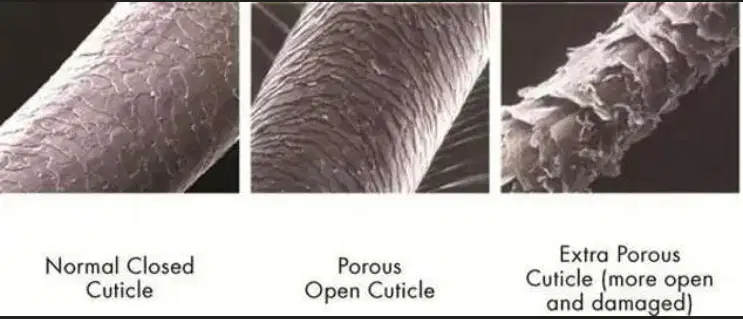
If the cuticle scale feels raised and bumpy this tells us?
The cuticle scale is closed and hair is in bad condition
The cuticle scale is open and hair is in poor condition
The cuticle scale is open and the hair is in good condition
The cuticle scale is closed and hair is in good condition
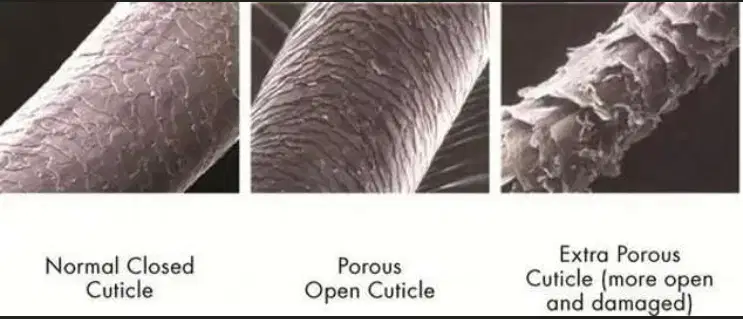
If the cuticle scale feels smooth this tells us?
The cuticle scale is open and hair is in good condition
The cuticle scale is open and hair is porous
The cuticle scale is closed and hair is porous
The cuticle is closed and hair is in good condition
The major elements that make up human hair are carbon, oxygen, hydrogen, nitrogen, and sulfur, often referred to as the:
keratins
dermal foundation
COHNS elements
amino acids
The units of structure that build protein and are joined together end to end like pop beads are:
lymph glands
primary acids
oxygenated cells
amino acids
As newly formed cells mature, they fill up with a fibrous , then move upward, lose their nucleus, and die. This process is called keratinization.
protein
melanin
sebum
tissue
Normal hair contains percent of the element carbon.
6
17
21
51
Normal hair contains percent of the element oxygen.
6
17
21
51
In the makeup of normal human hair, what COHNS element is present in the lowest percentage?
Nitrogen
Sulfur
Hydrogen
Oxygen
The chemical bond that joins amino acids to each other is called a ____________
peptide bond
nucleotide bond
COHNS bond
cystine bond
In the cortex, a side bond that is easily broken by strong alkaline or acidic solutions is a called a__ bond.
hydrogen
oxygen
salt
keratin
The cortex contains coloring matter in the form of minute grains of , or pigment.
medulla
albino
melanin
marrow
__________ are bonds that cross-link polypeptide chains and are responsible for the extreme strength and elasticity of human hair.
Carbon bonds
Side bonds
End bonds
Peptide bonds
In the context of side bonds, which of the following is a similarity between hydrogen bonds and salt bonds?
Both are reformed by oxidation with neutralizers.
Both are broken by thio permanent waves and thio relaxers.
Both are strong chemical side bonds.
Both result from attracting opposite charges.
A __________ is a strong chemical side bond that joins the sulfur atoms of two neighboring cysteine amino acids within the polypeptide chains.
disulfide bond
hydrogen bond
salt bond
peptide bond
Chemical services take place in the
epidermis
cortex
root
cuticle

