wayground logo

Free Printable Worksheets

Font size

S
M
L
XL
Worksheets

Evolution Review Quiz

Total questions: 35

Worksheet time: 26mins
Name
Class
Date
1.
This scientist came up with the idea of natural selection.
a)
Jean Baptiste Lamarck
b)
Gregor Mendel
c)
Charles Darwin
d)
Thomas Malthus
2.
Inherited trait that helps an organism survive is a(n) __________.
a)
Fossil
b)
Adaptation
c)
Ancestor
d)
Natural selection
3.
Survival of the fittest or when favorable adaptations reproduce faster is called what?
a)
Evolution
b)
Adaptation
c)
Natural selection
d)
Fossilization
4.
Structures with the same parts have different functions; suggests that organisms share a common ancestry
a)
vestigial structures
b)
homologous structures
c)
adaptive radiation
d)
fossil
5.
Which of the following is an example of a vestigial structure?
a)
the wings of a red-tailed hawk
b)
the hind limbs of a house cat
c)
the fins of sharks
d)
the tailbone of a human
6.
The diagram shows fossils in different rock layers. Which of these statements about the age of these fossils is most likely correct?
a)
Fossil A and C are the same age
b)
Fossil B is older than fossil C
c)
Fossils A is older than fossil B
d)
Fossil D is older than fossil C
7.
When an organism completely dies out, it is called.....
a)
Adaption
b)
Extinction
c)
Fossilization
d)
Mutation
8.
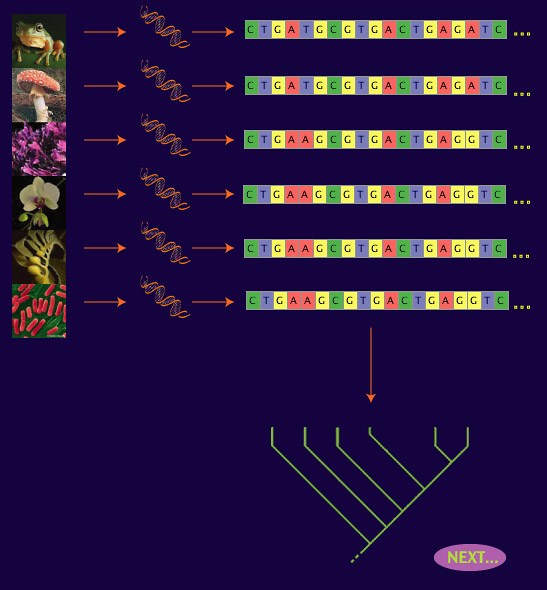
Two organisms that are closely related would have
a)
very similar DNA sequence
b)
exactly the same DNA sequences
c)
no proteins in common
d)
completely different DNA sequence
9.
All the individuals of a species that live in a particular area are called a
a)
variation
b)
population
c)
fossil
d)
group
10.
Which layer is oldest?
a)
A
b)
W
c)
G
d)
Z
11.
The long and sharp beak of a woodpecker is an example of:
a)
Natural Selection
b)
Selective Breeding
12.
The difference in the physical traits of an individual from those of other individuals in a group is called a(n)
a)
change
b)
adaption
c)
species
d)
variation
13.
The ability of an organism to survive and reproduce in its specific environment 
a)
diversity.
b)
evolution
c)
adaptation
d)
 fitness
14.

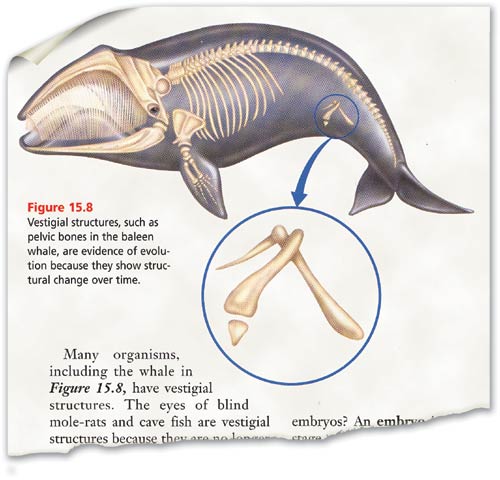
Whales are aquatic mammals that contain a pelvis (hip) bone. Even though it does not aid in its movement, the function must have been used by a common ancestor of the whale. Thus, the pelvis is referred to as a(n)

a)

vestigial structure

b)

analogous structure

c)

homologous structure

15.
What does Darwin's theory of evolution suggest?
a)
species change over time
b)
extinct species are not related to living species
c)
different species can interbreed
d)
animals that look alike are most closely related
16.
Vertebrate embryos pass through similar stages of development is evidence for
a)
use and disuse
b)
homologous structures
c)
common ancestry
d)
acquired characteristics
17.
Only populations can evolve.
Individuals can not evolve.
a)
True
b)
False
18.
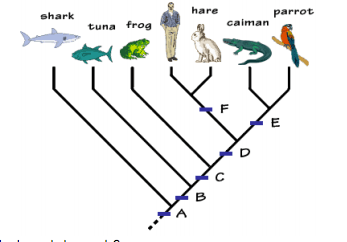
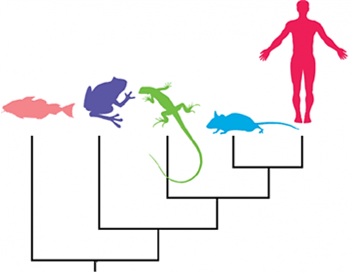
On the cladogram, which organism is the closest relative of the human?
a)
Frog
b)
Hare
c)
Caiman
d)
Parrot
19.

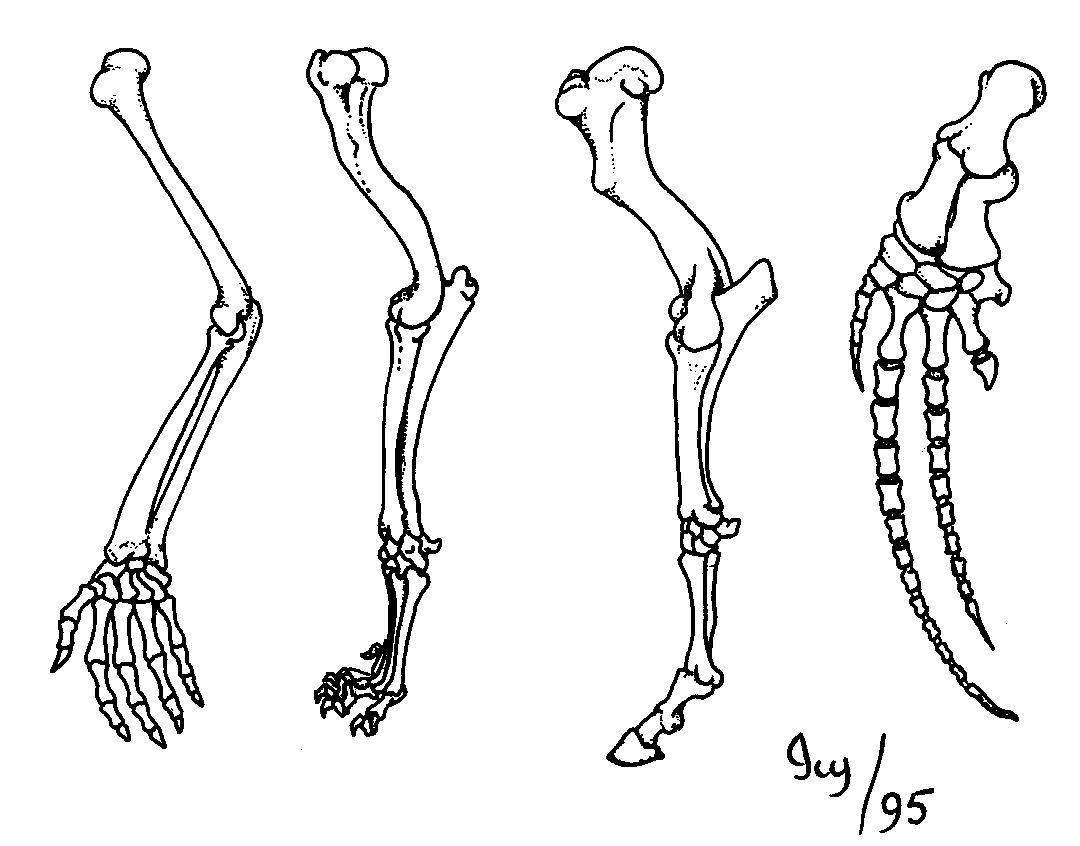
What type of structure does this image illustrate?

a)

Homologous structures

b)

Analogous structures

c)

Vestigial structures

20.

Which is not an example of camouflage ....

a)

a tiger stripes blend in with long grass

b)

a soldier's battle uniform helps him blend in to the background

c)

a butterfly fish have an eye spot on the body to fools the predators

d)

a polar bear has thick white fur

21.

Why are advantageous or beneficial traits more likely to be passed onto offspring?

a)

Because those traits make them more likely to survive and reproduce.

b)

Because those traits come from dominant alleles.

c)

Because those traits come from recessive alleles.

d)

Because those traits are acquired phenotypes.

22.

What is the common ancestor of Letters A, B, C, D, E?

a)

1

b)

2

c)

3

d)

4

23.
A table of arachnid and insect characteristics is shown. Which characteristic could be used to distinguish between
arachnids and insects?
a)
Jointed legs
b)
Body segments
c)
Presence of eyes
d)
Presence of antennae
24.

Using the cladogram, which two organisms are more closely related Lizards and Newts OR Lamreys and Sharks

a)

Newts and Lizards

b)

Lampreys and Sharks

25.

Which organisms from this cladogram are more closely related lizard and salamander OR Lizard and Mouse?

a)

Lizard and Salamander

b)

Lizard and Mouse

26.

Which trait(s) do conifers have?

a)

vascular tissue only

b)

vascular tissue and seeds

c)

vascular tissue, seeds and flowers

d)

seeds only

27.

According to this image, which two domains of life are most related?

a)

Bacteria & Archaea

b)

Archaea & Eukarya

c)

Eukarya & Bacteria

28.

According to this phylogenetic tree, which creature is the least related out of all pictured?

a)

Fish

b)

Frog

c)

Salamander

d)

Human

29.

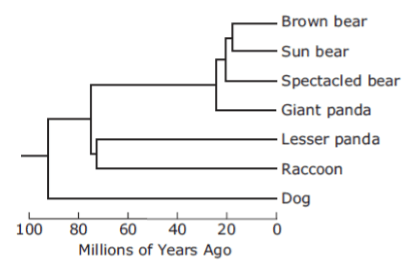
Who is the closest relative to the brown bear?

a)

Giant panda

b)

Dog

c)

Lesser panda

d)

Sun bear

30.

From the picture above, What do the species all have in common?

a)

Back bone

b)

Same father

c)

Common ancestor

d)

Feathers

31.

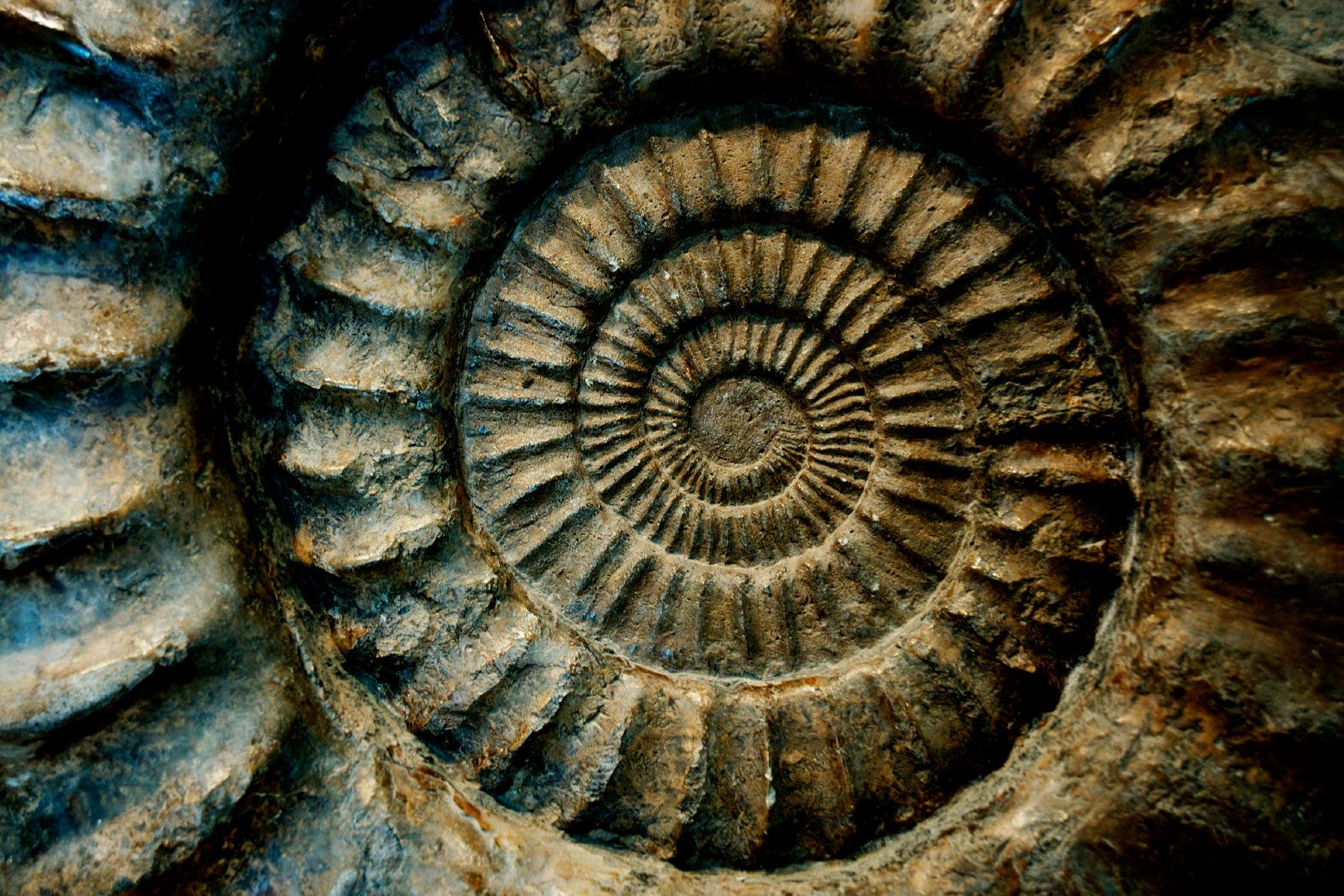
Scientists have collected millions of fossils of different organisms, and have developed a timeline of life on Earth. What do we call this?

a)

Mutation

b)

Natural Selection

c)

The theory of evolution

d)

Fossil Record

32.
Two organisms that are closely related would have
a)
very similar DNA sequence
b)
exactly the same DNA sequences
c)
no proteins in common
d)
completely different DNA sequence
33.

The table shows the survival rate of two types of beetles in the same environment over a period of three years.


Based on the table, which statement is correct?

a)

Brown beetles have a shorter life cycle than green beetles have

b)

Green beetles are more fit for their environment than brown beetles

c)

Brown beetles undergo more unfavorable mutations than green beetles

d)

Green beetles do not have the adaptations suited for survival in this environment

34.

Mutations are important because they produce:

a)

death of the organism in which they develop.

b)

new traits that help natural selection occur.

c)

benefits for the individual, not for the population.

d)

Hardey-Weinberg equilibrium within a population.

35.

This mechanism of evolution occurs when individuals, and their genetic material, move from one population to another.

a)

Extinction

b)

Gene flow

c)

Genetic drift

d)

Natural Selection