
 Worksheets
B - 4.1 - Cell Energy -- HS-LS1-5 & HS-LS1-7
Total questions: 68
Worksheet time: 2hrs 51mins
Photosynthesis transforms light energy into _______ energy.
chemical
kinetic
radiant
geothermal
Cellular respiration transforms chemical energy into _______ energy.
ATP
glucose
radiant
geothermal

Match Photosynthesis Key Ideas
Light Dependent Reaction location
Thylakoid
Light INDEPENDENT Reaction location
Stroma
Made of Thylakoids & Stroma
Chloroplast
Stacks of Thylakoids
Grana
Identify the photosynthesis reaction.
Identify the cellular respiration reaction.
Which part of the diagram represents the
light-independent
reactions of photosynthesis?
Which part of the diagram represents the
light-dependent
reactions of photosynthesis?
Which part of the diagram represents the
radiant energy
required for photosynthesis?
Which part of the diagram represents the
glucose
produced from the two stages of photosynthesis?

What are the two basic stages of photosynthesis?
light dependent rxns
&
light independent rxns
glycolysis rxns
&
fermentation rxns
Calvin cycle
&
light independent rxns
water & carbon dioxide & sunlight
Which stage of photosynthesis uses carbon dioxide?
light independent rxns
light dependent rxns
cellular respiration
fermentation
Location of the stage of photosynthesis that uses carbon dioxide?
chloroplast's
stroma
chloroplast's
thylakoid
mitochondria's membrane
nucleolus of
nucleus
Which best describes the relationship between the chemical equations for photosynthesis and cellular respiration?
They are similar.
They are exactly the same.
They are opposites.
They are unrelated to each other.
Which organism(s) use(s) cellular respiration?
animals only
plants only
both animals and plants
decomposers
Which of the following is the correct equation for photosynthesis?
CO2 + light + H2O --> O2 + sugar
CO2 + sugar + H2O --> O2 + light
O2 + light + H2O --> CO2 + sugar
CO2 + O2 + H2O --> light+ sugar
What is the purpose of cellular respiration?
to make food
to create protein in the body
provides a sequence of nucleotides
Cellular respiration happens in which two places?
*Select TWO
cytoplasm
mitochondria
stomata
chloroplast
nucleus
What gas is released into the air during cellular respiration?
nitrogen
Which process occurs in the mitochondria?
Which type of cellular respiration is faster?
anaerobic
aerobic
Which type of cellular respiration produces much more ATP energy?
aerobic
anaerobic
Glycolysis
Kreb’s cycle
Electron transport chain
Cellular Respiration
Photosynthesis
Kreb’s cycle
Electron transport chain
aerobic respiration
anerobic respiration
Glycolysis
Fermentation
aerobic respiration
anerobic respiration
Light dependent reactions,
Calvin cycle = Light independent reactions
Cellular Respiration
Photosynthesis
Where does gas exchange occur during photosynthesis?

During which process do guard cells move in order to open the stoma for gas exchange?
cellular respiration
glycolysis
photosynthesis
fermentation
In which structure do guard cells move in order to open the stoma for gas exchange?
plant leaf
cow heart
plant root
human lung
flower
Cellular respiration is a chemical process whereby the bonds of food molecules and oxygen molecules are (a) and the bonds in new compounds are (b) .
Which 2 are outputs (products) of photosynthesis?
(Pick 2)
Carbon Dioxide
Oxygen
Water
Sugar
Sunlight
Which 3 are inputs (reactants) for photosynthesis?
(Pick 3)
Carbon Dioxide
Oxygen
Water
Sugar
Sunlight
Glucose is an important organic molecule.
Organic molecules always contain ____.
carbon
phosphorus
iron
calcium
sodium
How many carbon atoms are in the formula for one compound of glucose?
2
4
6
12

How many different kinds of elements are in a molecule of glucose?
3
6
12
18
1
How many hydrogen atoms are in one compound of glucose?
3
6
12
18
2

Which letter in the image shown points to the site of aerobic respiration?
A
B
C
D
S
What is the Law of Conservation of Mass?
Mass is created in a chemical reaction
Mass is created in a physical change
New chemicals formed from a chemical reaction have a larger overall mass than the original reactants
Mass is never created or destroyed. The amount of mass stays the same before and after the reaction
Identify the chemical formula for Glucose.
C₆H₆O₆
C₆H₁₂O₆
H₂O
CO₂
CH₂O₆
If carbon dioxide is removed from a plant’s environment, what would you expect to happen to its production
of high-energy sugars?
More sugars will be produced.
No sugars will be produced.
The same number of sugars will be produced but without carbon dioxide.
Carbon dioxide does not affect the production of high-energy sugars in plants.

What's the total number of each type of atoms that are reactants?
Carbon atoms
6
Oxygen atoms
18
Hydrogen atoms
12
Nitrogen atoms
0
How many molecules of each of the following were produced?
Oxygen molecule/s
6
Glucose molecule/s
1
Hydrogen molecule/s
0
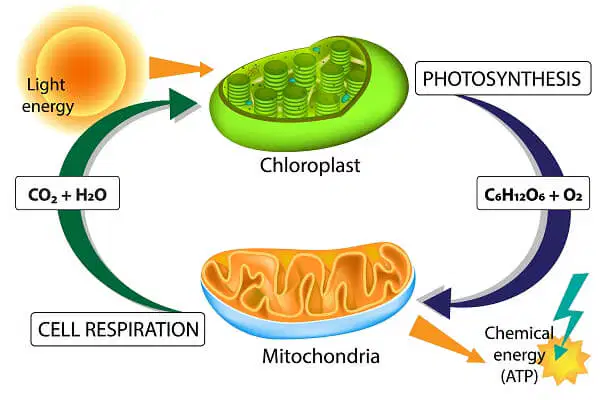
Match the following
Gaseous product of photosynthesis
O2
Gaseous reactant of photosynthesis
CO2
Biological molecule of energy
ATP
Source of energy for photosynthesis
sunlight
Vapor produced by respiration
H2O

Interpret a cell energy diagram.
Which accessory pigment in a leaf is the major absorber of green wavelengths of light?
Chlorophyll A
Chlorophyll B
Carotenoids
Phycoerythrin
Phychocyanin
Interpret a cell energy diagram.
What is the relative absorption of chlorophyll a when exposed to a wavelength of light of 500nm?
about ____
5%
20%
40%
60%
80%
Interpret a cell energy diagram.
What is the relative absorption of phycoerythrin when exposed to a wavelength of light of 500nm?
about ____
10%
20%
50%
60%
80%
Interpret a cell energy diagram.
Chlorophyll gives plants their green color because it does not absorb the _____wavelengths of white light. That particular light wavelength is reflected from the plant.
green
red
blue
Interpret a cell energy diagram.Which pigment in a leaf is the major absorber of red wavelengths of light?
Chlorophyll A
Chlorophyll B
Carotenoids
Phycoerythrin
Phychocyanin
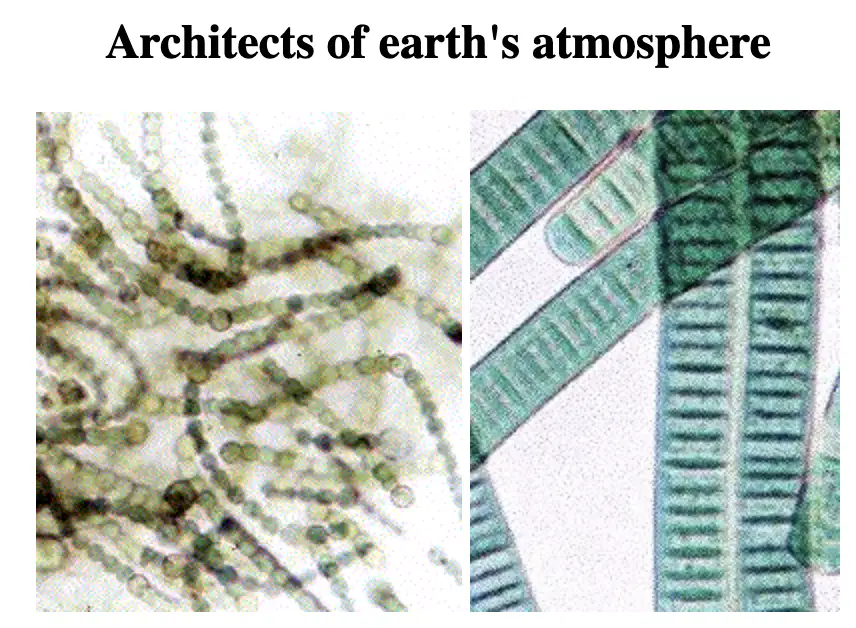
Because they are photosynthetic and aquatic, cyanobacteria are often called "blue-green algae". This name is convenient for talking about organisms in the water that make their own food, but does not reflect any relationship between the cyanobacteria and other organisms called algae. Cyanobacteria are relatives of the bacteria, not protists.
In the ENDOSYMBIOSIS THEORY, photosynthetic cyanobacteria are best described as the early prototype of ______.
the chloroplast
nitrogen
the mitochondrion
fish

Name of this organelle structure.
chloroplast
mitochondria
vacuole
cytoplasm
nucleus

Name of this organelle structure.
chloroplast
mitochondria
vacuole
cytoplasm
nucleus
In the absence of oxygen, which process comes after glycolysis?
fermentation
krebs cycle
electron transport chain

Step 1 of cellular respiration is:
Kreb's cycle
Electron Transport chain
Fermentation
Glycolysis
How many ATP molecules result from breaking glucose down into pyruvic acid?
36
zero
six
2
1
Which process of cellular respiration uses oxygen?
Glycolysis
Kreb's cycle
Electron transport system
How many ATP molecules result from the electron transport system?
36
zero
six
2
1
What does aerobic mean?
Without oxygen
With oxygen
What does anaerobic mean?
Without oxygen
With oxygen
What is the green pigment that makes plants green?
golgi body
nucleus
chlorophyll
chloroplast
carotenoid
Inside what organelle does photosynthesis take place?
golgi body
lysosome
mitochondria
chloroplast
nucleus

Which of the following structures are part of the mitochondria?
Pick THREE
outer membrane
DNA
matrix
nucleus
chloroplast
Which of the following structures are part of the mitochondria?
Pick THREE
outer membrane
ribosome
cristae
thylakoid
chloroplast
Mitochondria have their own ____ and DNA floating in the matrix
lysosomes
fungi
cyanobacteria
ribosomes
gimkits
When is NADH produced during glycolysis?

