wayground logo

Free Printable Worksheets

Font size

S
M
L
XL
Worksheets

Cycle 4 Review

Total questions: 79

Worksheet time: 3hrs 52mins
Name
Class
Date
1.
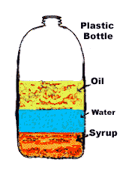
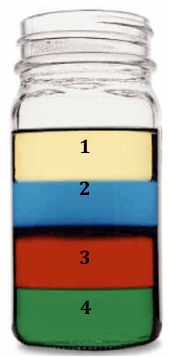
Put the liquids in order from most dense to least dense?
a)
4, 3, 2, 1
b)
1, 2, 3, 4
c)
3, 4, 2, 1, 
d)
4, 3, 1, 2
2.
Which liquid is the least dense?
a)
oil
b)
water
c)
syrup 
d)
plastic bottle
3.
What is the formula for density?
a)
density = mass x volume
b)
density = mass / volume
c)
density = mass + volume
d)
density = mass - volume
4.
Frank has an eraser. It has a mass of 4g, and a volume of 2cm3. What is its density?
a)
8 g/cm3
b)
2 g/cm3
c)
1/2 g/cm3
d)
24 g/cm3
5.
What is the volume of Object X?
a)
10.0 cm3
b)
15.0 cm3
c)
20.0 cm3
d)
25.0 cm3
6.

Which box has a higher density?

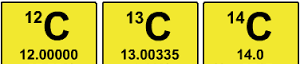
a)

A

b)

B

c)

They are the same

7.

What is the density of the sphere, if its mass is 50 g?

a)

40 grmL\frac{40\ gr}{mL}  

b)

65mLg\frac{65mL}{g}  

c)

2 gcm3\frac{2\ g}{cm^3}  

d)

25gmL\frac{25g}{mL}  

8.

Ethanol has a density of 0.789 g/cm3.

What is the mass of 225 cm3 of ethanol?

a)

178g

b)

285g

c)

0.004 g

d)

225.789g

9.

Which of the following is an assumption of the kinetic-molecular theory of gases?

a)

Collisions between gas particles are inelastic.

b)

Gases consist of closely spaced particles.

c)

Gas particles move around in an orderly manner.

d)

The temperature of a gas depends on the average kinetic energy of the gas particles.

10.

For a fixed amount of gas at a constant temperature, the volume increases as the pressure...

a)

remains steady.

b)

increases.

c)

decreases.

d)

fluctuates.

11.

This diagram represents particles in a ______________ state.

a)

Solid

b)

Liquid

c)

Gas

12.

Particles always ________________ each other, this gets stronger as the particles get ___________________.

a)

attract, farther apart

b)

attract, closer together

c)

repel, farther apart

d)

repel, closer together

13.

In which state of matter will there be the LARGEST space between molecules?

a)

Solid

b)

Liquid

c)

Gas

14.

Match the following:

a)

Vaporizaiton

1.

the phase transition from liquid to gas

b)

Evaporation

2.

occurs at the surface of a liquid

c)

Boiling

3.

occurs throughout the liquid

d)

Depostition

4.

phase change from gas to solid

e)

Sublimation

5.

phase change from solid to gas

15.

According to Boyle's Law, if the temperature stays the same and the volume of the container is decreased, then the pressure from the gas will

a)

Increase

b)

Decrease

c)

Stay the same

d)

None of the above

16.
Which container will have lower pressure?
a)
left
b)
right
c)
they both have the same pressure
17.
Tom Brady enjoys balloon animals from the carnival. He just received a balloon giraffe that has an initial temperature of 39.0°C and a volume of 1.28 L. If Gronkowski plays a trick on Tom, and puts his balloon giraffe into the freezer, what would be the new volume of the balloon if the temperature drops down to 8.0°C?
(Don’t forget about what must be done to temperatures!)
a)
1.42 L
b)
6.85 x 10⁴ L
c)
3.78 L
d)
1.15 L
18.

An inflated balloon with a volume of 0.75 L at 30 degree Celsius was placed inside the freezer where the temperature is -10 degree Celsius. What will happen to the volume of the balloon if the pressure remains constant?

a)

Decreases

b)

Doubles

c)

Increases

d)

Remains the same

19.
A gas occupies 4.98 L at 2.6 atm of pressure. What volume does it occupy at 1.8 atm pressure?
a)
12.9 L
b)
0.72 L
c)
7.2 L
d)
3.44 L
20.
The pressure on a sample of gas is increased from 1.0 atm to 3.0 atm. If the new volume is 0.52 L, find the original volume.
a)
0.52 L
b)
1.56 L
c)
0.173 L
d)
1.00 L
21.
The volume of an average NFL player is 2.4 L and the pressure is 101.70 kPa during exhalation. If the pressure during inhalation is 101.01 kPa, what is the volume of the lungs of a NFL player during inhalation?
a)
2.38 L
b)
2.4 L
c)
5.1 L
d)
4284 L
22.

(Charles Law) There are 65 liters of helium in a balloon at 35 K. If the temperature of the balloon is increased to 40 K, what will the new volume of the balloon be?

a)

40 L

b)

70 L

c)

74.3 L

d)

75.9 L

23.

What is the difference between a pure substance and a mixture? Select all that apply.

a)

substances are made of many different things while mixtures are just made of 1

b)

a substance has one type of particle while a mixture has 2 or more types

c)

a mixture is physically combined and can be physically separated while a substance is chemically bonded

d)

a mixture is chemically bonded together while a substance is physically combined

24.

What is the difference between a pure substance and a mixture? Select all that apply.

a)

substances are made of many different things while mixtures are just made of 1

b)

a substance has one type of particle while a mixture has 2 or more types

c)

a mixture is physically combined and can be physically separated while a substance is chemically bonded

d)

a mixture is chemically bonded together while a substance is physically combined

25.

What pure substance is made of 2 or more types of atoms?

a)

compound

b)

element

26.

Identify the following

a)

compound

b)

homogeneous mixture

c)

element

d)

heterogeneous mixture

27.

Identify the following

a)

compound

b)

homogeneous mixture

c)

element

d)

heterogeneous mixture

28.

Identify the following

a)

compound

b)

homogeneous mixture

c)

element

d)

heterogeneous mixture

29.

Identify the following

a)

compound

b)

homogeneous mixture

c)

element

d)

heterogeneous mixture

30.
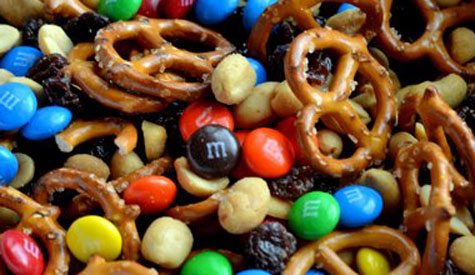
What type of mixture is this?
a)
homogenous mixture
b)
chemical
c)
heterogeneous mixture 
d)
solid mix
31.
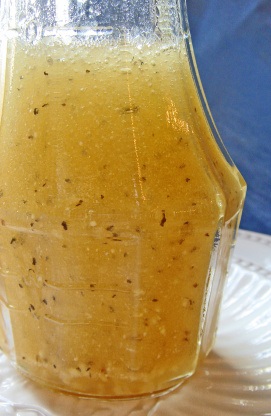
Italian Salad Dressing is a . . .
a)
heterogeneous mixture
b)
homogeneous mixture
c)
Pure Substance
d)
Compound
32.
Kool-Aid
a)
Element
b)
Compound
c)
Homogeneous Mixture
d)
Heterogeneous Mixture
33.
Carbon
a)
Element
b)
Compound
c)
Homogeneous Mixture
d)
Heterogeneous Mixture
34.
NaCl
a)
Element
b)
Compound
c)
Homogeneous Mixture
d)
Heterogeneous Mixture
35.
Sweet Tea
a)
Element
b)
Compound
c)
Homogeneous Mixture
d)
Heterogeneous Mixture
36.
What type of substance is gelatin?
a)
colloid
b)
comound
c)
substance
d)
suspension
37.
Physical properties are
a)
properties that can be observed without changing the identity of the substance
b)
properties that describe how a substance changes into a completely different substance
38.
which one is the definition of chemical property?
a)
a property or characteristic of a substance that is observed during a reaction where the chemical composition of a substance is changed
b)
any change that results in the formation of new chemical substances
c)
combustibility
39.
Boiling Point: Chemical or Physical Property
a)
Chemical Property
b)
Physical Property
40.
Melting Point: Chemical or Physical Property
a)
Chemical Property
b)
Physical Property
41.
Reacts with Acid: Chemical or Physical Property
a)
Chemical Property
b)
Physical Property
42.
Flammability (burns): Chemical or Physical Property
a)
Chemical Property
b)
Physical Property
43.
Density: Chemical or Physical Property
a)
Chemical Property
b)
Physical Property
44.

The ability to hammered into a thin sheet or be bent is

a)

Ductility

b)

Solubility

c)

Density

d)

Malleability

45.
Subatomic particle with a charge of 0
a)
neutron
b)
proton
c)
electron
d)
quark
46.

Subatomic particles with a negative charge

a)

Electrons

b)

Neutrons

c)

Protons

d)

Quarks

47.
Subatomic particles with a positive charge
a)
neutrons
b)
atomic mass
c)
protons
d)
isotopes
48.

The number 16 for the atomic element sulfur is the

a)

ionic number

b)

isotope

c)

atomic mass

d)

atomic number

49.

How many protons does sulfur have?

a)

32

b)

16

c)

48

d)

12

50.

How many electrons does sulfur have

a)

16

b)

32

c)

48

d)

12

51.
What is the atomic mass of "F"
a)
9
b)
18
c)
17
d)
19
52.

How many neutrons does an Oxygen atom have?

a)

8

b)

16

c)

24

d)

7.999

53.

How many neutrons does a Hydrogen atom have?

a)

1

b)

2

c)

3

d)

0

54.
What atom matches this electron configuration?
1s2s2p3s2
a)
Neon
b)
Magnesium
c)
Aluminum
d)
Potassium
55.
Which is the electron configuration for an oxygen atom?
a)
1s22s22p63s23p64s2
b)
1s22s22p4
c)
1s22s22p6
d)
1s22s22p63s23p6
56.
Which element is pictured?
a)
neon
b)
fluorine
c)
magnesium
d)
argon
57.
What noble gas should be used to write the shorthand configuration for Te?
a)
Ar
b)
Kr
c)
Xe
d)
Sb
58.
What is this element? 
1s22s22p63s23p6
4s23d104p6
a)
Argon
b)
Krypton
c)
Selenium
d)
Bromide
59.

Different isotopes of an element contain different numbers of ___.

a)

protons

b)

neutrons

c)

electrons

d)

elements

60.

If a proton is added or removed from an atom, what happens?

a)

It becomes a different element.

b)

It becomes a different isotope.

c)

Nothing happens.

61.

How many neutrons are in 1 atom of Carbon-13?

a)

6

b)

13

c)

7

d)

20

62.

How many neutrons are in an atom of Nitrogen-16?

a)

9

b)

7

c)

16

d)

20

63.

What is the difference between Neon-20 and Neon-22?

a)

They have different numbers of electrons.

b)

They have different numbers of neutrons.

c)

Only 1 is radioactive.

d)

No difference.

64.

Which is the correct symbol for Fluorine-18?

a)
b)
c)
d)
65.

How many protons are in this isotope?

a)

9

b)

21

c)

12

66.
What do these isotopes of carbon all have in common?
a)
neutrons & mass number
b)
atomic number and neutrons
c)
atomic number and electrons
d)
protons, atomic number, and mass number
67.
Four isotopes of lead include lead-204, lead-206, lead-207, and lead-208.  The average atomic mass of lead is 207.2.  Which isotope of lead is likely to be the most abundant.
a)
204
b)
206
c)
207
d)
208
68.
24.1% of all the isotopes of a an element have a mass of 75.23 amu, 48.7% have a mass of 74.61 amu, and 27.2% have a mass of 75.20 amu.
What is the average mass of this element?
a)
74.92 amu
b)
24.97 amu
c)
75.01 amu
d)
74.51 amu
69.

Calculate the average atomic mass of the element iron (Fe) using the following data:

[Isotope / % abundance]

[Iron 54 / 6% ] [Iron 56 / 92% ] [ Iron 57 / 2% ]

a)

53.7 amu

b)

54.9 amu

c)

5592.0 amu

d)

55.9 amu

70.
An isotope has three forms.  30% have a mass of 4 amu, 20% have a mass of 5 amu and 50% have a mass of 3 amu.  Average atomic mass will be closest to
a)
2 amu
b)
3 amu
c)
4 amu
d)
5 amu
71.
Sodium (Na) and potassium (K) are in the same group on the periodic table. Based on their locations, which statement about sodium and potassium is true?
a)
Sodium is less electronegative than potassium. 
b)
Sodium has fewer energy levels than potassium. 
c)
Sodium has a larger ionic radius than potassium. 
d)
Sodium has lower ionization energy than potassium. 
72.
Which of these elements has the greatest atomic radius? 
a)
H
b)
N
c)
Cl
d)
Cs
73.
The Periodic Table of the Elements is useful for revealing patterns and trends in the elements. Which statement accurately describes a pattern in the size of atomic radii in the Periodic Table of the Elements?
a)
Atomic radii decrease from left to right across a period and decrease from top to bottom in a group.
b)
Atomic radii increase from left to right across a period and increase from top to bottom in a group.
c)
Atomic radii decrease from left to right across a period and increase from top to bottom in a group.
d)
Atomic radii increase from left to right across a period and decrease from top to bottom in a group.
74.
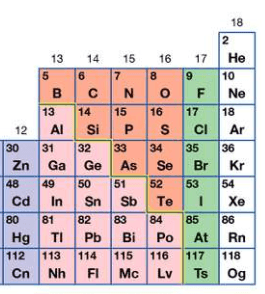
Which of these elements has an electron structure most similar to that of element X?
a)
1
b)
2
c)
3
d)
4
75.
Based on their locations in the periodic table, which element has chemical properties most similar to those of calcium, Ca?
a)
beryllium, Be
b)
potassium, K
c)
titanium, Ti
d)
yttrium, Y
76.
How many Valance electrons does Iodine Have?
a)
6
b)
16
c)
7
d)
17
77.
Which atom has the largest atomic radius?
a)
potassium
b)
rubidium 
c)
francium
d)
cesium
78.
Electronegativity is...
a)
how good an atom is at attracting electrons
b)
the ability of an atom to lose electrons
c)
the energy required to remove an electron from a specific atom
d)
how easy it is to make friends. 
79.
As you move down the periodic table atoms get bigger.  This is because ____________.
a)
The atoms have more mass.
b)
The atoms have more protons.
c)
The atoms have more energy levels
d)
The atoms have more neutrons