
 Worksheets
Taxonomy & Microbes Test Review
Total questions: 45
Worksheet time: 1hrs 1mins
An organism contains a cell wall and is a multicellular autotroph. Which kingdom does it belong to?
archaebacteria
eubacteria
fungi
plantae
An organism is unicellular, has a chloroplast and a nucleus. Which kingdom does it belong to?
archaebacteria
eubacteria
protista
fungi
An organism contains peptidoglycan in their cell walls, unicellular and autotroph. Which kingdom does it belong to?
archaebacteria
eubacteria
protista
fungi
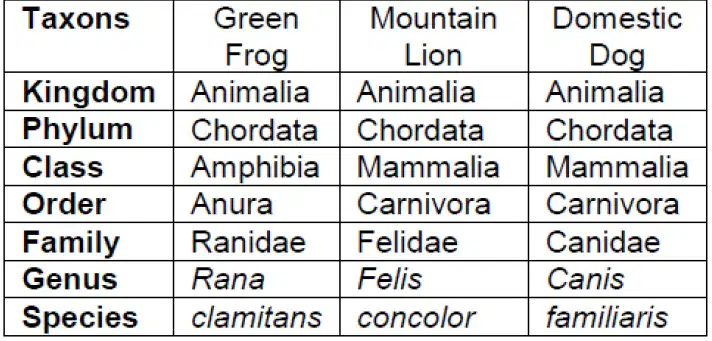
Which two organisms are most closely related?
green frog and mountain lion
mountain lion and domestic dog
green frog and domestic dog
all are equally related
If an organism is in the same order, what other taxa (levels) would they have in common?
kingdom
class
domain
genus
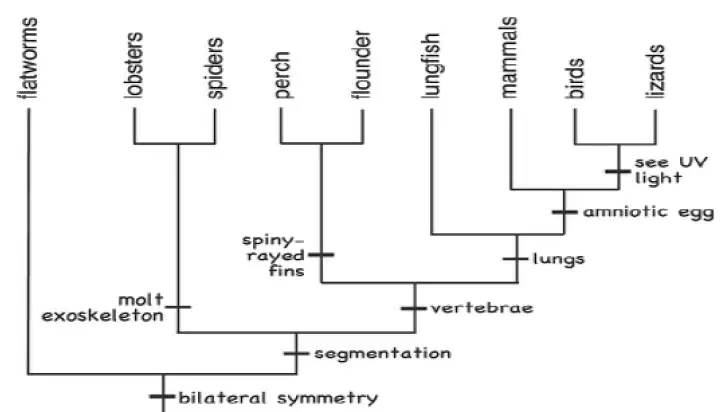
According to the cladogram, which are more closely related?
lungfish and flounder
lungfish and mammals
lungfish and perch
lungfish and birds
According to the cladogram, who has an amniotic egg?
lungfish
mammals
birds
lizards
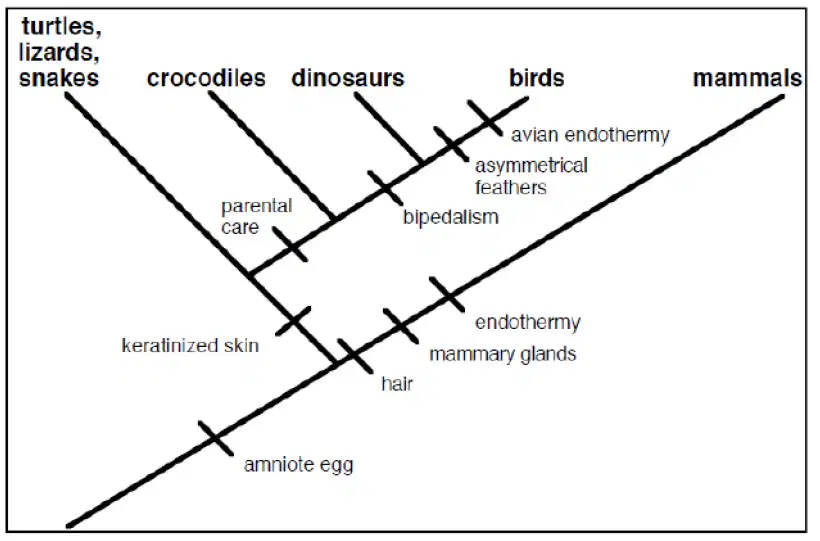
What characteristics do birds possess?
parental care
hair
amniote egg
asymmetrical feathers
mammary glands
The scientific name for an organism is made from the:
Class and family name
Genus and species name
Domain and kingdom name
Kingdom and phylum name
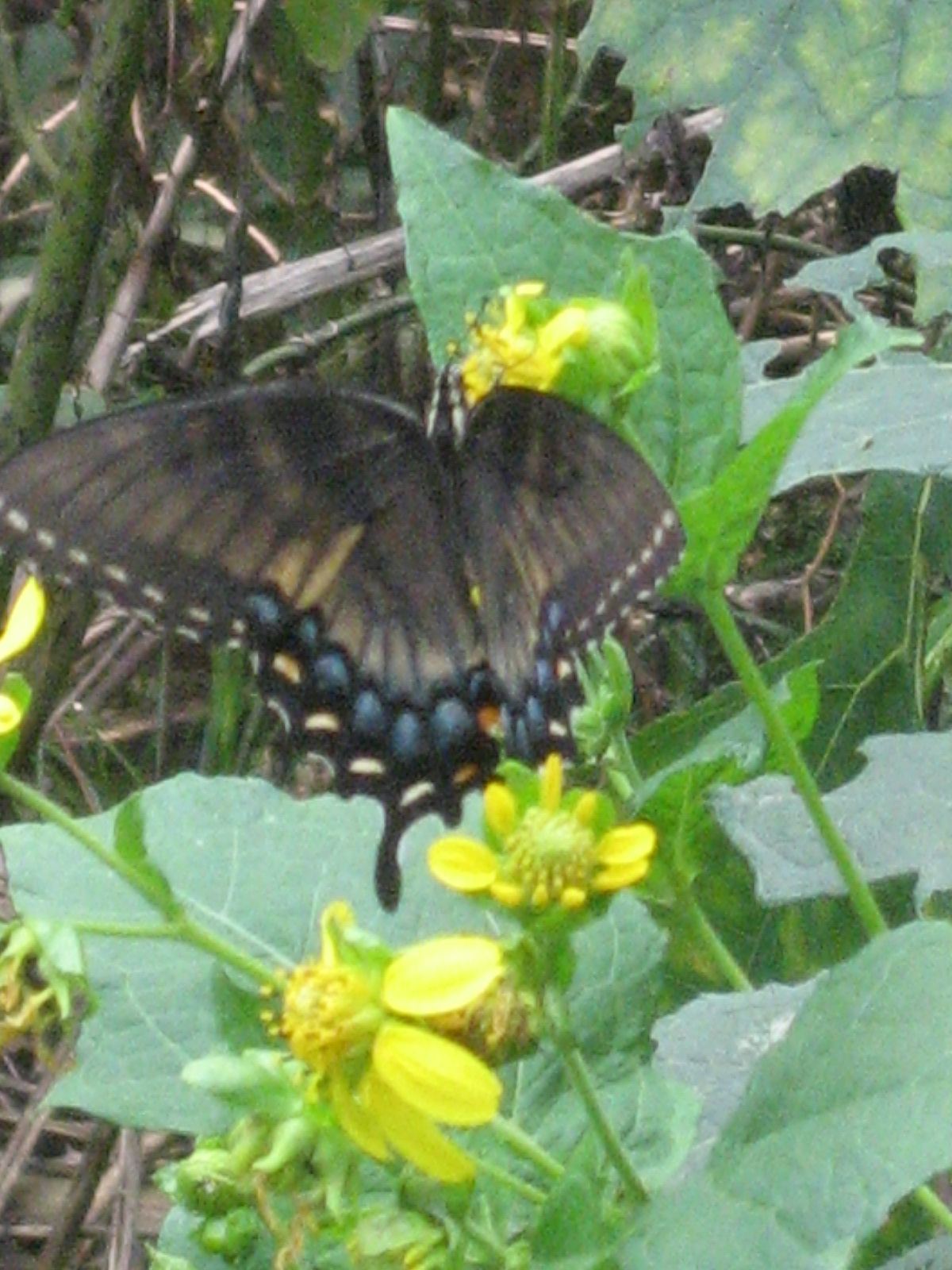
Organisms are the same ___________ when they are able to produce offspring who can also reproduce.
Class
Family
Species
Phylum

An illustration and a dichotomous key are given. What is the correct classification for this organism?
Class Insecta
Order Amblygygi
Order Araneae
Order Scorpiones
Organize these options into the lytic vs lysogenic cycles:
quicker cycle
longer cycle
virus remains dormant
virus destroys cells
symptoms show quickly
viral DNA combines with host DNA
flu
HIV

homo sapiens
Homosapiens
Homo sapiens
Homo Sapiens
What is a difference between the Plants and Fungi?
Fungi are heterotrophic
Plants are heterotrophic
Fungi have cell walls that contain cellulose
Plants have cell walls that contain chitin
What is an advantage of using scientific names vs. common names?
Common names can be confusing
Scientific names are all in Latin
Scientific names are universal
All of these choices are true
Match the following extremophiles with the environments they live in!
halophiles
extreme salt
thermophiles
extreme heat
methanogens
no oxygen
Place these organisms in the correct kingdom!
Methanopyrus kandleri
Thermococcus gammatolerans
Haloferax volcanii
Euglena
amoeba
kelp
yeast
mushroom
mold
moss
venus fly trap
pine tree
What distinguishes the archaebacteria from the eubacteria kingdom? (2 are correct)
how they reproduce offspring
type of environment they live in
presence or absence of peptidoglycan in the cell wall
number of cells they are composed of
Eubacteria have cell walls composed of (a) , some protists have cell walls made of (b) , which makes them similar to plants. Fungi have (c) in their cell walls.
Which organism(s) can do both autotrophic and heterotrophic nutrition? (2 are correct)
venus fly trap
euglena
mushroom
e. coli
Match the following:

protista

fungi

eubacteria

archaebacteria
What do the plant and animal kingdoms have in common? (2 are correct)
autotrophic
eukaryotic
contain cell walls
mostly multicellular

Match the following structure with function.
capsid that surrounds and protects viral genome
Structure A
DNA/RNA that provides instructions to hijack cell's machinery
Structure B
used for attaching host cell
Structure D
Match the following.
Used to treat bacterial infections.
Antibiotics
Used to prevent viral infections.
Vaccines
Proteins that protect you when unwanted substances enter the body.
Antibodies

The area where bacteria cannot survive because of the antibiotic inhibits or kills it is called:
zone of inhibition
zone of prohibition
the friend zone
zone of unhappiness
Which statement about viruses is true?
A virus is a prokaryotic microbe.
A virus requires a host cell to reproduce.
A virus is a eukaryotic microbe.
A virus moves by cilia or flagella.

The type of reproduction shown in the picture is called
regeneration
binary fission
sexual
budding
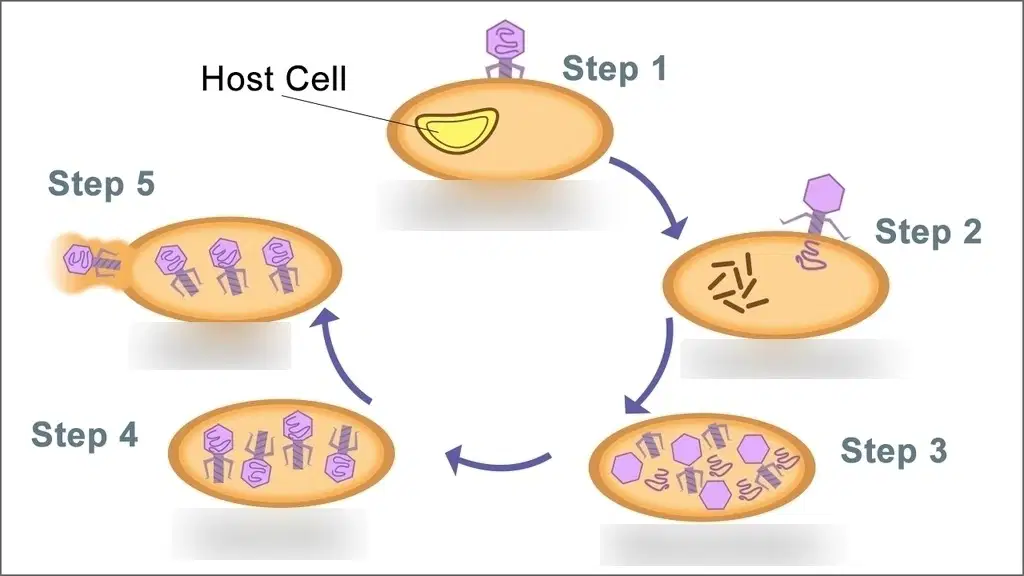
Choose the correct order of lytic cycle steps.
attachment
entry
replication
assembly
release
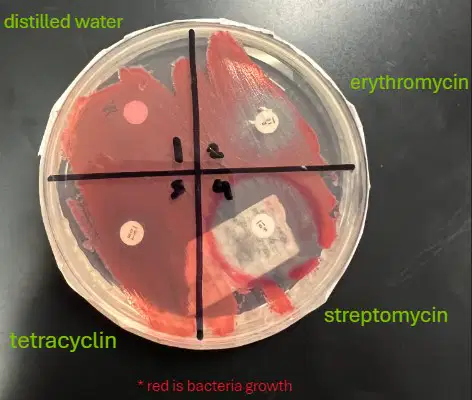
Based on the experiment, which antibiotic inhibited the growth of the bacteria the most?
tetracyclin
streptomycin
erythromycin
distilled water

What can we do to reduce the rate of development of antibiotic resistant strains of bacteria? Select all that apply.
Always finish a course of antibiotics
Only take antibiotics when they are really needed
Take antibiotics whenever it is possible
Take antibiotics for a few days and then stop.
Reasons that viruses are considered to be nonliving is because-
they are not made of cells.
they cannot reproduce on their own.
they do not use energy.
all of these choices are true
Which of these are functions/uses of bacteria? (choose all that apply)
help break food down and make vitamins
used in the making of food products like cheese
make oxygen through photosynthesis
undergo the lytic cycle in order to kill a host cell
Which of the following is not a virus.


This infectious viral disease has many symptoms, from chills, fever, and aching muscles to coughing and sneezing to nausea and vomiting. The symptoms show up quickly within 48 hours after the virus enters the body. This is an example of a virus in
the lytic cycle
the lysogenic cycle
meiosis division
mitosis division
What types of cells does HIV destroy?
Nerve cells

Which viral cycle kills its host cell by bursting it (breaking down the cell membrane)?
lytic
mitosis
lysogenic
meiosis
Why are antibiotics ineffective at treating viruses?
Antibiotics target metabolic processes that viruses don't have.
Match the following word roots:
glyco
sugar, glucose
arthro-
joint
macro-
large
non-
not
pod-
foot
Match the following word roots:
amphi
both, doubly
bi-
2
de-
down, away, from
zoo-
animal
ecto-
out

