wayground logo

Free Printable Worksheets

NEW

Font size

S
M
L
XL
Worksheets

Volcanoes and Earthquakes

Total questions: 50

Worksheet time: 48mins

Name
Class
Date
1.

What is another name for magma that has reached Earth's surface?

a)

Vent

b)

Dust

c)

Ash

d)

Lava

2.

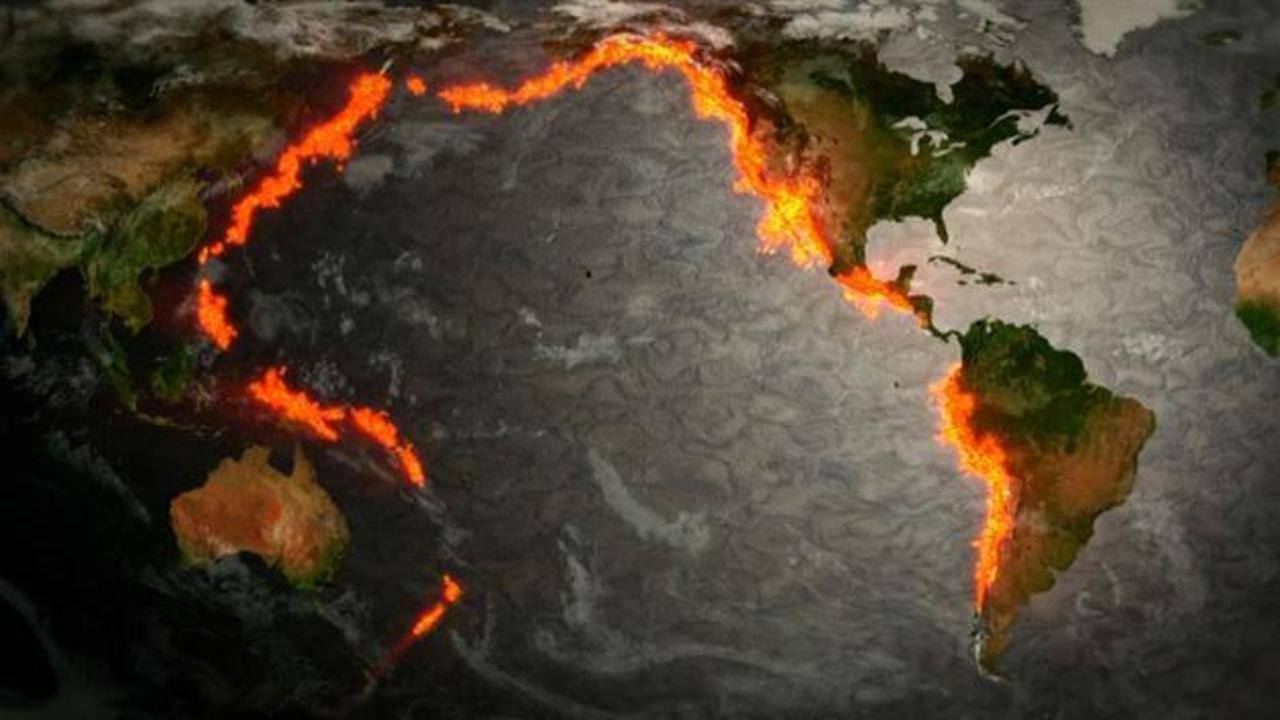
Where is the Ring of Fire located?

a)

Indian Ocean

b)

Arctic Ocean

c)

Pacific Ocean

d)

Atlantic Ocean

3.
What is molten rock that has formed deep within the Earth?
a)
Hot Spot
b)
Magma
c)
Lava
d)
Volcano
4.
As magma rises towards the surface it collects in a 'room' called a _____ _____ . 
a)
magma chamber
b)
side vent
c)
main vent
d)
lava chamber
5.
Vocanoes are found...
a)
on land
b)
under water
c)
on islands
d)
all of the above
6.
What is a volcano?
a)
A mountain that has lava all over it 
b)
A giant hill filled with magma
c)
A long high sea wave 
d)
A hole in the Earth where magma erupts
7.
Where are most volcanoes found?
a)
Southern Hemisphere
b)
Ring of Fire
c)
Mid-Atlantic Ridge
d)
Hot Spots
8.
What is the definition of dormant?
a)
sleeping
b)
extinct
c)
active
d)
invisible
9.
What are scientists that study volcanoes called?
a)
doctor
b)
vet
c)
volcanologist
d)
volcano scientist
10.
Dormant volcanoes might erupt in the future.
a)
True
b)
False
11.
The volcanoes on the Hawaiian Islands form due to which of the following?
a)
Divergent Boundary
b)
Hot Spot
c)
Subduction Boundary
d)
Transform Boundary
12.

What is a volcano?

a)

A weak spot in Earth’s crust where magma can come to the surface.

b)

A mix of rocks, minerals, gases, and water from the mantle.

c)

Hot semifluid rock that becomes solid rock as it cools off.

d)

A special kind of mountain.

13.

What is lava?

a)

A weak spot in Earth’s crust where magma can come to the surface.

b)

A mix of rocks, minerals, gases, and water from the mantle.

c)

Hot semifluid rock that becomes solid rock as it cools off.

d)

A really hot part of the mantle.

14.

Where do volcanoes typically form?

a)

At plate boundaries.

b)

In the middle of tectonic plates.

15.

What is a quiet eruption?

a)

When magma flows easily and erupts quietly with gases bubbling out gently and lava oozing out quietly.

b)

When trapped gases build up pressure until they explode with incredible force.

16.

What is an explosive eruption?

a)

When trapped gases build up pressure until they explode with incredible force.

b)

When magma flows easily and erupts quietly with gases bubbling out gently and lava oozing out quietly.

17.

What typically erupts from explosive volcanoes?

a)

Pahoehoe

b)

Aa

c)

A pyroclastic flow

18.

What is an extinct volcano?

a)

A volcano that has erupted at least once in the last 10,000 years.

b)

A volcano that hasn’t erupted in the last 10,000 years, but could still erupt.

c)

A volcano that should never erupt again.

19.

What kind of volcano is this?

a)

Stratovolcano

b)

Shield volcano

c)

Cinder cone volcano

20.

What kind of volcano is this?

a)

Stratovolcano

b)

Shield volcano

c)

Cinder cone volcano

21.

What kind of volcano is this?

a)

Stratovolcano

b)

Shield volcano

c)

Cinder cone volcano

22.

Melted rock inside the Earth is called

a)

magma.

b)

water.

c)

fire.

d)

surface.

23.
The more silica that magma contains...
a)
the thicker the magma
b)
the thinner the magma
c)
the higher the viscosity
d)
the runnier the magma
24.
Shield volcanoes have:
a)
gently sloping sides
b)
a steep cone shape
c)
moderately sized sides
d)
long cracks along plate boundaries
25.
When a volcano erupts, empties the magma chamber, and collapses the top leaving a huge hole.
a)
Dike
b)
Caldera
c)
Silica
d)
Geyser
26.
Explosive eruption that hurls ash, gases, cinders, and bombs from the main vent.
a)
Volcano bomb
b)
Geyser
c)
Geothermal energy
d)
Pyroclastic flow
27.
Magma's resistance to flow, or how thick it is, is called:
a)
silica
b)
viscosity
c)
hot spot
d)
caldera
28.
Which is NOT a property of magma from an explosive eruption?
a)
thick and sticky
b)
high viscosity
c)
high silica content
d)
thin and runny
29.
Felsic (light-colored) magma has a...
a)
Low silica content
b)
High silica content
30.
The name of a volcano that erupted in Washington State in 1980.
a)
Mt. Fuji
b)
Old Faithful
c)
Mt. St. Helens
d)
Mt. Pinatubo
31.
An opening through which the lava flows is called:
a)
crater
b)
caldera
c)
vent
d)
pipe
32.
Magma rises because it is...
a)
more dense than surrounding rock
b)
less dense than surrounding rock
33.
Mafic (dark-colored) magma has a...
a)
high silica content
b)
low silica content
34.

What event happens when there is a sudden, violent shaking of tectonic plates?

a)

earthquake

b)

volcano

c)

thunderstorm

35.

When scientists map the location of earthquakes, where do they find that most earthquakes happen?

a)

middle of tectonic plates

b)

in the core of the earth

c)

only near mountains

d)

at plate boundaries

36.

What gets released when plates move that causes the ground to shake?

a)

energy

b)

light

c)

soil

37.

What type of energy waves do earthquakes produce?

a)

sound

b)

heat

c)

light

d)

seismic

38.

What does the Moment Magnitude Scale measure?

a)

The speed of the earthquake

b)

The length of the earthquake in time

c)

The size of the earthquake in magnitude

d)

The direction of an earthquake

39.

Which wave can travel through solids, liquids, and gases?

a)

P-Waves

b)

S-Waves

c)

Surface (L) Waves

d)
40.

Which is the fastest type of seismic wave?

a)

p-waves

b)

s-waves

c)

surface waves

41.
What is a large ocean wave that results from an underwater earthquake, landslide, or volcanic eruption?
a)
Aftershock
b)
Liquefaction
c)
Seismic Gap
d)
Tsunami
42.

The place where the earthquake is felt on the Earth's surface is called the...

a)

Epicenter

b)

Hypocenter (focus)

c)

Surface

d)

Crust

43.

What is the instrument used to measure earthquakes?

a)

Seismograph

b)

Sling Psychrometer

c)

Spring Scale

d)

Balance

e)

Anemometer

44.
Which ocean in the world is also known as the "Ring of Fire"
a)
Atlantic
b)
Indian
c)
Arctic
d)
Pacific
45.
The focus of an earthquake is
a)
The point below Earth's surface where rock first breaks
b)
The closest seismic station
c)
The place where the greatest damage occurs
d)
A fault
46.
Earthquakes happen every day. Most are too small for humans to notice.
a)
True
b)
False
47.

What is the minimum number of seismograph stations needed to locate an earthquake epicenter?

a)

2

b)

3

c)

4

d)

5

e)

6

48.

Which city is closest to the epicenter?

a)

A

b)

B

c)

C

49.

S-waves can move through which of the following?

a)

Gas

b)

Liquid

c)

Solid

d)

All of these

50.

How do scientists know that the outer core is a liquid?

a)

P waves do not travel through the outer core but S waves do.

b)

S waves do not travel through the outer core but P waves do.

c)

P waves and S waves do not travel through the outer core.

d)

P waves and S waves travel through the outer core.