
 Worksheets
Rock Cycle
Total questions: 44
Worksheet time: 46mins
What Are The Three Main Types Of Rocks?
Igneous, Depository, Metamorphic
Depository, Igneous, Sedimentary
Metamorphic, Igneous, Depository
Igneous, Metamorphic, Sedimentary
How are metamorphic rocks formed?
Heating and cooling
Deposition
Heating and pressure
Materials gathering and pressing together
How are igneous rocks formed?
Sediment forming together
Heating and pressure
Cooling lava or magma
Deposition
How are sedimentary rocks formed?
Heating and pressure
compacting & cemetation
Weathering
Cooling
Rocks can turn into any other rocks?
True
False
What type of rock is formed from slow cooling magma UNDER the earth's surface?
Extrusive Igneous
Intrusive Igneous
Metamorphic
Sediment
Identify the series of geologic processes that can transform sediment into shale (sedimentary rock), shale into slate (metamorphic), and slate into magma
Cooling; Melting; Heat and Pressure
Compacting and cementing; heat and pressure; melting
Melting; heat and pressure; cooling
Weathering and erosion; compacting and cementing; cooling
Which characteristic is found only in sedimentary rocks?
Fossils
Crystals
Gas Bubbles
Glassy Surface

The Mount Rushmore National Monument is carved from the granite (formed from magma underground) of South Dakota's Black Hills. What type of rock is granite?
Igneous
Metamorphic
Sedimentary
None of the above

The seated sculpture of President Lincoln inside the Lincoln Memorial was carved out of white Georgia marble (formed from Earth's pressure and heat). What type of is marble?
Igneous
Metamorphic
Sedimentary
None of the above
Which characteristic is common to EXTRUSIVE igneous rocks?
Crystals
Fossils
Glassy surface
Ribbonlike layers
Identify the series of geologic processes that can transform magma into granite (igneous rock), granite into sand (sediment), and sand into sandstone (sedimentary rock).
Cooling; weathering and erosion; compacting and cementing
Melting; heat and pressure; cooling
Weathering and erosion; compacting and cementing;
Weathering and erosion; compacting and cementing; heat and pressure


Which type of rock is made from magma cooling inside Earth?
EXTRUSIVE igneous
INTRUSIVE igneous
metamorphic
sedimentary
Which type of rock is made from lava cooling on the surface of Earth?
EXTRUSIVE Igneous
Metamorphic
Sedimentary
INTRUSIVE Igneous


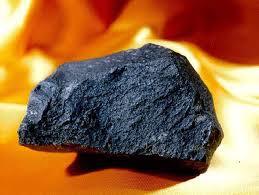
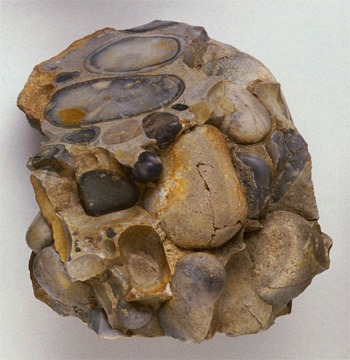
This rock was formed by smaller pieces of rock that settled at the bottom of a lake. What type of rock is this?
If a rock was exposed to 1500 degrees Celsius of heat & melted, what type of rock would it be?
Igneous
Metamorphic
Sedimentary
It would not be a type of rock; it would be magma.


Intrusive Igneous
Extrusive Igneous

Extrusive Igneous
Intrusive Igneous


Magma that reaches the surface flows from a volcano as ____________
Magma
Water
Ice
Lava

Magma trapped below the surface forms large – grained ______________ rock when it cools.
Extrusive
Metamorphic
Sedimentary
Intrusive

Magma cooling at or near Earth’s surface forms small-grained __________ igneous rock.
Extrusive
Intrusive
Sedimentary
Metamorphic

Volcanic glass rock (obsidian) __________ so quickly that few crystals form.
break
melt
cool
flow

Sometimes temperature and pressure are great enough to melt rock, forming ______________.
magma
lava
water
sandstone

Rock fragments, mineral grains, and bits of plants and animal remains moved by wind, water, ice or gravity are called _________________.
sediments
granite
marble
sandstone

If A is a metamorphic rock...then F must be
Heat and Pressure
Erosion & cementation
Melting & cooling
If F is a process of heat & pressure applied to a rock, then A must be a(n) _____________ rock.
Sedimentary
Igneous
Metamorphic
If B is a process of erosion & cementation applied to a rock, then C must be a(n) _____________ rock.
Sedimentary
Igneous
Metamorphic
If D is a process of melting & cooling applied to a rock, then E must be a(n) _____________ rock.
Sedimentary
Igneous
Metamorphic
If E is an igneous rock...then D must be
Heat and Pressure
Erosion & Cementation
Melting & cooling
If C is a sedimentary rock...then B must be
Heat and Pressure
Erosion & cementation
Melting & cooling

