
 Worksheets
GB2 Prelim Reviewer
Total questions: 48
Worksheet time: 30mins
Differentiate between xylem and phloem in terms of their structure and function.
Xylem and phloem are not involved in the transportation of any substances.
Xylem transports water and minerals, while phloem transports sugars and organic compounds.
Xylem transports sugars and organic compounds, while phloem transports water and minerals.
Xylem and phloem have the same structure and function.
How does vascular tissue contribute to the overall structure and function of a plant?
It provides structural support to the plant
It helps in the transport of water, nutrients, and sugars throughout the plant.
It is responsible for the plant's ability to perform photosynthesis
It helps in the production of flowers and fruits
What tissue type defends the plant from physical damage and pathogens?
Ground tissue
Protective tissue
Vascular tissue
Dermal tissue
Which tissue provide support and mechanical strength to the plant?
parenchyma tissue
sclerenchyma tissue
xylem tissue
collenchyma tisssue
Which layer of the leaf is responsible for gas exchange?
Palisade mesophyll
Spongy mesophyll
Epidermis
Vascular tissue
What is the tissue responsible for producing cork in woody stems?
Vascular cambium
Cork cambium
Periderm
Phellogen
What is the function of lenticels in stems?
Gas exchange
Water absorption
Food storage
Protection from mechanical injury
What is the main function of leaves in plants?
Photosynthesis
Transpiration
Food storage
All of the above
Which stem modification is used by plants for climbing?
Rhizomes
Stolons
Tendrils
Tuber
What is the primary function of roots in plants?
Anchorage
Absorption of water and minerals
Storage of nutrients
All of the above

Structures represented in the illustration presented are found in the lower epidermis of a plant leaf. The illustration at the right shows the response to a certain environmental condition.
The response represented in the illustration would most likely be caused by-
a reduced supply of oxygen
long periods of rainfall
high concentration of glucose
little available water

When the forces of cohesion and adhesion work together, water can move up the plant against the force of gravity by....
Phototropism
Geotropism
Photosynthesis
Capillary Action
The internal transport of water and minerals in plants requires that two systems work together. Which correctly describes how the two systems accomplish this task?
absorption through the root system, then transport through the shoot system by vascular tissue and stomata in leaf tissue
exchange of minerals for water in the root system, then transport of minerals through phloem to leaves in the stem system
transpiration by the guard-cell and leaf systems, then sweating into the soil by the root system
absorption of water by the leaf system, then transport through the meristematic system
Where does gas exchange occur within the plant?
Flower
Leaf
Stem
Roots
How can tuber serve as a sugar sink?
storage organ
point of delivery from source
site of sucrose manufacture
have mesophyll cells
Which of the following involve in bulk flow in sieve tube?
loading sugar into sieve tube reduce its water potential
water enter the sieve tube by osmosis
tension created by differences in pressure in the source and sink
evaporation of water and active transport of sucrose from the sink
what mechanism explains the movement of sucrose from source to sink?
tension created by the differences in pressure in the source and sink
active transport of sucrose through the sieve tube cells driven by proton pumps
the hydrolysis of starch to sucrose in the mesophyll cells that raise their water potential and drives the bulk flow of sap to the sink
osmotic movement of water into the sucrose loaded sieve tube members creating a higher pressure in the source than in the sink
Adhesion is a result of ....
hydrogen bonding between molecule of water
the pull of the water column as water evaporates from surfaces of mesophyll cells
tension within the xylem caused by negative pressure
the high surface tension of water
attraction of water molecules to hydrophilic walls of narrow xylem tubes

What is the movement of water up the stem as the water enters the roots it builds up and creates pressure which pushes water already in the stem upwards?
Root pressure
Tension-Cohesion
Active transport
Gravitational flow

The loss of water from a plant is known as..
Perspiration
Osmosis
Transpiration
Root pressure
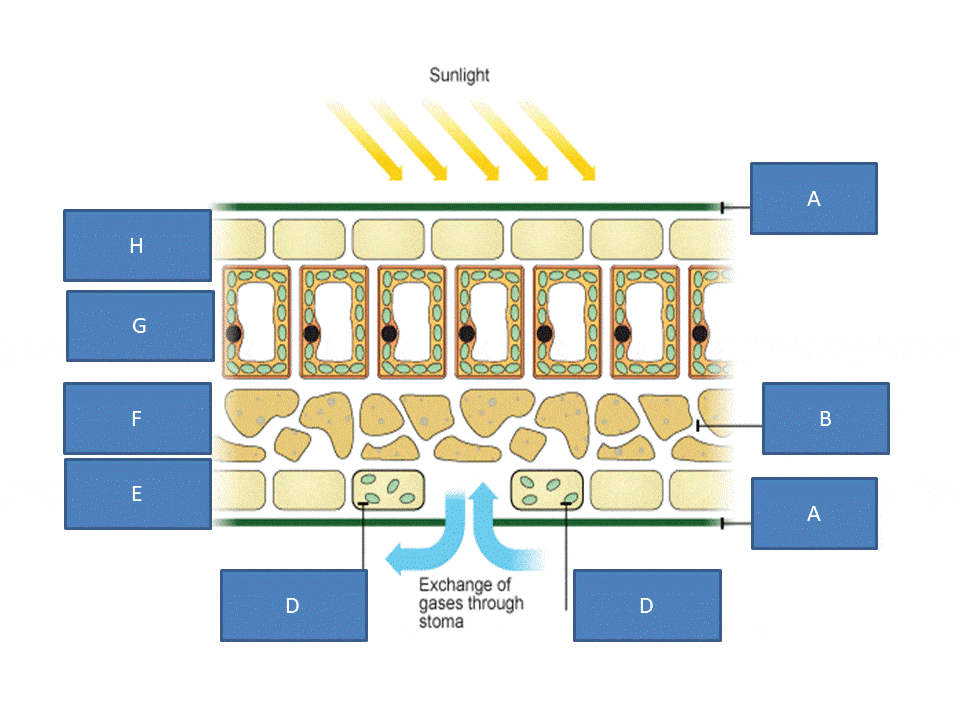
What is the name of the elongated, packed cells (part G) directly under the upper epidermis?
Palisade cells
Guard cell
Spongy layer
Lower epidermis


Which statement is true?
Leaves are the sites where oxygen is released and carbon dioxide is taken in.
Roots are the sites where oxygen is taken in and oxygen is released.
Leaves are the sites where oxygen is taken in and carbon dioxide is released.
Roots are the sites where oxygen is released and carbon dioxide is taken in.
What is the significance of meristematic tissue in plant growth and development?
Meristematic tissue has no significance in plant growth and development
Meristematic tissue is responsible for the growth and development of plants.
Meristematic tissue only affects the color of the plant
Meristematic tissue is only found in dead plants
Why are lenticels important?
They store sugar
They help regulate gas exchange
They are not important
They absorb nutrients
How can buds be arranged?
Opposite, Whorled, and Alternate
Alternate, Whorled, and Simple
Whorled, Simple, and Compound
Simple, Compound, and Opposite
What is the junction of the stem and petiole called?
Node
Internode
Stem
Axillary Bud
What is the correct term for the large section of the leaf where photosynthesis occurs?
Leaf Blade
Petiole
Node
Leaf
Which part is where flowers or stems come from, and is found throughout the plant?
Axillary Bud
Node
Internode
Petiole
What part of the plant is the main support and anchor and helps absorb water?
Tap Root
Lateral Roots
Root Hairs
Stem
Which is a description of translocation?
movement of amino acids and sucrose from sink to source
movement of amino acids and sucrose from source to sink
movement of water down a water potential gradient
movement of water up a water potential gradient

The diagram shows a potted plant and the same plant 24 hours later.
What causes the change in the appearance of the plant?
Water loss is greater than water uptake.
Water moves from the leaves to the stem.
Water uptake is equal to water loss.
Water uptake is greater than water loss.

This picture shows a leaf from my lemon tree. Which layers make the structure of to this side of the leaf?
Lower epidermis and stomata
Palisade mesophyll and waxy cuticle
Waxy cuticle and upper epidermis
Spongy mesophyll and veins
The stomata are openings in the leaf which allow for gas exchange. Which cells found either side of the opening control the stomata?
Guard cell
Palisade cell
Spongy mesophyll
Which part of the leaf contains the majority of the plant's chloroplasts and does most of the photosynthesis?
Stomata
Guard Cells
Mesophyll Cells
Cuticule

The table shows four substances and the parts of the plant to which they are transported.
Which are examples of translocation?
1
2
3
4
1. Water diffuses into the sieve tubes.
2. Leaf cells produce sugar by photosynthesis.
3. Solutes are actively transported into sieve tubes.
4. Sugar is transported from cell to cell in the leaf.
5. Sugar moves down the stem.
What does the plant need nitrate for?
For the production of chlorophyll
For the production of amino acids
For the production of glucose
For the production of starch
What does the plant need magnesium for?
For the production of chlorophyll
For the production of amino acids
For the production of glucose
For the production of starch
the roots that act like pillars to support the plant are known as
taproots
roots
climbing roots
prop roots

Which of the following root adaptation is shown on the picture?
Epiphytes
Haustoria
Prop root
Pneumatophore
In desert plants, rate of water loss gets reduced due to the presence of
cuticle
stomata
lignin
suberin
Find out incorrect sentence.
Parenchymatous tissues have intercellular spaces
Collenchymatous tissues are irregularly thickened at corners
Apical and intercalary meristems are permanent tissues
Meristematic tissues, in its early stage, lack vacuoles

The diagram represents
Osmosis of water through the root hair cells
Intake of Ions and Oxygen through the root hair cells
Diffusion of water through the root hair cells
Uptake of minerals and food from the root hair cells

Which of the following nutrients deficiency can cause this effect?
Phosphorus
Magnesium
Nitrogen
Calcium

Which of the following nutrient deficiency can cause this problem?
Phosphorus
Nickel
Chlorine
Sulphur

