Wayground logo

Free Printable Worksheets

Font size

S
M
L
XL
Worksheets

Bellringers for middle school science

Total questions: 86

Worksheet time: 1hrs 16mins

Name
Class
Date
1.
The powerhouse of the cell is the...It converts energy from food into energy the cell can use
a)
Mitochondrion
b)
Golgi body
c)
Nucleus
d)
Ribosomes
2.
The powerhouse of the cell is the...It converts energy from food into energy the cell can use
a)
Mitochondrion
b)
Golgi body
c)
Nucleus
d)
Ribosomes
3.
What organelle do plants have surrounding their cells that animal cells lack?
a)
Cell Wall
b)
Woody Stems
c)
Sharp thorns
d)
Cell Membrane
4.
Which is a conductor?
a)
wool sweater
b)
aluminum foil
c)
oven mitt
d)
wooden spoon
5.
Solids have a definite _______________.
a)
smell
b)
shape
c)
picture
d)
sound
6.
________________ is anything that has mass and takes up space.
a)
volume
b)
matter
c)
mass
d)
weight
7.
Texture, color, states of matter, flexibility, freezing & melting points
a)
Chemical Properties
b)
Physical Properties
c)
States of Mass
d)
Scientific matterology
8.
Which of the following is an example of physical change?
a)
an ice cream melts due to heat
b)
food digestion in stomach
c)
rusting of iron due to water exposure
d)
dynamite ignition
9.
__________ are the building blocks of life.
a)
solids
b)
gases
c)
atoms
d)
nutrients
10.
Volume is ______________.
a)
length X width
b)
height X length
c)
length X width X height
d)
width X height
11.
Something that takes up space and has mass.
a)
volume
b)
matter
c)
mass
d)
density
12.

Which is the correct order of the levels of organization from smallest and most simple to largerst and most complex?

a)

cell, organ, tissue, organ system

b)

cell, tissue, organ system, organ

c)

cell, tissue, organ, organ system

d)

cell, organ system, organ, tissue

13.

The function of the nervous system is to? What is the main organ it includes?

a)

Break down food. stomach

b)

Help the body move. muscles

c)

Send and receive messages. brain

d)

Pump blood around the body. heart

14.

The function of the digestive system is to? What is the main organ it includes?

a)

Break down food. stomach

b)

Help the body move. muscles

c)

Send and receive messages. brain

d)

Pump blood around the body. heart

15.

The function of the respiratory system is to? What is the main organ it includes?

a)

Bring in oxygen, and remove carbon dioxide. lungs

b)

Remove waste. kidneys

c)

Send and receive messages. brain

d)

Pump blood around the body. heart

16.

What does the skeletal system do?

a)

Allow us to move and give structure to the body

b)

Make us strong

c)

digest our food

d)

Turn oxygen into carbon dioxide

17.

Which two body systems work together to allow you to move? (Choose two)

a)

Digestive System

b)

Excretory System

c)

Muscular System

d)

Skeletal System

18.

Which two body systems work together to transport oxygen throughout the body?

a)

Digestive System

b)

Respiratory System

c)

Excretory System

d)

Circulatory System

19.

Which type of energy is both potential and kinetic combined?

a)

Thermal

b)

Mechanical

c)

Gravitational

d)

Chemical

20.
Three different objects that use the same source of energy are shown. What is the energy source for these objects?
a)
Light energy
b)
Mechanical energy
c)
Sound energy
d)
Electrical energy
21.

Light travels

a)

around corners

b)

in a straight line (transverse waves)

c)

in loops, like a slinky (longitudinal waves)

22.

Light bounces when it strikes a smooth and/or lustrous surface

a)

reflected

b)

absorbed

c)

refracted

23.
What is a wave?
a)
A disturbance that transfers energy from place to place
b)
The ability to do work
c)
What we see when specific light reflects off of an object
d)
The range of visible color
24.
What is color?
a)
A disturbance that transfers energy from place to place
b)
The ability to do work
c)
What we see when specific light reflects off of an object
d)
The range of visible color
25.
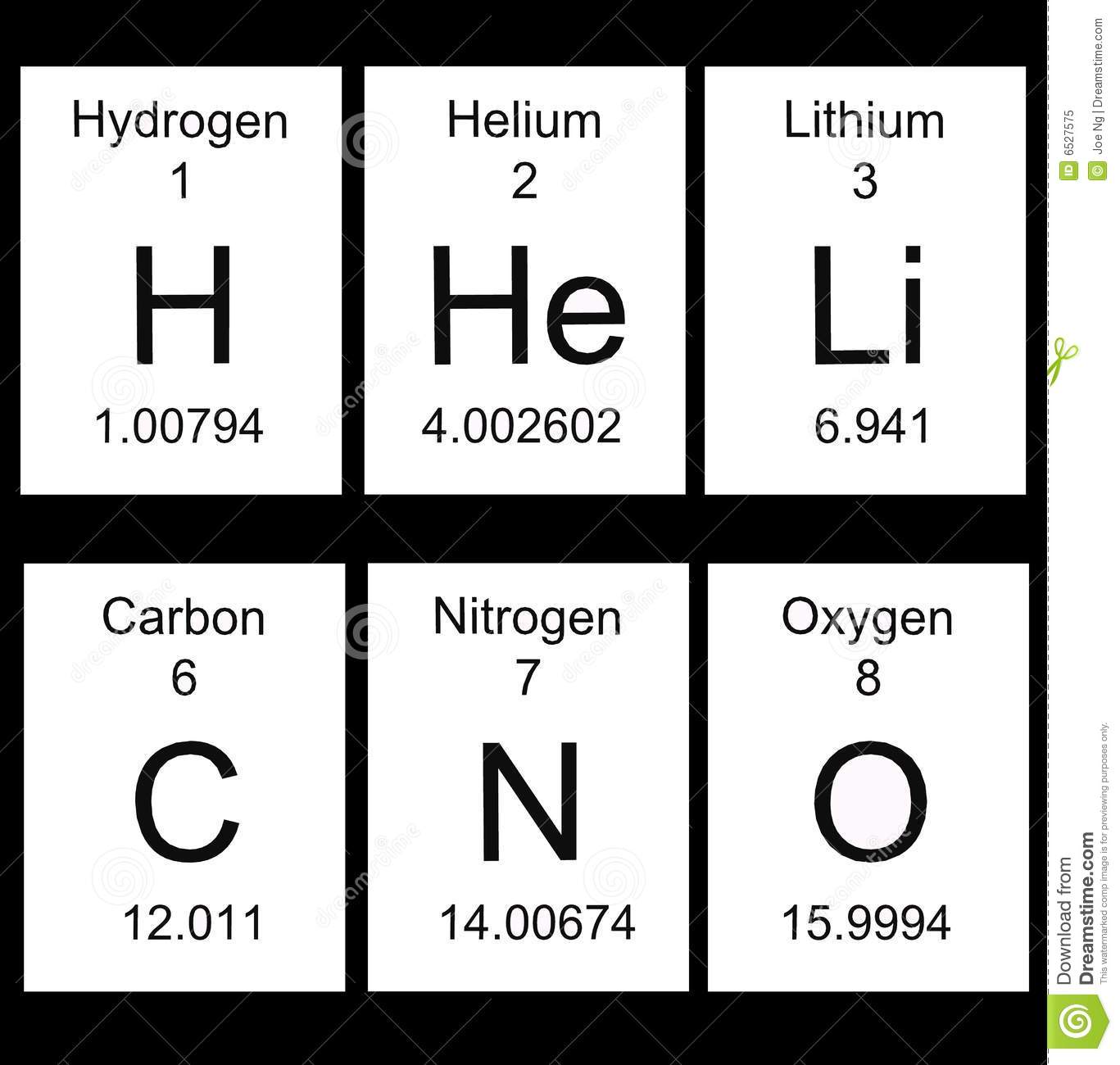
The number at the bottom of each square on the periodic table is the ...
a)
atomic number
b)
atomic mass
c)
chemical symbol
d)
element name
26.

Students in Mrs. Clark's science class are investigating a substance that has the following properties

-shiny

-bends easily

-hard, not easily broken


Based on these properties how would you classify the substance?

a)

metal

b)

nonmetal

c)

metalloid

27.
How many protons are in this element?
a)
79
b)
196
c)
117
d)
Cannot be determined
28.

the positively charged subatomic particle contained in the nucleus of an atom

a)

proton

b)

neutron

c)

electron

d)

matter

29.

a subatomic particle, contained in the nucleus of an atom, having the same mass as a proton but no electrical charge

a)

proton

b)

neutron

c)

electron

d)

matter

30.
These are found on the Periodic Table.
a)
Compounds
b)
Elements
c)
Mixtures
31.

Given the Punnett square for the traits of rounded seeds (dominant R) and wrinkled seeds (recessive r), what is the probability that an offspring will have rounded seeds?

a)

0

b)

14\frac{1}{4}

c)

12\frac{1}{2}

d)

34\frac{3}{4}

e)

1

32.

Polar bears live in the Northern Hemisphere and need a large amount of Arctic ice to hunt.


Which of the following is most likely to occur if the amount of Arctic ice in polar regions decreases significantly over a short period of time?

a)

Polar bears will migrate to the South.

b)

Polar bears will become extinct.

c)

Polar bears will develop a larger body size.

d)

Polar bears will adapt to water environments.

33.
The nucleus is like the ____________ of the cell.
a)
foot
b)
hand
c)
stomach
d)
brain
34.
A cell is...
a)
the basic unit of structure and function in living organism
b)
an organism
c)
a basic part of everything that we see
d)
found only in animals, not plants
35.
A cell is...
a)
the basic unit of structure and function in living organism
b)
an organism
c)
a basic part of everything that we see
d)
found only in animals, not plants
36.

Which of the following converts food into energy for the cell?

a)

vacuole

b)

mitochondria

c)

cytoplasm

d)

cell membrane

37.
What do vacuoles do? 
a)
They actually do not have an important role
b)
They protect the cell
c)
They are the brain of the cell
d)
storage area for cells; water storage in plants 
38.

Where does the food chain START?

a)

with consumers that eat grass

b)

with the sun giving energy to producers

c)

with the sun giving energy to consumers

d)

with consumers eating other consumers

39.

Breaks down and feeds on the remains of other organisms

a)

decomposer

b)

consumer

c)

producer

40.

Which of the following is not part of the classification community?

a)

Fox

b)

Tree

c)

Sun

d)

Bear

41.
The place where an organism lives is its _________.
a)
habitat
b)
abiotic
c)
ecosystem
d)
community
42.
The ______ is the layer of the Earth under the crust.
a)
core
b)
mantle
c)
magma
d)
none of the above
43.
This type of plate boundary is when two plates slide past each other.
a)
Convergent
b)
Transform
c)
Divergent
d)
Subductive
44.
When plates converge and form mountains, scientists call it _______.
a)
Uplift
b)
Subduction
c)
Elevation
d)
None of the above
45.
This scientist built most of the evidence for continental drift.
a)
Alfred Wegener
b)
Sean Carroll
c)
Fred Calfred
d)
John Williams
46.

Which is the correct order of the levels of organization from smallest and most simple to largerst and most complex?

a)

cell, organ, tissue, organ system

b)

cell, tissue, organ system, organ

c)

cell, tissue, organ, organ system

d)

cell, organ system, organ, tissue

47.
Number of H in 3(NH₄)₂CrO₄
a)
4
b)
2
c)
8
d)
24
48.
Nonrenewable energy source formed from remains of living organisms, , which cause pollution ( coal, natural gas, petroleum) 
a)
Fossil Fuel 
b)
Rocket fuel 
c)
Renewable Energy 
d)
Sugar
49.
Fossil fuel consisting of methane that occurs naturally underground
a)
Coal 
b)
Natural Gas
c)
Nuclear 
d)
Petroleum 
50.
The process by which carbon dioxide and water are converted into glucose(sugar) by plants, algae, and certain bacteria; uses sunlight energy to produce nutrients
a)
Respiration 
b)
Conservation 
c)
Photosynthesis 
51.
What do you call those organisms that feed on dead plants and animals? An example of these are mushrooms
a)
Bacteria
b)
Grass
c)
Virus
d)
Fungi
52.
When a plant is eaten by a caterpillar and the caterpillar is eaten by a frog, the frog belongs to
a)
Producer
b)
Primary consumer
c)
Secondary consumer
d)
Tertiary consumer
53.
Captures energy from the sunlight and uses it to produce food in a plant cell
a)
Chloroplast
b)
Ribosomes
c)
Nucleus
d)
Cell Wall
54.
Stores food, water, wastes, and other materials.
a)
Vacuoles
b)
Mitochondria
c)
Chloroplasts
d)
Golgi Bodies
55.

What are two major differences found in plant and animal cells?

a)

Plant cells have a cell wall and chloroplasts, while animal cells do not.

b)

Plant cells have a nucleus and vacuoles, while animal cells do not.

c)

Plant cells have no mitochondria or cytoplasm, while animal cells do.

d)

They are the same.

56.

Organisms made of one cell are known as

a)

multicellular

b)

unicellular

c)

epithelial

d)

epidermal

57.

What are the cell parts or structures inside the cell called?

a)

tissues

b)

muscles

c)

organs

d)

organelles

58.

The factor in an experiment who's value will change depending on the independent variable.

a)

dependent variable

b)

independent variable

c)

controlled variable

d)

inferences

59.
The factor in an experiment that will be changed. 
a)
dependent variable
b)
independent variable
c)
controlled variable
d)
inferences 
60.

Fossils could provide evidence for....

a)

relationships between past organisms and current organisms

b)

past organisms only

c)

current organisms only

61.

A scientist finds footprints in a fossilized stream bed. This is a ________.

a)

carbon film

b)

mineral replacement

c)

cast fossil

d)

trace fossil

62.
When __________ form, the elements lose there individual chemical properties and take on new properties.
a)
compounds
b)
atoms
c)
subscript
d)
formula
63.
How many carbon atoms are there in a methane molecule? 
a)
0
b)
1
c)
4
d)
5
64.

What is a Biotic factor?

a)

A living thing (Ex: Water, Soil, etc.)

b)

A living thing (Ex: Trees, Birds, etc.)

c)

A Non-living thing (Ex: Grass, Animals, etc.)

d)

A Non-living thing (Ex: Rocks, Rain, etc.)

65.

What is an abiotic factor?

a)

A living thing (Ex: Water, Soil, etc.)

b)

A Non-living thing (Ex: Grass, Animals, etc.)

c)

A living thing (Ex: Trees, Birds, etc.)

d)

A Non-living thing (Ex: Rocks, Rain, etc.)

66.
When a plant is eaten by a caterpillar and the caterpillar is eaten by a frog, and the frog is eaten by a snake, the snake belongs to
a)
Producer
b)
Primary consumer
c)
Secondary consumer
d)
Tertiary consumer
67.
These are different groups of organisms that belong to the same species (Example: rats, rabbits, snakes)
a)
Population
b)
Community
c)
Producers
d)
Consumers
68.

What is the name of the flexible structure that holds a cell together and controls what enters and leaves the cell?

a)

cell membrane

b)

cell wall

c)

nucleus

d)

mitochondria

69.

What type of organism has specialized cells that perform specific functions?

a)

multicellular

b)

unicellular

c)

single-celled

d)

bacteria

70.
Earth and the other planets closest to the Sun are made mostly of _______
a)
gas
b)
metal
c)
water
d)
rock
71.
One full orbit of an object around another object is called a ________.
a)
axis
b)
rotation
c)
revolution
d)
satellite
72.

This diagram represents...

a)

An element

b)

A molecule

c)

A compound

d)

A mixture of elements and compounds

73.
What is digestion?
a)
Physical property
b)
Chemical change
c)
Physical change
d)
Chemical property
74.

In which organelle does cellular respiration take place?

a)

mitochondria

b)

nucleus

c)

chloroplast

d)

ribosomes

75.

Which organelle contains heredity material known as chromosomes, and is the control center of the cell?

a)

nucleus

b)

mitochondria

c)

chloroplast

d)

cell membrane

76.

If Salem ran at the speed of 13 km/h for 1.5 hours. He continued to run for 2.5 hours at a speed of 10 km/h. How long did Salem run?

a)

44.5 km

b)

40.6 km

c)

35.5 km

d)

51.9 km

77.

If Abdulla ran at the speed of 15 km/h for 2.5 hours. He continued to run for 1.5 hours at a speed of 9 km/h. How long did Abdulla run?

a)

51 km

b)

45 km

c)

35 km

d)

60 km

78.

If Tameem walked 30 km at a speed of 10 km/h. How long did Tameem walk?

a)

3 hours

b)

3 km

c)

3 km/h

d)

3 h/km

79.

Which of the following diagrams correctly identifies the different parts of the wave?

a)
b)
c)
d)
80.

Given the Punnett square for the traits of rounded seeds (dominant R) and wrinkled seeds (recessive r), what is the probability that an offspring will have rounded seeds?

a)

0

b)

14\frac{1}{4}

c)

12\frac{1}{2}

d)

34\frac{3}{4}

e)

1

81.

What moon phase is this?

a)

1st Quarter

b)

3rd Quarter

c)

Waning Gibbous

d)

Waxing Gibbous

82.

Letting go of a balloon full of air is demonstrating Newton's ______ _______ ________ _________ because the air comes out of the back and the balloon moves forward.

a)

1st law of motion

b)

2nd law of motion

c)

3rd law of motion

d)

13th law of motion

83.

Which of the following lists the materials in order from least dense to most dense?

a)

Glass - Wood - Rubber

b)

Glass - Rubber - Wood

c)

Rubber - Glass - Wood

d)

Wood - Rubber - Glass

84.

A plant (Rr) is crossed with a plant (rr). Which Punnett square correctly shows this cross?

a)
b)
c)
d)
85.
The volume of water in a graduated cylinder in 12 mL. A marble is dropped in & the volume raises to 15 mL. What is the volume of the marble?
a)
3 mL
b)
12 mL
c)
15 mL
d)
27 mL
86.
A community of living and nonliving things in their natural environment makes up a(n)_______________
a)
food web
b)
ecosystem
c)
food chain
d)
carbon cycle