
 Worksheets
6th Benchmark 2 Review
Total questions: 90
Worksheet time: 30mins
What is energy?
something that picks up things, like a magnet.
Motion of an object
ability to do work
magic rays of sunshine that come down when you're feeling blue.
The change in an object’s position with respect to time and in comparison to the position of other objects used as reference points.
motion
speed
velocity
acceleration
the measurement of the force of gravity on an object
mass
speed
weight
motion
speed with a direction
motion
velocity
acceleration
distance
The rate of change of position (or distance traveled) with respect to time
acceleration
motion
density
speed
The amount of matter in a given space or volume; it is a relationship between mass and volume.
joule
volume
weight
density
speed up, slow down, change direction
speed
motion
movement
acceleration
At the top of the highest point/peak on a roller coaster, how is the energy split between potential and kinetic energy?
100% PE, 0% KE
0% PE, 100% KE
50% PE, 50% KE
25% PE, 75% KE
The amount of matter present in an object:
Weight
Speed
Distance
Mass
Directly proportional means:
As one decreases the other decreases
As one increases the other decreases
As one increases the other increases
No change in either variable
A soccer ball is rolling down a hill. At which point is it experiencing the most kinetic energy?
At the top of the hill
Halfway down the hill
At the bottom of the hill
The kinetic energy level is the same the whole time

Which of the following statements is correct?
The car has less kinetic energy because it has more mass than the girl.
The car has the most kinetic energy because it has more mass than the girl.
The car and the girl have the same amount of kinetic energy because they are moving at the same speed.
The girl has the most kinetic energy because she has less mass than the car.
A book has a mass of 5 grams. Another book has a mass of 10 grams. Which book will take more force to move?
the book that weighs 5 grams
the book that weighs 10 grams
They will both take the same amount of force to move.

What can you say about the potential energy of the two sleds shown above?
Sled B has more potential energy.
There is not enough information to know which sled has more potential energy.
The two sleds have the same potential energy.
Sled A has more potential energy.
Why does a soccer ball eventually stop rolling once it’s kicked on a grassy field?
none of these
Gravity acts upon it.
Light acts upon it.
Friction acts upon it.

Car 1 and Car 2 have the same mass. Which of the following statements is true?
Car 1 has the most kinetic energy because it is moving at a faster rate of speed.
Car 2 has the least amount of kinetic energy because it is actually smaller than car one.
Car 2 has the most kinetic energy because it is moving at a slower rate of speed.
Car 1 has the least amount of kinetic energy because it is moving at a faster rate of speed.
Which of the following is a correct statement?
Both the mass and speed of an object affect the amount of kinetic energy it will have.
Only the speed of an object affects the amount of kinetic energy it will have.
Only the mass of an object affects the amount of kinetic energy it will have.
Neither the mass nor speed of an object affects the amount of kinetic energy; only the height of the object.

How could you increase the number of snowmen destroyed by the sled sliding down the hill?
Increase the starting kinetic energy of the sled.
Increase the mass of the sled.
all of the above
Increase the starting height of the sled.
What is potential energy?
The energy an object has due to its atomic structure.
The energy an object has due to its chemical composition.
The energy an object has due to its motion.
The energy an object has due to its position or condition.
When does an object have no kinetic energy?
When it's at rest.
When it's moving very slowly.
When the only force that's acting on it is gravity.
When it has no electrical charge.
Which object has the most potential energy?
A ball resting on the ground.
A ball being thrown at 100 miles per hour.
A ball on top of a refrigerator.
A ball resting on the edge of a cliff.
When does a yo-yo have the most potential energy?
When it's at its highest point.
When it's at its lowest point.
When it's moving between its highest and lowest points.
When it's moving at its top speed.
When is potential energy transformed into kinetic energy?
When an object at rest is lifted to a higher elevation.
When an object at rest remains at rest.
When an object at rest is put into motion.
When an object in motion is stopped and put at rest.

Four cars are positioned at the top of a hill. Which car has the most potential energy?
A
B
C
D
Which is the best synonym for potential energy?
Stored energy
Energy of motion
Energy due to gravity
Mechanical energy
Why do objects at high elevations have more potential energy than objects at low elevations?
Because the thinner air at higher elevations means objects have a greater potential to move very fast
Because objects at high elevations are closer to the sun, which is the source of all energy on earth
Because objects at high elevations tend to move slower than objects at low elevations
Because gravity gives objects at high elevations the potential to fall much further
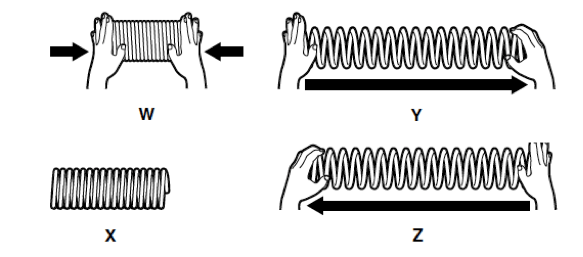
Elastic potential energy is energy stored in an object, such as a spring, due to the object being stretched or compressed. In which position is it most likely that the spring has lost its elastic potential energy?
W
Y
X
Z
Energy stored because of gravity is called:
Gravitational Potential Energy
Kinetic Energy
Mechanical Advantage
Chemical Energy
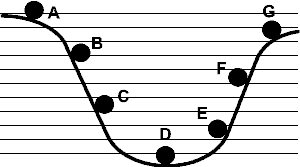
At which point does the ball has the greatest gravitational potential energy (GPE)?
A
G
D
C
G
Which would have the LEAST gravitational potential energy (GPE)?
A ball sitting on the ground
Moon viewed from the Earth
An airplane flying 30,000 feet above the ground
A rock sitting on top of Mt. Everest
How could you increase the gravitational potential energy of an object without changing its mass and gravity?
Make the object larger
Lower the object towards the ground
Raise the object farther off the ground
Allow the object to roll on the ground
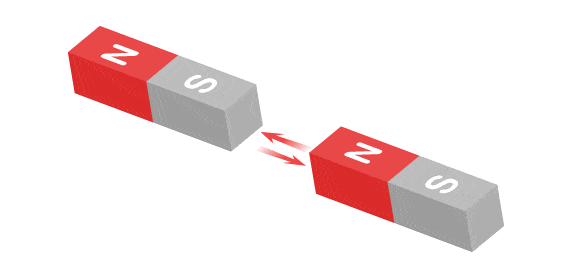

Which picture is NOT an example of Chemical PE?
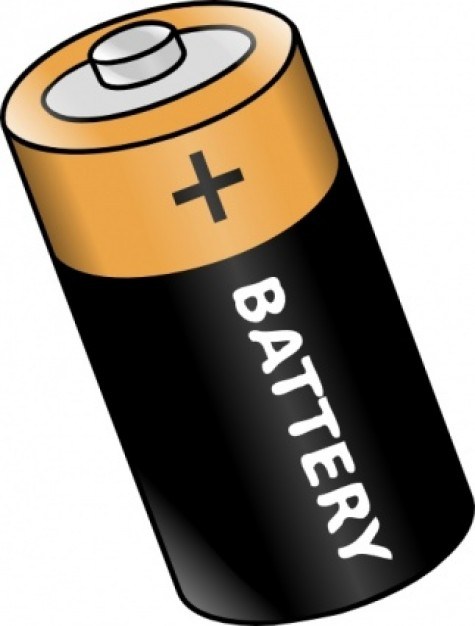


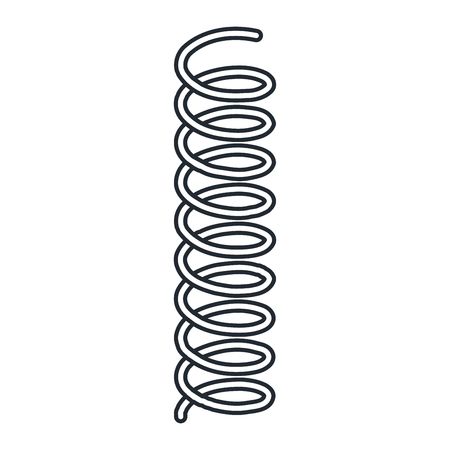
Which piece of evidence BEST represents Chemical PE being released?
a rubber band flung a far distance
an apple falling from a tree
2 magnets repelling
water temperature increasing
What is potential energy?
The energy an object has due to its position or condition.
The energy an object has due to its motion.
The energy an object has due to its chemical composition.
The energy as object has due to its atomic structure.

All of the pictures are examples of what type of energy?
gravitational potential energy
elastic potential energy
chemical potential energy
kinetic potential energy
Gravitational potential energy depends on which two factors?
mass and height above the ground
distance and speed
speed and height above the ground
mass and speed

You throw a ball into the air as shown in the diagram. At what point does the ball have the most potential energy?
W
X
Y
Z

At which position does the child on the swing have the most gravitational potential energy?
W
X
Y
Z


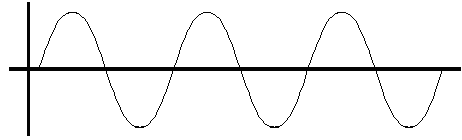
The highest point of a transverse wave.
crest
trough
compression
rarefaction
The lowest point of a transverse wave.
crest
trough
compression
rarefaction


What are the TWO main types of waves?
Ocean
Electromagnetic
Sound
Mechanical
Transmitted
A rhythmic disturbance that moves through a medium or vacuum
The material through which the wave travels
When something is passed from one place to another
The pattern of disturbance caused by the movement of energy traveling through a medium such as air, water, or any other liquid or solid matter
A rhythmic disturbance that moves through a medium or vacuum
Wave
Medium
Transmitted
Sound wave
A wave that is carried by vibrations through a physical medium
Sound wave
Medium
Mechanical wave
Wave
Sound is an example of a(n) –
Radio wave
Mechanical wave
Electromagnetic wave
Infrared wave
Soundproof rooms have the ability to –
Absorb electromagnetic waves
Allow any sound to be heard
Absorb sound
Transmit sound
Typically, sound will travel fastest in a –
Liquid
Plasma
Gas
Solid
What is it called when sound waves bounce off a solid surface and return back to the source?
Reflection
Absorption
Refraction
Transmission
Why can’t explosions in space be heard?
Space is a vacuum; no matter is present.
The sound waves bounce back and forth until they lose energy.
The sound waves gain too much energy.
Particles in space absorb the sound waves.
The material through which the wave travels
Wave
Transmitted
Mechanical wave
Medium
The pattern of disturbance caused by the movement of energy traveling through a medium such as air, water, or any other liquid or solid matter
Transmitted
Sound wave
Wave
Medium
Which of the following provides an example of sound waves being reflected?
Water in a glass vibrating because of the sound of thunder
The sound of a distant train getting louder as it approaches an observer
A noise that produces an echo when it bounces off a distant wall
Hearing music being played by a neighbors stereo through a wall

A ringing bell makes noise inside a glass jar. Then the air is removed from the glass jar using a vacuum pump. When all of the air leaves the jar, the sound of the ringing bell can no longer be heard. Which of the following best explains why the students can no longer hear the bell?
The air in the jar provides a medium for the sound to travel through.
The difference in pressure inside and outside the glass jar is too great.
The sound in the empty jar is reflected off the inside of the glass sides.
Removing the air from the jar allows the bell to ring only very softly.
What allows more transmission?
thin materials or metal
thick or nonmetal mediums
neither of these
Which of these do not need a medium to travel through?
sound
sunlight
mechanical waves
all of these
Music studios use “soundproof" recording rooms. The walls of these rooms are designed in such a way that the only sounds that reach the microphones inside the room are sounds from inside the room. The most important characteristic in designing the soundproof room is to create walls that–
allow sounds to move easily from one place to another
reflect sounds around the room to alter their properties.
absorb sounds and prevent them from passing through.
allow communication between people inside and outside the room.
What does the speed of sound depend on?
the type of wave
the medium
law of reflection
transmission

Geologists can learn about rock layers beneath the surface of Earth using sound waves. They use a vibration truck to send sound waves into the ground. A measuring truck has special microphones, called geophones, that pick up sounds.This method for learning about rock layers depends on what characteristic of sound waves?
Sound waves can travel for an unlimited distance from the source that creates them.
Sound waves are absorbed by dense solids and reflect off liquids.
Sound waves can travel through and reflect off rock layers.
Sound waves require energy, such as electricity to generate them.
Why aren't astronauts able to hear a landslide on the moon?
air molecules on the moon are too far apart to carry sound.
intensive sunlight destroys sound waves.
the lunar dust deadens sounds.
the magnetic field of the moon is too weak to carry sound.
Radio waves, x-rays, and visible light are examples electromagnetic waves that always differ from each other in
wavelength.
temperature.
intensity.
amplitude.
Why can’t explosions in space be heard?
space is a vacuum; no matter is present
particles in space absorb the sound waves
the sound waves gain too much energy
the sound waves bounce back and forth till they lose energy
Which of the following would cause a change in the speed of a mechanical wave?
the wave being made by a smaller vibration
the wave moving from a solid to a gas
the wave moving through a liquid
the wave being made by a larger vibration
Which of the following diagrams represents the refraction of waves?


Which surface would reflect sound more clearly?
concrete
sandpaper
carpet
glass
Which surface would absorb sound best?
concrete
sandpaper
carpet
glass
Which best explains the relationship between the speed of sound and the medium through which it passes?
Sound travels faster in air because of the decreased distance between air particles.
Sound travels slower in solids because of the decreased distance between solid particles.
Sound travels faster in solids because of the increased distance between solid particles.
Sound travels slower in air because of the increased distance between air particles.

For the soilds listed in the data table, which seems to be true about the relationship between the speed of sound and density?
There is no apparent relationship between density and the speed of sound.
The speed of sound decreases as density increases.
The speed of sound increases as density decreases.
The speed of sound increases as density increases.

