wayground logo

Free Printable Worksheets

Font size

S
M
L
XL
Worksheets

Unit 11 Cells - Review

Total questions: 87

Worksheet time: 2hrs 33mins
Name
Class
Date
1.
Which of the following statements is not part of the cell theory?
a)
Cells are the basic unit of structure and function in all living things.
b)
All cells are produced from other cells.
c)
Only animal cells are composed of cells.
d)
All living things are composed of cells.
2.
The invention of the microscope made it possible for people to discover and learn about
a)
Plants
b)
Skin 
c)
Animals 
d)
Cells
3.
What is one way in which all living things on Earth are alike?
a)
All living things have hair.
b)
All living things are made of cells and come from other cells.
c)
The cells of all living things have chloroplast.
d)
All living things can move. 
4.

When cells are damaged, new cells are created by cell a process called cell division. How does the cell theory support this fact?

a)

It states that all cells have a nucleus which divides.

b)

It states that all living things are made up of one or more cells.

c)

It states that cells come from previously existing cells.

d)

It states that the basic units of structure and function are cells.

5.
The ___ is the basic unit of sturucture and function of organisms
a)
atom
b)
cell
c)
matter
d)
all other answers are correct
6.
Which statement is a part of the cell theory?
a)
all cells come from preexisting cells
b)
bacteria are prokaryotic cells
c)
eukaryotic cells are complex
d)
humans are multicellular
7.
The ___ is the basic unit of sturucture and function of organisms
a)
atom
b)
cell
c)
matter
d)
all other answers are correct
8.
Which of the following is NOT a cell theory.
a)
All non-living things are made of cells
b)
All cells come from pre-existing cells
c)
Cells are the basic unit of structure and function of all living things
9.
Rocks are not living because
a)
they never move
b)
they aren't needed for humans
c)
they are not made of cells
d)
they don't break down
10.
Which of the following statements is not part of the cell theory?
a)
Cells are the basic unit of structure and function in all living things.
b)
All cells are produced from other cells.
c)
Only animal cells are composed of cells.
d)
All living things are composed of cells.
11.

All living things are made up of

a)

Prokaryotic Cell

b)

Eukarytoic Cells

c)

Either prokaryotic or eukaryotic cells

12.

Which organelle contains DNA and controls the cell?

a)

Cell membrane

b)

nucleus

c)

nucleolus

d)

lysosme

13.

Which organelle controls what goes in and out of the cell?

a)

nucleus

b)

nucleolus

c)

cell membrane

d)

nuclear membrane

14.

The gelatinous material inside the cell

a)

ribosomes

b)

lysosome

c)

granum

d)

cytoplasm

15.

This pigment is found in chloroplasts.

a)

rhodopsin

b)

chlorophyll

c)

thylakoid

d)

stroma

16.

Proteins are produced at this organelle.

a)

golgi body

b)

ribosome

c)

cytoskeleton

d)

cilia

17.

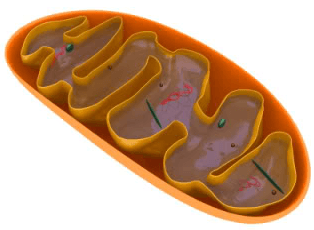
this organelle makes ATP.

a)

chloroplast

b)

mitochondria

c)

ribosome

d)

nucleolus

18.

The pigment found in chloroplasts.

a)

chlorophyll

b)

green

c)

starch

d)

cellulose

19.
This organelle takes food and turns it into ENERGY for plant and animal cells.
a)
Chloroplast
b)
Mitochondria
c)
Lysosome
d)
Ribosome
20.
Which part of the cell is often called "the brain of the cell"?
a)
nuclear membrane
b)
endoplasmic reticulum
c)
nucleus
d)
mitochondria
21.
I am the outer most layer of an animal cell. What am I?
a)
cell wall
b)
nucleus
c)
cell membrane 
d)
cell skin
22.
A rigid layer that lies outside the cell's  membrane is...
a)
Cytoskeleton
b)
Cilia
c)
Cell Wall
d)
Flagella
23.
What organelle is called the "powerhouse" of a cell?

a)
Endoplasmic Reticulum
b)
Nucleus
c)
Mitochondria
d)
Nucleolus
24.
I am only found in a plant cell. What am I?
a)
cell wall
b)
mitochondria
c)
cytoplasm
d)
chloroplast
25.
Consists of a jellylike substance that contains many organelles.
a)
ribosomes
b)
cytoplasm
c)
chloroplasts
d)
cell wall
26.
Which organelle uses energy from sunlight to make sugar?
a)
mitochondria
b)
nucleus
c)
chloroplasts
d)
vacuoles
27.
Controls what enters/leaves a cell
a)
cell membrane
b)
Nuclear membrane
c)
cell wall
d)
cytoplasm
28.
hold/store water, mainly found in plant cells
a)
nuclolus
b)
ribosomes
c)
golgi bodies
d)
vacuoles
29.
jello-like material, fills the space between cell organelles, is where many chemical reactions occur
a)
cytoplasm
b)
chromatin
c)
chloroplast
d)
cell membrane
30.
Converts food into usable energy for the cell
a)
Mitochondria
b)
Chloroplast
c)
Nucleus
d)
Vacuole
31.
Provides structure and support for plant cells.
a)
Cell membrane
b)
Chloroplast
c)
Ribosomes
d)
Cell Wall
32.
Stores food and water for the cell.
a)
Cytoplasm
b)
Cell Wall
c)
Vacuole
d)
Nucleus
33.
Controls the cell and contains DNA
a)
Nucleus
b)
Mitochondria
c)
Chloroplast
d)
Cell Wall
34.
Controls what enters and leaves the cell
a)
Mitochondria
b)
Cell Membrane
c)
Cell Wall
d)
Nucleus
35.
To provide protection and form for the plant cell is a function of _________.
a)
Cell Wall
b)
Cytoplasm
c)
Nucleus
d)
Mitochondria
36.
To convert the radiant energy of the sun into the chemical energy of glucose through the process of photosynthesis is a function of _________.
a)
Cell Wall
b)

Large Central Vacuole

c)
Chloroplast
d)
Mitochondria
37.
Protects the cell from the outside environment. (Only Plants)
a)
Cell Membrane
b)
Chloroplasts
c)
Cell Wall
d)
Vacuoles
38.
Provides support and protection for the cell while also controlling the movement of materials in and out of the cell.
a)
Cellular Membrane
b)
Nucleus
c)
Ribosomes
d)
Vacuole
39.
The control center of the cell.
a)
Nucleus
b)
Nuclear Membrane
c)
Chloroplasts
d)
Golgi Aparatus
40.
What are tiny organelles that convert glucose into ATP?
a)
Ribosomes
b)
Vesicles
c)
Cytoskeleton
d)
Mitochondria
41.
Bacteria is what kind of cell?
a)
Eukaryotic
b)
Prokaryotic
42.
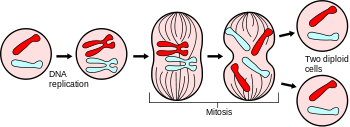
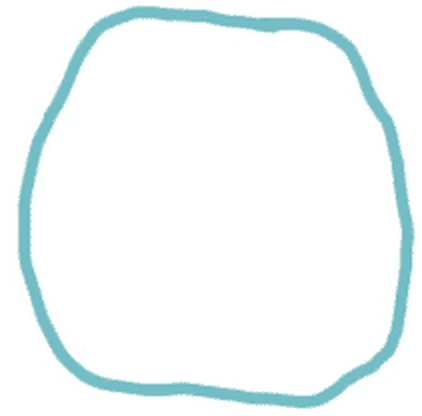
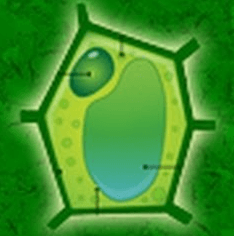
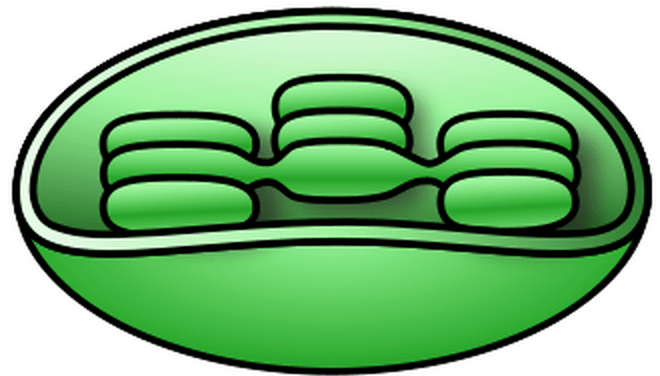
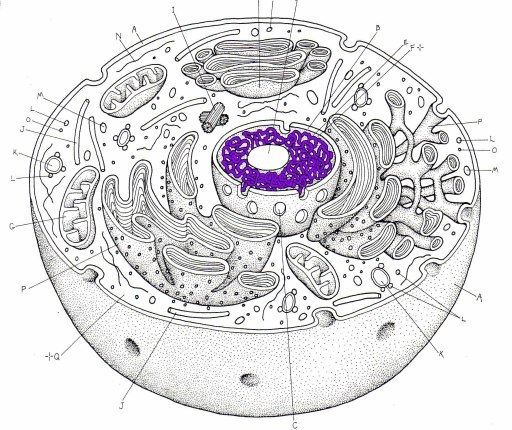
What kind of cell is this?
a)
Eukaryotic
b)
Prokaryotic
43.
Cells can only be seen with the help of a...
a)
hand lens 
b)
magnifying glass
c)
3D glasses 
d)
microscope 
44.
What is unicellular? 
a)
one cell 
b)
many cells 
c)
no nuclues 
d)
DNA 
45.
What is multicellular? 
a)
one cell 
b)
no cells 
c)
many cells 
d)
no nucleus 
46.
All cells come from other...
a)
cells 
b)
plants 
c)
nucleus 
d)
microscopes 
47.
What type of cell has a nucleus? 
a)
eukaryotic
b)
prokaryotic 
48.
What type of cell does not have a nucleus?
a)
eukaryotic 
b)
prokaryotic 
49.
Plants and animal cells are examples of ___ cells 
a)
prokaryotic cells 
b)
eukaryotic cells 
50.

Which cell is larger?

a)

Prokaryotic

b)

Eukaryotic

51.

Which cell is smaller?

a)

Prokaryotic

b)

Eukaryotic

52.

Which cell is more complex?

a)

Prokaryotic

b)

Eukaryotic

53.

Which cell is simpler?

a)

Prokaryotic

b)

Eukaryotic

54.

This cell is a ...

a)

Prokaryotic Cell

b)

Eukaryotic Cell

55.

This cell has a nucleus, that means it is ...

a)

Prokaryotic

b)

Eukaryotic

56.

This is a __________________cell.

a)

Prokaryotic

b)

Eukaryotic

57.

This is a _________________ cell.

a)

Prokaryotic

b)

Eukaryotic

58.

These are simple, small cells that do not have a nucleus. They are also bacteria. What are they?

a)

Prokaryotic

b)

Eukaryotic

59.

Which controls all functions of the cell?

a)

Ribosomes

b)

Cytoplasm

c)

Cell Membrane

d)

Nucleus

60.

Which are part of "The Cell Theory"? (Hint: Only two are correct)

a)

All living and non-living things are made of cells

b)

All cells arise from preexisting cells

c)

All cells are large

d)

all living organisms are made of one or more cells

61.
All cells have DNA.
a)
True
b)
False
62.
These cells have DNA surrounded by a nucleus.
a)
Eukaryotic
b)
Prokaryotic
c)
Neither
d)
Both prokaryotic and eukaryotic
63.

All cells have cell membranes. What is the function (job) of the cell membrane?

a)

Allow certain things to enter and exit the cell.

b)

Allows all things to enter the cell.

c)

Does not allow anything to enter and exit.

d)

It is made out of wood.

64.
What does it mean when you see a nucleus in a cell?
a)
The cell is empty
b)
The cell is prokaryotic
c)
The cell is eukaryotic
d)
This would not be a cell
65.
Humans and plants are made of ______________ cells because they both have a nucleus. 
a)
Eukaryotic 
b)
Prokaryotic 
c)
Fungi
d)
What?
66.
1. All living things are made of one or more cells.
2. Cells are the building blocks of life.
3. All cells come from preexisting cells.
What is this theory called?
a)
The Eukaryotic Theory
b)
The Prokaryotic Theory 
c)
The Cell Theory
d)
The Nucleus Theory 
67.
All cells have DNA.
a)
True
b)
False
68.
Bacteria are all made of ...
a)
Eukaryotic cells
b)
Plant cells
c)
Prokaryotic cells
d)
fungi cells
69.
First type of cell to appear on Earth?
a)
Plant
b)
Animal
c)
Prokaryotic
d)
Eukaryotic
70.
Type of cell shown?
a)
Bacterial
b)
Prokaryotic
c)
Eukaryotic
d)
Red blood 
71.
Which of the following in NOT a characteristic of eukaryotic cells?
a)
DNA is separated from the cytoplasm by a nuclear membrane
b)
Large
c)
Complex 
d)
Lack membrane-bound organelles
72.
How are prokaryotes and eukaryotes similar?
a)
They both contain membrane-bound organelles.
b)
They both have cell membranes.
c)
The both have nuclei.
d)
They both have chloroplasts.
73.
When a collection of similar cells group together, they form what is called _________.
a)
Organs
b)
Tissue
c)
Organ system
d)
Organism
74.
A collection of tissue that is grouped together forms an ___________
a)
tissue
b)
organ system
c)
organism
d)
organ
75.
Your stomach is most likely an
a)
organ
b)
organ system
c)
tissue
d)
muscle
76.

What part is missing in the hierarchy?

a)

cell

b)

organ

c)

tissue

d)

organism

77.

There are levels of cellular organization withinmulticellular organisms. Which of the following statements is true?

a)

Tissues are made up of organs.

b)

Organ systems are made up of organs.

c)

Organs are made up of organisms

d)

Cells are made up of organ systems.

78.

The organization of the human body includes both nervous tissue and muscle tissue. What do both nervous tissue and muscle tissue have in common?

a)

Each tissue is found in only one organ in an organism.

b)

Each tissue is made of groups of similar cells that work together

c)

They are both found in the same organ inside an organism.

d)

They are organized into organ systems that help an organism live.

79.

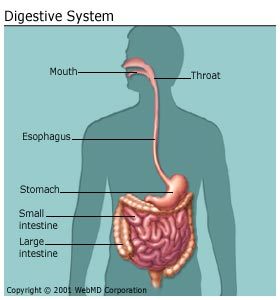
Which level of organization in the human body does the diagram best represent?

a)

cell

b)

tissue

c)

organ system

d)

atom

80.

Composed of cells from the same origin. Examples are connective, muscle, epithelial, and nerve.

a)

Cell

b)

Tissue

c)

Organ System

d)

Molecules

81.
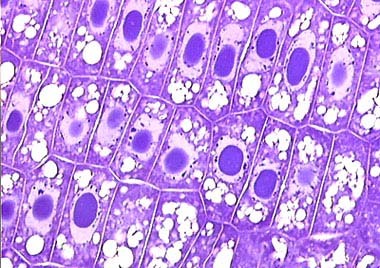
This is a example of........ 
a)
organ system
b)
cells
c)
organ
d)
tissue
82.
This is a example of ........
a)
cell
b)
tissue
c)
organ 
d)
organ system
83.
What is the difference between a cell and a tissue?
a)
cell is basic unit of life; tissue is group of cells that work as one
b)
cell is group of tissues; tissue is basic unit of life
c)
cell is basic unit of life; tissue is groups of different cells
d)
cell is group of organs; tissue is group of different cells
84.

The basic units or "building blocks" of life are called

a)

cells

b)

molecules

c)

organisms

d)

tissues

85.

The image could best be described as

a)

tissue

b)

organ

c)

organ system

d)

organism

86.

Which of the following correctly lists the levels of biological organization from MOST complex to LEAST complex?

a)

cell, tissue, organ, organ system, organism

b)

cell organism organ system organ tissue

c)

organ system organism organ tissue cell

d)

organism organ system organ tissue cell

87.

Living systems are organized in levels according to their structures and functions.


_______________ --tissues--organs--organ systems--organisms--ecosystems


Which word is missing from the organizational chart above?

a)

cells

b)

tissue

c)

protist

d)

bacteria