wayground logo

Free Printable Worksheets

Font size

S
M
L
XL
Worksheets

Geology Common Assessment Review

Total questions: 93

Worksheet time: 1hrs 7mins
Name
Class
Date
1.
This layer contains the upper mantle and the crust.
a)
Mesosphere
b)
Asthenosphere
c)
Lithosphere
d)
Core
2.
This layer contains most of Earth's mass.
a)
Inner Core
b)
Mantle
c)
Outer Core
d)
Crust
3.
The core is mostly made up mostly of which elements?
a)
Oxygen and Silicon
b)
Silicon and Magnesium
c)
Nickel and Iron
d)
Iron and Magnesium
4.
Which layer of the Earth is the only liquid layer?
a)
Outer Core
b)
Inner Core
c)
Mantle
d)
Lithosphere
5.
What are the two type of crust?
a)
Continental and Landforms
b)
Oceanic and Mountains
c)
Mountains and Landforms
d)
Oceanic and Continental
6.
Which layer(s) of the Earth make up the asthenosphere?
a)
Part of the upper mantle
b)
Crust, mantle, Core
c)
Crust and upper mantle
d)
Only the crust
7.
Which layer is considered the thinnest layer?
a)
Mesosphere
b)
Core
c)
Mantle
d)
Crust
8.
This layer is divided into pieces called tectonic plates.
a)
Mesosphere
b)
Asthenosphere
c)
Mantle
d)
Lithosphere
9.
What is the hottest layer?
a)
Crust
b)
Mantle
c)
Core
10.
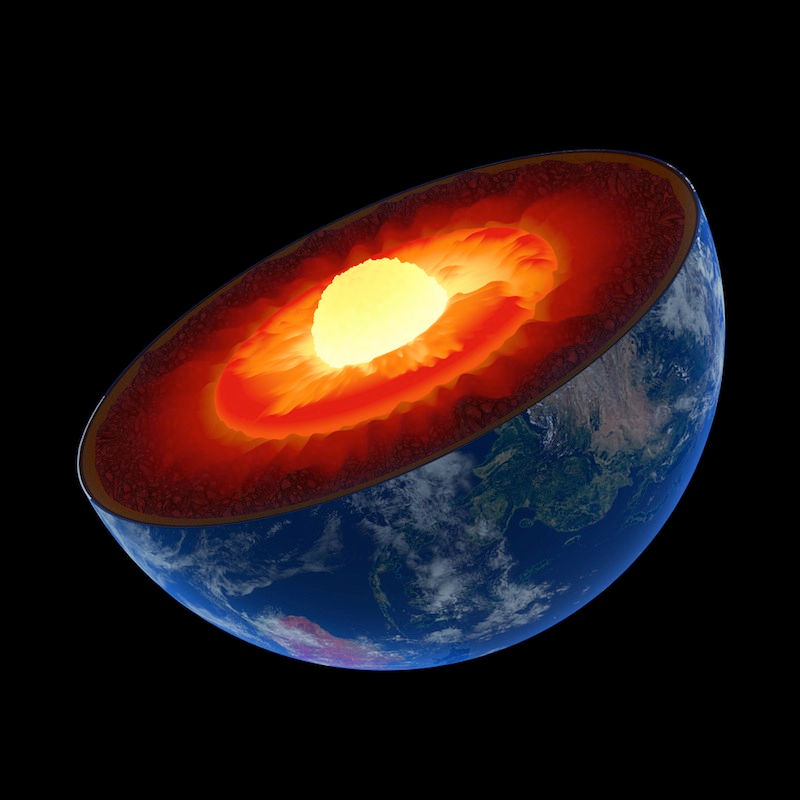
Identify layer  #20.
a)
mantle
b)
pizza crust
c)
inner core
d)
outer core
11.
How would you describe the outer-core?
a)
liquid nitrogen
b)
liquid iron and nickle
c)
solid iron and nickle
d)
neither liquid nor solid, but plastic like layer
12.
Which layer does the lithosphere (the outer most layer and the crust) float on top of?
a)
the crust
b)
lithosphere
c)
asthenosphere
d)
outer core
13.
Most geologists think that the movement of Earth's plates is caused by _____.
a)
Earth's magnetic field
b)
conduction
c)
earthquakes
d)
convection currents in the mantle
14.
The Earth's solid inner core is surrounded by the hot, molten metal of which layer?
a)
Mantle
b)
Outer Core
c)
Crust
d)
Lithosphere
15.
Large pieces of lithosphere that move around on top of the asthenosphere are called _____.
a)
Crust plates
b)
Tectonic plates
c)
Mantle pieces
d)
Core plates
16.
Where does the heat come from that drives this convection current in the mantle?
a)
The sun
b)
The crust
c)
the mantle
d)
the core
17.

Which type of plate boundary would cause mountains to form?

a)

Transform

b)

Convergent

c)

Divergent

d)

Reform

18.
The Great Rift Valley in Africa and the Mid-Ocean Ridge were all created by this boundary
a)
Divergent
b)
Convergent
c)
Reform
d)
Transform
19.
subduction zones in the ocean can create which features?
a)
islands
b)
volcanoes
c)
earthquakes
d)
all of the above
20.
When one plate sides under neath another, it _________ and the magma _________.
a)
hardens, sinks
b)
melts, sinks
c)
hardens, rises
d)
melts, rises
21.
The Himalayas in Asia are an example of what type of plate boundary?
a)
divergent
b)
continent-to-continent convergent
c)
ocean-to-continent convergent
d)
transform
22.
When an oceanic plate and a continental plate collide, which one will subduct?
a)
oceanic
b)
continental
c)
neither
23.
Which of the following is NOT a tectonic boundary?
a)
Convergent
b)
Divergent
c)
Sedergent
d)
Transform
24.
Two tectonic plates collide at a _______ plate boundary.
a)
convergent
b)
divergent
c)
transform
25.
What is the name of the plate boundary that slides past each other?
a)
Divergent
b)
Convergent
c)
Transform
d)
Mr. C the Slide Man
26.
Which of these events can ONLY happen on a DIVERGENT BOUNDARY?
a)
Rift Valley
b)
Mountain
c)
A peninsula
d)
An Insanely complex, long answer that you will click out of instinct. 
27.
The youngest material of the ocean floor is found at mid-ocean _________.
a)
ridges
b)
trenches
c)
basins
d)
rifts
28.
The presence of the same ________ on several continents supports the idea of continental drift.
a)
rocks
b)
fossils
c)
both fossils and rocks
d)
neither fossils nor rocks
29.
Many scientists think hot plastic-like rock in the mantle is forced upward toward the surface, cools, and sinks.  This process is called a(n) _________.
a)
earthquake
b)
convergent boundary
c)
volcano
d)
convection current
30.
The San Andreas Fault in California is an example of a ________.
a)
divergent boundary
b)
convergent boundary
c)
transform fault
d)
subduction zone
31.
The feature labeled C represents some of the deepest spots on the ocean floor. These areas are called ___.
a)
mid-ocean ridge
b)
trenches
c)
deep-sea vent
d)
abyssal plain
32.
This rock was formed when heat and pressure changed its minerals around into new minerals. What type of rock is it?
a)
Metamorphic Rock
b)
Igneous Rock
c)
Sedimentary Rock
d)
Boring Rock
33.
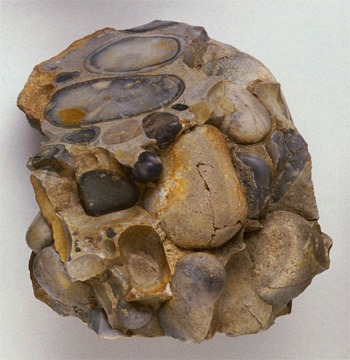
This rock formed when bits of other rocks became pressed into a solid. What type of rock is it?
a)
Sedimentary Rock
b)
Metamorphic Rock
c)
Igneous Rock
34.
What are the 3 major types of rocks?
a)
Igneous, Metamorphic, Sedimentary
b)
Metamorphic, Igneous, Cementation
c)
Brown, Red, Gray
d)
Streak, Hardness, Breakage
35.
The process where one type of rock can change into another type of rock is known as ____
a)
The rock cycle
b)
Sedimentation
c)
Igneous
d)
Composition
36.
The process by which water, wind, ice, and changes in temperature break down rock into fragments called sediments.
a)
Deposition
b)
Erosion
c)
Weathering
d)
Igneous Rock
37.
This rock started as molten magma. What type of rock is this?
a)
Sedimentary
b)
Igneous
c)
Metamorphic
38.
What is a rock?
a)
Rock that forms when melted, or molten rock from deep below Earth's surface cools and hardens.
b)
A solid material made up of one or more minerals.
c)
Rock that forms when existing rocks are changed by heat, pressure, or chemicals beneath the Earth's surface.
39.
Which type of rock results from melting and cooling of magma?
a)
Igneous
b)
Metamorphic
c)
Sedimentary
d)
Extrusive
40.
Which type of rock forms from extreme heat and pressure?
a)
Igneous
b)
Sedimentary
c)
Organic
d)
Metamorphic
41.
A metamorphic rock changes into an igneous rock by what two processes?
a)
Melting and cooling
b)
Extreme heat and pressure
c)
Compaction and cementation
d)
Weathering and erosion
42.
What is the MAIN way rocks are classified?
a)
Their color and shapes
b)
How they form
c)
Mineral bands
d)
Where they form
43.

True/False: Igneous rocks can only turn into metamorphic rocks.

a)

True

b)

False

44.
The process in which dissolved minerals crystallize and glue sediment together.
a)
compaction
b)
deposition
c)
organic rock
d)
cementation
45.
When sediments are pressed together tightly, this is called ____________.
a)
Compaction
b)
Cementation
c)
Weathering
d)
Erosion
46.
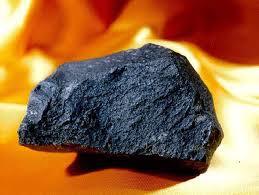
This rock was found near the mouth of a volcano. What type of rock is this?
a)
Sedimentary
b)
Igneous
c)
Metamorphic
47.
This rock was formed by smaller pieces of rock that settled at the bottom of a lake millions of years ago. What type of rock is this?
a)
Sedimentary
b)
Igneous
c)
Metamorphic
48.
This rock is made from tiny pieces of other rocks that settled to the bottom of a valley millions of years ago. What type of rock is this?
a)
Sedimentary
b)
Igneous
c)
Metamorphic
49.

This rock was molten magma that slowly cooled under the ground. What type of rock is this?

a)

Sedimentary

b)

Igneous

c)

Metamorphic

50.
This rock cooled on the outside of a volcano and contained air bubbles when it was forming. What type of rock is this?
a)
Sedimentary
b)
Igneous
c)
Metamorphic
51.
After lots of time, pressure, and heat, you get this kind of rock. What type of rock is this?
a)
Sedimentary
b)
Igneous
c)
Metamorphic
52.
Each rock type can follow only one pathway of the rock cycle.
a)
True
b)
False
53.
Fossils are often found in ____________ because it is formed from the remains of once living things.
a)
metamorphic
b)
magma
c)
igneous
d)
sedimentary
54.
This rock was formed by lots of fossils that settled on top of each other over time. What type of rock is this?
a)
Sedimentary
b)
Igneous
c)
Metamorphic
55.
Why is coal not a mineral?
a)
It's not a solid
b)
It is man-made
c)
It is not inorganic
d)
It is made of carbon
56.
What mineral is used for pencils?
a)
Graphite
b)
Galena
c)
Magnetite
d)
Quartz
57.
Large crystals are going to form
a)
when lava erupts from a volcano
b)
when a shallow sea evaporates
c)
when magma underground cools off
d)
all of the above
58.
What does inorganic mean?
a)
Something that is living
b)
Something that is dead, but was once living
c)
Something that was never living
59.
The ratio of an objects mass to its volume is called
a)
Fluorescence
b)
Streak
c)
Ore
d)
Density
60.

Can all minerals be gemstones?

a)

no

b)

yes

61.

One reason gemstones are special is because they are

a)

cheap

b)

rare

c)

ugly

d)

easy to find

62.

Used to describe the timing and relationships between events that have occurred throughout Earth's history

a)

absolute age

b)

Law of Superposition

c)

classification

d)

geologic time scale

63.

A time scale- 2 or more of these form an era (it is shorter than an era). It cross-references rocks and geological events.

a)

stratigraphy

b)

eon

c)

era

d)

period

64.

When many organisms become extinct at one time.

a)

absolute age

b)

relative age

c)

mass extinction

d)

index fossil

65.

A preserved remain of an organism that gives us a history of the Earth.

a)

geologist

b)

stratigraphy

c)

fossil

d)

epoch

66.

A preserved remain of an organism that can be used to date formation in which it is found.

a)

index fossil

b)

absolute age

c)

paleontologist

d)

period

67.

The geologic age of fossil organism, rock, or geologic features or events defined relative of each other, determines whether a formation is older or younger than its surrounding formation (it does not give an exact age).

a)

stratigraphy

b)

absolute age

c)

chronological order

d)

relative age

68.

States that in any undisturbed sequence of rocks deposited in layers, the youngest layer is on top and the oldest on bottom.

a)

stratigraphy

b)

classification

c)

Law of Superposition

d)

paleontology

69.

A person who specializes in research and study of the Earth.

a)

Earthologist

b)

Geologists

c)

Geographists

d)

Stratigrophists

70.

A person who studies fossils.

a)

paleontologist

b)

dinosaurologist

c)

neurologist

d)

oceanologist

71.

The age of a geologic formation in years; provides geologists with the actual age of a formation.

a)

absolute age

b)

relative age

c)

approximate age

d)

statigraphy

72.

Noting or pertaining to the earliest era of earth history, ending 570 million years ago, during which the earth's crust formed and life first appeared in the seas.

a)

cenozoic time

b)

mesozoic time

c)

paleozoic time

d)

precambrian time

73.
The process in which the nuclei of radioactive elements break down, releasing fast-moving particles and decay.
a)
relative age
b)
half-life
c)
absolute age
d)
radioactive decay
74.
The time it takes half of the atoms of a radioactive element to decay
a)
relative age
b)
half-life
c)
absolute age
d)
radioactive decay
75.
One of three long units of geologic time between Precambrian and the present.
a)
evolution
b)
period
c)
geologic time scale
d)
era
76.
According to the law of superposition, the oldest fossils are found 
a)
At the top of the rock layers
b)
Near the bottom of the rock layers
c)
In the middle of the rock layers
d)
Somewhat near the surface
77.
The Law of Superposition helps scientists to determine what?
a)
The absolute age of rock layers
b)
The age of fossils
c)
The relative age of rock layers
d)
the super powers of rocks
78.
Which rock layer in the diagram seems to be the oldest?
a)
F
b)
E
c)
B
d)
A
79.
According to the law of superposition, which layer is the youngest?
a)
A
b)
B
c)
C
80.
Which type of dating method can be used on rock layers by applying the Law of Superposition?
a)
relative dating
b)
absolute dating
c)
radioactive dating
d)
radiometric dating
81.
Which of the following is the oldest?
a)
Layer L
b)
Intrusion D
c)
Intrusion H
d)
Layer E
82.
Which of the following correctly lists the layers in order from oldest to youngest?
a)
A, B, C, D, E
b)
E, B, C, D, A
c)
E, D, C, B, A
d)
C, B, A, D, E
83.
What is the oldest layer in the outcrop?
a)
B
b)
C
c)
D
d)
E
84.
What is the youngest layer in the outcrop?
a)
A
b)
B
c)
C
d)
D
85.
The rock formation labeled "P" is a(n)...
a)
fault
b)
intrusion
c)
inclusion
d)
unconformity
86.
Letter "F" is a....
a)
inclusion
b)
intrusion
c)
fault
d)
unconformity 
87.
Which rock layer in the diagram seems to be the oldest?
a)
F
b)
E
c)
B
d)
A
88.
In this rock layer diagram there are two unconformities, a fault at E and an intrusion at D. Which unconformity occurred first?  How do you know?
a)
Intrusion D occurred first because the instrusion has been moved by the fault.
b)
The fault occurred first because it has moved the intrusion D.
c)
Intrusion D occurred first because it can be seen in all of the rock layers.
d)
Fault E occurred first because it is a normal fault.
89.
Which Rock layer or intrusion is the youngest?
a)
A
b)
B
c)
C
d)
D
90.
Which rock layer most likely contains fossils of the most recently evolved organisms?
a)
1
b)
2
c)
3
d)
4
91.
An archaeologist made the following diagram of a dig site. What can be said about the pottery as compared to the skull found in the site?
a)
The rock layer with the pottery is more recent than the rock layer with the skull.
b)
The rock layer with the skull is more recent than the rock layer with the pottery.
c)
The rock layer with the skull is approximately the same age as the rock layer with the pottery.
d)
The rock layer with the skull has an absolute date of 17,000 years.
92.
Which fossil is relatively the oldest?
a)
Trilobite
b)
Ammonite
c)
Crinoid
d)
Gastropod
93.
Which of the following does the law of superposition tell scientists?
a)
Absolute age
b)
Relative age
c)
Exact age
d)
All of the answer choices