
 Worksheets
🚀12.01 (MVP1 Review)
Total questions: 92
Worksheet time: 46mins

What is a sign that a chemical reaction has happened when a match is lit?
The match gets shorter
The match gives off light
The match becomes too hot to hold
The match produces smoke and ash

Students mix a clear liquid and a white powder in a container with a thermometer. If the chemical reaction releases energy, what would they most likely observe?
The temperature increases
The temperature decreases
The container's pressure decreases
The mixture changes from a liquid to a solid

A teacher puts zinc metal in a balloon and attaches it to a flask with hydrochloric acid. After shaking, the balloon inflates. What does this show?
A chemical reaction occurred because a gas was released
A chemical reaction did not occur because bubbles formed
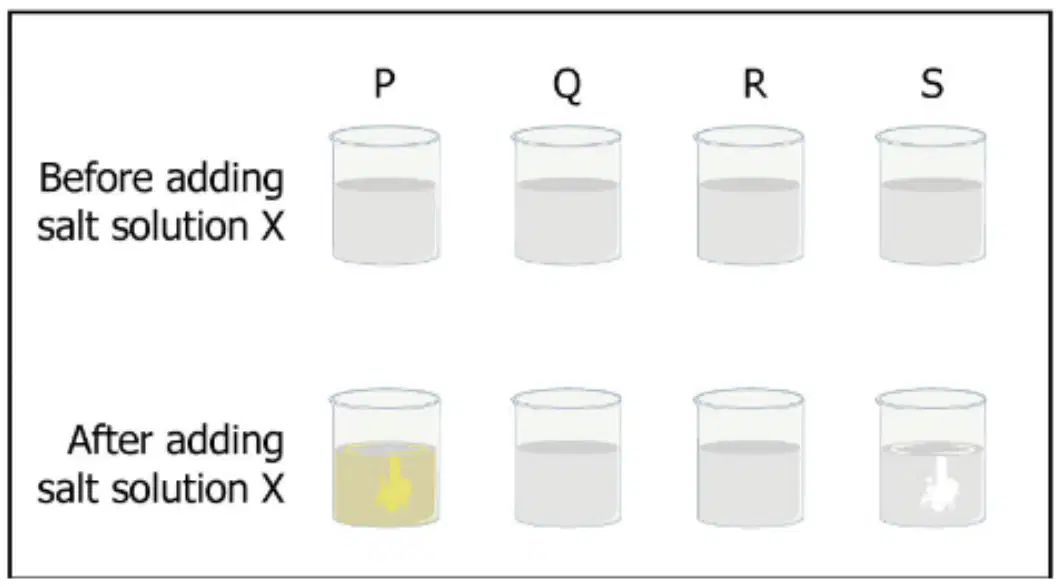
Students add a colorless salt solution to four different salt solutions (P, Q, R, S). Solutions P and S change color after adding the solution. What does this color change tell us?
The solutions got warmer
The solutions mixed together
A chemical reaction happened in P and S
The solutions changed their state of matter
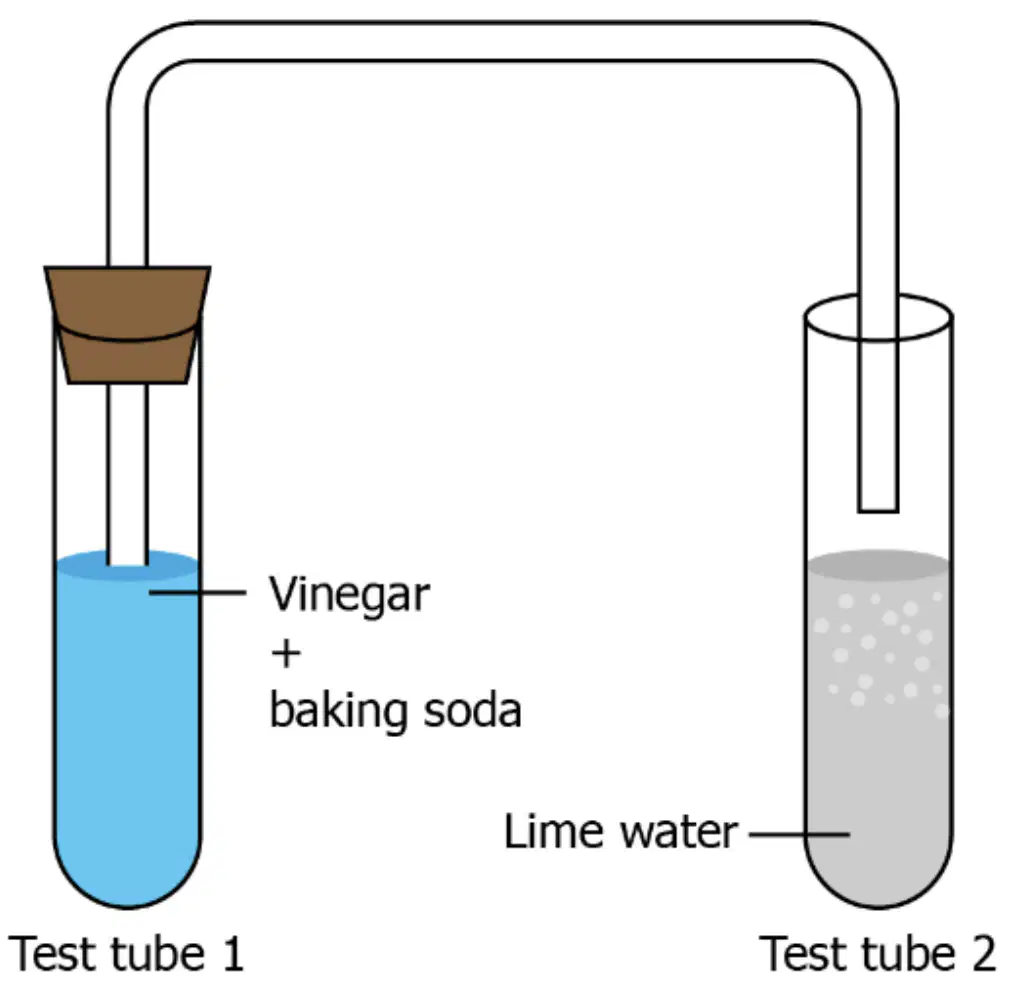
Students mix vinegar and baking soda in one test tube, and the gas produced goes into another test tube with lime water. The lime water turns milky. In which test tube did students see evidence of a new substance forming?
Only the first tube, because bubbles formed
Only the second tube, because the color changed
Neither tube, because only physical changes occurred
Both tubes, because new substances formed in each

During a chemistry lab, students observe a tablet dissolving in water. The temperature drops from 22°C to 15°C. What type of reaction occurred?
An exothermic reaction releasing energy to the surroundings
An endothermic reaction releasing energy to the surroundings
An exothermic reaction absorbing energy from the surroundings
An endothermic reaction absorbing energy from the surroundings

Students design cold packs for the school nurse. They test four chemical combinations and measure the temperature after mixing. Room temperature is 22°C. Which combination would work best for a cold pack?
One that increases temperature to 35°C
One that decreases temperature to 10°C
One that keeps temperature at 22°C
One that increases temperature to 25°C

Students mix iron filings and sulfur powder. Before heating, a magnet picks up the iron filings. After heating, the mixture becomes a dark lump and the magnet no longer picks up the iron. What happened?
A new mixture formed because the color changed
A chemical reaction occurred because the iron lost its magnetic properties
A mixture formed because the components can still be separated
A physical change occurred because the properties look different

Students place iron nails in five different salt solutions. In two solutions, the color changes from the original color. What does this color change indicate?
The iron nails got rusty
The solutions evaporated
Chemical reactions occurred in those two solutions
The nails dissolved completely

Students are testing substances for a hand warmer. They want the mixture to release heat. What should they look for as evidence?
The mixture getting colder
The mixture staying the same temperature
The mixture getting warmer
The mixture changing color only

When students mix calcium chloride and water, the temperature goes from 20°C to 35°C. When they mix baking soda and vinegar, the temperature goes from 20°C to 10°C. What can they conclude?
Both reactions released energy as heat
The first reaction released energy, the second absorbed energy
The first reaction absorbed energy, the second released energy
Both reactions absorbed energy

Students want to confirm that their hot pack mixture is producing an exothermic reaction. What is the BEST way to check this?
Look for bubbles to see if gas is produced
Measure the temperature before and after mixing
Freeze the mixture to test for state changes
Measure how long the mixture stays warm

During an experiment, students heat a mixture of iron filings and sulfur. They observe that the mixture turns into a dark brown solid lump. This color change is evidence of:
A physical change only
A chemical reaction occurring
The materials getting hot
The iron and sulfur separating

What physical property change would indicate that a gas is being produced during a chemical reaction?
The mixture getting warmer
A container or balloon expanding
The mixture changing color
The mixture becoming thicker

If students want to design the most effective cold pack, what temperature change should they look for?
The biggest increase in temperature
The biggest decrease in temperature
No change in temperature
A small increase in temperature

Students mix two chemicals and notice the formation of bubbles. This observation is evidence of:
A temperature change
A gas being produced
A color change
A change in state from liquid to solid

During an experiment, students observe that their mixture produces both bubbles and a temperature change. How many types of evidence for a chemical reaction did they observe?
One type of evidence
Two types of evidence
Three types of evidence
No evidence of a chemical reaction

Students are looking for evidence that a chemical reaction has occurred. Which of these observations would NOT be good evidence of a chemical reaction?
The mixture produces gas bubbles
The temperature of the mixture changes
The mixture changes color
The mixture is stirred with a spoon

Pure iodine freezes at 114°C and boils at 184°C. If the temperature rises from 120°C to 195°C, what happens to the particle arrangement?
Particles move closer together and become more organized
Particles spread farther apart and move more freely
Particles stay in the same arrangement
Particles disappear completely

Water freezes at 0°C and vinegar freezes at 17°C. At 10°C, what can we say about the states of these substances?
Both are frozen solid
Water is frozen, vinegar is liquid
Both are liquid
Water is liquid, vinegar is frozen

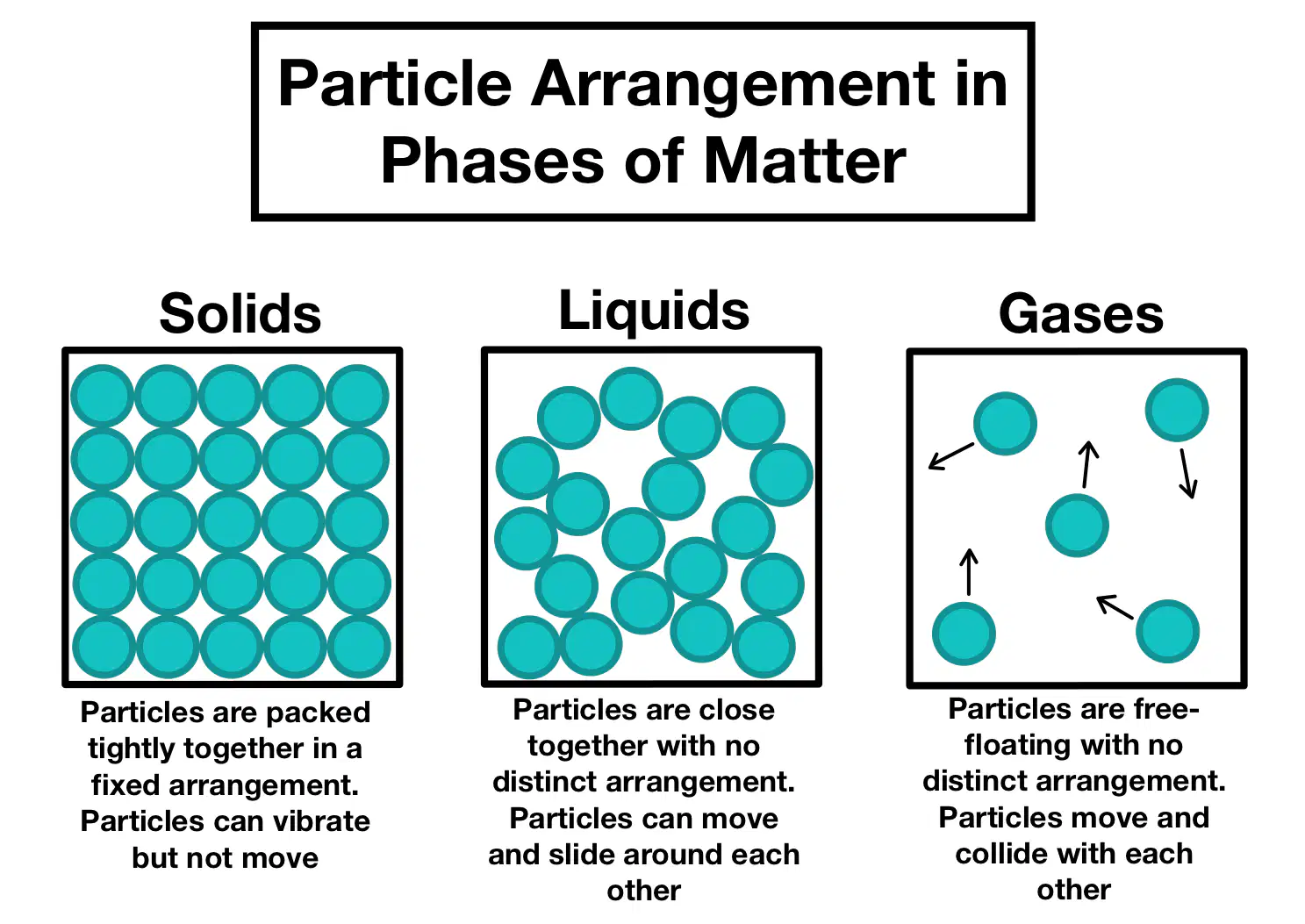
Look at this diagram showing particles in three states of matter: solid (tightly packed), liquid (close but flowing), and gas (spread far apart). What physical property causes particles to change from solid to liquid to gas?
An increase in mass
An increase in volume

When matter is heated, what happens to the spaces between particles?
They get smaller
They stay the same
They get larger
They completely disappear

A sealed container has helium gas. More helium is added to the same container. What will happen to the gas particles inside?
They will move slower because there's more gas
They will move faster because there's more gas
They will collide more often because there are more particles
They will stop moving completely

When more helium is added to a sealed container, what happens to the pressure?
Pressure decreases because particles spread out
Pressure increases because there are more particles hitting the walls
Pressure stays exactly the same
Pressure becomes zero
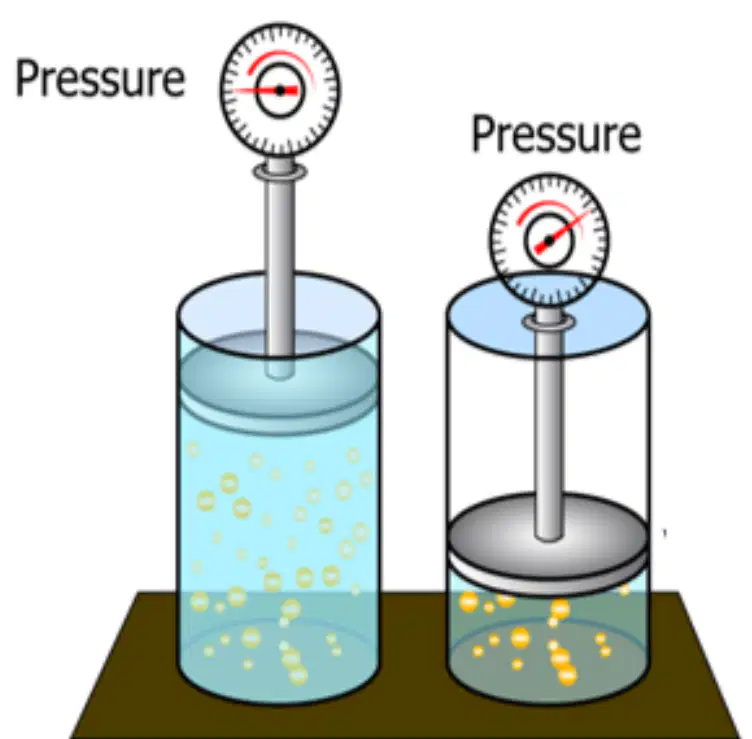
A student pushes a piston to compress gas in a cylinder. What happens to the gas particles when pressure increases?
Particles move farther apart and volume increases
Particles come closer together and volume decreases
Particles expand in size
Particles contract in size

When a substance changes from solid to liquid, what happens to particle arrangement?
Particles become more tightly packed
Particles become less organized and can flow
Particles completely separate from each other
Particles stop moving entirely

A thermometer measures temperature changes during a reaction. If particles are moving faster, what would the thermometer show?
Lower temperature reading
Higher temperature reading
No change in temperature
The thermometer would break

Ice cubes are placed in warm water. As the ice melts, what happens to the water molecules in the ice?
They start moving slower
They start moving faster and become less organized
They change into different types of atoms
They stop moving completely

A balloon is heated in the sun. What happens to the air particles inside the balloon?
Particles move slower and the balloon shrinks
Particles move faster and the balloon expands
Particles stop moving and the balloon stays the same
Particles turn into liquid

When you cool down a gas, what happens to particle motion and arrangement?
Particles move faster and spread out more
Particles move slower and come closer together
Particles move at the same speed but change color
Particles multiply in number
A student observes that heating a solid turns it into a liquid. What can they conclude about particle energy?
Particles gained energy and can move more freely
Particles lost energy and became more rigid
Particles gained mass
Particles lost mass

In a pressure cooker, both temperature and pressure are increased. How does this affect the water particles inside?
Particles move slower because of high pressure
Particles move faster because of high temperature, but are pushed closer together by pressure
Particles don't change at all
Particles turn into a different substance

A student inflates a basketball in a warm garage, then brings it outside in winter. What happens to the air particles in the ball?
Particles move faster and the ball gets bigger
Particles move slower and the ball gets smaller
Particles stop moving and the ball stays the same
Particles turn into a liquid

Which statement best explains why liquids flow but solids don't?
Liquid particles are smaller than solid particles
Liquid particles can move past each other more easily than solid particles
Liquid particles are made of different atoms than solid particles
Liquid particles weigh less than solid particles

When perfume is sprayed in a room, people across the room can smell it after a few minutes. This shows that perfume particles:
Stay in one place
Move randomly through the air
Only move when pushed
Turn into different chemicals

A sealed jar contains gas at room temperature. If the jar is placed in a freezer, what happens to the gas particles?
They move faster and take up more space
They move slower and take up less space
They change into liquid immediately
They multiply in number

Based on particle motion, why does a hot air balloon rise?
Hot particles are lighter than cold particles
Hot particles move faster, spread out more, making the air less dense
Hot particles stick together better
Hot particles change into different atoms

Faster particles result in a higher temperature according to the particle model because:
they have more kinetic energy, which increases temperature.
they lose energy, which cools the substance.
they become larger in size, raising the temperature.
they attract each other more strongly, causing heat.

Particle spacing in a substance is related to pressure changes in which way?
Decreased particle spacing increases pressure.
Increased particle spacing increases pressure.
Particle spacing does not affect pressure.
Pressure and particle spacing are unrelated.

The mechanisms involved in state changes (such as melting, freezing, evaporation, or condensation) using the particle model include:
Particles gain or lose energy, causing changes in movement and arrangement.
Particles change their chemical identity during state changes.
State changes occur without any energy transfer between particles.
Particles remain stationary during all state changes.

Applying the particle model can explain why ice melts when heated.
The particles in ice gain energy and move faster, causing the ice to melt.
The particles in ice lose energy and stop moving, causing the ice to melt.
The particles in ice become larger, causing the ice to melt.
The particles in ice change color, causing the ice to melt.

When methane (CH₄) burns in oxygen (O₂) to produce carbon dioxide (CO₂) and water (H₂O), which statement is true?
The number of hydrogen atoms is halved in the products
More carbon atoms are found in the products than in the reactants
The total number of oxygen atoms is different in the reactants and products
The number of atoms of each element is conserved throughout the reaction

Sarah finds this equation for photosynthesis: 6H₂O + 6CO₂ → 6O₂ + C₆H₁₂O₆. Does this equation obey the Law of Conservation of Mass?
Yes, because there is the same amount of each type of atom on both sides
No, because there is a different amount of each type of atom on both sides
No, because there is a different number of reactants and products
Yes, because there is the same number of reactants and products

Which chemical equation correctly shows the Law of Conservation of Mass?
H₂ + O₂ → 2H₂O
2H₂ + O₂ → 2H₂O

Carlos writes this equation: C6H12O6 → CO2 + C2H5OH. What can we say about this equation?
It's balanced and follows the Law of Conservation of Mass
It's not balanced and does not follow the Law of Conservation of Mass
It's correct because glucose turns into these products
It's wrong because chemical reactions can't happen

In the reaction 2Fe + 3O2 → 2Fe2O3, how many iron atoms are needed to make the equation balanced?
2 iron atoms
3 iron atoms
4 iron atoms
6 iron atoms

What does the Law of Conservation of Mass tell us about chemical reactions?
Matter can be created during reactions
Matter can be destroyed during reactions
The number of each type of atom stays the same before and after
Chemical reactions always make new types of atoms

A student counts atoms in this reaction: NaCl + AgNO3 → NaNO3 + AgCl. What should they find?
More atoms on the left side than the right side
More atoms on the right side than the left side
The same number of each type of atom on both sides
Different types of atoms on each side

In the equation CH₄ + 2O₂ → CO₂ + 2H₂O, how many oxygen atoms are on each side?
2 on the left, 2 on the right
4 on the left, 4 on the right
2 on the left, 4 on the right
4 on the left, 2 on the right

Why do we use coefficients (numbers in front of formulas) in chemical equations?
To make the equation look more complicated
To balance the number of each type of atom on both sides
To show which chemicals are more important
To indicate the temperature of the reaction

A student writes: 2Al + 3O₂ → Al₂O₃. Is this equation balanced?
Yes, it follows the Law of Conservation of Mass
No, there are different numbers of aluminum atoms on each side
No, there are different numbers of oxygen atoms on each side
Yes, because aluminum and oxygen react together

In a chemical reaction, atoms can:
Be created from nothing
Be destroyed completely
Change from one element to another
Rearrange to form new compounds

The equation Fe + O₂ → Fe₂O₃ is not balanced. What needs to be fixed?
Add coefficients to balance the number of each type of atom
Change the chemical formulas
Remove some atoms
Add new elements

For the reaction NaOH + HCl → NaCl + H₂O, a student counts: Left side: 1 Na, 1 O, 2 H, 1 Cl Right side: 1 Na, 1 Cl, 1 O, 2 H What can they conclude?
The equation is balanced
The equation needs more sodium
The equation needs more chlorine
The equation is impossible

What happens to the total mass during a chemical reaction?
It increases because new matter is created
It decreases because some matter is destroyed
It stays the same because atoms are conserved
It changes depending on the temperature

A student balances this equation: ___Fe + ___O₂ → ___Fe₂O₃. What coefficients make it correct?
1, 1, 1
2, 3, 2
4, 3, 2
6, 3, 3

Which statement about atoms in chemical reactions is true?
Atoms of one element can turn into atoms of another element
The total number of atoms increases during reactions
The total number of atoms decreases during reactions
Atoms rearrange but the number of each type stays the same

In the equation C + O₂ → CO₂, how many carbon atoms are on each side?
1 on the left, 2 on the right
1 on the left, 1 on the right
2 on the left, 1 on the right
2 on the left, 2 on the right

Why is it important to balance chemical equations?
To make them look professional
To show that the Law of Conservation of Mass is followed
To make calculations harder
To use more chemicals

A student sees the equation: ___H₂O → ___H₂ + ___O₂. What coefficients balance this equation?
1, 1, 1
2, 2, 1
1, 2, 1
2, 1, 2

The main idea of the Law of Conservation of Mass is:
Chemical reactions always produce gases
Chemical reactions always release energy
Atoms are never created or destroyed in chemical reactions
Chemical reactions always require heat

What does the Law of Conservation of Mass state?
Mass can be created or destroyed
Mass is always conserved in a chemical reaction
Atoms disappear during reactions
Mass is irrelevant in chemical reactions

What is the process of making sure the number of atoms for each element is the same on both sides of a chemical equation called?
Chemical equation balancing
Reactant formation
Product analysis
Coefficient addition

In a chemical reaction, the substances that start the reaction are called ______ and the substances formed are called ______.
reactants; products
products; reactants
catalysts; inhibitors
substrates; enzymes

What are coefficients in chemical equations used for?
To show the number of molecules or atoms involved in the reaction
To indicate the speed of the reaction
To balance the color of the reactants
To change the temperature

Interpreting a chemical formula involves understanding the types and numbers of ______ present in a compound.
atoms
molecules
ions
elements

Atoms can be created or destroyed in a chemical reaction.
True
False

Which of the following is a common mistake when balancing chemical equations?
Balancing equations by changing formulas
Counting the number of atoms correctly
Using coefficients properly
Understanding conservation

What does misunderstanding 'conservation' mean in the context of balancing equations?
It means not understanding that the number of atoms of each element must be the same on both sides of the equation.
It means thinking that equations must always have coefficients of one.
It means believing that only the total mass matters, not the atoms.
It means assuming that the products and reactants must look identical.

Students are designing a hot pack for sore muscles. Which step would BEST help them confirm their reaction releases energy?
Measure before and after temperatures
Look for bubbles to see if gas is produced
Freeze the mixture to test for state changes
Measure how long the mixture stays warm

A student mixes a clear liquid and white powder in a container with a thermometer. If the reaction releases energy, what would they observe?
The temperature increases
The temperature decreases
The container's pressure decreases
The mixture changes from liquid to solid

During a chemistry lab, students observe a tablet dissolving in water. The temperature drops from 22°C to 15°C. What type of reaction occurred?
An exothermic reaction releasing energy to the surroundings
An endothermic reaction releasing energy to the surroundings

Students test four chemical combinations for cold packs. Room temperature is 22°C. Which result shows the MOST effective cold pack?
Final temperature: 35°C
Final temperature: 10°C
Final temperature: 22°C
Final temperature: 25°C

Students mix calcium chloride with water and measure these temperatures: Starting: 20°C Ending: 35°C What can they conclude?
The reaction absorbed energy from the surroundings
The reaction released energy to the surroundings
No chemical reaction occurred
The reaction created new energy

Students mix baking soda with vinegar and measure these temperatures: Starting: 20°C Ending: 10°C What type of energy change occurred?
Energy was released (exothermic)
Energy was absorbed (endothermic)
No energy change occurred
Energy was destroyed

For a hand warmer design, students want a reaction that releases heat. What should they look for in their investigation?
Temperature decreasing after mixing
Temperature increasing after mixing
No temperature change after mixing
Temperature staying exactly the same

Students compare two reactions: Reaction A: 20°C → 35°C (temperature change: +15°C) Reaction B: 20°C → 10°C (temperature change: -10°C) What can they conclude?
Both reactions released energy
Both reactions absorbed energy
Reaction A released energy, Reaction B absorbed energy
Reaction A absorbed energy, Reaction B released energy

What is the main difference between exothermic and endothermic reactions?
Exothermic reactions are faster than endothermic reactions
Exothermic reactions release energy, endothermic reactions absorb energy
Exothermic reactions use more chemicals than endothermic reactions
Exothermic reactions happen in winter, endothermic reactions happen in summer

A student wants to investigate energy changes in chemical reactions. What is the MOST important tool they should use?
A scale to measure mass
A thermometer to measure temperature changes
A ruler to measure length
A stopwatch to measure time

Students test substances for making cold packs. They dissolve different chemicals in water and record the temperature changes. Which observation indicates an endothermic reaction?
The water gets warmer
The water gets colder
The water stays the same temperature
The water turns a different color

In an investigation, students mix Chemical X with water. The temperature rises from 25°C to 45°C. What should they conclude?
Chemical X stored energy during the reaction
Chemical X released energy during the reaction
Chemical X did not react with water
Chemical X absorbed energy from the water

Students are planning an investigation to compare energy changes in different reactions. What should they keep the same (control variables)?
The amount of each chemical and the amount of water
The type of chemical used
The final temperature
The energy change that occurs

A teacher demonstrates a reaction where the temperature drops significantly. Students feel the container getting cold. This demonstrates:
An exothermic reaction where energy is released
An endothermic reaction where energy is absorbed
A reaction where no energy change occurs
A reaction where energy is created

Students investigate which combination makes the best hot pack. They test: • Calcium chloride + water: +20°C change • Sodium chloride + water: +2°C change • Ammonium nitrate + water: -15°C change Which combination should they choose?
Calcium chloride + water
Sodium chloride + water
Ammonium nitrate + water
All combinations work equally well

What evidence would students need to collect to prove a chemical reaction releases energy?
Measure the mass before and after
Measure the temperature before and after
Count the number of bubbles formed
Measure how long the reaction takes

Students plan to investigate instant cold packs used by athletes. What should they hypothesize about the chemical reaction inside?
The reaction releases energy and heats up
The reaction absorbs energy and cools down
The reaction doesn't involve energy changes
The reaction creates energy from nothing

A student mixes two chemicals and observes the container becoming very warm to touch. What can they infer about energy?
Energy was absorbed from the surroundings
Energy was released to the surroundings
No energy change occurred
Energy was destroyed in the reaction

Which of the following indicates energy absorption in a chemical reaction?
Temperature increases
Temperature decreases
No temperature change

Using temperature measurements as evidence is important in identifying exothermic and endothermic reactions.
True
False

Name one real-world application of exothermic or endothermic reactions mentioned in the list.
Hot/cold packs
Solar panels
Wind turbines
Light bulbs

A change in ________ is evidence of energy transfer.
temperature
color
shape
mass
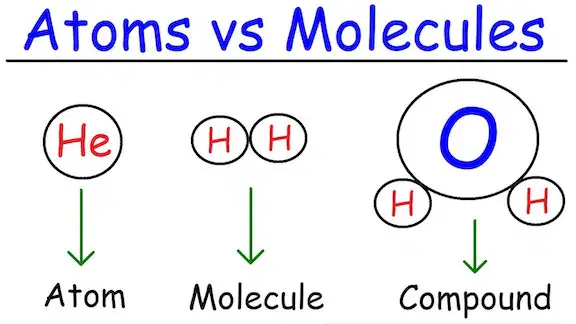
A student is comparing water, salt, and sugar. She notices that water is made of hydrogen and oxygen atoms, while salt and sugar are made of other elements. What does this show us about substances?
Each substance contains the same number of atoms
These substances cannot be broken down into smaller parts
The substances are made of different combinations of elements
All the substances have atoms from the same group on the periodic table

