
 Worksheets
Earth Science Semester 2 Review
Total questions: 85
Worksheet time: 1hrs 19mins


Hot, molten rock inside the earth is called ...
lava
magma
igneous rock
minerals


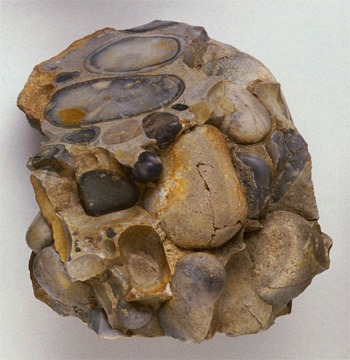
This rock formed when bits of other rocks and sediment were pressed into a solid. What type of rock is it?
Sedimentary Rock
Metamorphic Rock
Igneous Rock


Which processes form sedimentary rocks?
Lava cools and hardens to form a rock.
Weathering, Erosion, Deposition, Compaction, Cementation
Extreme heat and pressure from inside the Earth turn rocks into new rocks.
Magma trapped under the Earth's surface cools and solidifies.

Identify two processes labeled in this rock cycle that must occur in order to change any rock into an igneous rock.
heat and/or pressure
weathering and erosion
melting and solidification
deposition and cememtation

Identify two processes labeled in this rock cycle that change igneous rock into sediments.
heat and/or pressure
melting and solidification
deposition and cementation
weathering and erosion
What type of rock forms directly from Deposition, Compaction, and Cementation?
Igneous Rock
Sedimentary Rock
Metamorphic Rock
In what layer of the atmosphere do all weather events occur?
Stratosphere
Exosphere
Mesosphere
Troposphere

Located CLOSEST to Earth's surface.
Troposphere
Stratosphere
Mesosphere
Thermosphere
All of the above.
Eventually fades into space.
Troposphere
Stratosphere
Mesosphere
Thermosphere
All of the above.

Which layer is the Stratosphere?
1
2
3
4
Which layer is the Thermosphere?
1
2
3
4
Which layer is the Troposphere?
1
2
3
4
Which layer is the Mesoposphere?
1
2
3
4


Overcast skies & steady precipitation (snow or rain) is weather you'd see at what type of front?
warm
cold

What city will experience decreasing temperatures in the next day?
Denver
El Paso
Memphis
Los Angeles
Which type of weather system brings cold, dry air?
High Pressure System
Low Pressure System
Which type of weather system brings warm, moist air?
Low Pressure System
High Pressure System

The image shows a weather map with different pressure systems. What type of weather would Texas be having right now?
clear, sunny, dry weather
rainy, cloudy, stormy weather
Which answer correctly orders the planets from the sun?
Mercury, Earth, Mars, Jupiter, Venus, Saturn, Uranus, Neptune
Jupiter, Saturn, Uranus, Neptune, Earth, Venus, Mars, Mercury
Mercury, Venus, Earth, Mars, Jupiter, Saturn, Uranus, Neptune
Mercury, Venus, Earth, Mars, Saturn, Jupiter, Uranus, Neptune


Which of the following celestial bodies has a long and lighted tail?
Comet
Asteroid
Meteorite
Which of the following ones orbits around the sun?
Satellites
Meterorites
Asteroids
Which of the following best describes an asteroid?
It is made of ice and dust
It is also known as a "shooting star"
It has a nucleus, coma, and tail
It is a LARGE chunk of rock and metal
What keeps the planets in orbit around the sun?
gravity and inertia together
gravity
inertia
neither gravity or inertia
Why do the planets in our solar system orbit the sun?
because the sun is the brightest object
because the sun was there first
because the sun has the most mass
because nothing can orbit planets
What would happen to Earth if there were no inertia?
Earth would crash into the sun
Earth would fly out to space
Earth would collapse
Earth would orbit the moon
What would happen to Earth if there were no gravity?
Earth would crash into the sun
Earth would fly out to space
Earth would collapse
Earth would orbit the moon
Which hemisphere do we live in?
Northern Hemisphere
Southern Hemisphere
Western Hemisphere
Eastern Hemisphere

Based on the diagram, which season would the northern hemisphere be experiencing?
Winter
Spring
Summer
Fall
What season is the southern hemisphere experiencing when the northern hemisphere is experiencing summer
Fall
Winter
Spring
Summer

What season would we be experiencing with Earth #3?
Winter
Spring
Summer
Fall
What season would we be experiencing with Earth #3?
Winter
Spring
Summer
Fall
True or False: The Earth is closer to the sun during the summer months.
True
False

The imaginary pole that runs through the center of the Earth is called Earth's _______________.
Pole
Axis
Arm
Hemisphere
How many degrees is the Earth tilted on axis
3.5 degrees
23.5 degrees
35.2 degrees
235 degrees
We experience the same amount of daylight hours and nighttime hours during a(n)
Solstice
Equinox
Revolution
Orbital Period

True or false: The diagram represents summer in the northern hemisphere.
True
False
What season would we be experiencing with Earth #1?
Winter
Spring
Summer
Fall

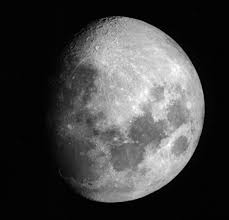
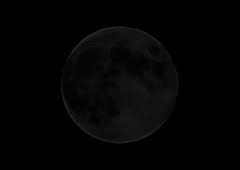
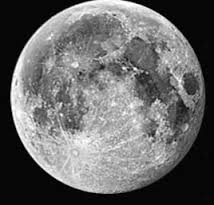
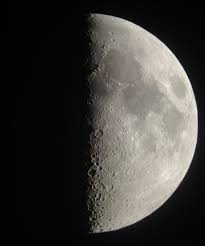
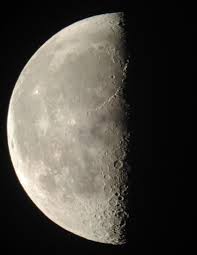
This model is showing us a...
lunar eclipse
solar eclipse
phases of the moon
earth eclipse

This image is showing us a.....
solar eclipse
lunar eclipse
phases of the moon
earth eclipse
In order to have an eclipse, the Moon, Sun and Earth have to be?
Below each other
Above each other
In alignment


Define nuclear fusion.
Nuclear fusion – combining lighter atoms to make heavier ones – is what makes it possible.
Nuclear fusion – splitting lighter atoms to make heavier ones – is what makes it possible.
Nuclear fusion – combining heavier atoms to make lighter ones – is what makes it possible.
Nuclear fusion – splitting heavier atoms to make lighter ones – is what makes it possible.
When hydrogen is "fused" together on the Sun, what new element is created?
Helium
Carbon Dioxide
Oxygen
Light
Choose the best description for a meteor...
-still in space
-burns up in earths atmosphere
-hits earth surface
Choose the best description for a meteorite...
-still in space
-burns up in earth's atmosphere
-hits earth surface
Choose the best description for a comet...
icy small body with a tail
chunky rock
rock moving body
Asteroids "hang out" in our solar system in a place called...
We often see these objects appear as "shooting stars" or streak of light in the sky. They are "smaller" pieces of rock that are burning in our atmosphere.
Asteroids
Meteors
Meteroids
Comets
A large, rocky object orbiting the sun is called a...
Comet
Asteroid
Meteoroid
Meteor
The earth orbits around the sun.
Rotation
Revolution
The sun appears to rise in the east and set in the west.
Rotation
Revolution
The earth spins on its axis.
Rotation
Revolution
This movement of Earth is completed in a year.
Rotation
Revolution

