
 Worksheets
Inheritance (Genetics)
Total questions: 59
Worksheet time: 3585secs
What do snapdragons, human height, and speckled chickens have in common?
They are non-Mendelian traits.
They are Mendelian traits.
They are examples of polygenic traits.
They are all caused by a single gene.
What is incomplete dominance?
A scenario where both alleles are expressed equally.
A condition where the recessive allele masks the dominant allele.
A case where the dominant allele is not completely expressed over the recessive allele.
A situation where the dominant allele completely masks the recessive allele.
In snapdragons, what does the genotype 'Rr' result in?
A red flower
A speckled flower
A white flower
A pink flower
What is codominance?
A condition where the recessive allele masks the dominant allele.
A situation where one allele is completely dominant over the other.
A case where the dominant allele is not completely expressed over the recessive allele.
A scenario where both alleles are expressed equally.
What phenotype do BW chickens exhibit?
They are completely white.
They are completely black.
They are pink.
They are speckled, showing both black and white.
What does 'polygenic' mean?
Influenced by a single gene.
Influenced by two genes.
Influenced by many genes.
Not influenced by genetics.
What is epistasis?
When a single gene determines a trait.
When a gene's expression depends on another gene.
When environmental factors solely determine a trait.
When a trait is determined by multiple alleles.
What happens to a llama with the genotype 'cc' for the epistatic gene?
It will be albino, with no pigment expressed.
It will have brown wool.
It will have speckled wool.
It will have black wool.
How are human height and skin color similar, genetically speaking?
Both are determined by environmental factors only.
Both are examples of incomplete dominance.
Both are polygenic traits.
Both are determined by a single gene.
Why should you not assume a trait is non-Mendelian unless indicated?
Because most traits follow Mendelian inheritance.
Because non-Mendelian traits are rare.
Because all traits are actually Mendelian.
Because the problem must provide information or clues.
genetics is the study of __________
heredity
genetics
parents

A Punnett square is a (a) that allows you to easily determine the expected (b) of different (c) in the (d) of two parents. An example of a Punnett square for pea plants is shown here. In this example, both parents are (e) for flower color (Pp).
In a broad sense, the term "genotype" refers to the (a) of an organism; in other words, it describes an organism's (b) . In a more narrow sense, the term can be used to refer to the (c) , or variant forms of a (d) , that are carried by an organism.

The presence of (a) at a particular (b) . A (c) genotype may include one (d) and one mutated allele or two different mutated alleles (compound heterozygote).

Gene locus is the physical site or location of a specific (a) on a (b) .

We all have two alleles, or versions, of each gene. Being (a) for a particular gene means you inherited two identical versions. It's the opposite of a (b) genotype, where the alleles are different. People who have recessive traits, like blue eyes or red hair, are always homozygous for that gene.

The gametes produced by the (a) are at the top of the chart, and the gametes produced by the (b) are along the side. The different possible combinations of alleles in their offspring are determined by filling in the cells of the (c) with the correct letters (alleles).

A (a) is a scoring of the type of variant present at a given location (i.e., a locus) in the genome. It can be represented by (b) . For example, BB, Bb, bb could be used to represent a given variant in a gene.

In the cross shown above, you can see that (a) (25 percent) has the genotype PP, one out of four (25 percent) has the genotype pp, and (b) (50 percent) have the genotype Pp. These percentages of genotypes are what you would expect in any cross between (c) Of course, when just four offspring are produced, the actual percentages of genotypes may vary by chance from the expected percentages. However, if you considered hundreds of such crosses and thousands of offspring, you would get very close to the expected results, just like tossing a coin.

(a) are always expressed when the connected allele is dominant, even if only one copy of the dominant trait exists. (b) are expressed only if both the connected alleles are recessive.

A Punnett square can also be used to determine a (a) based on the other genotypes involved in a cross. Suppose you have a parent plant with purple flowers and a parent plant with white flowers. Because the p allele is r (b) , you know that the white-flowered parent must have the genotype pp. The purple-flowered parent, on the other hand, could have either the PP or the Pp genotype. The Punnett square below shows this cross. The question marks (?) in the chart could be either P or p alleles.
In a broad sense, the term "genotype" refers to the (a) of an organism; in other words, it describes an organism's (b) . In a more narrow sense, the term can be used to refer to the (c) , or variant forms of a (d) , that are carried by an organism.
Red (R) is dominant over white (r). How can a flower be white?
It can have RR and be white.
It has to have rr.
It has to have rR
There is no way it can be white until the third generation.
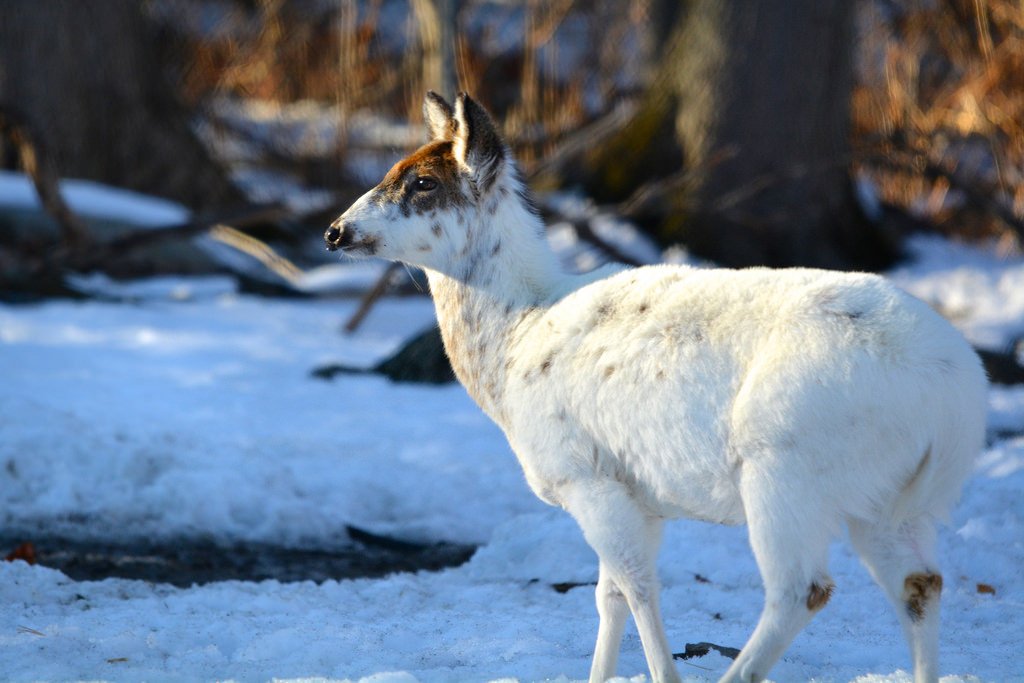
If "B" is brown and "b" is blond, what is the phenotype of someone who's genotype is "bb"
Brown Hair
Blond Hair
Red Hair
P= purple petals and p= white petals. What genotype(s) would result in purple petals?
pp
Pp, pp
PP, Pp
PP, pp
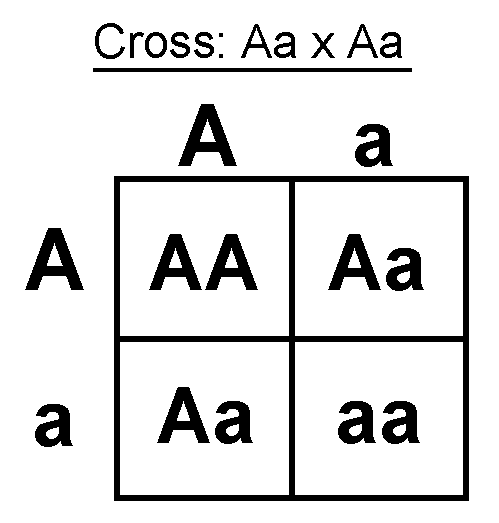
If the dominant trait is having freckles (F) and the recessive trait is no freckles (f), which allele combination(s) below would represent a person who has freckles? (select all that apply)
FF
Ff
ff
The combination of genes a person has, represented by letters, is their...
Genotype
Phenotype
Chromosome
Punnett Square

What belongs in the last box?
RR
Rr
rr
ff
Which of the following allele pairs is heterozygous?
RR
ss


In snapdragons, flower color is controlled by incomplete dominance. The two alleles are red (R) and white (W). The heterozygous genotype is expressed as pink.
Match the genotype with phenotype
RR
Red flowers
WW
White flowers
RW
Pink flowers
Incomplete Dominance
In Andalusian fowls, black individuals (B) and white individuals (W) are homozygous. A homozygous black bird is crossed with a homozygous white bird. Draw the Punnett square. What fraction of the offspring would be heterozygous (displaying a phenotype of bluish feathers)?
0/4
1/4
2/4
3/4
4/4
Which of the following genotypes code for the blood type AB?
IA IA and IA IB
IA IB only
IA IB and IB i
ii only
Which of the following are genotypes for blood type B?
IA IA and IA IB
IB IB and ii
IB IB and IB i
IA IB and IA IB

A woman with curly hair and a man with straight hair produced a child with wavy hair:
Incomplete dominance
Codominance
Complete dominance

This type of inheritance pattern is a MIXTURE of two traits. This is known as ---
incomplete dominance.
codominance


A long-haired female rabbit and a short-haired male rabbit produced this offspring with a medium-length coat:
Incomplete dominance
Codominance
Complete dominance

Some flowers are controlled by codominance. Red flowers (FRFR), blue flowers (FBFB) and Speckled flowers (FRFB).
Cross a red flower with a speckled flower. What is the phenotypic ratio?
50% red, 50% speckled
25% red, 25% blue
100% blue


A brown rooster and a white chicken produced this speckled offspring:
Incomplete dominance
Codominance
Complete dominance

A black male and white female produced this grey offspring:
Incomplete dominance
Codominance
Complete dominance

Codominance occurs in calico cats, which allows for the Black and Tan colors to show. What percentage of the offspring will be calico (black and tan spotted)?
25
50
75
100

What does this Punnett square and the probabilities of the ofspring represent?
incomplete dominance
codominance

