
 Worksheets
ECHEM30 LAB FINAL EXAM
Total questions: 35
Worksheet time: 36mins
These laboratory apparatus are very important when performing experiments of any kind. They can keep dangerous chemicals and other substances from damaging your eyes.
Goggles
Gloves
Jacket
Sunglasses
These laboratory apparatus are important to wear in order to protect the skin from chemical substances.
Goggles
Gloves
Jacket
Sunglasses
This laboratory apparatus is made up of a glass or plastic tube used for holding, mixing and heating small quantities of liquid chemicals.
Erlenmeyer Flask
Beaker
Test tube
Graduated Cylinder
This laboratory apparatus has a conical shaped body, a cylindrically shaped neck, and a flat bottom.
Erlenmeyer Flask
Beaker
Test tube
Graduated Cylinder
This laboratory apparatus is generally used for a more accurate way to measure volume than a typical beaker or flask.
Erlenmeyer Flask
Beaker
Test tube
Graduated Cylinder
This laboratory apparatus is a metal tube that produces a flame from gas such as methane, propane, or butane.
Bunsen Burner
Funnel
Tripod
Wire gauze
This laboratory apparatus is a pipe with wide mouth that helps to pour substances into a container without spilling.
Bunsen Burner
Funnel
Tripod
Wire gauze
This laboratory apparatus is used to support a beaker or flask when heating. It helps to spread the heat evenly.
Bunsen Burner
Funnel
Tripod
Wire gauze
This laboratory apparatus is used to support a beaker or flask when heating or when not in use.
Bunsen Burner
Funnel
Tripod
Wire Gauze
This laboratory apparatus is a glass container with a flat bottom and a small spout for pouring.
It is used in the chemistry lab for mixing, heating, and stirring liquids
Erlenmeyer Flask
Beaker
Test tube
Graduated Cylinder
The SI units J/g°C measures
Specific heat
mass
temperature
heat energy
Determine the heat energy needed to heat the water in the pot to boiling.
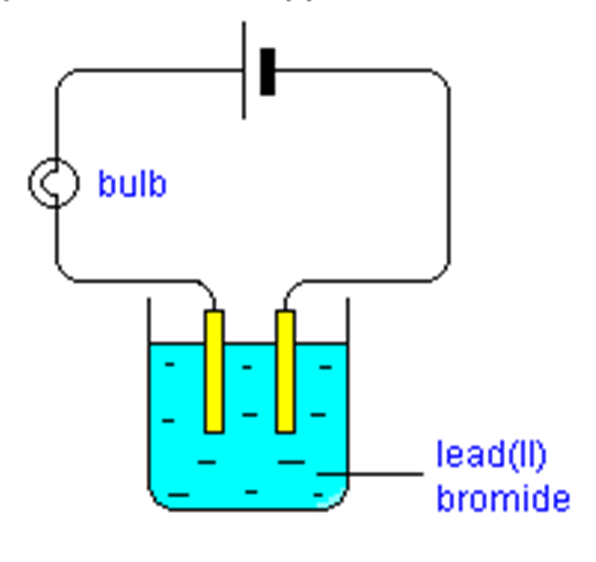
The diagram shows the electrolysis of lead(II) bromide using inert electrodes. Why does the bulb only light up when the lead(II) bromide is melted?
Bromine atoms in lead(II) bromide are converted to ions when it is melted
Electrons flow through the lead(II) bromide when it is melted
The ions in lead(II) bromide are mobile charge carriers in the molten state.
There are no ions in solid lead(II) bromide
Anions get discharged by ________ electrons at the ___________
gaining, cathode
losing, anode
gaining, anode
losing, cathode
What is the gas produced at the anode during the electrolysis of very dilute hydrochloric acid?
water
oxygen
hydrogen
chlorine
What ions are present in molten aluminium oxide?
Al3+, O2-, H+, OH-
Al3+, O2-
Al3+, OH-
What is the basis for separating the components of a mixture through distillation?
freezing point of the substances
room temperature
decaying period
boiling pint of the substances

Which of the following techniques is used to separate the components of a solution?
filtration
decantation
evaporation
physical manipulation

Which technique is shown in the image?
seiving
filtration
decanting
crystallization
Which separation technique is used to obtain pure water from seawater?
Simple distillation
Filtration
Chromatography
Evaporation
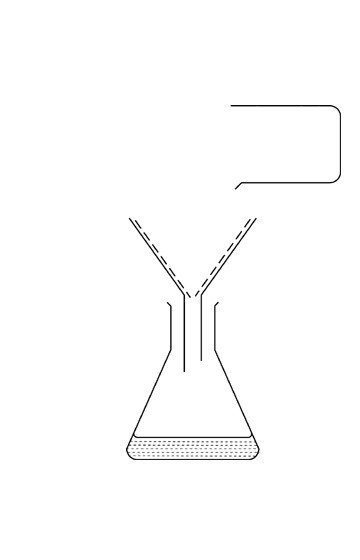
What is the name of this separation technique?
distillation
filtration
evaporation
chromatography
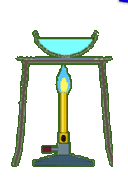
What method would you use to separate a mixture of salt and water so that you can get keep the salt AND the water?
sorting by hand
distillation
chromatography
No matter what you do, sand will not dissolve in water, because sand is _________.
dissolved
soluble
insoluble
aqueous
How can we separate an insoluble solid from a liquid?
chromatography
evaporation
filtration
condensation
Dyes in water soluble markers may be separated by means of
Distillation
Filtration
Chromatography
Evaporation
Sodium chloride can be separated from rock salt by first adding water to the mixture to dissolve the sodium chloride. The separation then takes place in two stages:
evaporation followed by filtration
distillation followed by decanting
filtration followed by evaporation
filtration followed by decanting

