wayground logo

Free Printable Worksheets

Font size

S
M
L
XL
Worksheets

Chapter 9: Motion and Machines

Total questions: 69

Worksheet time: 1hrs 6mins

Name
Class
Date
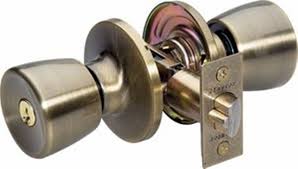
1.
Identify this simple machine
a)
Lever
b)
Wheel & Axle
c)
Inclined Plane
d)
Screw
2.
Two examples of a pulley...
a)
knife & axe blade
b)
lightbulb & screw
c)
flagpole hoist & window blinds
d)
catapult & teeter totter
3.
Which of the following does a simple machine do?
a)
allows the users to apply less force over a longer distance
b)
reduce the amount of force needed to do work
c)
change the direction of the applied force
d)
all of the above
4.
What do you call a machine made up of two or more simple machines?
a)
complicated machine
b)
compound or complex machine
c)
comprehensive machine
d)
constructive machine
5.
An inclined plane wrapped around a rod forms this simple machine 
a)
lever
b)
pulley
c)
screw
d)
wedge 
6.
An axe is an example of a
a)
pulley
b)
inclined plane
c)
screw
d)
wedge 
7.
A seesaw is an example of a  
a)
wedge
b)
lever 
c)
inclined plane 
d)
pulley 
8.
Which is not a type of simple machine?
a)
spring
b)
screw
c)
pulley
d)
wedge
9.
What type of simple machine is this?
a)
wheel and axle
b)
gear
c)
lever
d)
inclined plane
10.
The transfer of energy that occurs when a force makes an object move is known as 
a)
effort
b)
potential 
c)
kinetic 
d)
work 
11.
A flat sloping surface that connects lower and higher elevations. It makes raising objects easier.  
a)
wedge
b)
screw
c)
lever
d)
inclined plane 
12.
Name this simple machine.
a)
Lever
b)
Wedge
c)
Pulley
d)
Inclined Plane
13.
How does a pulley make work easier? 
a)
It changes the direction of the input force.
b)
It changes the distance over which the input force is applied.
c)
It changes the amount of the input force applied 
d)
It changes direction and increases the effect of your input force
14.
This picture is an example of a _________.
a)
pulley
b)
wedge
c)
wheel and axle
d)
screw
15.
What simple machine can be used to split things apart and also it can hold open a door?
a)
Lever
b)
Pulley
c)
Wedge
d)
Screw
16.

A ______ is a grooved wheel with a chain or rope wrapped in the groove

a)

Pulley

b)

Wheel and axle

c)

Screw

d)

Inclined plane

17.

(a)   =mass x acceleration

18.

(a)   x distance = work

19.

Mechanical advantage is the increase in effort that is needed to move an object.

a)

TRUE

b)

FALSE

20.

A _____ ___ ______ combines multiple fixed and moveable pulleys

(a)  

21.

The ridges in a screw are called (a)   .

22.

A ______ is attached to something so it does not move

a)

Fixed pulley

b)

Moveable pulley

c)

Block and tackle

d)

Screw

23.

A pulley is an incline wound around a cylinder or cone.

a)

TRUE

b)

FALSE

24.

A (a)   is a machine consists of two inclined plaines placed back to back.

25.

A _____ _____ lever has the resistance between the effort and the fulcrum

(a)  

26.

A pulley makes work easier by either changing the direction of the force or by reducing the amount of force needed to move an object.

a)

TRUE

b)

FALSE

27.

A gear is a type of ________

a)

None of these

b)

Wheel and axle

c)

Screw

d)

Wedge

28.

Work is measured in units of newtons.

a)

TRUE

b)

FALSE

29.

Kinetic energy is ________.

a)

Speed

b)

Potential energy

c)

Static

d)

Motion

30.

To determine whether an object is in motion, you need a ______ _____.

(a)  

31.

A _____ ______ combines 2 or more simple machines to make work even easier.

(a)  

32.

Stored energy is _________ _____.

(a)  

33.

Force is measured in ________.

a)

Work

b)

Joules

c)

Newtons

d)

Distance

34.

What do we use levers for?

a)

To lower objects

b)

To lift objects that are too heavy for us

c)

To build a building

d)

To make toothpaste

35.

The speedometer measures the _______ ______.

(a)  

36.

The unit used to measure work is called the (a)   .

37.

(a)   is a change in velocity during a period of time.

38.

A wedge is two inclined planes placed back to back

a)

True

b)

False

39.
You hit a wall with a stick.  The equal but opposite reaction is _____
a)
the wall pushes against you
b)
the stick pushes against you
c)
you push against the stick
d)
the wall pushes against the stick
40.
A person is pushed forward into their seat belt when a car stops quickly.  Which law is this?
a)
1st
b)
 2nd
c)
2 and 3
d)
3rd 
41.
An object at rest will _______ if no outside forces are applied.
a)
stay at rest
b)
increase velocity
c)
decrease mass
d)
fall to the ground
42.
What is Newton's First Law?
a)
Object in motion stays in motion and an object at rest stays at rest unless acted on by a outside force
b)
Force = mass x acceleration
c)
For every action there is an equal and opposite reaction
43.
What is Newton's Third Law?
a)
Object in motion stays in motion and an object at rest stays at rest unless acted on by a outside force
b)
Force = mass x acceleration
c)
For every action there is an equal and opposite reaction
44.
What is the name for a push or pull?
a)
movement
b)
force
c)
speed
d)
density
45.
Which law explains why a person in a car slides to the right when going through a very sharp left turn on the highway. 
a)
1st Law
b)
2nd Law
c)
3rd Law
46.
What is Newton's First Law known as? The Law of
a)
Friction
b)
Mass
c)
Inertia
d)
Gravity
47.
How does Newton’s third law explain how a rocket takes off?
a)
The rocket’s acceleration is positive, while the gasses acceleration is negative but the direction is the same. 
b)
The rocket is at rest until ignition.
c)
The hot gasses move in one direction, while the rocket moves in the opposite direction but with equal force.
48.

What is the formula for the 2nd law of motion?

a)

a=lw

b)

F=m/a

c)

F=ma

49.

Force is related to mass and acceleration. Which law is this?

a)

Law 1

b)

Law 2

c)

Law 3

50.

A book sitting on the table does not move.

a)

Law 1

b)

Law 2

c)

Law 3

51.

A change in and object's position

a)

mechanical energy

b)

potential energy

c)

motion

d)

force

52.

Can cause an object at rest to move

a)

gravity

b)

friction

53.

Can cause an object in motion to stop

a)

gravity

b)

friction

54.

Which object most likely had a greater force applied>

a)

an object with a great acceleration

b)

an object with a small acceleration

55.
Distance over time.
a)
Travel
b)
Motion
c)
Velocity
d)
Speed
56.
When an object speeds up, slows down, stops, or starts is called?
a)
speed
b)
direction
c)
acceleration
d)
time
57.
What are the two things that must be measured in order to find an objects velocity?
a)
speed and direction
b)
acceleration and speed
c)
direction and time
d)
distance and rate
58.

What two things do you need to know to calculate speed?

a)

direction and distance

b)

time and direction

c)

time and distance

d)

distance and position

59.

______ is the ability to cause change or do work. It is all around us

a)

force

b)

speed

c)

friction

d)

energy

60.

Which formula is used to calculate

momentum?

a)

Momentum = Mass x Speed

b)

Momentum = Weight x Speed

c)

Momentum = Volume x Velocity

d)

Momentum = Mass x Velocity

61.

An example of a lever is a ________.

a)

doorstop

b)

drill

c)

staircase

d)

hammer

62.

The fixed point around which a lever rotates is know as the

a)

wheel.

b)

fulcrum.

c)

input force.

d)

output force.

63.

A simple machine that splits an object apart is a _______.

a)

inclined plane

b)

fulcrum

c)

wedge

d)

lever

64.

A ramp is an example of a(n) _______.

a)

inclined plane

b)

fulcrum

c)

force

d)

lever

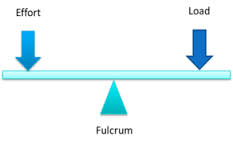
65.
Which type of lever is this?
a)
First Class Lever
b)
Second Class Lever
c)
Third Class Lever
d)
Coach  Class Lever
66.
A see saw is an example of a:
a)
1st class lever
b)
2nd class lever
c)
3rd class lever
67.
A wheelbarrow is an example of a:
a)
1st class lever
b)
2nd class lever
c)
3rd class lever
68.

What class lever is a fishing rod?

a)

1st

b)

2nd

c)

3rd

69.

What kind of lever is this?

a)

First Class Lever

b)

Second Class Lever

c)

Third Class Lever