
Font size
 Worksheets
Energy Unit Review
Total questions: 40
Worksheet time: 20mins

Hilda is comparing two light bulbs. After she observes both of the lit bulbs, she concludes that the fluorescent bulb produces less of which type of energy?
chemical
nuclear
thermal
electrical
In a gasoline-powered car, chemical energy from gasoline is transformed to make the car move. The motion of the car is what form of energy?
mechanical energy
electrical energy
nuclear energy
radiant energy
Which form of energy is in firewood?
(a)
Which type of energy is found in fossil fuels?
mechanical
chemical
nuclear
radiant
A student is reading the nutritional information on a box of cereal. It says that a single serving contains 215 calories. Which type of energy is being measured by this unit?
mechanical
electrical
chemical
kinetic
Carlos was playing on a slide on a sunny summer day. Which property of the slide tells Carlos how much energy the slide absorbed from the Sun?
the color
the mass
the height
the temperature
Amanda and Jake learned about kinetic and potential forms of energy within a simple electrical circuit. The circuit they are studying has a battery, wires, and a light bulb. Which is a form of potential energy in the circuit?
chemical energy in the battery
light energy from the light bulb
electrical energy moving through the light bulb
heat energy lost from the electric wires
Which BEST represents the use of mechanical energy?
a light bulb giving off heat
a nail being hammered
a candle providing light
a can rusting

The picture shows a can opener being operated. Which form of energy is MOST likely used to open the can?
mechanical
electrical
chemical
thermal
Anya placed an ice cube on the sidewalk on a warm day. The ice cube soon melted to form a puddle. What process caused the ice cube to melt?
Heat transferred from the air and the pavement by conduction.
Heat transferred from the air to the ice cube by radiation.
Heat transferred through the ice cube by convection.
Heat transferred through the ice cube into the pavement by conduction.
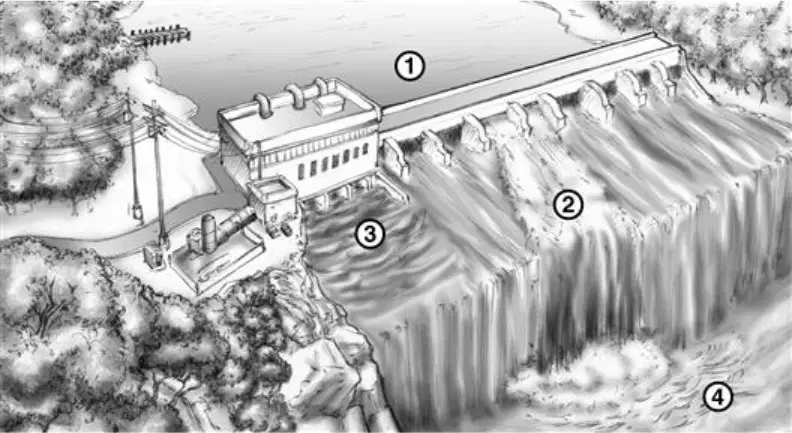
A hydroelectric plant uses the power of falling water to turn turbines to create electricity to power homes, offices, and schools. Where is the potential energy to run the plant?
3
2
4
1
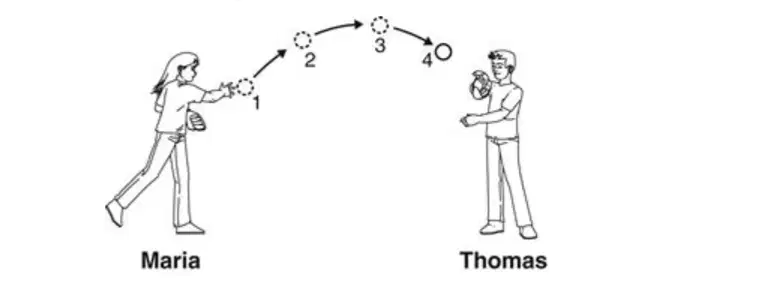
Maria throws a ball to Thomas. The ball has kinetic energy and potential energy. The ball makes a path through the air, as shown in the diagram. At which labeled point on the diagram does the ball have the LEAST kinetic energy?
1
3
4
2
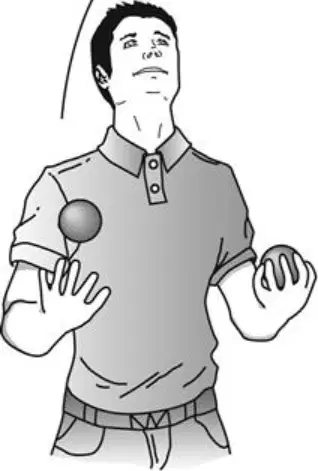
A juggler tosses balls into the air as he juggles. Which form of energy is increasing as the balls travel up into the air?
potential energy
kinetic energy
thermal energy
chemical energy
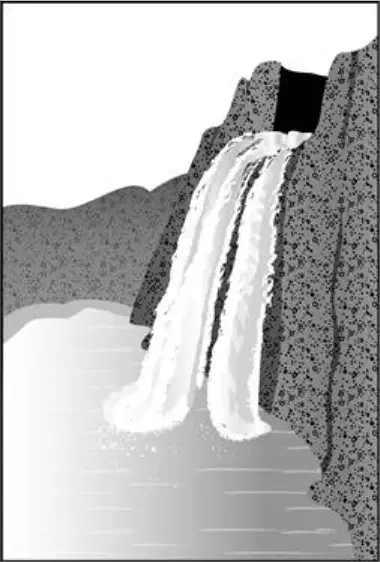
The drawing shows a waterfall flowing into a pool of water. Which statement BEST describes the energy of the objects in the drawing?
The water has potential energy at the top of the waterfall and increasing kinetic energy as it falls.
The pool of water has more kinetic energy and the falling water has more potential energy.
The water at the top of the fall has kinetic energy that becomes potential energy as it falls into the pool.
The falling water has potential energy and the rock over which it flows has kinetic energy.
A roller coaster is climbing up the highest hill on its track. At which point will the front car of the coaster MOST likely have its greatest potential energy?
at the bottom of the highest hill
at the start of the track
at the end of the track
at the top of the highest hill
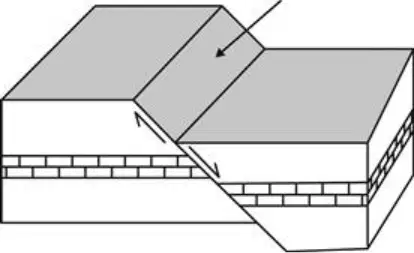
The diagram below shows a normal fault. The fault is formed by the release of
potential energy
chemical energy
heat energy
electromagnetic energy
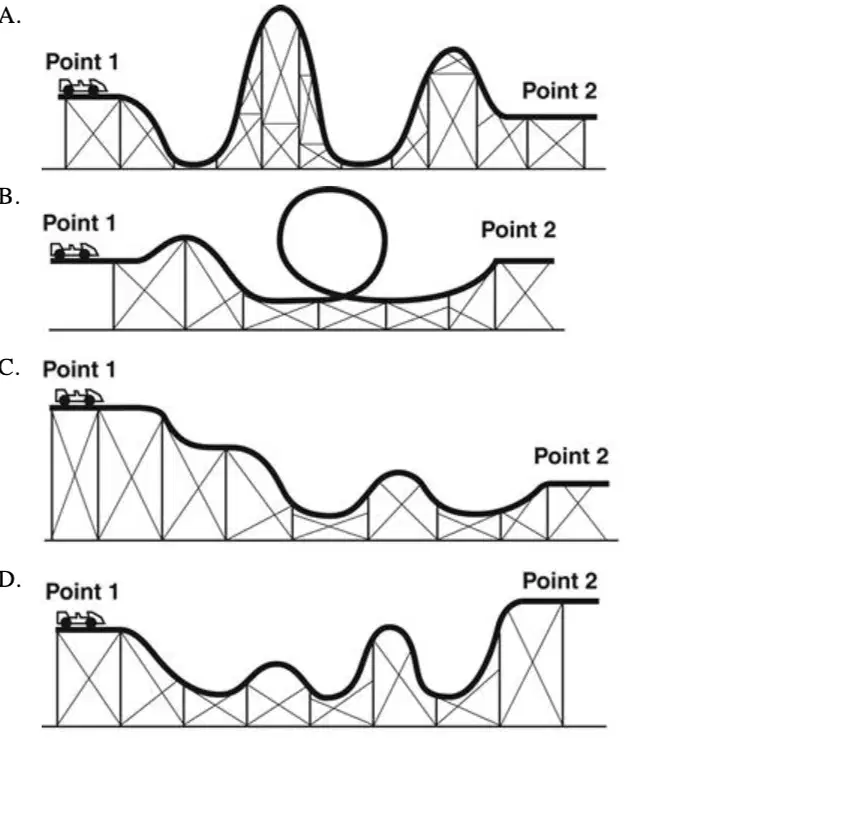
A student plans to build a model roller coaster for a science fair. The only energy for the car is the potential energy it contains. The student wants the car to roll from Point 1 to Point 2. Which design allows the car to roll to Point 2 by converting its potential energy into kinetic energy?
Design A
Design B
Design C
Design D
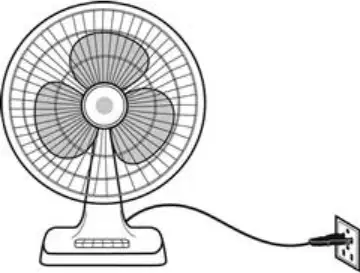
David switches on a fan on a hot day. Which statement BEST describes how energy changes to make the fan spin?
Electrical energy changes to heat energy.
Electrical energy changes to mechanical energy.
Heat energy changes to mechanical energy.
Wind energy changes to electrical energy.

Four identical cans are arranged on the shelves of the bookcase as shown. Which can has the greatest potential energy?
3
4
2
1
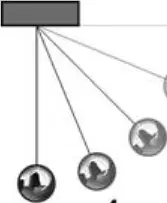
The diagram shows a swinging pendulum. Five different positions of the pendulum are labeled. Each position contains different amounts of potential and kinetic energy. The potential and kinetic energy of the pendulum can be represented on bar graphs. Which graph correctly shows the amount of energy available at position 3?
A
B
C
D
The diagram shows a swinging pendulum. Five different positions of the pendulum are labeled. Each position contains different amounts of potential and kinetic energy. The potential and kinetic energy of the pendulum can be represented on bar graphs. Which graph correctly shows the amount of energy available at position 3?
A
B
C
D
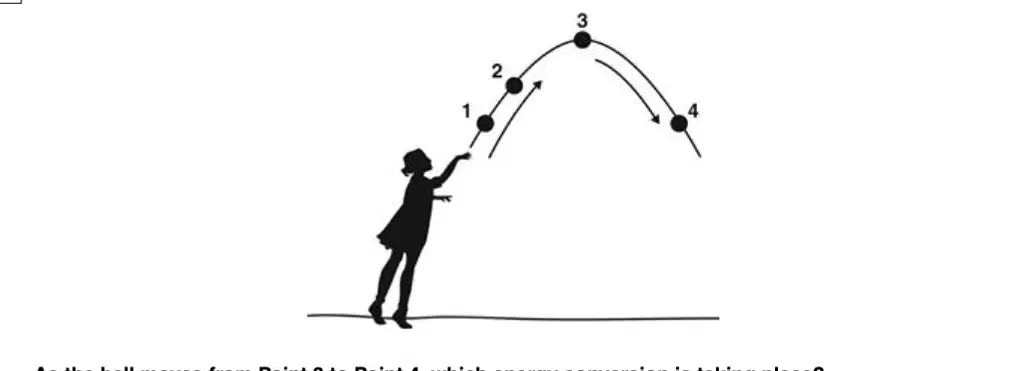
The line shows the path of the ball. As the ball moves from Point 3 to Point 4, which energy conversion is taking place?
kinetic to thermal
kinetic to potential
potential to kinetic
thermal to kinetic
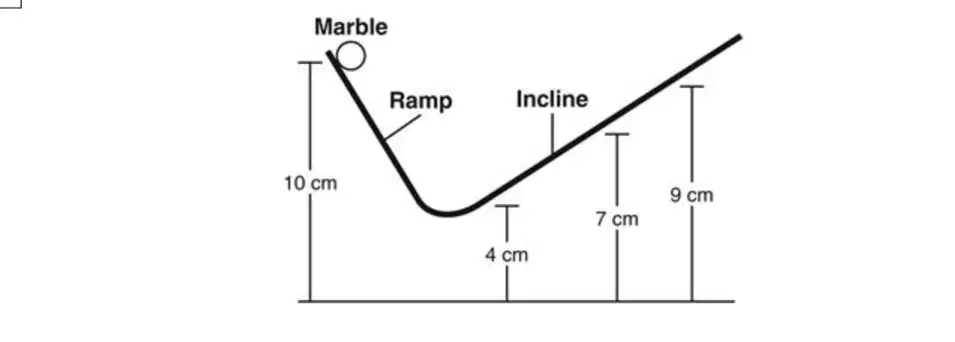
A student investigates how far a marble can travel up the incline after rolling down the ramp. Without friction, what is the maximum height the marble will be able to reach on the incline?
9 cm
10 cm
4 cm
7 cm
Every night, Johnny reads next to a lamp that is lit by an incandescent light bulb. Which is the BEST indication that the transfer of electrical energy to the lamp is inefficient?
The bulb gets hot.
The bulb produces light.
The lamp uses copper wires.
The lamp can be turned off at a switch.
Riding a bicycle produces several forms of energy. Which form of energy is produced in the greatest amount by pedaling a bicycle down the sidewalk?
radiant
chemical
sound
kinetic
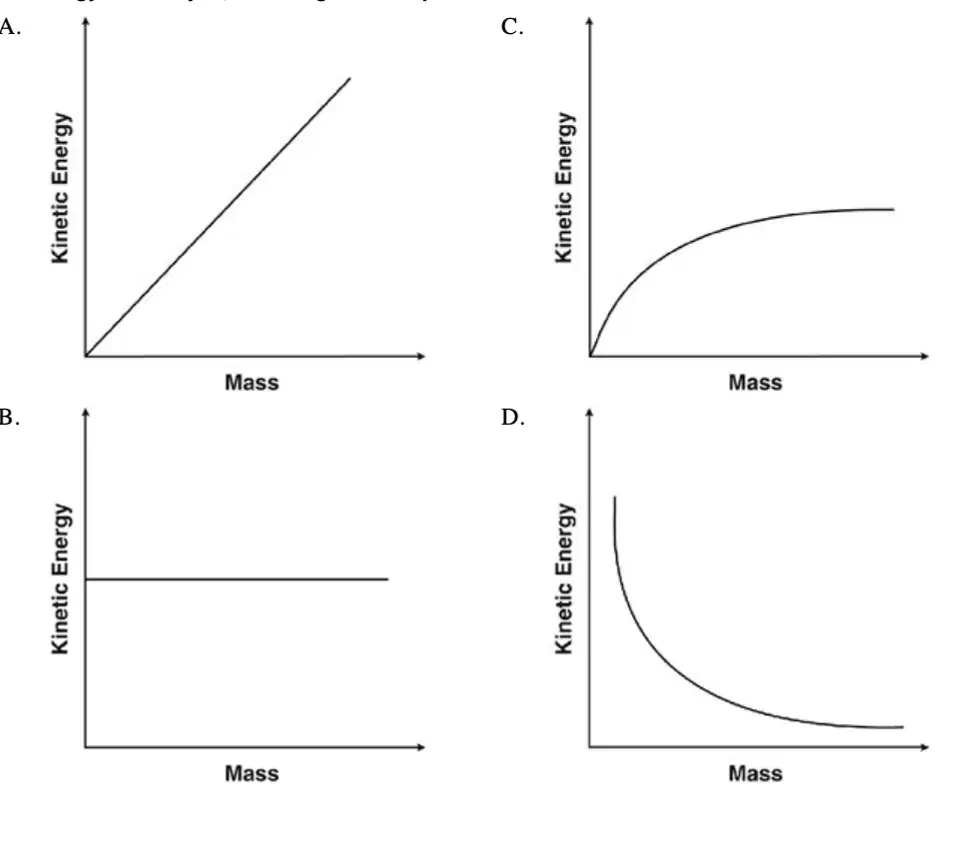
Which graph correctly shows the relationship between the mass of a moving object and the kinetic energy of the object, assuming that the speed is constant?
Diagram A
Diagram B
Diagram C
Diagram D

A group of students built a ramp and rolled steel balls of different sizes down the ramp onto the floor. Then they measured how far each ball rolled from the bottom of the ramp. Which statement correctly explains the differences in the distances that the balls rolled?
Acceleration increased as mass increased.
Friction increased as mass increased.
Velocity increased as mass increased.
Kinetic energy increased as mass increased.
Molly was making iced tea by putting tea bags in boiling water. She needed to cool the hot tea quickly, so she poured it into a pitcher full of ice. Which BEST describes the flow of thermal energy?
from the ice to the pitcher
from the tea to the ice
from the pitcher to the tea
from the ice to the tea
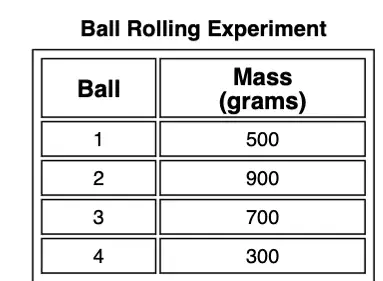
Samuel rolled four different balls across a table. All of the balls were the same size, but each had a different mass. The table shows the mass of each ball. Samuel rolled each ball with the same amount of force. Which ball MOST likely rolled the farthest?
Ball 4
Ball 2
Ball 3
Ball 1

During an investigation on energy, Seth rolls marbles of four different masses down a ramp. Which size marble will have the greatest kinetic energy when it reaches the bottom of the ramp?
5 grams
6 grams
3 grams
2 grams
Laura bruised her knee. She applied an ice pack to the bruised area. When she removed the ice pack from the injured knee, she noticed that the temperature of her skin was lower than the rest of her body. What is the MOST likely reason this occurred?
Heat energy from the skin was transferred to the ice pack.
The cooling energy of the ice pack was transferred to the skin.
Increased blood flow due to the ice pack caused the skin to be cooler.
The air surrounding the ice pack cooled the skin.
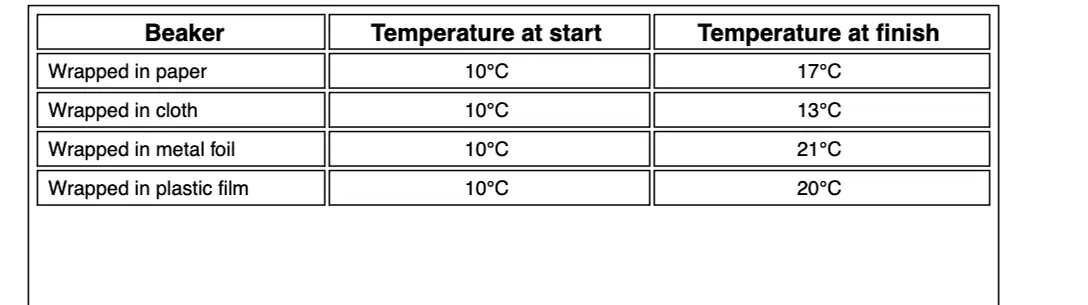
Students measured the temperature of water inside three different beakers. They measured the temperature again two hours later. What can the students conclude?
Cloth is a better insulator than metal foil.
Paper is a better insulator than cloth.
Metal foil is a better insulator than plastic film.
Plastic film is a better insulator than paper.
A carpenter rubs sandpaper on a wooden bench to make the bench smoother. The sandpaper will get warm as it is rubbed on the bench. As a result of the friction between the sandpaper and the bench, thermal energy is converted to
potential energy that is stored by the wood
radiant energy that is transferred to the bench
heat energy that is transferred to the air
chemical energy that is stored by the sandpaper
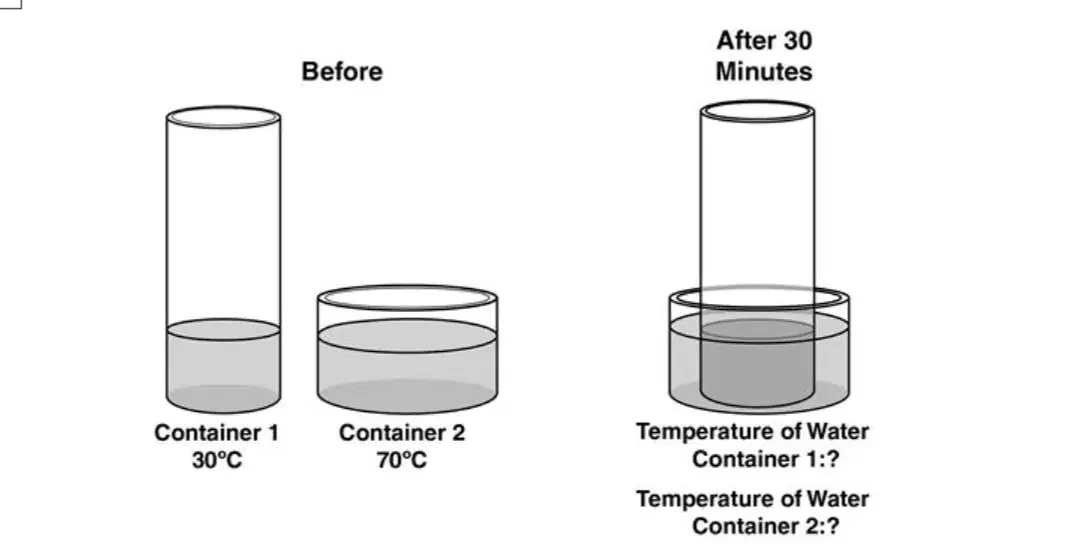
A student investigated the containers of water shown in the pictures below. The student placed Container 1 in the middle of Container 2. The student measured the temperature of the water in each container after 30 minutes. Which results MOST likely occurred?
Water in Container 1: 40°C / Water in Container 2: 100°C
Water in Container 1: 20°C / Water in Container 2: 20°C
Water in Container 1: 70°C / Water in Container 2: 30°C
Water in Container 1: 60°C / Water in Container 2: 60°C
A pot is touching the flame of a gas stove. The water in the pot begins to boil as it heats up. Which of the following BEST describes the heat transfer through the bottom of the pot?
vaporization
conduction
convection
radiation
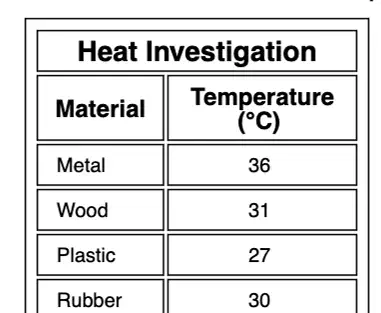
Elaine investigated how well different materials conducted heat. She had samples of metal, wood, plastic, and rubber that were each the same size. Elaine put each sample in boiling water for five minutes and then measured its temperature. She put her results in the table. Which is the best conductor?
rubber
metal
wood
plastic
Isabella filled a glass with warm water. She measured the temperature, and it was 30°C. She left the glass on a table in a room that was 20°C. A few hours later, she measured the water temperature again, and it was 24°C. Which BEST explains why the water temperature changed?
Heat energy in the water was destroyed by the glass.
Energy in the air removed heat from the water.
Energy used by evaporation caused the water temperature to decrease.
Heat energy in the water was transferred to the cooler air.
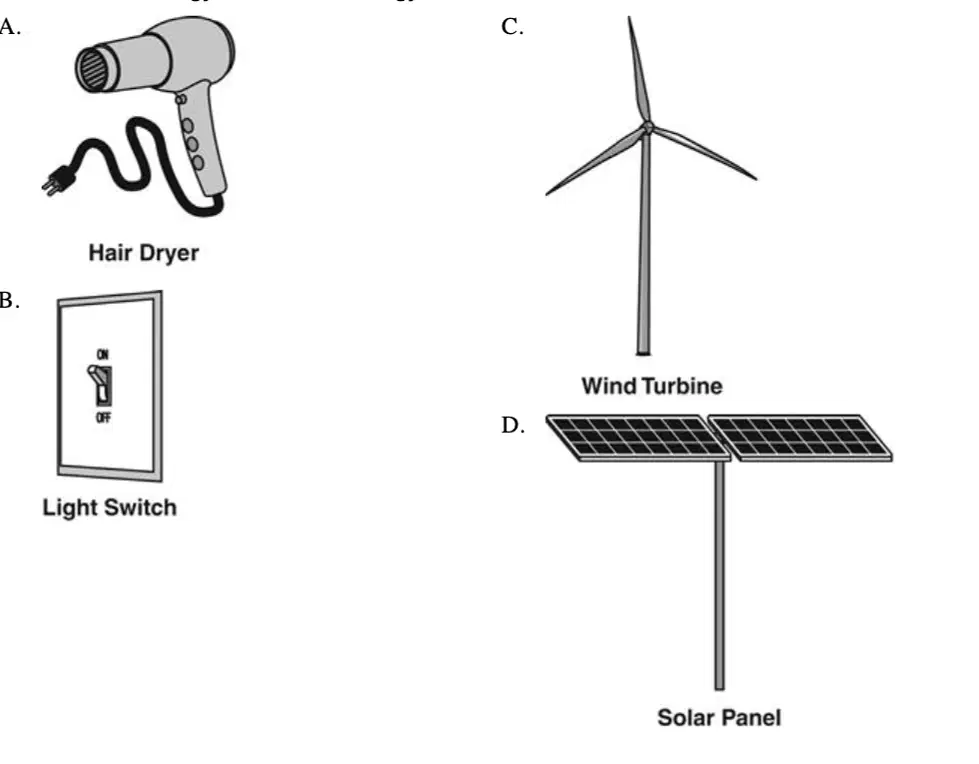
Julie studied how devices can change one type of energy into another. Which device can change mechanical energy into electrical energy?
Hair Dryer
Light Switch
Wind Turbine
Solar Panel
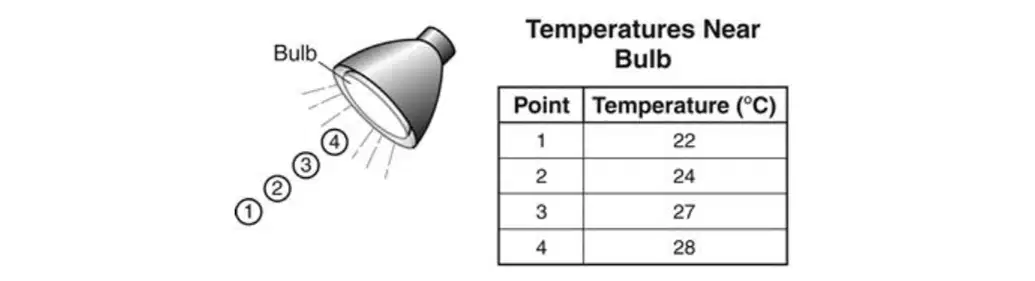
Mary used a thermometer to test the air temperature at four points near a lit bulb. She recorded her data in the table. Which BEST explains why the air closest to the bulb was warmest?
The bulb gave off light.
The bulb radiated heat.
The bulb was insulated.
The bulb conducted electricity.

A student put a cube of butter on a metal rod. Then he placed the other end of the rod in a beaker of hot water. The setup for the investigation is shown below. The butter melted in ten minutes. What type of energy did the metal rod conduct to the butter?
electrical
mechanical
chemical
thermal

