
Font size
 Worksheets
2024 11 ATAR HB - Respiratory system
Total questions: 61
Worksheet time: 41mins
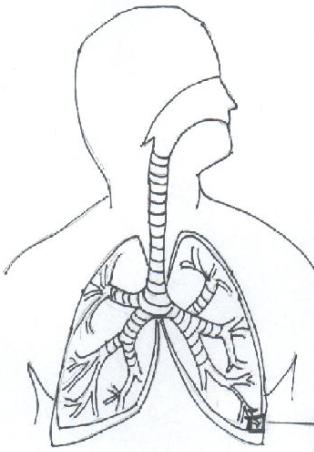
What is the function of the bronchi?
Transport air from nose to lungs
Transport air from trachea to lungs
Transport air from lungs to alveoli
Transport air from alveoli to blood
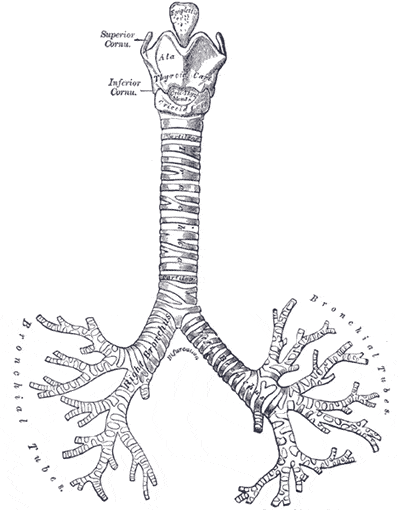
The two main branches from the trachea (one to each lung)
bronchi
alveoli
capillaries
bronchioles
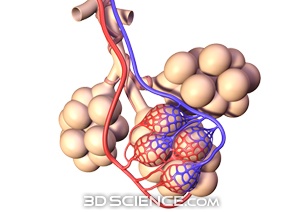
The air sacs that are covered with capillaries where gas exchange takes place
bronchi
lungs
oxygen
alveoli
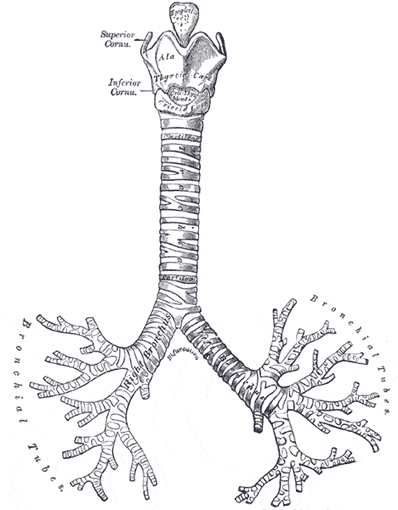
What is tube that is also known as your wind pipe?
esophogus
bronchi
trachea
alveoli
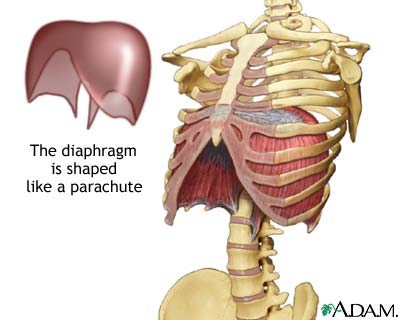
What is function of the dome-shaped diaphragm?
This is where gas exchange happens.
Air passes through the diaphragm on the way to the lungs.
It attaches to the lungs to help in breathing.
It is under the lungs and keeps them from falling down to your stomach.

The upper respiratory system is composed of these divisions:
Nasal cavity
Larynx
Pharynx
Bronchioles
These apply to inhalation
Diaphragm moves up
Ribs move in
Ribs move out
Diaphragm contracts
Creates larger pressure in thoracic cavity
These apply to exhilation
Diaphragm relaxes
Pressure increases in thoracic cavity
Pressure is less outside the body
Diaphragm moves down
Which answer is true?
Increase in volume= increase in pressure
decrease in volume= increase in pressure
decrease in volume= decrease in pressure
Increase in volume= decrease in pressure
Your lungs are ___________ air
My lungs are __________________ air.
What are the tiny air sacs that allow for diffusion between oxygen and carbon dioxide
Bronchi
Bronchioles
Trachea
Alveoli
What is the name of the passages that enables air to pass into the Alveoli?
Bronchi
Trachea
Pharynx
Bronchioles
Please choose the correct pathway air travels though into the lungs
Nasal passage, pharynx, larynx, trachea, bronchiole, bronchi, alveoli
Nasal passage, pharynx, larynx, trachea, bronchi, bronchiole, alveoli
Nasal passage, pharynx, larynx, trachea, bronchi, alveoli, bronchiole
Nasal passage, trachea, pharynx, larynx, bronchi, bronchiole, alveoli
What am I? I divide in 2 and lead to each lung.
Bronchioles
Bronchi
Alveoli
Trachea
What is the main function of gas exchange
To remove carbon dioxide and supply oxygen to the body
To remove oxygen from the body
To supply carbon dioxide and remove oxygen from the body
To supply water to the body cells
Which part of the human respiratory system is a thin, moist membranous structure where gas exchange occurs?
trachea
bronchus
epiglottis
alveolus
Pulmonary gaseous exchange...
Is the exchange of O2 and CO2 between the alveoli and capillaries
Is the diffusion of gases at the muscles
Is Oxygen moving from low concentration to high concentration
Is where blood becomes deoxygenated
A flat piece of tissue that prevents food particles from entering into the larynx and trachea is_____
Epiglottis
Pharynx
Nose
Cilia
A respiratory surface must have the following characteristics. Thick the correct answers.
Moist
Impermeable to gases
Permeable to gases
Must have a large surface area
During exhalation, When carbon dioxide is expelled out of the body, the diaphragm ____
Contracts and becomes flattened
Relaxes and assumes a dome shape
Please choose the correct pathway air travels though into the lungs
Nasal passage, pharynx, larynx, trachea, bronchiole, bronchi, alveoli
Nasal passage, pharynx, larynx, trachea, bronchi, bronchiole, alveoli
Nasal passage, pharynx, larynx, trachea, bronchi, alveoli, bronchiole
Nasal passage, trachea, pharynx, larynx, bronchi, bronchiole, alveoli
What is tube that is also known as your wind pipe?
esophogus
bronchi
trachea
alveoli

What is #5 pointing to?
trachea
mouth
nose
pharynx

What is #4 pointing to?
mouth
pharynx
nasal cavity
trachea

What is #7 pointing to?
larynx
lung
bronchiole
trachea

What is #1 pointing to?
larynx
pharynx
alveoli
bronchi

What is #6 pointing to?
larynx
pharynx
trachea
bronchus

What is #8 pointing to?
nasal passageway
nose
right lung
left lung

What is #11 pointing to?
pharynx
alveoli
bronchiole
left primary bronchus
this cleans the air that enters the respiratory system
cilia
mucus
capillaries
this is also called the windpipe and is made of C-shaped rings of cartilage
larynx
pharynx
trachea
lungs
__________ is an active process of breathing which causes intake of air into lungs.
Inspiration
Expiration
Deglutition
Expectorant
_________ is a passive process of breathing which causes expulsion of air from lungs.
Inspiration
Expiration
Deglutition
Expectorant
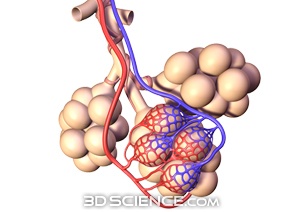
Pulmonary Artery is the blood vessel which carry oxygenated blood to whole body
True
False
Pulmonary Vein is the blood vessel which carry oxygenated blood to whole body
True
False
5.The ______________________ is a sheet of smooth muscles located below the lungs and separates them from the abdominal cavity.
A. Lungs
B. Diaphragm
C. Alveoli
D. Bronchioles
6. During ___________________ , muscular contraction causes the walls of the chest cavity to expand so that the rib cage moves outward and upward.
A. Excretion
B. Exhalation
C. Inhalation
D. Respiration
7.During ____________, the ribs and diaphragm return to their original resting position.
A. Excretion
B. Exhalation
C. inhalation
D. Respiration

The Pleura is
When someone has more than 2 lungs
Small fluid filled gap filled with fluid to prevent friction.
Is inside the lungs
Two tubes that lead into the lungs
What happens when the diaphragm moves down
Diaphragm relaxes air is inhaled.
Diaphragm contracts air is inhaled.
Lungs get rid of air
The ribs break
Which of the following are features of the alveoli that adapt them to gas exchange?
I. High surface area
II. Thin walls
III. Dry surfaces
I and II only
I only
II and III
I, II, and III
what is found around alveoli?
capillaries
pleura
lymphatic nodes
saliva
Which of the following are features of the alveoli that adapt them to gas exchange?
I. Large surface area
II. Thin walls
III. Dry surfaces
IV. Good blood supply
I and II only
I, II and III
II and III
I, II and IV

