
 Worksheets
Energy, work & power revision
Total questions: 124
Worksheet time: 2hrs 4mins


Use the diagram to put the steps below in the correct order to describe how electrical energy is generated in an electrical power plant.
- Electricity is generated.
- Magnet spins between wire coils.
- Water is heated and changes to steam.
- Steam makes turbine spin.
- Fossil fuel is burned.
Steps 1, 3, 4, 2, then 5.
Steps 5, 2, 4, 3, then 1.
Steps 5, 3, 4, 2, then 1.
Steps 1, 2, 4, 3, then 5.
What happens to fossil fuels to create electricity?
They are stored
They are burned
They are melted
They are frozen
In a power station, what causes the turbine to turn?
Heat
Gas
Air
Steam
Why are coal, oil, and natural gas classified as nonrenewable resources?
They are limitless
They exist in many places on Earth.
They are originally from once-living things.
They take millions of years to form.
One benefit of geothermal energy is that ________________________________.
a plant can be built ANYWHERE
it doesn't cost a lot of money to build
it can provide power 24 hours a day
it harms ecosystems where it's built

Which of these is a true statement about nuclear power?
It's waste can destroy habitats and ecosystems.
It doesn't cost a lot of money to build.
It does not produce radioactive waste.
It produces very little amounts of energy.
Which statement is true about coal and natural gas?
Both are renewable resources
Both require wind in order to work
Both lead to greenhouse gases and climate change
Neither one causes global warming

What is a disadvantage to Hydroelectricity?
lots and lots of pollution
Kills wild bird population
Radioactive waste
Increases potential for flooding
What are two advantages of geothermal energy?
cheap and a lot pollution
expensive and a lot of pollution
cheap and little pollution
expensive and little pollution
If a river is located in a deep canyon, and has changing amounts of water , how can this be developed as an energy source?
A dam could be built to store water
A well could be dug to hold the water
Wind turbines could be built on the banks.

Which of these is NOT a disadvantage of a nuclear power plant?
It's waste can destroy habitats and ecosystems.
It costs a lot of money to build.
It produces radioactive waste.
It produces large amounts of energy.
Another advantage of using hydropower is that
it's able to produce a steady flow of energy 24 hours a day
it's very cheap to build a dam
no ecosystems are destroyed by damming up a river
dams cause flooding
What are the 3 MAIN types of fossil fuels?
Coal - Oil - Nuclear
Coal - Oil - Solar
Oil - Coal - Gas

Wind energy
is less expensive than fossil fuels
is difficult to utilize in areas with low wind availability
is a renewable source of energy
utilizes small or large areas of land not previously used
A cyclist at the top of a hill has...
Kinetic Energy
Chemical Potential Energy
Elastic Potential Energy
Gravitational Potential Energy
Humans get their energy from...
Chemical Potential Energy
Thermal Energy
Kinetic Energy
Nuclear Energy
Energy Stored in an atoms nucleus is..
Atomic Energy
Electrostatic Energy
Nuclear Energy
Elemental Energy
Energy stored in objects being stretched or squashed...
Elastic Potential Energy
Kinetic Energy
Chemical Energy
Thermal Energy

Identify the energy transfer
electrical to chemical to light
kinetic to potential
chemical to electrical to light
light to sound


Type of energy?
Electrical
Chemical
Mechanical
Nuclear
Thermal

The picture demonstrates chemical energy transforming into ...(pick 3)
radiant energy
sound energy
thermal energy
kinetic energy
potential energy
Energy can be stored in different ways. A moving object has energy in its __________ energy store.
Thermal
Chemical
Kinetic
Gravitational potential
Elastic potential
Energy can be stored in different ways. The temperature of an object depends on the amount of energy it has in its __________ energy store.
Thermal
Chemical
Kinetic
Gravitational potential
Elastic potential
Energy can be stored in different ways. A compressed or stretched object that can return to its original shape has energy in its __________ energy store.
Thermal
Chemical
Kinetic
Gravitational potential
Elastic potential
Energy can be stored in different ways. An object raised above the ground has energy in its __________ energy store.
Thermal
Chemical
Kinetic
Gravitational potential
Elastic potential
Cells and batteries have most of their energy in their __________ energy store.
Thermal
Chemical
Kinetic
Gravitational potential
Elastic potential
A student picks up a book off the floor and puts it on a high shelf. Which energy store has been filled /increased in this process?
Thermal
Chemical
Kinetic
Gravitational potential
Elastic potential
There are different ways that energy can be transferred from one energy store to another. Energy is transferred __________ when there is a difference in temperature between two objects.
By electrical current
By heating
Mechanically (by forces)
By radiation/waves (light, sound, etc.)
Energy is transferred __________ when a wave (e.g. visible light or infrared) transfers energy from an object to its surroundings.
By electrical current
By heating
Mechanically (by forces)
By radiation/waves (light, sound, etc.)
Energy is transferred __________ when a force moves an object through a distance.
By electrical current
By heating
Mechanically (by forces)
By radiation/waves (light, sound, etc.)
What type of energy is stored in a parcel on a shelf?
Kinetic
Gravitational potential
Elastic potential
Chemical
What energy changes take place when a car rolls down the hill?
Chemical to thermal
Gravitational to kinetic
Electrical to kinetic
Electrical to sound
An electric blender makes a smoothie
Chemical to thermal
Gravitational to kinetic
Electrical to kinetic
Electrical to sound
An radio is playing a song
Chemical to thermal
Gravitational to kinetic
Electrical to kinetic
Electrical to sound
A candle burns
Chemical to thermal
Gravitational to kinetic
Electrical to kinetic
Electrical to sound

5 kJ is the same as
0.005 W
5000 J
0.005 J
5000000 J
A cyclist waiting at the top of a hill has...
Kinetic Energy
Chemical Energy
Elastic Energy
Gravitational Energy
A car transfers 100 J of chemical energy in order to gain 50 J of kinetic energy. The efficiency of the car is
20%
0.5%
50%
200%
Which of these equations is correct?
efficiency = total energy transferreduseful energy transferred
efficiency = useful energy transferredtotal energy transferred
energy = efficiency ×100%
efficiency = total energy tranferredwasted energy transferred

Total energy = 200J
Useful energy = 20J
Workout the efficiency of this lightbulb.
efficiency = total energy inuseful enegy ×100
100%
80%
40%
10%

Total energy = 350J
Useful energy = 70J
Workout the efficiency of this iphoneX.
efficiency = total energy inuseful energy ×100%
100%
80%
40%
20%

Total energy = 34000J
Useful energy = 340J
Workout the efficiency of this vintage VW Beetle.
efficiency = total energy inuseful energy ×100%
100%
10%
40%
20%

This car needs 8600J of energy to power it. If 5000J is changed into useful energy, how much energy is wasted?
13600J
3600J
5000J
8600J
What is the work output of a machine that has a work input of 2,800 Joules and an efficiency of 90%?
25200 J
2520 J
0.0082J
Energy stored because of gravity is called:
Gravitational Potential Energy
Kinetic Energy
Mechanical Advantage
Chemical Energy
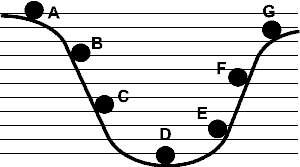
At which point does the ball has the greatest gravitational potential energy (GPE)?
A
G
D
C
G
Which would have the LEAST gravitational potential energy (GPE)?
A ball sitting on the ground
Moon viewed from the Earth
An airplane flying 30,000 feet above the ground
A rock sitting on top of Mt. Everest
How could you increase the gravitational potential energy of an object without changing its mass and gravity?
Make the object larger
Lower the object towards the ground
Raise the object farther off the ground
Allow the object to roll on the ground
How could you increase the object's gravitational potential energy (GPE) without changing its distance from the ground (height) and gravity?
Decrease the object's mass
Increase the object's height
Increase the object's mass
Decrease the object's height

You throw a ball into the air as shown in the diagram. At what point does the ball have the most gravitational potential energy?
W
X
Y
Z

At which position does the child on the swing have the most gravitational potential energy?
W
X
Y
Z

At which point on the roller coaster is the gravitational potential energy the greatest?
W
X
Y
Z

What kind of energy is in a rock at the edge of a cliff?
Gravitational Potential Energy
Kinetic Energy
Both potential and kinetic energy
none of the above
Which is the correct unit for expressing gravitational potential energy?
Joule
Newton
m/s2
meter
What is the gravitational potential energy (GPE) of a 1 kilogram book that is 1 meter above the ground?
g = 9.8 m/s2
9.8 Joules
1.0 Joule
0.10 Joule
11.8 m/s2
Which 2 items does gravitational pull depend on?
Mass (weight)
Speed
Height / Distance from the ground
Force
True / False: The heavier an object is, the more potential energy the object has.
True
False
If a falling ball has, at one point in its fall, 20 J of gravitational potential energy and 60 J of kinetic energy, how much kinetic energy will it have when it strikes the Earth?
80 J
60 J
20 J
40 J
Which of the following is true?
Energy is found only in living objects
Energy is a fuel
Energy is a substance or fluid
Energy is associated only with movement
Any store of energy may be transferred into another store
Convert 0.78 kilojoules to joules.
7,800 joules
780 joules
78 joules
7.8 joules
0.078 joules
A science student holds a 55g egg out a window. Just before the student releases the egg, the egg has 8.0J of gravitational potential energy with respect to the ground. How far is the students arm fro the ground in meters?
15m
17m
8m
19m
A diver has 3400J of gravitational potential energy after stepping up onto a diving platform that is 6 meters above the water. What is the divers mass in kilograms?
85kg
64m
58kg
None of the answers are correct

What two factors affect an object's kinetic energy?
area and volume
mass and weight
weight and height
mass and speed

Where would this tossed baseball have the least amount of kinetic energy?
point W
point X
point y
point z
Increasing an object's mass will increase its kinetic energy.
true
false
Increasing an object's speed will increase its kinetic energy.
false
true
What is the formula for Kinetic Energy?
S = d / t
KE = 1/2 * m * v2

A 65,000 kg train travels to New York at 24 m/s. What is the train's Kinetic Energy?
2708.9 m/s
65,000 kg
24 m/s
18,720,000 J
Which is the best example that something has kinetic energy?
a car parked on a steep hill
a tennis ball rolling across the court
a picture hanging on the wall
a piece of coal before it's burned
Which of the following are examples of kinetic energy? (check all that apply)
an arrow flying through the air
a book on a shelf
kicking a soccer ball
chewing gum
sitting at a stop light
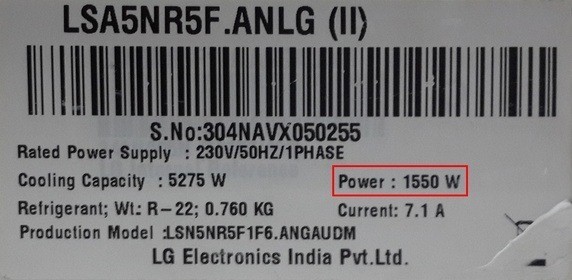
What is needed calculate power?
work
time
mass
distance
Two workers use 100 N of force to move a sofa 2 meters in 2 seconds. How much power is required?
100 watts
400 watts
104 watts
50 watts
If you increase your work and decrease your time, you will have
more power
less power
same amount of power
power rating can not be determined
Person A and Person B are both using the same amount of work to lift something. Person A takes half as much time to do it. Who has greater power.
Person A
Person B

