
NEW
Font size
S
M
L
XL
 Worksheets
Interactions and Interdependencies
Total questions: 25
Worksheet time: 25mins
Name
Class
Date
1.
Green plants are
a)
producers
b)
consumers
c)
herbivores
d)
omnivores
2.
What is the original source of almost all energy in most ecosystems?
a)
carbohydrates
b)
sunlight
c)
water
d)
carbon
3.
An organism that produces its own food supply from inorganic compounds is called a(an)
a)
heterotroph
b)
consumer
c)
detritivore
d)
autotroph
4.
What is the term for each step in the transfer of energy and matter within a biological community?
a)
energy path
b)
food web
c)
trophic level
d)
food pyramid
5.

which symbiosis is this
a)
parasitism
b)
mutualism
c)
commensalism
d)
nonalism
6.

symbiotic relationship in which both organisms benefit
a)
competition
b)
Mutualism
c)
nitrogen fixation
d)
energy pyramid
7.

What does a food web represent?
a)
All connections of energy flow throughout all organisms in a habitat.
b)
The specific ways that mutualism is carried out.
c)
A single pathway or energy flow between organisms.
d)
How carnivores get their food.
8.

diagram that shows the energy available to each trophic level in an ecosystem; 10% is passed on to upper levels, the rest is lost as heat
a)
succession
b)
cellular respiration
c)
energy pyramid
d)
biochemical cycle
9.

a relationship between two in which one species, the predator, feeds on the other species, the prey
a)
chemosynthesis
b)
predation
c)
cellular respiration
d)
commensalism
10.

symbiotic relationship in which one organisms benefits and the other organism is not affected
a)
invasive (non-native) species
b)
mutualism
c)
nitrogen fixation
d)
commensalism
11.
Study of interactions between organisms and their environment
a)
niche
b)
community
c)
ecology
d)
ecosystem
12.
Members of a species in a defined area
a)
Ecosystem
b)
community
c)
biodiversity
d)
population
13.
Where an organism lives
a)
habitat
b)
niche
c)
heterotrogh
d)
biosphere
14.
Non-living factor that affects an ecosystem
a)
biotic factor
b)
abiotic factor
c)
food chain
d)
biome
15.
Organisms that breaks down and absorbs nutrients from dead organisms
a)
consumer
b)
trophic level
c)
decomposer
d)
species
16.
A human & a Tape Worm: The tape worm gets a place to live in the intestines of the human and food from the human. The human loses weight and nutrients from the tape worm.
a)
Mutualism
b)
Commensalism
c)
Parasitism
17.
Bird & Tree: A bird builds a nest in a hole in the trunk of the tree. It is protected from the rain and predators. The tree is not harmed or helped by the bird.
a)
Mutualism
b)
Commensalism
c)
Parasitism
18.
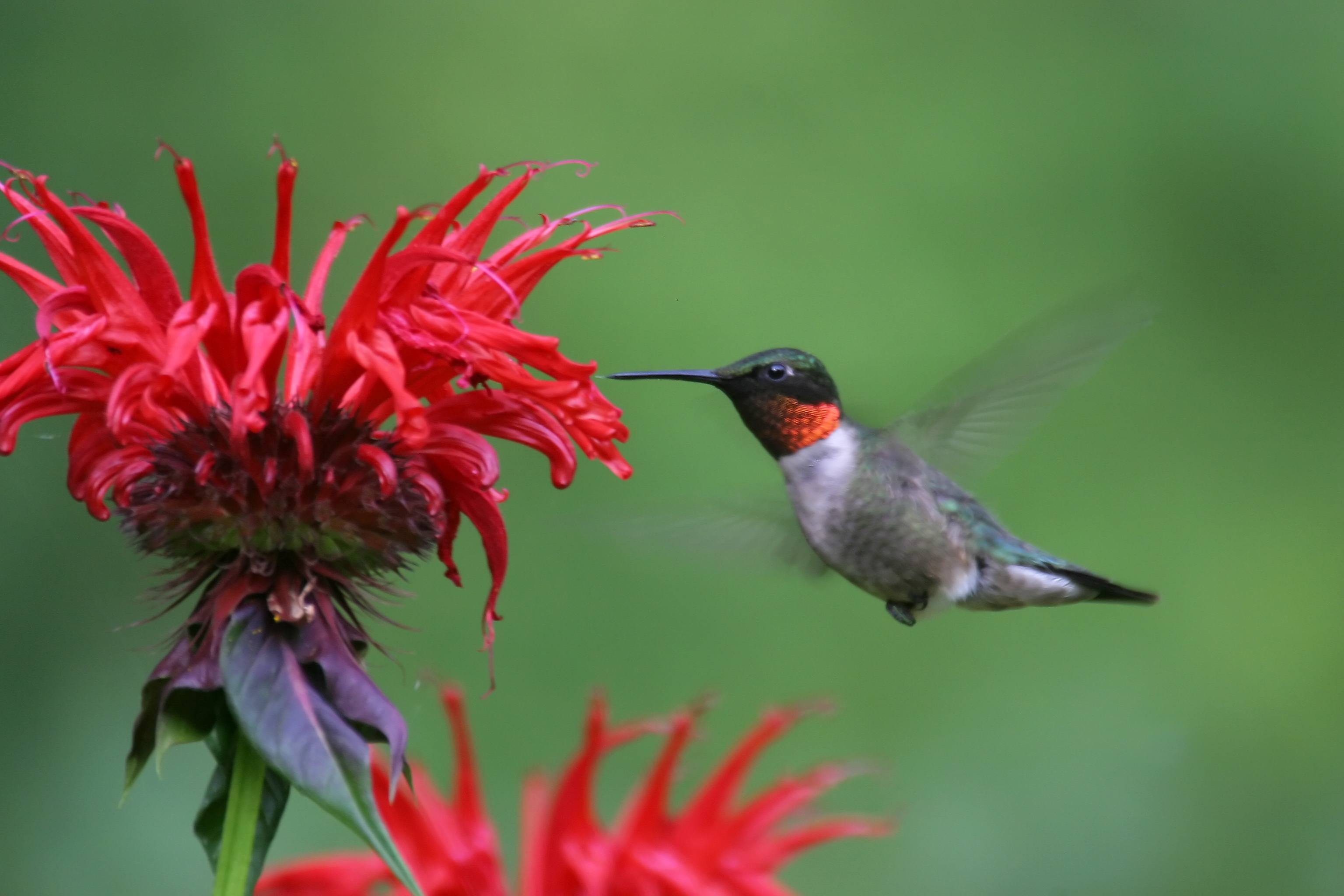
What type of symbiosis? Hummingbirds feed on nectar from flowers. The flowers are pollinated by hummingbirds as they move from flower to flower.
a)
commensalism
b)
mutualism
c)
parasitism
d)
predation
19.
What is the name of an animal that is hunted and eaten by other animals?
a)
producer
b)
prey
c)
predator
d)
decomposer
20.
Groups of different populations that live in a given area and interact are called a(n)...
a)
Community
b)
Colony
c)
Population
d)
Ecosystem
21.
An ecologist who studies how several species in an area interact with one another and with the abiotic parts of the environment is interested in the biological organization level called a(n) _____.
a)
organism
b)
population
c)
community
d)
ecosystem
22.
Parasitism, mutualism, and commensalism are examples of _______.
a)
food chains
b)
food webs
c)
symbiosis
d)
trophic levels
23.
study of how living things relate to each other and their environment
a)
evolution
b)
ecology
c)
parasitology
d)
ethology
24.
Organisms in this category get their energy from both plant and animal matter.
a)
Producer
b)
Carnivore
c)
Detrivore
d)
Omnivore
25.

Which organism will receive the LEAST amount of energy in this
food web?
a)
Shrew
b)
Cougar
c)
Snake
d)
Deer
Reset

