
 Worksheets
Proteins
Total questions: 7
Worksheet time: 2hrs 37mins
This video explains the first two levels of protein structure: primary and secondary. Primary structure refers to the specific sequence of amino acids in a protein. This sequence is like a set of instructions, determining the protein's final three-dimensional shape, which is crucial for its function. Even a slight change in this sequence can alter the shape and prevent the protein from working properly. The primary structure is determined by the DNA sequence of the gene coding for that protein. Secondary structure describes the local folding patterns of the polypeptide chain, influenced by hydrogen bonds between the amino acid backbones. These interactions cause the chain to twist and fold into specific shapes called alpha helices and beta pleated sheets. The type of secondary structure formed depends on the specific sequence of amino acids in that region, as certain amino acids favor forming one type of structure over the other. The video concludes by mentioning that the next video will delve deeper into protein structure
Which factor influences the type of secondary structure formed?
a) The overall size of the protein
b) The concentration of amino acids
c) The specific sequence of amino acids in the region
Secondary structure describes the local folding patterns of the polypeptide chain, influenced by (a) bonds.
Which term describes a protein that has lost its functional shape due to external factors?
a) Denatured
b) Catalyzed
c) Activated
d) Hydrolyzed
What happens if a protein fails to fold correctly?
a) It remains inactive.
b) It is immediately degraded.
c) It forms aggregates.
d) All of the above.
What is the primary force responsible for protein folding?
a) Covalent bonds
b) Ionic bonds
c) Hydrogen bonds
d) Van der Waals forces
What is the term used to describe the process by which a polypeptide chain attains its functional, three-dimensional structure?
a) Transcription
b) Translation
c) Protein Folding
d) Replication
What determines the final three-dimensional structure of a protein?
What determines the primary structure of a protein?
Sequence of amino acids and The DNA sequence of the gene coding for the protein
Why is the primary structure of a protein important?
Joining of two amino acids is a ________ reaction because a _______ molucule is formed.
You can join two amino acids with a ________ bond
What does primary structure refer to in proteins?
Which statement is true regarding protein folding?
a) It always results in the correct functional structure.
b) It is a spontaneous process.
c) It is not influenced by environmental factors.
d) It occurs only in eukaryotic cells.
What is a polypeptide?
Proteins are formed from _______ acids
Interactions between amino acid backbones cause the chain to twist and fold into alpha helices and beta pleated (a)
When a polypeptide folds into its correct shape for its function, it is referred to as:
protein
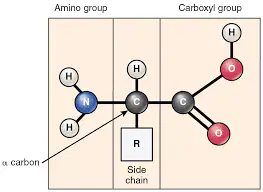
What is the general structure of amino acids?
What specific shapes are formed in secondary structure?
Why is the primary structure of a protein important?
The primary structure is determined by the DNA sequence of the gene coding for that protein.
(a)
Even a slight change in the primary structure sequence can prevent the protein from working properly..
(a)
In what part of the cell does protein folding primarily occur?
a) Nucleus
b) Endoplasmic reticulum
c) Golgi apparatus
d) Mitochondria
What is the primary role of hydrogen bonds in secondary structure formation?
Primary structure is the specific sequence of amino acids in a protein, crucial for determining its final three-dimensional shape. What is the final three-dimensional shape of a protein determined by?
(a)
True or False: Most polypeptides contain hundreds of amino acids
True
False
Which of the following is NOT a factor influencing protein folding?
a) Temperature
b) pH
c) Enzymes
d) Lipid concentration
Which of the following correctly describes protein folding?
a) The process of breaking down proteins into amino acids
b) The process of converting mRNA into a polypeptide chain
c) The process of a polypeptide chain assuming its functional three-dimensional structure
d) The process of attaching carbohydrate molecules to proteins
What is a complex protein?
A complex protein is a protein made up of multiple amino acid chains that are folded together in a specific 3D structure. It has different types of polypeptides
There are _____ different levels of proteins
The first level of protein structure is called a _______ structure
The primary protein helps to determine the 3 dimensional shape of a protein molecule
False, Tertiary structure
True, Peptide bond
True, Amino acid sequence
False, Secondary structure
Is the shape of a protein critical for its function?
What is a primary protein?
A primary protein is a protein that contains all the essential amino acids required by the human body in a linear sequence of amino acids in a polypeptide chain
Even if we change a single amino acid in a protein structure can change the final shape of a protein
True or False: Changing a single amino acid in a protein structure can prevent the protein from carrying out its function effectively
What determines the primary structure of a polypeptide?
a) Ribosome
b) Golgi apparatus
c) DNA sequence found in the gene
d) Endoplasmic reticulum
Which component of a cell contains the genetic information that determines the sequence of amino acids in a polypeptide?
a) Mitochondria
b) Lysosome
c) Nucleus
d) Vacuole
If a single nucleotide mutation occurs in the DNA sequence coding for a polypeptide, what might be affected?
a) Secondary structure
b) Tertiary structure
c) Quaternary structure
d) Primary structure
What is the term for the linear sequence of amino acids in a polypeptide chain?
What happens if there is a change in the DNA sequence coding for a polypeptide?
a) The polypeptide's function remains unchanged.
b) The polypeptide's primary structure is altered.
c) The polypeptide folds into a different tertiary structure.
d) The polypeptide becomes denatured.
In the secondary structure of a polypeptide, what are the characteristics of the CO groups and NH groups?
CO groups have a small negative charge, while NH groups have a small positive charge.
What is the primary charge interaction responsible for the formation of secondary structure elements in a polypeptide?
Which secondary structure element is characterized by a right-handed helical structure?
What type of bonding stabilizes the alpha helix structure?
What structural element involves a folding pattern where the polypeptide chain is arranged in a zig-zag fashion?
When CO groups (carbonyl groups) have a small negative charge and NH groups (amine groups) have a small positive charge, they form:
What effect do hydrogen bonds between CO and NH groups have on a polypeptide chain?
They cause the polypeptide chain to twist and fold into shapes.
How do hydrogen bonds contribute to the secondary structure of proteins?
In the context of polypeptide folding, what role do hydrogen bonds play?
Which statement accurately describes the effect of hydrogen bonds on protein folding?
Hydrogen bonds stabilize the folded structure of proteins by facilitating interactions between amino acid side chains.
What would be the consequence if hydrogen bonds between CO and NH groups were absent in a polypeptide chain?
The polypeptide chain would be unable to form any secondary structures.
Whichis the most common shape found in secondary structure?
Which statement accurately describes the shape of an alpha helix and a beta sheet?
Alpha helix is a right-handed coil, while beta sheet consists of multiple aligned strands.
What type of bonding pattern is characteristic of an alpha helix?
In a beta sheet structure, how are the polypeptide chains arranged?
Zigzag pattern with hydrogen bonds forming between adjacent chains. They run in opposite directions, either parallel or antiparallel.
Which statement accurately describes the directionality of an alpha helix and a beta sheet?
Alpha helix is right-handed, beta sheet can be parallel or antiparallel. Alpha helix runs in a single direction, while beta sheet can run in multiple directions.
What characterizes the flexibility of an alpha helix and a beta sheet?
Alpha helix is rigid, while beta sheet is flexible.
What holds the shape of protein secondary structures such as alpha helices and beta pleated sheets in place?
Hydrogen bonds between amino acids
The presence of regions with alpha helices and beta pleated sheets in proteins depends on:
The primary structure of the protein in that region.
Which statement accurately describes the influence of the primary structure on secondary structure formation in proteins?
Certain amino acids tend to be found in beta pleated sheets, while others tend to be found in alpha helices.
In regions where alpha helices are prevalent, what type of amino acids are commonly found?
Amino acids with small side chains like alanine, glycine, and serine. Hydrophobic amino acids
What type of amino acids are often found in regions with beta pleated sheets?
Polar amino acids
"Introduction. Welcome back to Free Science Lessons! By the end of this video, you should be able to describe what's meant by the tertiary and quaternary structures of proteins. Now, we've already looked at the primary and secondary structures of proteins. Remember that the primary structure is simply the order of the amino acids in a polypeptide chain. The secondary structure is where specific regions of the chain then fold, and we saw two examples: these are the Alpha helix and the beta pleated sheet. Remember that the secondary structure formed depends on the amino acids present; secondary structure is stabilized by hydrogen bonding between different parts of the polypeptide chain. So, in this video, we're looking at the tertiary and quaternary structures. The tertiary structure is the overall three-dimensional shape of a polypeptide chain. I'm showing you a tertiary structure polypeptide chain here. As you can see, this polypeptide chain has not started folding. First, the chain folds into regions of secondary structure, and we can see that here. Once the regions of secondary structure form, the chain now continues folding, forming the final tertiary structure. So, this diagram shows the tertiary structure of a real protein. As you can see, it contains five alpha helixes wrapped in a very specific pattern around a beta pleated sheet. Now, the tertiary structure is critical to protein functions. For example, the active site of an enzyme depends on the protein forming a very specific tertiary structure. And if we change the tertiary structure of an enzyme, for example, by heating it, then the shape of the active site changes, and the enzyme can no longer function effectively. We say that the enzyme has denatured, and we'll look at that again in the topic on enzymes coming up. We'll see what's meant by quaternary structure. Quaternary Structure. Okay, so as we've seen, the tertiary structure is really important for protein function. Now, many proteins consist of only one polypeptide chain, for example, a protein I'm showing you here. However, a large number of proteins consist of several polypeptide chains working together as a large molecule, and I'm showing an example here: this is hemoglobin, which is found in red blood cells. Now, this diagram does look complex, but don't be put off by that. Hemoglobin consists of four polypeptide chains forming a large molecule. Scientists call these polypeptides subunits. Two of the subunits are shown in red, and two are shown in blue. Now, the quaternary structure shows how the individual subunits are arranged to form a larger three-dimensional structure, and quaternary structure only applies to proteins with at least two subunits. Now, there is one other point about quaternary structure: some proteins contain other non-protein molecules forming part of the structure. These are called prosthetic groups, and they help the protein to carry out its role. Hemoglobin contains a prosthetic group, heme, which binds to oxygen, and we can see the four heme molecules here. Proteins with a prosthetic group are called conjugated proteins. So, as well as showing us how the subunits are arranged, the quaternary structure also shows us the position of any prosthetic groups. In the next video, we'll look at the bonding taking place in protein molecules."
Quaternary structure shows the position of prosthetic groups in (a)
Which of the following accurately describes the primary structure of a protein?
Secondary structure is formed by folding specific regions of the chain..
(a)
Proteins have primary, secondary, tertiary, and (a) structures.
Tertiary structure is the overall three-dimensional shape of a single polypeptide chain. What is the answer?
(a)
Primary structure is the order of amino acids in a polypeptide chain. What is the answer?
(a)
What does the primary structure of a protein refer to?
Tertiary and quaternary structures are essential for proper protein function. (a) ?
What is the role of hydrogen bonding in protein secondary structure?
What structures are formed in the secondary structure of a protein?
What stabilizes the secondary structure of a protein?
Quaternary structure refers to how individual subunits are arranged in a (a) .
What term describes the folding of specific regions in a polypeptide chain?
What specific structures result from the folding of specific regions in a polypeptide chain?
What structures of proteins will be described in this video?
What is the primary structure of a protein?
Which structures of proteins are stabilized by hydrogen bonding?
What happens to an enzyme when its tertiary structure is changed?
It denatures and loses its function
Hemoglobin consists of how many polypeptide chains?
Which of the following is NOT a prosthetic group found in proteins?
Oxygen
What does the quaternary structure of a protein show?
How individual subunits are arranged to form a larger structures
What is the primary structure of a protein?
What are two examples of secondary structure mentioned in the passage?
By hydrogen bonding between different parts of the polypeptide chain
Which of the following statements about secondary structure is true?
a) It depends on the overall shape of the protein.
b) It is independent of the amino acids present.
c) It is stabilized by hydrogen bonding between different parts of the polypeptide chain.
d) It determines the arrangement of individual subunits in a protein.
What is the tertiary structure of a protein?
When does the chain start folding into regions of secondary structure?
The video starts with a brief review of primary and secondary structures of proteins. The primary structure is the order of amino acids in a polypeptide chain. The secondary structure is formed by folding of specific regions of the chain, resulting in structures like alpha helix and beta pleated sheet. Hydrogen bonding between different parts of the polypeptide chain stabilizes the secondary structure. The main content of the video is about tertiary and quaternary structures of proteins. The tertiary structure is the overall three-dimensional shape of a single polypeptide chain. The folding of the polypeptide chain is essential for the protein to function properly. An example is the active site of an enzyme, which depends on the specific tertiary structure of the protein. If the tertiary structure is altered, the enzyme can no longer function effectively, and we say that the enzyme is denatured. Many proteins consist of several polypeptide chains working together as a large molecule. The quaternary structure refers to how these individual subunits are arranged to form a larger three-dimensional structure. Quaternary structure only applies to proteins with at least two subunits. Hemoglobin is an example of a protein with quaternary structure. It consists of four polypeptide chains arranged in a specific way. In addition to showing the arrangement of subunits, the quaternary structure also shows the position of any prosthetic groups, which are non-protein molecules that are part of the protein structure. Hemoglobin, for example, contains a prosthetic group called heme, which binds to oxygen. Proteins with prosthetic groups are called conjugated proteins. Overall, the video explains that the tertiary and quaternary structures of proteins are essential for their proper function. The tertiary structure is the folding of a single polypeptide chain, while the quaternary structure is the arrangement of multiple polypeptide chains. convert each sentence of the passage into a mcq for am mcq quiz, include all small details
What does the tertiary structure refer to in proteins?
The overall three-dimensional shape of a single polypeptide chain
The sequence of amino acids in a protein
The secondary structure of a protein
The interactions between multiple polypeptide chains
What does the active site of an enzyme depend on?
Primary structure of the protein
Secondary structure of the protein
Tertiary structure of the protein
Quaternary structure of the protein
Why are tertiary and quaternary structures essential for proper protein function?
They determine the primary structure of the protein
They are responsible for the overall shape and stability of the protein
They regulate gene expression in the cell
They are involved in protein synthesis
What does the video explain about proteins?
Primary and tertiary structures
Secondary and quaternary structures
Primary and secondary structures
Tertiary and quaternary structures
Which type of structure does hemoglobin exemplify?
Primary structure
Secondary structure
Tertiary structure
Quaternary structure
Why is the folding of the polypeptide chain essential for the protein to function properly?
It helps the protein maintain its shape and structure
It increases the protein's solubility in water
It decreases the protein's stability
It has no impact on the protein's function
What does quaternary structure refer to in protein structures?
How individual subunits are arranged to form a larger three-dimensional structure
The sequence of amino acids in a protein
The folding of a single polypeptide chain into a specific three-dimensional shape
The interaction between two or more polypeptide chains
What does the tertiary structure of a protein refer to?
The overall three-dimensional shape of a single polypeptide chain
Why is the folding of the polypeptide chain essential for protein function?
What aspect of an enzyme's structure depends on the specific tertiary structure of the protein?
What happens to an enzyme if its tertiary structure is altered?
What term describes the loss of function due to alteration in protein structure?
Which structural level of protein organization is primarily responsible for the specific shape of the active site?
What does the quaternary structure of a protein reveal, besides the arrangement of subunits?
What are prosthetic groups in proteins?
What is an example of a prosthetic group found in hemoglobin?
What is the function of the heme prosthetic group in hemoglobin?
Binding oxygen molecules/it bonds to oxygen
What term describes proteins with prosthetic groups?
Holoenzymes/ Conjugated proteins
What does the quaternary structure of a protein primarily depend on?
What information does the quaternary structure provide about proteins?
The organization of multiple subunits and prosthetic groups
The video starts with a brief review of primary and secondary structures of proteins. The primary structure is the order of amino acids in a polypeptide chain. The secondary structure is formed by folding of specific regions of the chain, resulting in structures like alpha helix and beta pleated sheet. Hydrogen bonding between different parts of the polypeptide chain stabilizes the secondary structure. The main content of the video is about tertiary and quaternary structures of proteins. The tertiary structure is the overall three-dimensional shape of a single polypeptide chain. The folding of the polypeptide chain is essential for the protein to function properly. An example is the active site of an enzyme, which depends on the specific tertiary structure of the protein. If the tertiary structure is altered, the enzyme can no longer function effectively, and we say that the enzyme is denatured. Many proteins consist of several polypeptide chains working together as a large molecule. The quaternary structure refers to how these individual subunits are arranged to form a larger three-dimensional structure. Quaternary structure only applies to proteins with at least two subunits. Hemoglobin is an example of a protein with quaternary structure. It consists of four polypeptide chains arranged in a specific way. In addition to showing the arrangement of subunits, the quaternary structure also shows the position of any prosthetic groups, which are non-protein molecules that are part of the protein structure. Hemoglobin, for example, contains a prosthetic group called heme, which binds to oxygen. Proteins with prosthetic groups are called conjugated proteins. Overall, the video explains that the tertiary and quaternary structures of proteins are essential for their proper function. The tertiary structure is the folding of a single polypeptide chain, while the quaternary structure is the arrangement of multiple polypeptide chains. convert each sentence of the passage into a mcq for am mcq quiz, include all small details
What does the video emphasize regarding the importance of protein structures?
What does the active site of an enzyme depend on?
Primary structure of the protein
Secondary structure of the protein
Quaternary structure of the protein
Tertiary structure of the protein
What defines the quaternary structure of a protein?
What does the video explain about proteins?
Primary and tertiary structures
Secondary and quaternary structures
Primary and secondary structures
Tertiary and quaternary structures
What does quaternary structure refer to in protein structures?
How individual subunits are arranged to form a larger three-dimensional structure
The sequence of amino acids in a protein
The folding of a single polypeptide chain into a specific three-dimensional shape
The interaction between two or more polypeptide chains
What conclusion does the video draw regarding protein structures?
Protein structures are complex and diverse./ Quaternary structure is more important for protein function
What is an example of a protein with quaternary structure?
Insulin
Hemoglobin
Collagen
Actin
What is the primary focus of the discussion about protein structures in the video?
Why are tertiary and quaternary structures essential for proper protein function?
They determine the primary structure of the protein
They are responsible for the overall shape and stability of the protein
They regulate the gene expression of the protein
They are involved in the transportation of the protein within the cell
What does the tertiary structure refer to in protein molecules?
Primary structure
Secondary structure
Tertiary structure
Quaternary structure
Which protein structure involves the folding of a single polypeptide chain?
Why is the folding of the polypeptide chain essential for the protein to function properly?
It helps the protein maintain its shape and structure
It increases the protein's solubility in water
It decreases the protein's stability
It has no effect on the protein's function
What is the primary structure of a protein?
What is the secondary structure of a protein?
What are two examples of secondary structure mentioned in the passage?
How is the secondary structure stabilized?
Which of the following statements about secondary structure is true?
What is the tertiary structure of a protein?
The overall three-dimensional shape of a polypeptide chain
When does the chain start folding into regions of secondary structure?
During the process of protein folding, Before the tertiary structure formation
What happens once the regions of secondary structure form?
Tertiary structure of the protein is formed, The chain continues folding to form the tertiary structure
How is the tertiary structure of a protein formed?
So, this diagram shows the tertiary structure of a real protein. As you can see, it contains five alpha helixes wrapped in a very specific pattern around a beta pleated sheet. Now, the tertiary structure is critical to protein functions. For example, the active site of an enzyme depends on the protein forming a very specific tertiary structure. And if we change the tertiary structure of an enzyme, for example, by heating it, then the shape of the active site changes, and the enzyme can no longer function effectively. We say that the enzyme has denatured, and we'll look at that again in the topic on enzymes coming up. We'll see what's meant by quaternary structure.
What will be discussed in the future regarding protein structure?
Primary structure
Secondary structure
Tertiary structure
Quaternary structure
How can changes in the tertiary structure affect enzymes?
Increase their activity
Denature them
Enhance their stability
Promote their binding
What is the tertiary structure of a protein composed of?
Five alpha helixes wrapped around a beta pleated sheet
A single alpha helix wrapped around a beta pleated sheet
A beta pleated sheet wrapped around an alpha helix
A random coil structure
What do enzymes rely on for effective function?
Primary structure
Secondary structure
Tertiary structure
Quaternary structure
What topic will be covered in the upcoming discussion on enzymes?
Primary structure of proteins
Secondary structure of proteins
Denaturation of enzymes
Quaternary structure of proteins
Why is the tertiary structure crucial for protein functions?
It determines the primary structure of proteins
It is responsible for the active site of enzymes
It regulates gene expression
It controls protein synthesis
Why do proteins need specific tertiary structures?
To determine their primary sequence
To enhance their solubility
To regulate gene expression
To ensure proper functionality
What does the tertiary structure of a protein contain, as described in the passage?
Why is the tertiary structure critical to protein function?
What happens to the active site of an enzyme if its tertiary structure is altered?
What term is used to describe the change in the enzyme's structure due to heating?
Quaternary Structure. Okay, so as we've seen, the tertiary structure is really important for protein function. Now, many proteins consist of only one polypeptide chain, for example, a protein I'm showing you here. However, a large number of proteins consist of several polypeptide chains working together as a large molecule, and I'm showing an example here: this is hemoglobin, which is found in red blood cells. Now, this diagram does look complex, but don't be put off by that. Hemoglobin consists of four polypeptide chains forming a large molecule. Scientists call these polypeptides subunits. Two of the subunits are shown in red, and two are shown in blue. Now, the quaternary structure shows how the individual subunits are arranged to form a larger three-dimensional structure, and quaternary structure only applies to proteins with at least two subunits
What type of proteins does quaternary structure apply to?
Primary structure
Secondary structure
Tertiary structure
Quaternary structure
Why is quaternary structure essential for understanding protein organization?
It determines the primary structure of proteins
It is responsible for the folding of proteins into their functional 3D shapes
It involves the interaction of multiple protein subunits
It regulates gene expression in cells
What does quaternary structure show in a protein?
Primary structure
Secondary structure
Tertiary structure
Subunit arrangement
What colors are the subunits in hemoglobin shown as?
Green and yellow
Red and blue
Black and white
Orange and purple
Can proteins consist of multiple polypeptide chains?
Yes
No
Maybe
Not sure
Why is tertiary structure crucial for protein function?
It determines the overall shape of the protein
It affects the protein's ability to interact with other molecules
It influences the protein's stability and activity
It determines the primary sequence of the protein
How many polypeptide chains does hemoglobin have?
One
Two
Three
Four
What is the focus of the passage?
Quaternary structure of proteins
How many polypeptide chains make up hemoglobin?
What term is used to describe the individual polypeptide chains in a protein?
subunits are arranged to form a larger structure
When does quaternary structure apply to proteins?
Quaternary structure exists in proteins consisting of two or more identical or different polypeptide chains (subunits).
Now, the quaternary structure shows
to form a larger three-dimensional structure, and quaternary structure only applies to proteins with at least two subunits. Now, there is one other point about quaternary structure: some proteins contain other non-protein molecules forming part of the structure. These are called prosthetic groups, and they help the protein to carry out its role. Hemoglobin contains a prosthetic group, heme, which binds to oxygen, and we can see the four heme molecules here. Proteins with a prosthetic group are called conjugated proteins. So, as well as showing us how the subunits are arranged, the quaternary structure also shows us the position of any prosthetic groups. In the next video, we'll look at the bonding taking place in protein molecules."
What does quaternary structure form for proteins with at least two subunits?
Primary structure
Secondary structure
Tertiary structure
Larger three-dimensional structure
What are proteins with prosthetic groups called?
Primary proteins
Secondary proteins
Conjugated proteins
Tertiary proteins
What does quaternary structure show in proteins?
Arrangement of subunits and position of prosthetic groups
Primary structure
Secondary structure
Tertiary structure
What do some proteins contain that help them carry out their roles?
Lipids
Carbohydrates
Prosthetic groups
Nucleic acids
What are proteins with prosthetic groups called?
Primary proteins
Secondary proteins
Tertiary proteins
Conjugated proteins
What will the next video focus on?
Bonding in DNA molecules
Bonding in lipid molecules
Bonding in carbohydrate molecules
Bonding in protein molecules
What is the prosthetic group in hemoglobin that binds to oxygen?
Heme
Chlorophyll
Cytochrome
Flavin
What does the quaternary structure of proteins show?
How individual subunits are arranged to form a larger structure
When does quaternary structure apply to proteins?
Quaternary structure exists in proteins consisting of two or more identical or different polypeptide chains (subunits).
What are prosthetic groups in proteins?
Other non-protein molecules forming part of the structure
What is the function of prosthetic groups in proteins?
What term is used for proteins containing prosthetic groups?
A conjugated protein with its prosthetic group is known as the apoprotein. When the apoprotein is combined with its prosthetic group is known as the holoprotein

