
 Worksheets
Sociology: Culture, Norms, and Values
Total questions: 47
Worksheet time: 26mins

What is a subculture?
A culture that is different from other cultures and less good.
An underwater culture.
A smaller group with distinctive norms and values that is different to the mainstream majority group.
A little group of people with norms and values which are similar to the mainstream group.

What are values?
Numbers that relate to how good something is
Unwritten rules about how to behave
standards shared by members of a culture and used to judge whether behaviour is right or wrong.
A position that someone has in society

How is a social identity formed?
Our sense of social identity is formed by eating healthy food.
Our sense of social identity is formed through biological processes
Our sense of social identity emerges from chatting with our friends on social media.
Our sense of social identity arises out of our interaction with other, so that we develop our identity based on what others think of us ans well as our own perceptions of ourselves.

What is peer pressure?
Excluding someone from the main social community or group
The influence that a peer group has on its members to persuade them to perform.
Pushing a friend around
The use of force or violence.

Which of these are examples of sanctions in modern industrial society? ( select all correct)
Food vouchers
Fine
Prison sentence
Discharge

What is diversity?
Cultures which are in close contact in society
Where there are many differences in and between human cultures
Cultures which share many features
An under water swimming method.

What is cultural relativism?
considering all cultures on their own terms rather than from a Western point of view
Elements in all cultures which can be seen everywhere.
All main world religions have this
A society in which many different cultures or subcultures exist alongside each other.
Select areas of culture which show a great deal of variation in different cultures (select all)
Language
Food
Traditions
Ideas about morality

What is primary socialisation? (two answers)
It is learning how to become human that occurs at school.
The first and most important part of learning how to be human, which occurs in the family between the ages of 0-4.
It is the first stage of getting to know your friends.
It is the first process of learning societies' norms and values. In includes processes such as imitation and role modelling.
What is secondary socialisation?
Socialisation at secondary school.
Later processes of socialisation that occur in education, at work and in your peer groups. You learn more specific roles and statuses.
It is learning societies' norms and values in the family.
It is getting to know your friends well and learning social skills.

What does Ann Oakley's concept of canalisation mean?
You have fallen in the canal.
This is when girls wear pink and boys wear blue.
Being channelled into activities that are considered appropriate for a particular gender.
This is being male or female based on biological indicators such as chromosones.

What is meant by the "hidden curriculum" at school?
This is the idea that learning at school is based on what will be best for children.
This is what you have to learn about in the formal curriculum subjects.
This is the curriculum that you study at home.
This is all of the informal lessons you learn that are supposed to prepare you for life. It includes messages about expected behaviours.
What is an ascribed status
A position in a football or netball team
A position you inherit at birth which is assigned based on class, ethnicity, gender or position. It is seen to be fixed.
A position that you gain when you enter the work place. E.g. Teacher or administrator.
A position that you earn through hard work or effort.
What is achieved status?
The status you get as a result of effort or hard work, e.g. a work role or qualification
The position you get through birth, e.g. inherited characteristics
The status you get from entering tests and competitions
The status you get from your peers
Shared products of human groups is ...
language
symbols
culture
norms
physical objects created by people are
symbols
nonmaterial culture
norms
material culture
things humans create such as ideas, beliefs, and language are considered
values
material culture
non material culture
mores
anything that stands for something else
norm
symbol
mores
value
shared rules of conduct that tell people how to act in a certain situation
values
culture
language
norms
The emphasis on employment, individualism, and competition demonstrate that we value
Equality
Personal Achievement
Romantic Love
Freedom
The fact that we care about discipline, dedication, and hard work as signs of virtue shows that we value
Love
Democracy
Work
Morality
Most Americans tend to think of the world in terms of right and wrong and believe it is important to do charity work. This is evidence that we value...
Personal Achievement
Work
Morality and Humanitarianism
Progress
The belief that your children should have a better life than you, and that science should work to give you a more comfortable life than those that came before you shows that we value...
Progress
Equality
Morality
Work
The belief that everyone deserves an equal opportunity to succeed is
Practicality
Equality
Morality
Work
The fact that Americans tend to judge an item based on its usefulness shows that they value
Progress
Work
Practicality
Personal Achievement
Personal choice and individualism are examples that Americans value
Morality
Hard Work
Freedom
Equality
Commitment to fully developing your personality and using your time and talents to reach your full potential shows the new value of
Narcissism
Freedom
Work
Self-fulfillment
When a norm becomes a part of a persons personality it is known as
Transferability
Internalization
Sactioning
Positivity
A sanction in the form of a punishment
positive sanction
negative sanction
Sanctions given by an official organization
formal sanctions
informal sanctions
spontaneous expressions of approval or disapproval
formal sanction
informal sanction
Culture is defined as the shared _______ within a group of humans or society.
beliefs
products
religion
technology
Which of the following is not a required component in order to have a culture?
Technology
Military
Language
Norms
Values
Which of these cannot be a symbol?
a word
a hand gesture
a sound
a place
all of these can be symbols
When you deviate from the mores of a culture, you are probably
going to get into a lot of trouble.
not going to get into much trouble.
How are mores formalized?
They are often made into laws.
They are unspoken.
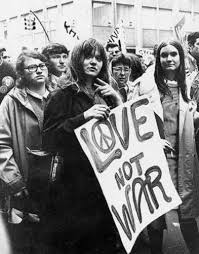
A subgroup that pushes back on the mainstream culture in an attempt to change how society functions is known as the:
Subgroup
Radical Culture
Counterculture
Marginalized

_________________ define how to behave in accordance with what a society has defined as good, right, and important, and most members of the society adhere to them.
Norms
Narms
Majorities
Stereotypes
Language is not considered a component of culture.
True
False
The belief that each culture must be understood in terms of the values and ideas of that culture and should not be judged by the standards of another culture.
Culture
Cultural Relativism
Ethnocentrism
Subculture
Studies have shown that in some tribal cultures, it is normal to have multiple wives. While it is not considered legal or common practice in many parts of the world, researches believe that an individual’s norms and actions should be understood by others in terms of that individual’s own cultural context. This concept is referred to as:
Cultural boundaries
Cultural interpretation
Cultural relativism
Cultural sensitivity
Americans believe that the democracy is the best form of government. This reflects a/an_______________.
Ethnocentrism
Cultural Relativism
German Nazi regime believed that they were a superior race and considered Jews as an inferior race. This reflects a/ an _____________.
Ethnocentrism
Cultural Relativism
the spread of a cultural trait from its original location
cultural relativism
xenophobia
cultural diffusion
Select an appropriate synonym for assimilation
defiant
deviant
acclimating
accelerating
There can be a culture without a society
True
False

Many cultures coming together to form one culture is known as:
Subgroup
Counterculture
Melting Pot
Multiculturalism

