
 Worksheets
6035DRPPT2Q2
Total questions: 47
Worksheet time: 2hrs 21mins
How far above an opening window must the soil stack be installed if it terminates outside the property and is within 3 metres of the window?
At least 300mm above the window
At least 900mm above the window
At least 600mm above the window
At least 1200mm above the window
What is the purpose of installing a terminal fitting on the top of the soil stack?
To improve the aesthetic appeal of the stack
To regulate the temperature within the stack
To prevent any debris from falling down the stack and causing a blockage
To increase the height of the soil stack
In which scenario may a vent cowl need to be fitted to the soil stack?
If the installation is in a dry area
If the installation is in a windy area
If the installation is in a high-traffic area
If the installation is in a shaded area
What is the purpose of using lead or weathering slate and a weather collar in roof systems?
To increase the aesthetic appeal of the roof
To stop rainwater penetrating the property
To support the structural integrity of the vent pipes
To improve the insulation of the property
When is it necessary to use weathering materials like lead or weathering slate on a roof?
When installing solar panels
When a vent pipe protrudes through a roof line
When painting the roof
When installing satellite dishes
What is grey water recovery?
A process of heating water for domestic use
A type of recycling that reuses water from washbasins, showers, washing machines, and baths
A method of purifying drinking water
A system for collecting rainwater
Where is the water stored in a grey water recovery system?
In a rooftop tank
In a high level cistern
In an underground tank
In a municipal water facility
What happens to the water after it is stored in a grey water recovery system?
It is directly reused without any treatment
It is discharged into the environment
It is filtered and cleaned before use
It is used to generate electricity
What is the purpose of pumping the cleaned water to a high level cistern in a grey water recovery system?
To increase water pressure for household use
To prepare it for drinking
To use it to flush WCs within the property
To store it for emergency use
What must be protected against contamination via the grey water in a grey water recovery system?
The electrical system
The mains cold water
The heating system
The grey water itself
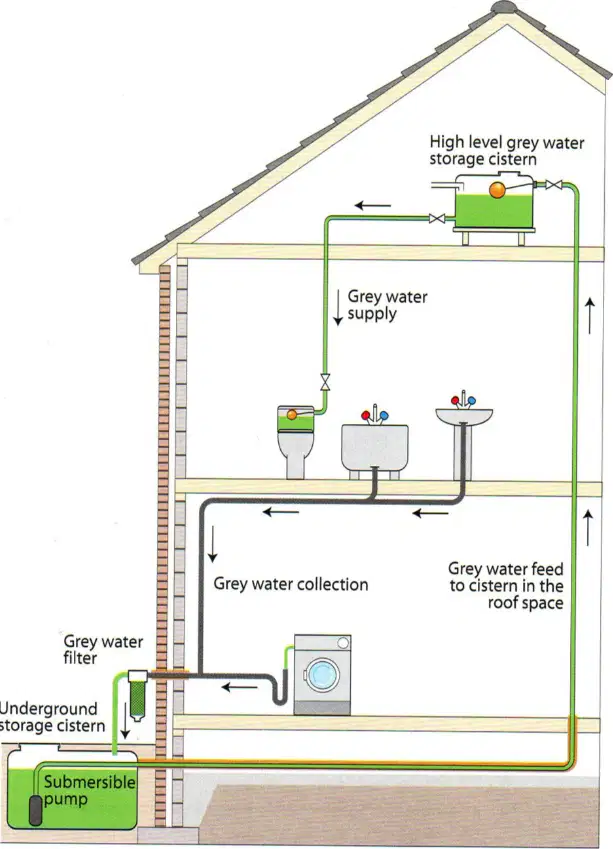
In the diagram of a grey water recovery system, where is the high level grey water storage cistern located?
Below the grey water collection
Next to the submersible pump
In the roof space
Outside the house
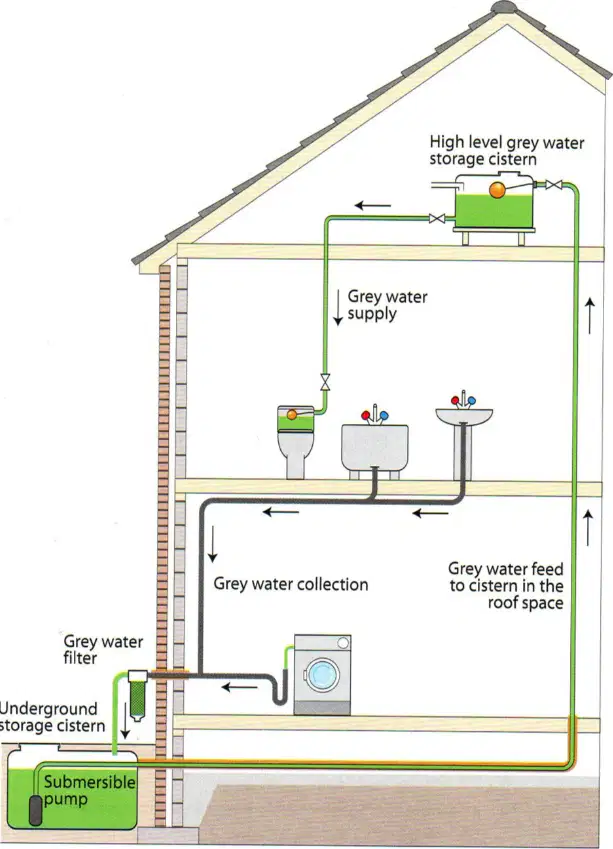
What component is used to move grey water from the underground storage cistern to the high level grey water storage cistern?
Gravity
A submersible pump
A grey water filter
A grey water collector
What is the function of below ground drainage systems?
To supply clean water to properties
To take discharged soiled water and rainwater away from the dwelling to the main sewers
To generate electricity from wastewater
To collect rainwater for gardening purposes
Where does the water travel to after reaching the main sewers in the road from below ground drainage systems?
Directly back to residential areas
To the sewage plant for treatment
To rivers and lakes without treatment
To industrial plants for reuse
How many main types of systems are properties connected to for below ground drainage?
Two
Three
Four
Five
Which of the following is NOT a type of system that properties are connected to for below ground drainage?
Separate system
Combined system
Partially separate system
Fully separate system
Which system is favored by local authorities for below ground drainage?
Combined system
Separate system
Surface system
Sanitary system
In a separate drainage system, where does the foul water connect to?
The surface water sewer
The rainwater sewer
The foul water sewer
The stormwater sewer
What does the rainwater connect to in a separate drainage system?
The foul water sewer
The river or water course
The stormwater sewer
The sanitary sewer
Which of the following is included in the discharges from foul water?
Discharges from the roof
Discharges from the garden
Discharges from the WC, bath, basin, bidet and sink
Discharges from the driveway
What does S&VP stand for in the context of below ground drainage systems?
Surface and vent pipe
Soil and vent pipe
Sewage and vent pipeline
Stormwater and vent passage
What is the purpose of a RWG in drainage systems?
Regulate water growth
Rain water gully
Road water guard
Runoff water gate
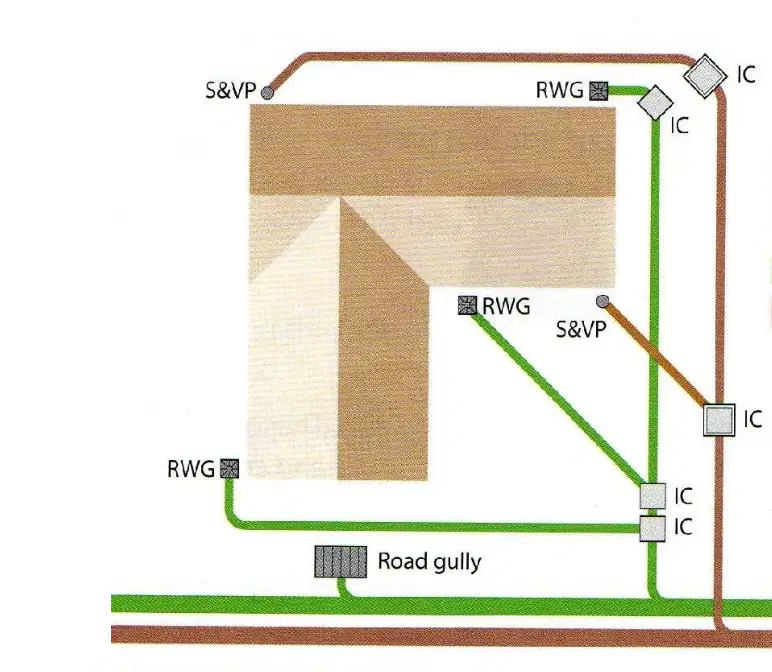
What does IC represent in the diagram?
Internal conduit
Inspection chamber
Inflow collector
Irrigation channel

Which color represents the foul water drain in the diagram?
Red
Blue
Green
Brown
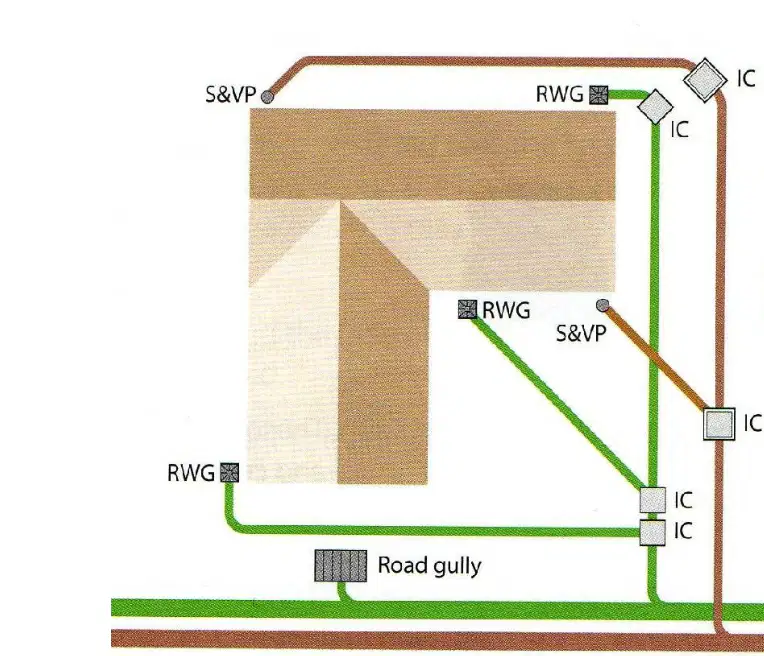
What is indicated by the brown color in the diagram?
Rain water drain
Foul water drain
Surface water sewer
Road gully
What is one of the advantages of a separate system in below ground drainage systems?
It is cheaper to install
Sewage plant is inundated with water when it rains
Rainwater receives treatment
No trapped gullies are required for rainwater and less water for treatment
Which of the following is a disadvantage of a separate system in below ground drainage systems?
Rainwater is regularly flushed by rainwater
It is less expensive to maintain
Risk of making an incorrect connection
Sewage plant is inundated with water when it rains
What is a characteristic of the combined system in below ground drainage systems?
It is a newer system that separates foul water and rainwater.
It discharges both foul water and rainwater into the foul water sewer in the road.
It is the only system recognized by the Building Regulations for new builds.
It uses two separate sewers to manage foul water and rainwater.
Is the combined system recognised by the Building Regulations for new builds?
Yes, it is the preferred system.
No, it is not recognised for new builds.
Yes, but only for commercial buildings.
No, it is only recognised for refurbishments.
What does S&VP stand for in the context of below ground drainage systems?
Surface and vent pipe
Soil and vent pipe
Sewage and vent pipe
Storm and vent pipe
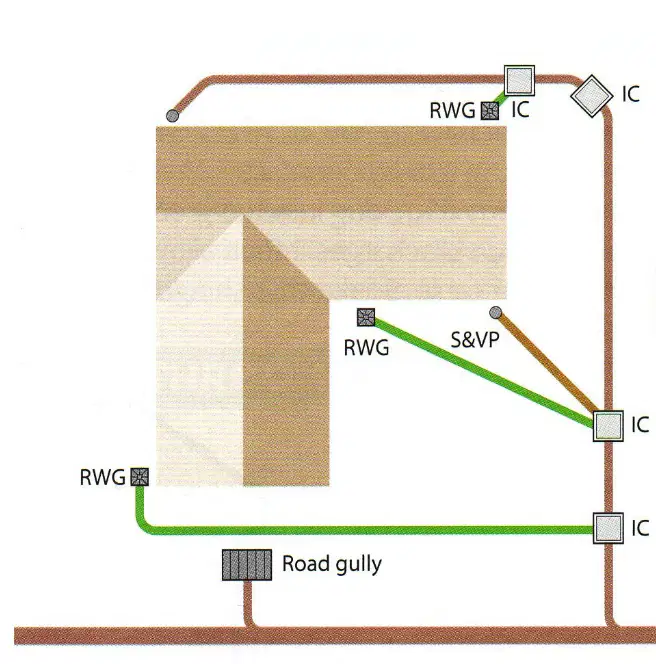
What is the purpose of the RWG as shown in the diagram?
To carry sewage water
To carry rainwater from the roof
To inspect the drainage system
To vent soil gases
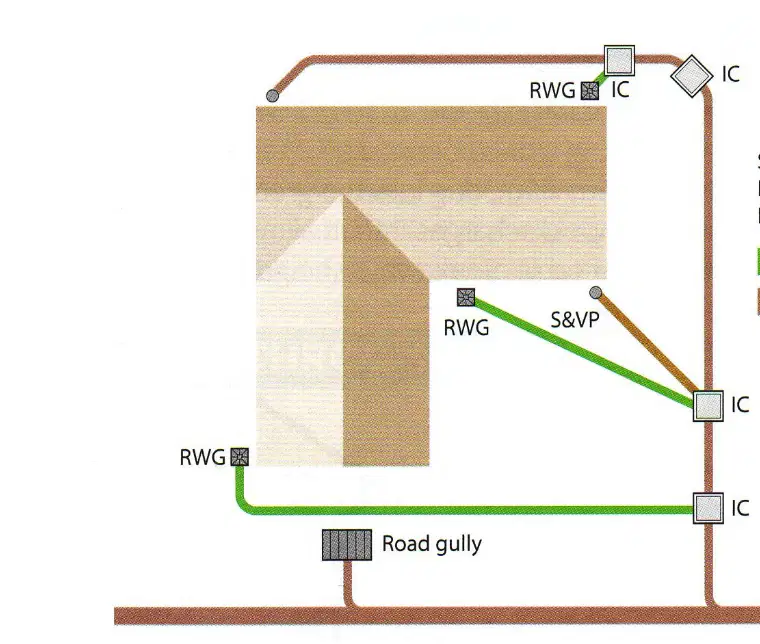
What does IC represent in the drainage system diagram?
Internal chamber
Inspection chamber
Inflow control
Incline chamber
Which of the following is a characteristic of a combined system in below ground drainage?
It only carries rainwater.
It has separate pipes for rainwater and foul water.
It combines rainwater and foul water in a single sewer.
It does not require inspection chambers.
What is one of the advantages of a combined below ground drainage system?
It is more expensive to install
It requires more maintenance
It is cheaper to install
It allows for incorrect connections
Which of the following is a disadvantage of a combined below ground drainage system?
Drains are not flushed by rainwater
Maintenance is more difficult
It is impossible to make an incorrect connection
More expensive for the water authority to treat the additional rainwater
How does rainwater affect a combined below ground drainage system?
It leads to frequent clogging of drains
All drains are flushed by rainwater
Rainwater reduces the system's efficiency
Rainwater increases maintenance costs
What is the function of a soakaway in below ground drainage systems?
To store rainwater for future use
To filter rainwater before it enters the sewer system
To allow rainwater to naturally disperse in the ground
To heat rainwater before it is released into the environment
What is a partially separate system in below ground drainage systems?
A system where surface water and foul water are completely mixed before disposal
A system where surface water and foul water are completely separated
A system that is a compromise between two systems, conveying most rainwater to the surface water sewer and foul water to the foul water sewer
A system that collects rainwater for irrigation purposes only
What is the volume of a typical soakaway pit mentioned in the text?
0.5m³
1.0m³
1.5m³
2.0m³
Can soakaway kits be purchased nowadays according to the text?
Yes, they are widely available
No, they must be custom built
Yes, but only for industrial use
No, they are no longer used
What does S&VP stand for in the context of below ground drainage systems?
Surface & Ventilation Passage
Soil & Vent Pipe
Sewage & Ventilation Pipe
Storm & Vacuum Pipeline
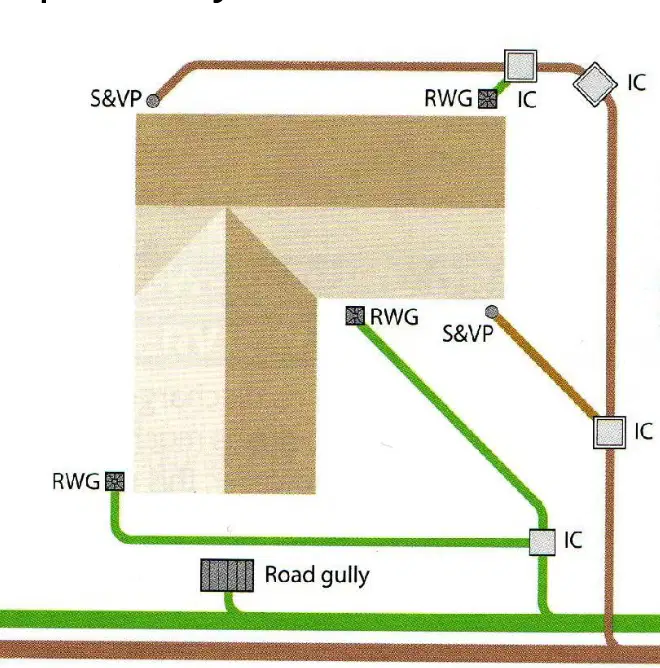
What is the abbreviation for Rain Water Gully as shown in the diagram?
RWG
RWP
RGW
RVP
What does IC represent in the drainage system diagram?
Internal Chamber
Inspection Chamber
Inflow Collector
Incline Channel
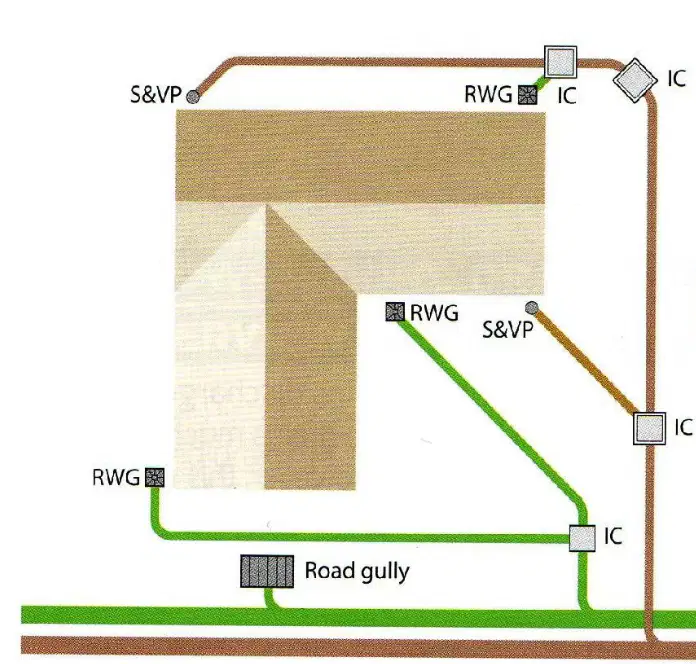
Which color represents the rain water drain in the diagram?
Blue
Green
Brown
Yellow
Which color is used to denote the foul water drain in the provided diagram?
Red
Yellow
Green
Brown
What is the purpose of a soakaway in below ground drainage systems?
To store clean water for domestic use
To filter sewage water before it enters the environment
To collect and store rainwater for irrigation
To manage isolated downpipes from rainwater systems
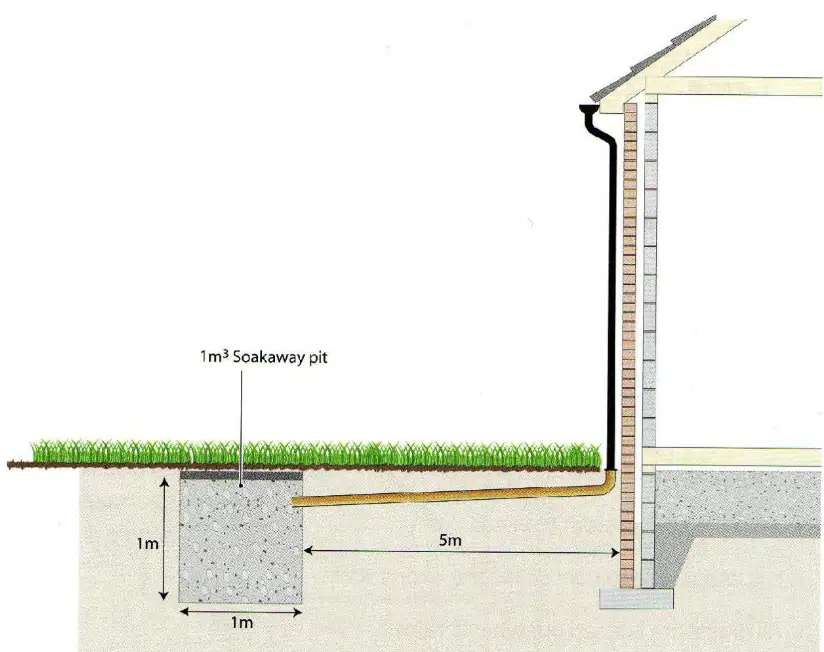
Based on the diagram, what is the approximate volume of the soakaway pit?
1m³
5m³
3m³
10m³

