
 Worksheets
Predictions, Observations, and Inferences
Total questions: 61
Worksheet time: 38mins
There are fourteen red roses on my birthday cake.
inference
observation
prediction
Football practice may be cancelled today due to a possible thunderstorm.
inference
observation
prediction

Which two of these can be observations about a gorilla?
The gorilla wants a bigger banana.
The gorilla has 5 fingers on his right hand.
The gorilla is hungry.
The gorilla has dark brown hair.

Which of these choices are inferences about the picture.
The gorilla wants a bigger banana.
The gorilla has two eyes.
The gorilla will be hungry after he eats that banana.

A student recorded how many commercials she saw in one week. Her results are recorded above. What can you you infer?
The tv shows lasted longer on Monday.
She watched more tv on Monday.
The tv shows didn't last as long as usual on Monday.
She watched less tv on Monday.
When you explain or interpret the things you observe, you are ____________.
infering
predicting
observing
claiming
How are the skills of inferring and predicting alike? How are they different?
Both involve making observations, but predictions are about what will happen and inferences are about what has happened.
Only inferring involves making observations, but predictions are about what will happen and inferences are about what has happened.
Only predicting involves making observations, but observations are about what will happen and inferences are about what has happened.
There is nothing similar or different about the two. That is what makes them unique.


The butterfly is on a pink flower.

If my cell phone rings in Ms. Brady's class, she will take it up until after school.
inference
observation
prediction


The variable that is measured. It is the result of the experiment.
Controlled Variable
Dependent Variable
Independent Variable
The one factor that a scientist changes during an experiment. (It affects the results of the experiment).
Controlled Variable
Dependent Variable
Independent Variable
Why do scientists do the same experiment multiple times?
To see if their results are reliable, and then they can form a theory.
Because it is fun.
Because their boss makes them.
Probably they do not have anything better to test.
What if two scientists are doing the same experiment, but they get different results?
They should give up.
They should repeat the experiment again and see what happens.
They choose a different independent variable to test.
They are both wrong.
Ms. A was testing if the bead in the first investigation changed color when her mood changed. NOTHING happened to her bead when she was feeling different ways. Was this experiment a failure? WHY OR WHY NOT?
Yes, it was a failure because she did not find anything out.
No, it was not a failure because she found out that mood does not affect the bead´s color.
No, it was not a failure because she learned that the bead was not working properly.
Yes, it was a failure because she broke the bead.

A scientist is studying if height and arm length are connected. What can the scientist conclude from this graph?
Height does not affect arm length.
Height does affect arm length for most people.
Height always affects arm length.
There is no trend so I would not be able to tell.
If you were testing the time it took for objects of different sizes to reach the ground after being dropped from 30 feet in the air, which of these would be the DEPENDENT VARIABLE?
The time it takes for each object to hit the ground.
The size of each object.
The type of object you use.
The height you drop the object from
You are testing how the amount you water a plant affects its growth. What would be the INDEPENDENT VARIABLE in this experiment.
They type of pot you put the plants in.
The amount you water each plant.
The amount of sunlight the plants get.
The amount the plant grows.
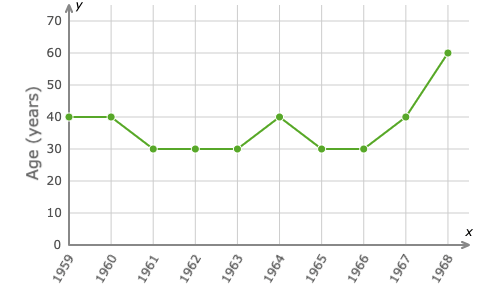
Between what two years did the average age increase by 20?
1967-1968
1960-1961
1962-1963
1966-1967
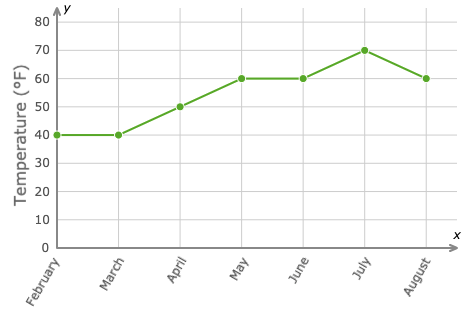
How much warmer was the temperature in April than March?
10 degrees
20 degrees
30 degrees
40 degrees
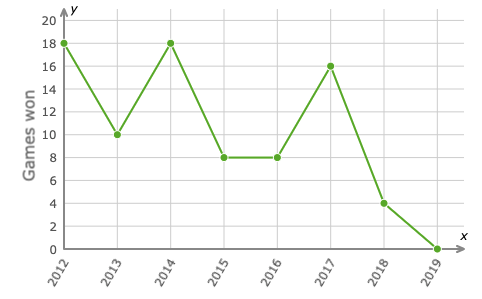
How many more games were won in 2014 than 2015?
4
8
10
12
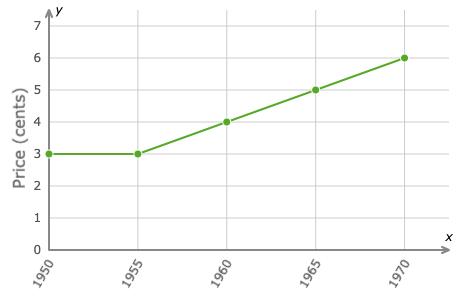
How much was a stamp in 1965?
3 cents
4 cents
5 cents
6 cents
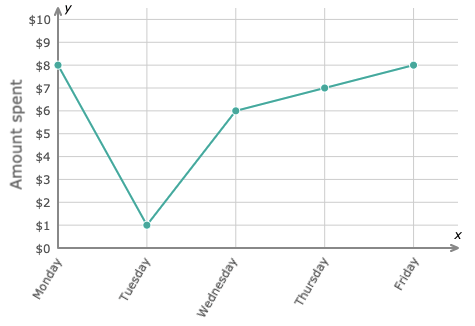
How much money was spent on Thursday?
1
6
7
8
How much warmer was the temperature in April than March?
10 degrees
20 degrees
30 degrees
40 degrees
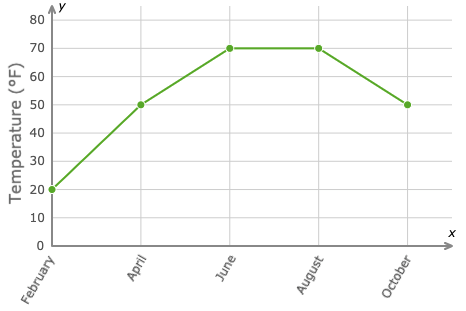
What month was the coldest?
February
April
August
October
These observations are based around results that show written quality of an item
Quantitative
Qualitative
These observations are based around results that show measurement or number of items
Qualitative
Quantitative


What is the term for the cumulative body of observations on which scientific explanations are based? This includes observations and measurable data.
peer review
pseudoscience
empirical evidence
What is pseudoscience?
real science
fake science
Why is objectivity important to scientific investigations?
Objectivity means that opinions of the scientists are included in the results.
Objectivity means that scientists add their own biases and beliefs to their data, which is important to obtaining valid conclusions.
Objectivity means that the opinions of the scientists do not affect results.
Empirical Evidence is the for ______ & ______ on which a scientific explanation can be based.
table & concerns
observations & data
science & fake science
How should you feel about a scientific explanation presented by one test or by one scientist?
CONVINCED: one test is all it takes to prove something
SKEPTICAL: one test does not prove anything
Which is a general prediction?
We will have snow.
We will have a lot of snow in the winter
We will have 5 snow days this winter in North Canton
Which is a Somewhat specific prediction?
I hurt
I have pain in my foot
I have pain in my left foot in my little toe
Which is a quite specific prediction?
I like to run
I like to run long distances
I like to run marathons that are 26.2 miles

