
 Worksheets
Unit 1 - N5 Chemistry
Total questions: 100
Worksheet time: 3hrs 51mins
Organise these options into the right categories
Increasing temperature
Decrease particle size
increase concentration
Decrease temperature
Incerase particle size
Decrease concnentration
Add a suitable catalyst
The correct formula for sulfur dioxide is?
SO
S2O
SO2
SiO2
Bubbling
Colour change
Precipitate
Energy change
Change of shape
Boiling
Dissolving
Melting
Identify the metal
Carbon
Calcium
Silicon
Iodine
A substance that increases the rate of a reaction without being used up during the reaction is called a
catalyst
product
reactant
solute
When a catalyst is added to a reaction the rate of reaction...
Increases
Decreases
Does not change
A catalyst
is used up
is never used up
In an exothermic reaction, heat is_____
taken in
given out
In an endothermic reaction, heat is_____
taken in
given out

The mass of zinc used in Experiment 1 was 1.00 g. What mass the mass of zinc used in Experiment 3?
0.50 g
1.00 g
2.00 g
3.00 g
In a reaction, the mass lost in 30 seconds was 2 g. What is the average rate of reaction, in g s−1, over this time?
1/30
30/2
1/2
2/30
The volume of gas collected in 2 minutes was 5cm3.
What was the average rate of reaction over this time?
0.2
0.4
2.5
5
The volume of gas collected in 2 minutes was 5cm3.
What are the units for the average rate of reaction?
cm3/min-1
cm3min-1
min/cm3
min cm-3

Which reaction is the fastest?
A
B

The table shows the results obtained in an experiment carried out to measure the volume of ethyne gas produced.
Calculate the average rate of reaction between 60 and 90 seconds.
(a)
Label the groups correctly.
Noble Gases
Transition Metals
Alkali metals
Alkali earth metals
Halogens
Organise these options into the right categories
positively charged
located in nucleus
mass of 1 amu
no charge
located in nucleu
mass of 1 am
negatively charged
orbits the nucleus
on energy shells
mass of almost zero
Match the group with the valency
Group 2
Valency 2
Group 7
Valency 1
Group 5
Valency 3
Group 8
Valency 0
Group 4
Valency 4
Atoms have this charge...
negative
positive
neutral
Slowest reaction is?
The orange reaction was repeated with smaller particles, which graph would be produced?
The orange graph was produced using magnesium chunks. Which graph is for magnesium powder
Elements in sodium nitrate
Sodium and nitrogen
Sodium and oxygen
Sodium and nitrate
Sodium and nitrogen and oxygen
Fastest part of reaction at this point of the graph.
molecules
lattice
share electrons
lose and gain electrons
conduct when melted or dissolved
never conduct
Metal and non metal
non metals only
high melting points
low melting points
molecules
lattice
Feels cold
heat absorbed
Heat released
Feels hot
Candle burning
Cool pack for sore wrist
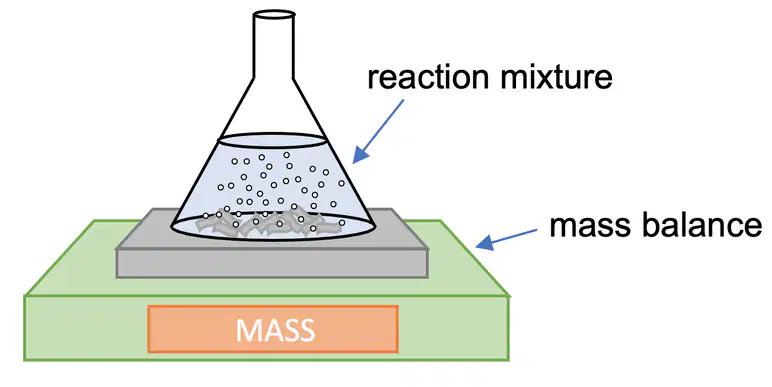
Why does the mass of the reaction change?
Reactants get used up
The products are lighter
A gas is produced
The solid disappears

Number of protons in atom
17
35
52
18
Number of neutrons in atom
17
35
52
18
Mass of atom
17
35
52
18
Atomic number
17
35
52
18
Match the following
17
Protons (atomic number)
35
Mass (protons + neutrons)
18
Neutrons
Element
Chlorine
Atoms are neutral (have no charge) because
Protons and electrons cancel each other out
Same number of protons and neutrons
Same number of protons and electrons
Same number of electrons and neutrons
Correct formula for calcium nitride
CaN
Ca2N3
Ca3N2
CaN3
When an atom loses an outer electron, it becomes a _____________ ion.


What is the charge on a magnesium ion, electron arrangement
2, 8, 2?
3+
2+
2-
3-

What is the charge on a oxygen ion
electron arrnagement 2, 6?
3+
2+
2-
3-
What is the charge on a nitrogen ion
electron arrangment 2,5 ?
3+
2+
3-
1-
2-
What is the charge on a flourine ion
electron arrangement 2, 7 ?
3+
2+
3-
1-
2-
What is the charge on a potassium ion
electron arrangment 2,8,8,1?
1+
2+
1-
2-

Which of the following represents a sodium ion?
Na⁻
Na²⁻
Na
Na⁺

How does a chlorine atom become a chloride ion?
by gaining one electron
by losing one electron
by gaining one proton
by losing one proton
The 2nd and 3rd shells can hold a maximum of...
One electron
2 electrons
8 electrons
10 electrons

Use your Periodic Table to identify this atom.
Lithium
Nitrogen
Sodium
Oxygen
Why do atoms form ions during chemical reactions?
To get a full first shell
To empty their inner shells
To get a full outer shell
To become more reactive

This atom, neon is a member of the group called the noble gases. Why are the noble gases unreactive?
Because they already have full outer shells
Because they have an even number of electrons
Because they only need to gain one electron
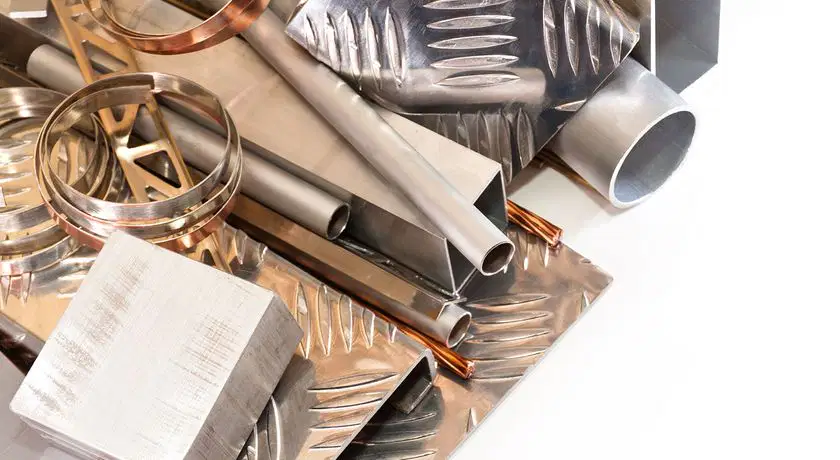
Metals (a) electrons to become stable.

Non metals (a) electrons to become stable.
Metals become (a) ions.

Non metals become -------- ions.
(a)
Match the following

Covalent Molecule

Covalent Network

Metallic Lattice

Ionic Lattice
Organise these options into the right categories
only contains strong bonds
made from positive & negative ions
positive ions and delocalised electrons
conducts as solid a
graphite is the only one that conducts
never conduct electricity
low melting and boiling points
conduct electricity when molten/dissolved
What is the formula for lithium bromide?
LiBr
LiBr2
Li2Br
Li2Br2
What is the formula for iron(II) oxide?
FeO2
FeO
Fe2O
Fe2O3
What is the formula for aluminium hydroxide?
AlOH
AlOH3
Al(OH)3
(Al)3OH
The formula for ammonium sulfate is
(NH4)2S
NHSO4
NH42SO4
(NH4)2SO4
Order the prefixes from largest to smallest
oct-
hex-
tetra-
di-
mon-
S (a)
V (b)
S (c)
D (d)
F (e)
mass is measured in (a)
volume is measured in (b)
concentration is measured in (c)
Solutions that have more OH– ions than H+ ions are
acidic
alkaline
spectator ions
neutral
Solutions that have more H+ ions than OH- ions are
acidic
alkaline
spectator ions
neutral
pH 1
pH 10
pH 14
When mixed with water, insoluble metal oxides e.g. CuO or ZnO make a _____ solution
Acidic
Alkaline
Neutral
When mixed with water, soluble metal oxides e.g. K2O , Na2O , Li2O make a _____ solution
Acidic
Alkaline
Neutral
What happens to the pH of an acid during neutralisation?
It stays the same
It moves toward pH 1
It moves towards pH 7
It moves towards pH 14
Match the following
Hydrochloric Acid
HCl
Sulfuric Acid
H2SO4
Nitric Acid
HNO3
Phosphoric Acid
H3PO4
Ethanoic Acid
CH3COOH

Substance that is most acidic
Milk
Drain cleaner
Lemon
Blood
Substance that has highest pH
Stomach acid
Drain cleaner
Coffee
Soap
What will happen to the pH of ammonia if it is diluted?
No change
Increase
Decrease
Soap
What will happen to the pH of vinegar if it is diluted?
No change
Increase
Decrease
Soap
Correct equation for neutralisation is (a) + alkali -> (b) + water
Calculate the formula mass of CaCO3
18
100
102
53.5
Balance this equation:
H2 + Cl2 ---> HCl
It is balanced.
H2 + Cl2 ---> 2HCl
3H2 + Cl2 ---> 6HCl
H2 + 3Cl2 ---> 6HCl
What is the total number of atoms present in 5Na3PO4?
5
55
40
8
Calculate the formula mass of H2O
18
100
102
53.5
Calculate the formula mass of potassium carbonate
18
100
138
53.5
Calculate the formula mass of ammonium chloride
18
100
102
53.5
Calculate the mass of 0.25 mol of Mg(NO3)2
46g
37.13 g
46 kg
37.1 kg
Calculate the mass of 2 mol of sodium
46g
4.6g
46 kg
46 l
Calculate the number of moles in 5.6 g KOH
3 mol
0.2 mol
0.1 mol
0.02mol
Calculate the number of moles of potassium hydroxide that is dissolved to make 500 cm3 of 1 mol/l.
0.5 mol
0.1 mol
0.01 mol
0.5 mol
Calculate the number of moles of potassium hydroxide that is dissolved to make 200 cm3 of 0.5 mol/l.
0.5 mol
0.1 mol
0.01 mol
0.5 mol
Calculate the volume of a 0.4 mol l-1 solution containing 0.1 mol of solute
2 l
0.05 l
5 l
0.25 l
Calculate the volume of a 0.1 mol l-1 solution containing 0.5 mol of solute
2 l
0.05 l
5 l
0.25 l
Calculate the concentration of 1.38 g K2CO3 dissolved to make 100 cm3 of solution
0.4mol/l
0.02mol/l
0.005 mol/l
0.1 mol/l
What is the meaning of standard solution?
A solution of which its concentration does not accurately known.
Measurement that shows the quantity of solute in one unit of volume of solution
A solution of which its concentration is accurately known.
Concentration that shows the number of mol of solute
Calculate the concentration of 1.27g of iron (II) chloride dissolved to make 2 litres of solution
0.4mol/l
0.02mol/l
0.005 mol/l
0.1 mol/l
Calculate the number of grams of substance required to make 200cm3 of calcium nitrate solution, concentration 0.25 mol/l
10.6 g
0.345 g
33g
8.2 g
Balance this equation
(a) Zn + (b) HCl --> ZnCl2 + H2
(a) Al + (b) FeO → Al2O3 + (c) Fe
Which equation is balanced?
PbO2 + 2H2--> H2SO4
SO2 + H20 --> H2SO4
2Na + 2H2O --> 2NaOH + H2
2Na + 2H2O --> 2NaOH + H
What is the mass of 0.75 moles of (NH4)3PO4?
0.0044 g
91 g
110 g
74 g

