
Font size
 Worksheets
Allergy Lesson
Total questions: 14
Worksheet time: 53mins
1-6.
Answer the questions below after watching the video
Antigens are recognized by their
shape
location on the cell membrane
they are not recognized
color
What types of blood cells carry oxygen?
White Blood Cells
Red Blood Cells
Platelets
Plasma
How will you determine which antibody pairs with which antigen?
(a)
What type of white blood cells produce antibodies?
(a)
How will you determine which antibody goes with which antigen?
Review: What is the job of a macrophage?
7-10.
Answer the questions below after watching the video
Normally, does food trigger an immune response even though it is a foreign substance?
No
Yes
What kind of digestion occurs in the stomach?
Mechanical Digestion only
Chemical Digestion only
Both Mechanical and Chemical Digestion
No digestion
Summarize - What does the digestive system do? What does the circulatory system do? How do molecules go from the digestive system into your blood?
Normally - is there an immune response from the body when food is eaten?
Yes
No
11-15.
Answer the questions below after watching the video
The best definition of an allergy is
Allergens are deadly and your immune system reacts to destroy them.
The immune system produces a response to a harmless substance.
The food you are allergic causes food poisoning.
The allergen and antibody have a matching...
shape
color
taste
smell
What chemical is released as part of this immune response?
Hydrochloric Acid
Enzymes
Histamine
BTB
What are some symptoms associated with histamine?
Summarize what an allergic reaction is.
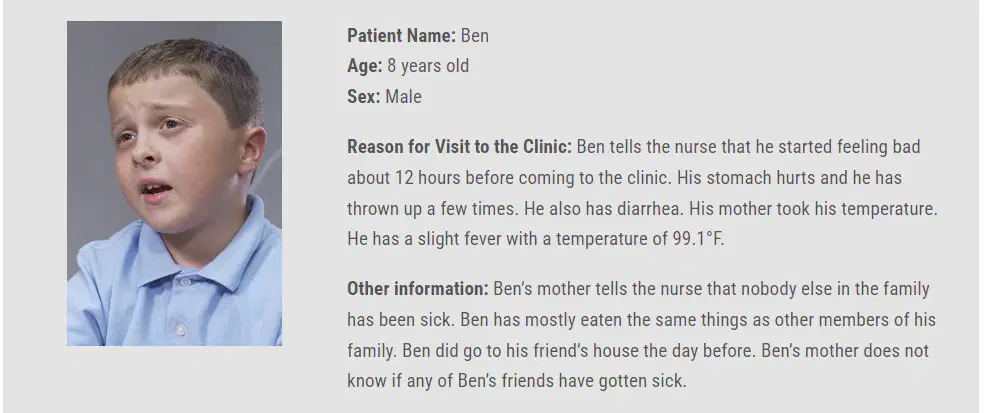
If you were Ben's doctor, how would you diagnose him?
Food Allergies
Food Poisoning
Lactose Intolerance
Gluten Intolerance
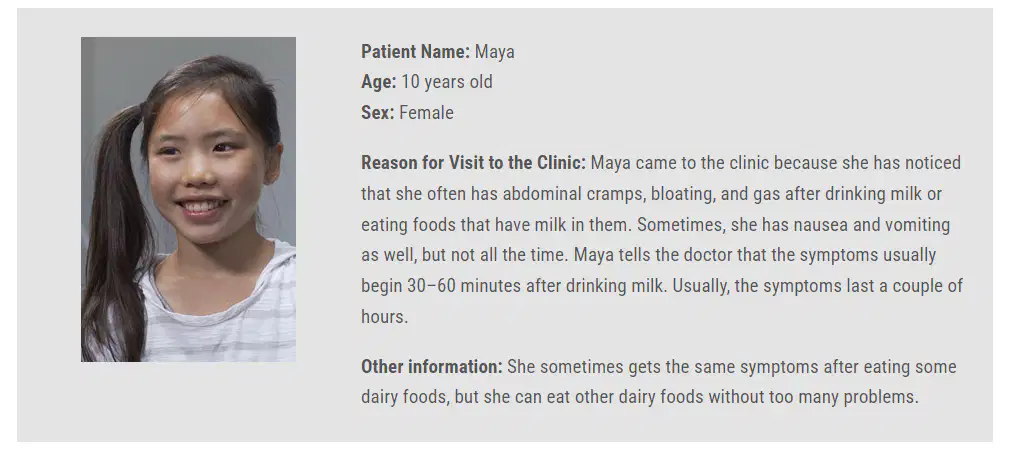
If you were Maya's doctor, how would you diagnose her?
Food Allergies
Food Poisoning
Lactose Intolerance
Gluten Intolerance
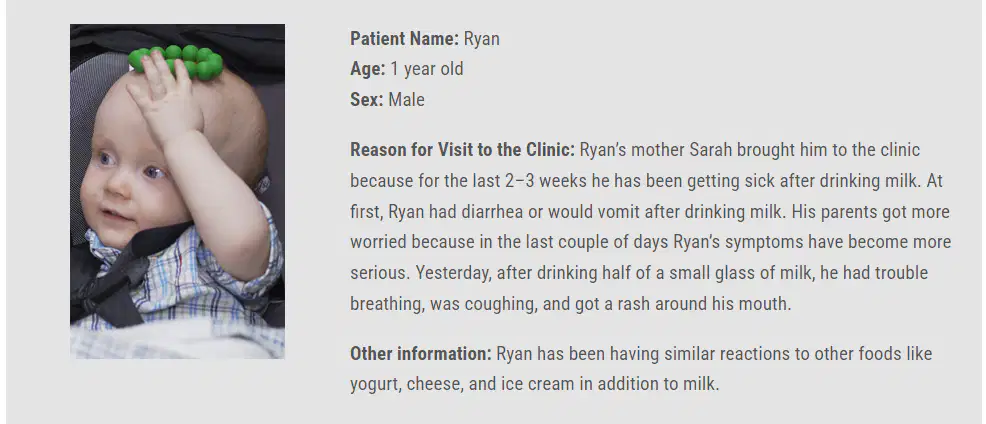
If you were Ryan's doctor, how would you diagnose him?
Food Allergies
Food Poisoning
Lactose Intolerance
Gluten Intolerance
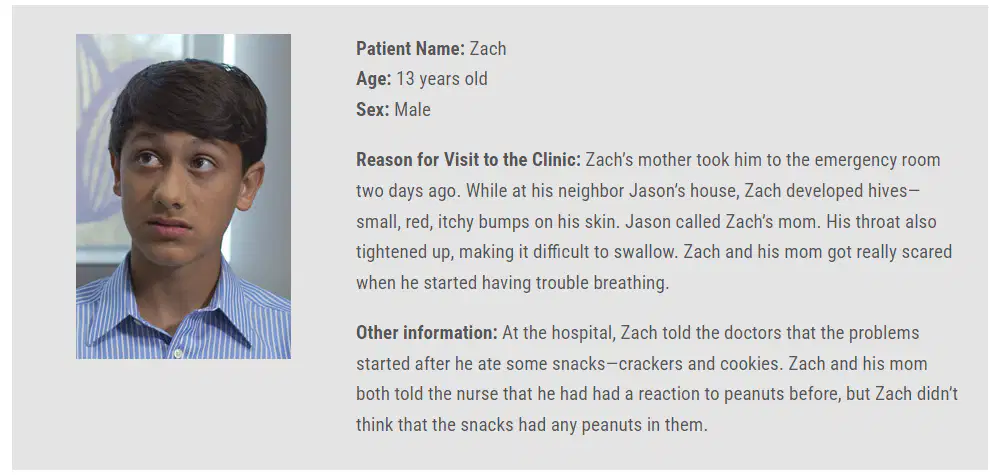
If you were Zach's doctor, how would you diagnose him?
Food Allergies
Food Poisoning
Lactose Intolerance
Gluten Intolerance
20.
Answer the questions below after watching the video
What symptom(s) do you think indicate a severe allergic reaction?
What component of food is responsible for an allergic reaction?
fat
protein
carbohydrate
trans fatty acids
When exposed to pollen, individuals may experience different allergic reactions.
true
false
Imagine you are at a picnic and suddenly experience anaphylaxis due to a bee sting. What might happen?
You wouldn't be able to breathe properly
You would develop a severe rash
Your nose would run uncontrollably
You would develop a high fever
What is commonly used to treat the symptoms of an allergy?
Antibiotics
Antivirals
Antifungals
Antihistamines
Organ Transplant Rejection and Allergic Reactions
Organ transplant rejection occurs when the recipient's immune system recognizes the transplanted organ as foreign and attacks it. Although the organ transplant is not harming the individual, the immune system responds to the presence of foreign antigens.
This is similar to the immune response in allergic reactions. In both cases, the immune system identifies a substance as harmful and mounts a response to eliminate it. This response can lead to tissue damage and other symptoms associated with rejection or allergies.
During organ rejection, immune cells such as T cells, B cells, and antibodies target the transplanted organ, causing inflammation and damage. Similarly, in allergic reactions, immune cells release histamine and other chemicals that trigger symptoms like itching, swelling, and difficulty breathing.
Understanding the similarities between organ rejection and allergic reactions can help researchers develop better treatments for both conditions. By studying the immune response in rejection and allergies, scientists can identify common pathways and potential targets for therapy to improve outcomes for patients.
What does the immune system recognize on transplanted organs that cause it to respond?
What do both organ rejection and allergic reactions involve?
Digestive system
Nervous system
Immune system
Respiratory system
What happens when organ transplant rejection occurs?
The recipient's immune system accepts the transplanted organ
The recipient's immune system attacks the transplanted organ
The recipient's immune system ignores the transplanted organ
The recipient's immune system enhances the function of the transplanted organ
What causes inflammation and damage to the transplanted organ during rejection?
Bacterial infection
Viral infection
Immune cells targeting the organ
Allergic reaction
What does the similarities in immune system reactions between allergic responses and organ rejection highlight?
The simplicity of the body's defense mechanisms
The unrelated nature of allergic responses and organ rejection
The complexity of the body's defense mechanisms
The lack of immune system involvement in allergic responses

