
Font size
 Worksheets
Marine Biology- sponges, microbes, algae
Total questions: 77
Worksheet time: 45mins
During a biology class, students were discussing the major domains of life. One student mistakenly mentioned a group that is not considered a domain of life. Which of the following is NOT a domain of life?
Plantae
Eukarya
Archaea
Bacteria
In a biology class, students are asked to classify a newly discovered species. Of the following, which classification level is the least specific?
Phylum
Family
Order
Class
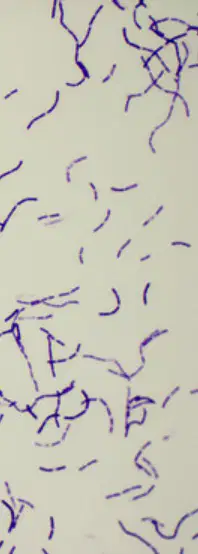
Imagine you are studying two types of cells under a microscope. One is from an animal tissue, and the other is from a bacterial culture. What key difference would you observe?
The cell from animal tissue has a nucleus; the cell from bacterial culture does not
The cell from bacterial culture has a nucleus; the cell from animal tissue does not
The cell from bacterial culture does not have DNA; the cell from animal tissue does
The cell from animal tissue does not have DNA; the cell from bacterial culture does

Imagine you're a scientist studying microscopic organisms. You're comparing bacteria and viruses, noting they can both cause diseases. What is the ONE big difference between them?
Bacteria can reproduce by themselves; viruses cannot
Viruses can reproduce by themselves; bacteria cannot
Bacteria have a nucleus; viruses do not
Viruses have a nucleus; bacteria do not

Imagine you're exploring a hot spring and you find microorganisms thriving in the boiling water. What type of organisms are these likely to be?
Archaeans known as 'extremophiles' because they can live in extreme environments like a hot spring.
Common bacteria that are capable of causing extreme illnesses in their hosts.
Ordinary plants that cannot survive in extreme environments like a hot spring.
Adventurous animals that do extreme things like bungee jumping.
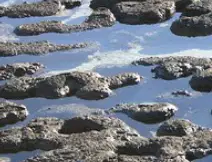
What are the calcareous mounds formed by cyanobacteria called?
Stromatolites
Plankton
Algae
Diatoms
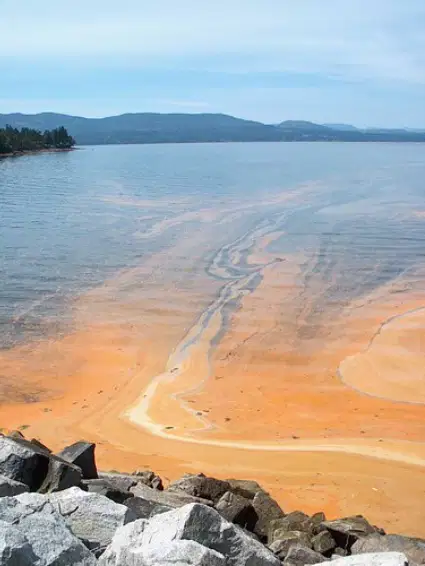
What could lead to an algal bloom in a coastal town's water supply?
High nutrient levels from agricultural runoff
Heavy metal pollution from industrial waste
Too many whales migrating close to the shore
Low nutrient levels due to strict environmental regulations
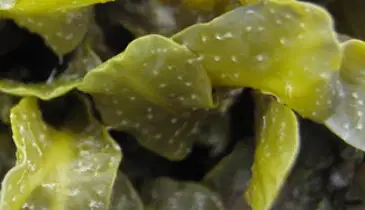
Which part of a seaweed thallus is the site for photosynthesis?
Blade
Leaf
Stipe
Pneumatocyst
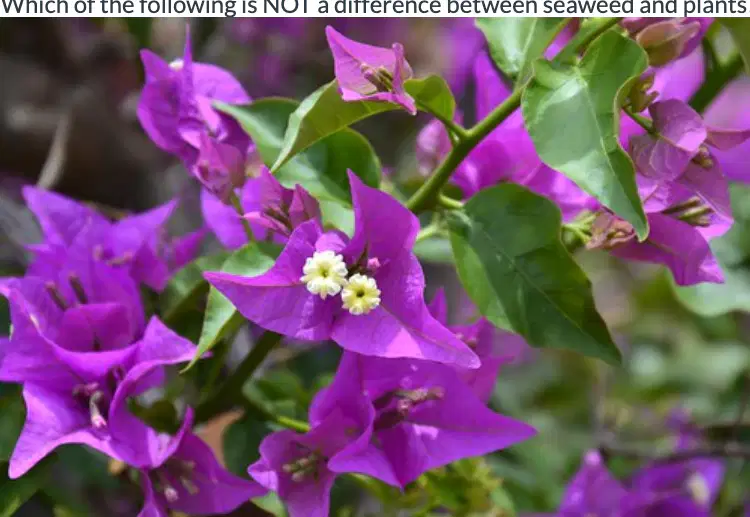
During a coastal cleanup, a group of environmentalists discuss the characteristics of seaweed compared to terrestrial plants. Which of the following is NOT a difference they might note?
Role as a primary producer
Presence of roots
Presence of pneumatocysts
Presence of leaves
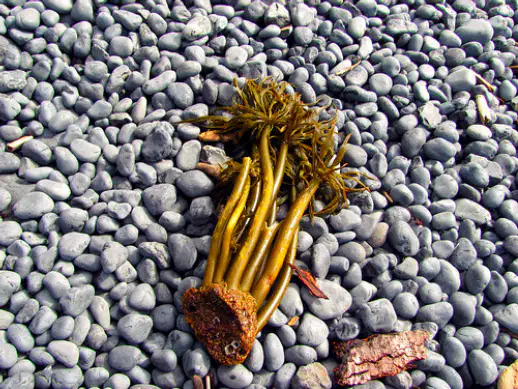
The holdfast of a seaweed
Only anchors the seaweed to the floor
Is the exact same as the root of a plant
Extracts nutrients from the sea floor
Extracts water from the sea floor
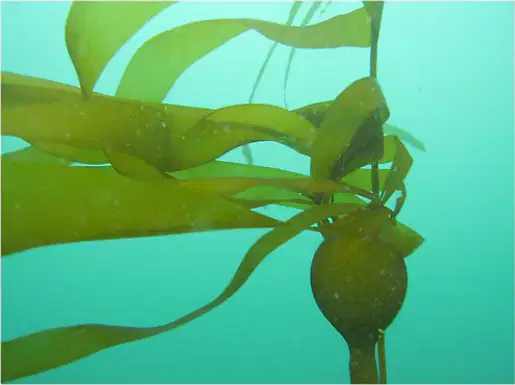
During a marine biology lesson, students learn about the largest and most structurally complex seaweeds. Which type of seaweed is being described?
Brown
Green
Red
Blue
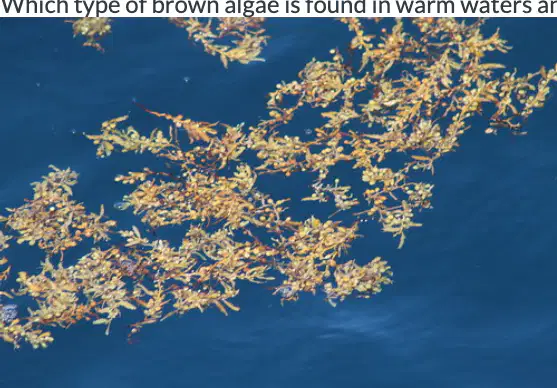
Which type of brown algae is found in warm waters and is used to clean industrial waste?
Sargassum
Kelp
Seagrass
Spiral rockweed

Phycocolloids are chemicals found in many seaweeds that are often used in human-made products to enhance creaminess. Which of the following is NOT a product containing one of these phycocolloid chemicals?
Chicken broth
Pudding
Ice cream
Toothpaste
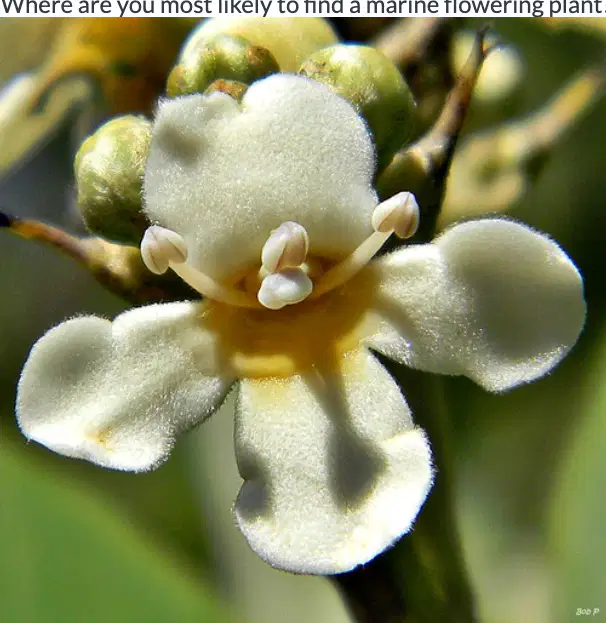
Where are you most likely to find a marine flowering plant?
Near the coast
In the deep sea
Floating in the open ocean
Around mid-ocean ridges
During a marine biology expedition, researchers discovered a unique type of sponge on the ocean floor. They are curious to know, in which phylum do these glass sponges belong?
Porifera
Animalia
Calcarea
Eukarya
Which sponge body type is the least complex and efficient?
Asconoid
Osculoid
Syconoid
Leuconoid
What type of sponge cell is responsible for trapping/ingesting food particles?
choanocyte
archaeocyte
porocyte
pinacocyte
What function do spicules provide?
structure
trap food
water flow
temperature regulation
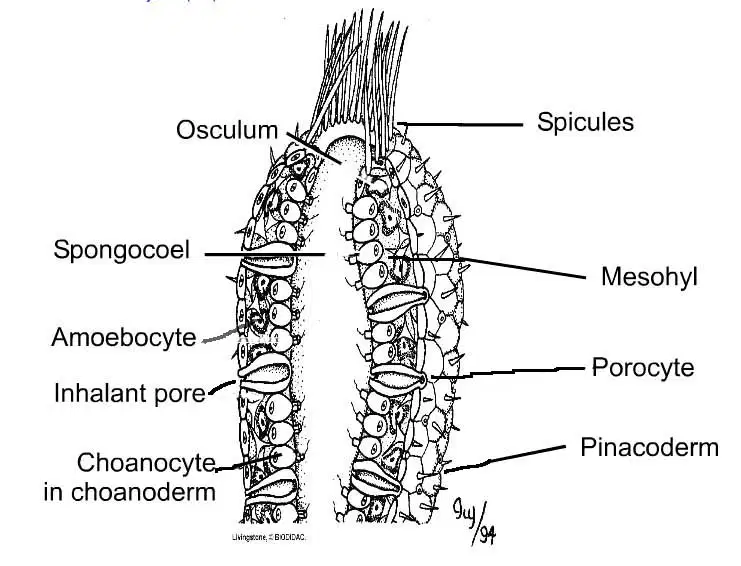
Look at the image. Which part allows water to flow out of the sponge?
spongocoel
pinacoderm
spicules
osculum
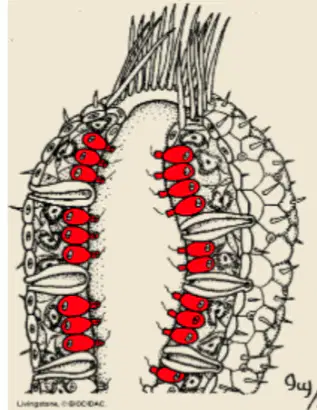
While examining a sponge under the microscope, you notice certain cells highlighted in red. What are these cells called?
Choanocytes
Pinacocytes
Porocytes
Ostia
Which class of sponges are ONLY marine and have spicules made of calcium carbonate?
Calcarea
Hexactinellida
Demospongiae
Why are sponges important to our marine ecosystem?
They provide a habitat for fish
They eat toxic fish
They perform photosynthesis
In the vast ocean, creatures known as sponges belong to the domain __________.
eukarya
bacteria
plantae
porifera
During a marine biology lesson, students learn that sponges are classified in the kingdom __________.
eukarya
animalia
plantae
porifera
Sponges are found in the phylum __________,
eukarya
animalia
plantae
porifera
Imagine you are studying marine life and come across a creature attached to a rock. Which of these characteristics would indicate it's not a sponge?
sessile
bilateral symmetry
multicellular
composed of 2 layers
During a marine biology expedition, researchers are studying the feeding mechanisms of sponges in their natural habitat. Which parts or cells are involved in sponge nutrition? (mark all that apply)
choanocytes
amoebocytes
porocytes
pinacocytes
spongocoel
Sponges reproduce only sexually.
True
False
Match the class of sponge to its description: Calcarea
small, calcium carbonate spicules, marine, shallow water, vase shaped
6 rayed silicon spicules & are marine, glass sponge, polar water
silicon spicules or spongin, marine & freshwater species, all are leuconoid
Match the class of sponge to its description: Hexactinellida
small, calcium carbonate spicules, marine, shallow water, vase shaped
6 rayed silicon spicules & are marine, glass sponge, polar water
silicon spicules or spongin, marine & freshwater species, all are leuconoid
Identify the characteristics of the Demospongiae class found in a marine biology study:
small, calcium carbonate spicules, marine, shallow water, vase shaped
6 rayed silicon spicules & are marine, glass sponge, polar water
silicon spicules or spongin, marine & freshwater species, all are leuconoid
Marine microbes that photosynthesize and provide energy to the food web are called:
photospores
primary producers
endospores
bateriophages
In a remote alien planet, the newly discovered microscopic life forms, similar to Earth's prokaryotes, do not have
DNA
cell walls
membrane bound organelles
ribosomes
Diatoms have a two part cell wall (frustule) made of
cellulose
silica
lipids
glucose
These are the most important temperate and polar open-water primary producers
diatoms
dinoflagellates
cyanobacteria
kelp
When observing the ocean's microscopic life, one might find organisms with cell walls made of plates composed of
cellulose
silica
lipids
protein
Protozoans obtain energy from
photosynthesis
ingesting food particles
photosynthesis and ingesting food particles
chemosynthesis
Red tides can be toxic because of a toxin released by these unicellular protists
diatoms
dinoflagellates
protozoans
all answers are correct
What Kingdom do seaweeds (multicellular algae) belong?
Plantae
Protista
Animalia
Fungi
What do seaweeds such as giant kelp provide beyond being a food source (primary producer)?
they protect coral reefs
they take salt out of the water
they create a habitat for many organisms
This gelatinous type of chemical from seaweeds is used in food processing and the manufacturing of many goods:
chlorophyll
carotenoid
phycobilin
phycocolloid
In a typical garden, flowering plants have
true leaves
transport tissue (xylem and phloem)
roots
all answers are correct
Mangroves trees produce
broad-shaped seedlings to drift away on currents
pencil-shaped seedlings to stick in the mud
parachute-seedlings to drift on coastal winds
Most sponges are ________________, but some live in freshwater.
marine
yellow
square
good cooks
As adults sponges are _____________, meaning they remain in one place.
wrinkly
slow
sessile
Sponges get food by ________________________.
filter-feeding
hunting
going to the Crusty Crab
What type of symmetry do sponges (Porifera) have?
asymmetrical
radial
bilateral
medial

Do sponges have an organ system?
no
yes

I have no mouth but many pores and am asymmetric. I don't move very much but I am a marine animal.
I am an arthropod
I am a mollusk
I am a sponge
I am a cnidarian

How do Sponges interact with organisms around them?
Sponges provide shelter for algae, shrimp, and crabs.
sponges are heterotrophic and hunt fish around them.
Sponges decompose organic materials in the coral.
Sponges are sessile and do not interact with organisms in the environment.


The small openings all over a sponge are...
Collar cells
Flagella
Osculum
Pores
A sponge is a very simple _____________________.
vertibrate
invertebrate
Because they do not have heads, arms, legs, internal organs or even brains sponges are the ________________________ of all animals.
complicated
simplest
remarkable
largest
What is a defense that some sponges have?
Venom
Some have spines (spikes)
They attach to the host and eat them
They can float away from predators

the stem-like portion of then of seaweeds
thallus
blade
stipe
pneumatocyst
holdfast

body of seaweed
stipe
macroalgae
thallus
blade
How are seaweed classified or sorted in to groups?
By their pigment
By their length
By the water they are found in
By their toxins
Which products contains seaweed?
cosmetics
dairy products - icecream, processed cheeses, yogurts
fertilizers
toothpaste, shampoos, etc.
All of these
green pigment
fucoxanthin
chlorophyll
carotenoids
phycoblins

Algae are similar to plants, yet they don't have _____
Roots
Flowers and Fruits
Stem
Leaves
Is seaweed a type of algae?
Yes
No
Mode of Nutrition in Algae is
Heterotrophic
Autotrophic
Both Autotrophic and Heterotrophic
None
What phylum does brown algae belong to?
rhodophyta
chlorophyta
phaeophyta
fucucillin
What phylum does green algae belong to?
Chlorophyta
Phaeophyta
Rhodophyta

Scientific name?
Egregia menziesii
Fucus spiralis
Ulva
Nereocystis luetkeana
Allows the leaf-structures of the seaweed to float
Blade
Holdfast
Bulb / Gas Bladder / Pneumatocyst
Stipe
Which group of algae contains the larges species of seaweed, including kelp and sargasso?
red algae
green algae
purple algae
brown algae

Red Algae belong to which phylum?
Rhodophyta
Chrysophyta
Euglenophyta
Chlorophyta
Red Algae are contains a jelly-like substance which is used as a medium to grow bacteria for research purposes.
Algin
Sap
Agar
Grime

