wayground logo

Free Printable Worksheets

Font size

S
M
L
XL
Worksheets

Y9 Revision (Physics)

Total questions: 93

Worksheet time: 3hrs 36mins

Name
Class
Date
1.

Heat and Temperature are ______

a)

same

b)

different

c)

opposites

2.

Heat is a form of ________

a)

power

b)

energy

c)

temperature

3.

Heat is measured in ________

a)

degrees

b)

grams

c)

Joules

4.

Temperature is measured in ________

a)

degrees

b)

grams

c)

Joules

5.

The scales used for Temperature are Celsius, Fahrenheit, and _______

a)

Kalvin

b)

Kelvin

c)

Celvin

6.

Temperature is ____________

a)

thermal energy

b)

a measure of how hot or cold an object is,

c)

is the transfer of energy from one object to another.

7.

Heat is transferred from _____ objects to ______ objects

a)

big,small

b)

cold,hot

c)

hot,cold

8.

1. 15⁰C to _____ ⁰F

a)

9⁰F

b)

99⁰F

c)

49⁰F

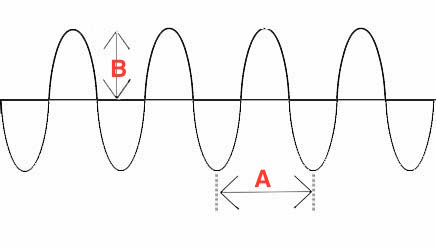
d)

59⁰F

9.

1. 50⁰F to _____ ⁰C

a)

10⁰C

b)

110⁰C

c)

100⁰C

d)

20⁰C

10.

1. 32⁰C to _____ ⁰K

a)

30.15 K

b)

305.15 K

c)

45.56 K

d)

241.15 K

11.
Energy of motion is which type of energy?
a)
Potential
b)
Kinetic
c)
Sound
d)
Gravitational
12.
When plants convert the sun's energy into food, which type of energy is it?
a)
kinetic
b)
chemical
c)
thermal
d)
radiant
13.
What kind of energy is represented in this picture?
a)
Thermal
b)
Potential
c)
Nuclear
d)
Mechanical
14.
What kind of energy does this device use?
a)
Chemical
b)
Electrical
c)
Thermal
d)
Chemical
15.
What kind of energy is represented in the picture?
a)
Thermal
b)
Chemical
c)
Sound
d)
Nuclear
16.
A battery converts what type of energy to another?
a)
sound to kinetic
b)
light to heat
c)
mechanical to electrical
d)
chemical to electrical
17.
Wind turbines and windmills convert what energy to another?
a)
Kinetic to electric
b)
Gravitational potential to electric
c)
Mechanical to potential
d)
Thermal to sound
18.
What machine changes electrical energy into light and sound energy?
a)
battery
b)
lightbulb
c)
alarm clock
d)
apple
19.
The purpose of the panels is to change solar energy into ____________.
a)
light energy
b)
electrical energy
c)
chemical energy
d)
mechanical energy
20.
Which is a renewable source of energy?
a)
coal
b)
uranium
c)
ocean tides
d)
natural gas
21.
Which is a renewable source of energy?
a)
oil
b)
nuclear
c)
wind
d)
natural gas
22.
The picture shows sunlight shining on solar panels. 
Which statement best describes this energy source?
a)
Sunlight is a renewable energy source used to produce hydropower.
b)
Sunlight is a nonrenewable energy source used to produce nuclear power.
c)
Sunlight is a renewable energy source used to produce electricity.
d)
Sunlight is a nonrenewable energy source used to produce natural gas.
23.
There is the same amount of energy today as when the world began.
 
a)
True
b)
False
24.
A windmill is a renewable energy source
a)
True
b)
False
25.
Coal, oil, and natural gas are all are renewable energy sources.
a)
True
b)
False
26.

The transfer of energy through molecules in direct contact is ...

a)

Heat

b)

Conduction

c)

Convection

d)

Radiation

27.
The flow of energy that occurs when a warm liquid or gas rises ..
a)
Heat
b)
Conduction
c)
Convection
d)
Radiation
28.
The transfer of energy by electromagnetic waves.
a)
Heat
b)
Conduction
c)
Convection
d)
Radiation
29.

As you touch a hot stove the heat transfers -

a)

from your hand to the stove by conduction.

b)

from the stove to your hand by conduction.

c)

from your hand to the stove by radiation.

d)

from the stove to your hand by radiation.

30.

Which sentence explains why a cold metal spoon placed in a pot of boiling water becomes hot?

a)

Thermal energy is transferred from the spoon to the water by conduction

b)

Thermal energy is transferred from the water to the spoon by conduction.

c)

Thermal energy in the water is transformed into kinetic energy in the spoon by convection.

d)

Thermal energy in the spoon is transformed into kinetic energy in the water by convection.

31.
In a lava lamp, the warm part rises and the cool part sinks.  This is an example of 
a)
heat computation
b)
convection
c)
conduction
d)
radiation
32.
_________________ are observed in liquids and gases (air).
a)
convection currents
b)
radiation waves
c)
thermal conductivity
d)
conductors
33.
The movement of thermal energy from a region of _________________ temperature to a region of _____________________ temperature is called heat.
a)
higher, lower
b)
cooler, warmer
c)
lower, higher
d)
medium, medium
34.
The rubber that makes up the handle on the pan is considered a thermal ___________________ because thermal energy moves slowly through this material.
a)
conductor
b)
insulator
c)
regulator
d)
temperature
35.
Which example below is an example of conduction?
a)
Boiling macaroni
b)
The attic is warmer than the basement
c)
The Sun heating the Earth
d)
Touching hot sand with your feet
36.
Which example below is an example of convection?
a)
Standing on a hot metal bridge
b)
The attic is warmer than the basement
c)
The Sun heating the Earth
d)
Touching hot sand with your feet
37.
Which example below is an example of radiation?
a)
Standing on a hot metal bridge
b)
The attic is warmer than the basement
c)
The Sun heating the Earth
d)
Touching hot sand with your feet
38.
True or false: Heat moves from the cooler object to a warmer object
a)
True
b)
False
39.

True or False?

Heat and temperature are different.

a)

True

b)

False

40.

As thermal energy increases, kinetic energy also...

a)

Increases

b)

Decreases

c)

Remains the same

41.
The diagram to the right shows a solid iron bar that is being heated in a flame. The primary method of heat transfer in the solid iron bar is—
a)
convection
b)
conduction
c)
absorption
d)
radiation
42.
What is the difference between heat and temperature?    
a)
a.  Temperature measures the motion of molecules, and heat is the energy of that motion
b)
b.  Temperature is measured by a thermometer, and heat is measured by a barometer
c)
c.  Heat is measured in calories, and temperature is measured in joules
d)
d.  Heat is caused by the sun, and temperature is caused by conditions in the atmosphere
43.
Why is there more thermal energy in an iceberg than in a pot of boiling water?    
a)
a.  The pot insulates the heated molecules
b)
b.  Most icebergs are fairly warm to the touch
c)
  c.  Icebergs contain many more molecules than pots of water
d)
  d.  Water does not hold heat very well
44.

What tool is used to measure temperature?

a)

a stove

b)

a beaker

c)

a thermometer

d)

a glove

45.

Metal objects heat up more slowly than plastic or wooden objects?

a)

True

b)

False

46.

The movement of tectonic plates is due to ____?

a)

convection currents in the mantle

b)

seafloor spreading

47.

What is true about the Earth's plates?

a)

The are made of solid rock that can never be seen.

b)

They are made of solid rock that can be seen if not covered by soil, rock, or water.

48.

As plates pull apart, what happens?

a)

Loose rock material fills the empty space.

b)

New plate material fills the empty space so there is no space left.

49.

What is true about the Earth's plates?

a)

They are separated by oceans.

b)

They fit closely together with each plate touching all the others.

50.

What happens when continental plates press together?

a)

The edges of the plates will push upward and continue to move toward each other.

b)

The edges of the plates will be pushed downward and continue to move toward each other.

51.

Two of Earth's plates pressed together for millions of years. What happened?

a)

The oceanic plate was pushed downward

b)

The continental plate was pushed downward.

52.

What kind of diagram would show how three of the Earth's plates fit together?

a)

They would be next to each other and have a space between them.

b)

They would be next to each other and have no space between them.

53.

What is true about the layer (lower mantle) below the Earth's plates?

a)

It is solid rock.

b)

It is slightly softened rock like clay.

54.

What are nebulae?

a)

groups of exploding stars

b)

clouds of gas and dust in space

c)

a collection of stars

d)

groups of stars forming a pattern

55.

Stars, like our Sun, form from nebulae. How long ago did our Sun form?

a)

4.6 million years ago

b)

46 million years ago

c)

4.6 billion years ago

d)

46 billion years ago

56.
What is the shape of a planet's orbit?
a)
circular
b)
elliptical
c)
spherical
d)
round
57.
The __________ has planets, moons, comets, and asteroids.
a)
solar system
b)
earth
c)
rotation
d)
United States
58.
What force acted on the massive nebula to collapse it and eventually form our sun?
a)
electrostatic force
b)
strong force
c)
 weak force
d)
gravity
59.
What is the nebular hypothesis?
a)
Prediction about how the universe was formed
b)
Prediction of how the moon was formed
c)
Prediction of how comets were formed
d)
Prediction of how the Solar System was formed
60.
Which device measures sound waves?
a)
Oscilloscope
b)
Stethoscope 
c)
Radio
d)
I don't know
61.

Sound is a form of energy produced by ______________.

a)

Vibrations

b)

Distances

c)

Prisms

d)

Forces

62.

Sound waves travel the FASTEST through _____________.

a)

Gases

b)

Liquids

c)

Solids

63.

What is Pitch?

a)

How loud or soft a sound is.

b)

Muscle that holds vocal cords.

c)

Movement back and forth.

d)

How high or low a sound is.

64.
Why is sound able to travel faster through a solid than a gas?
a)
Gas molecules are packed tightly.
b)
Sound does not travel faster through a solid than a gas.
c)
Solid molecules are packed tightly.
d)
Gas molecules move slowly.
65.

__________ is the loudness or softness of a sound. 

a)
Echo
b)
Volume
c)
Pitch
d)
Vibration
66.

The volume of a sound is measured in units called ________

a)

decibels

b)

hertz

c)

frequency

d)

amplitude

67.
A longer string makes a _______ pitch than a short string.
a)
louder
b)
softer
c)
higher
d)
lower
68.
If a sound has a high amplitude then it also has a ____________!!!
a)
fast echo
b)
slow pitch
c)
high volume
d)
low volume
69.

Which of the following sound wave produces the highest pitch of sound?

a)
b)
c)
d)
70.

Choose the correct statements. (2 answers)

a)

P - The loudness increases

b)

Q - The pitch decreases

c)

R - The loudness decreases

d)

S - The pitch increases

71.

Diagram shows 3 types of sound waves generated from speaker. Which of the following statements is true?

a)

P has a higher pitch than Q

b)

Q has a higher pitch than R

c)

R has the highest pitch

d)

P, Q and R have the same pitch

72.

Which waveform has the lowest frequency?

a)

(a)

b)

(b)

c)

(c)

d)

(d)

e)

(e)

73.

If the distance represented by the letter A (the amplitude) were increased, how would it change the sound?

a)

The sound would be higher.

b)

The sound would be softer.

c)

The sound would be lower.

d)

The sound would be louder.

74.

What is changed in the second picture?

a)

Someone is talking louder in picture 2

b)

Someone is talking softer in picture 2

c)

Someone is talking lower pitch in picture 2

d)

Someone is talking higher pitch in picture 2

75.

What is changed in the second picture?

a)

Someone is talking louder in picture 2

b)

Someone is talking softer in picture 2

c)

Someone is talking lower pitch in picture 2

d)

Someone is talking higher pitch in picture 2

76.

Frequency is measured in the unit of

a)

Ampere (A)

b)

Hertz (Hz)

c)

Mole (mol)

d)

Meter (m)

77.

Which of the following statement is true?

a)

The higher the amplitude, the higher the pitch of sound

b)

The lower the amplitude, the louder the sound

c)

The higher the frequency, the higher the pitch

d)

The lower the frequency, the louder the sound
78.

What property of this wave is represented by the letter "A"?

a)

amplitude

b)

crest

c)

trough

d)

wavelength

79.

People with the nerve deafness is due to permanent damage to a nerve ending in the ______________

a)

ear canal

b)

eardrum

c)

cochlea

d)

anvil, stirrup, hammer (three bones)

80.

What type of interference is represented in this diagram?

a)

Constructive

b)

Destructive

81.

What type of interference is represented in the diagram?

a)

Constructive

b)

Destructive

82.

Through which material does sound travel slowest?

a)

Water

b)

Paper

c)

Aluminum

d)

Air

e)

None of the above

83.
What two types of measurements make up DENSITY
a)
Mass and Volume
b)
Temperature and Mass
c)
Grams and Centimeters
d)
Volume and Weight
84.
Look at this image.  Which object has the LOWEST density in water? How
a)
The Ping Pong Ball because it floats to the top 
b)
The bolt because it has sunk to the bottom
c)
The soda cap because it is not just full of air like the Ping Pong ball
85.
Jack has a rock. The rock has a mass of 14g and a volume of 2cm3. What is the density of the rock?
a)
7 mL
b)
7 g/cm3
c)
28 g/cm3
d)
1/7 g/cm3
86.
If an object has a density of .6 g/mL and you put it into water, will it sink or float?  
a)
sink
b)
float
87.
If an object has a density of 3.6 g/mL and you put it into water, will it sink or float?  
a)
sink
b)
float
88.
Frank has an eraser. It has a mass of 4g, and a volume of 2cm3. What is its density?
a)
8 g/cm3
b)
2 g/cm3
c)
1/2 g/cm3
d)
24 g/cm3
89.
What units are used to measure mass?
a)
g
b)
cm3
c)
g/cm3
d)
cm3/g
90.
What is the formula for density?
a)
density = mass x volume
b)
density = mass / volume
c)
density = mass + volume
d)
density = mass - volume
91.
Helium balloons rise on earth because
a)
helium is less dense than air
b)
helium is more dense than air
c)
helium is cooler than air
d)
helium is warmer than air
92.
True or False:  The density of a specific type of material never changes.  
a)
True
b)
False
93.
Calculate the density of the cube.
a)
2 g/cm3
b)
4 g/cm3
c)
6 g/cm3
d)
8 g/cm3