wayground logo

Free Printable Worksheets

Font size

S
M
L
XL
Worksheets

Mercury Venus Earth & Mars

Total questions: 62

Worksheet time: 32mins

Name
Class
Date
1.

How large in Mercury in kilometers?

a)
3,500 kilometers
b)
4,880 kilometers
c)
6,200 kilometers
d)
5,000 kilometers
2.

How large is Venus in miles?

a)
8,200 miles
b)
6,300 miles
c)
9,500 miles
d)
7,520 miles
3.

How do you convert miles to kilometers?

a)
Multiply the number of miles by 1.60934 to get the equivalent distance in kilometers.
b)
Subtract the number of miles from 1.60934 to get the equivalent distance in kilometers.
c)
Add the number of miles to 1.60934 to get the equivalent distance in kilometers.
d)
Divide the number of miles by 1.60934 to get the equivalent distance in kilometers.
4.

Describe the composition of the planet Mercury.

a)
Metallic iron and nickel, with a silicate mantle and crust.
b)
Consists of only rocks
c)
Composed of water and ice
d)
Made of pure gold
5.

Describe the composition of the planet Venus.

a)
Gaseous mantle, iron core, nitrogen atmosphere with water vapor clouds
b)
Metallic mantle, carbon core, hydrogen atmosphere with helium clouds
c)
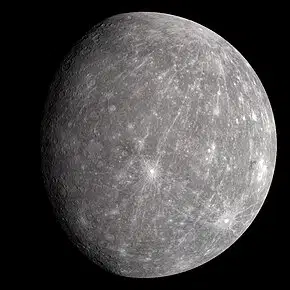
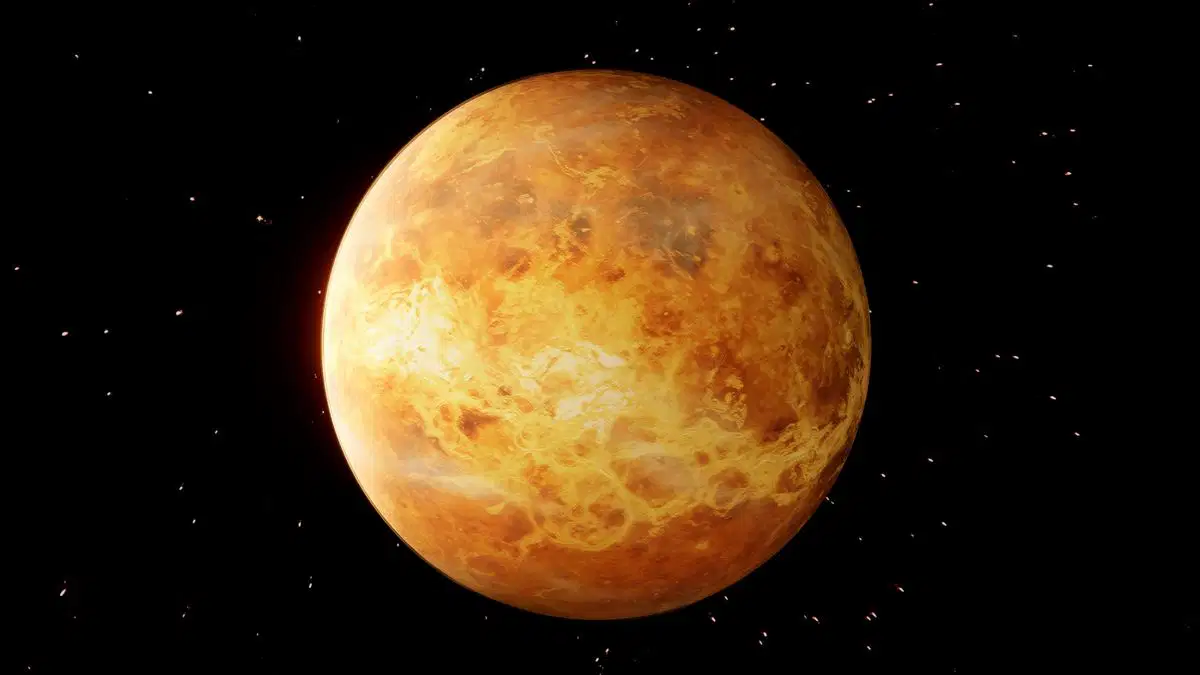
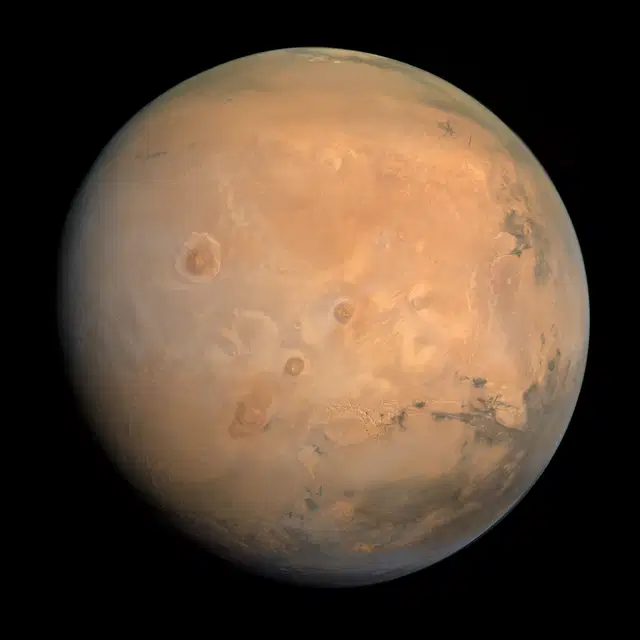
Liquid mantle, silicon core, oxygen atmosphere with methane clouds
d)
Rocky mantle, metallic core, carbon dioxide atmosphere with sulfuric acid clouds
6.

T/F: Like the moon, mercury has craters.

a)
False
b)
True
7.

How many Earth days is Mercury's year?

a)
88
b)
365.5
c)
365.25
d)
365
8.

How do we know all this information pertaining to Mercury if it is too dangerous to land on it?

a)
Scientists use magic to gather information about Mercury.
b)
Mercury sends messages to Earth with all the information.
c)
Aliens living on Mercury provide us with the information.
d)
Scientists use telescopes, satellites, and space probes to gather information about Mercury.
9.

What is the purpose of Mariner 10 and Messenger probes?

a)
To study Mercury and Venus (Mariner 10) and Mercury (Messenger) respectively.
b)
To study Mars and Jupiter
c)
To explore the Moon and Mars
d)
To investigate Saturn and Uranus
10.

What is the mean temperature of mercury?

a)
55.2 degrees Celsius
b)
67.1 degrees Celsius
c)
80.7 degrees Celsius
d)

167 degrees Celsius

11.

What is the least visited planet of the following?

a)
Mars
b)

Mercury

c)
Saturn
d)
Jupiter
12.

Why is Venus referred to as the Earth's sibling/twin?

a)
Venus is a gas giant
b)
Different size, composition, and gravity
c)
Venus has no atmosphere
d)

Similar size, density, and gravity

13.

What is Venus mean temperature?

a)

464 degrees Celsius

b)

350 degrees Celsius

c)

600 degrees Celsius

d)

125 degrees Celsius

14.

Would you weigh less or more on Venus?

a)
Equal
b)
Less
c)
More
15.

If Tommy is 155 lbs, how much would he weigh on Venus?

a)

139.5 lbs

b)

122 lbs

c)

60.45

d)

135.75lbs

16.

How many moons does Mercury have?

a)
1
b)
3
c)
2
d)
0
17.

How many moons does Venus have?

a)
3
b)
1
c)
2
d)
0
18.

How many earth days is Venus's year?

a)
300
b)
225
c)
365
d)
180
19.

Describe Venus's atmosphere.

a)
Venus's atmosphere is mainly carbon dioxide with sulfuric acid clouds.
b)
Venus's atmosphere is transparent with no gases.
c)
Venus's atmosphere is filled with water vapor.
d)
Venus's atmosphere is composed of nitrogen and oxygen.
20.

Why would walking on Venus be so difficult?

a)

Atmospheric pressure and density

b)

no tectonic activity

c)

greenhouse gases

d)

magnetic fields

21.

What is different about Venus's volcanos and earths?

a)

Venus's volcanoes are all active, while Earth's are dormant.

b)

Venus's volcanoes have no tectonic activity, so the material simply piles up on itself.

c)

Earth's volcanoes are mostly shield volcanoes, while Venus has a variety of volcano types.

d)
Venus's volcanoes are all underwater, while Earth's are on land
22.

Mercury is the...?

a)

1st planet from the sun

b)

2nd Planet from the Sun

c)

3rd planet from the sun.

23.

Venus is the????

a)

1st planet from the sun

b)

2nd planet from the sun

c)

6th planet from the sun

24.

Venus is the hottest planet1

a)

True

b)

False

25.

Venus has thick????

a)

Water

b)

Rivers

c)

Clouds

26.

What are the layers of Earth?

a)
Crust, Core, Outer Core, Inner Core
b)
Crust, Mantle, Outer Core, Inner Core
c)
Crust, Mantle, Core, Inner Core
d)
Surface, Mantle, Outer Core, Inner Core
27.

Earth's atmosphere is mostly which 2 elements?

a)
neon and krypton
b)
hydrogen and argon
c)
helium and carbon dioxide
d)
nitrogen and oxygen
28.

How many days is a year on Earth?

a)
364 days
b)
366 days
c)
360 days
d)
365 days
29.

How many moons does the Earth have?

a)
2
b)
3
c)
4
d)
1
30.

The moon orbits the earth every __ days.

a)
27.3
b)
29.2
c)
25.8
d)
30.5
31.

what is the cause for Earth's magnetic field?

a)
Earth's atmosphere
b)
Tectonic plate movement
c)
Solar wind
d)
Movement of molten iron and nickel in Earth's outer core
32.

How many km is Earth?

a)
40,075 km
b)
50,000 km
c)
45,000 km
d)
30,000 km
33.

Solar wind exists on which planets?

a)

Earth & Mercury only.

b)
Mercury, Venus, Earth, Mars
c)

Venus & Earth only.

34.

How long is Earth's rotation?

a)
24 hours
b)
48 hours
c)
36 hours
d)
12 hours
35.

Radar on probes such as Magellan are able to...

a)
analyze the chemical composition of comets
b)
measure the temperature of stars
c)
communicate with extraterrestrial life forms
d)

detect the surface features of planets, moons, seeing through clouds, and producing topology maps.

36.

T/F: Earth is the only planet with large amount of liquid water on its surface.

a)

true

b)

false

37.

What color is Mercury?

a)
Blue
b)
Silvery-white
c)
Green
d)
Red
38.

What color is Venus?

a)
Yellowish-white
b)
Blue
c)
Green
d)
Red
39.

What color is Earth?

a)
Yellow
b)
Red
c)
Purple
d)
Blue, green, and white
40.

What is the difference between the 4 inner and 4 outer planets?

a)
The 4 inner planets are all red in color, while the 4 outer planets are all blue.
b)
The 4 inner planets are all moons, while the 4 outer planets are all stars.
c)
The 4 inner planets are gas giants and larger, while the 4 outer planets are rocky and smaller.
d)
The 4 inner planets are rocky and smaller, while the 4 outer planets are gas giants and larger.
41.

What color is Mars?

a)
Yellow
b)
Blue
c)
Green
d)
Red
42.

How large is Mars?

a)
3,456 kilometers (2,144 miles)
b)
6,779 kilometers (4,212 miles)
c)
8,921 kilometers (5,543 miles)
d)
5,678 kilometers (3,526 miles)
43.

How many Earth days is a year on Mars?

a)
365
b)
420
c)
687
d)
550
44.

What is the mean temperature of Mars?

a)
-40 degrees Fahrenheit (-40 degrees Celsius)
b)
120 degrees Fahrenheit (49 degrees Celsius)
c)
50 degrees Fahrenheit (10 degrees Celsius)
d)
-80 degrees Fahrenheit (-62 degrees Celsius)
45.

Does Mars have gravity?

a)
No
b)
Sometimes
c)
Yes
d)
Only on weekends
46.

Which planet has had the most missions?

a)
Jupiter
b)
Saturn
c)
Mars
d)
Venus
47.

T/F: Mars is relatively small is size.

a)
False
b)
Huge
c)
Tiny
d)
True
48.

How is Mars similar to Earth?

a)
Mars has oceans and abundant marine life like Earth.
b)
Mars has a dense atmosphere and breathable air like Earth.
c)
Mars has a similar gravitational pull and mass as Earth.
d)
Mars has seasons, polar ice caps, and a day length close to Earth's.
49.

Mars layers include...

a)
crust, atmosphere, core
b)
mantle, core, atmosphere
c)
crust, mantle, core
d)
crust, core, atmosphere
50.

Natural disasters on Mars include...

a)
Volcanic eruptions
b)
Tornadoes
c)
Earthquakes
d)
Dust storms, avalanches, meteorite impacts
51.

What is the largest planet in the solar system?

a)
Mars
b)
Saturn
c)
Neptune
d)
Jupiter
52.

The red spot on Jupiter is a...

a)
Giant hurricane
b)

An area enduring countless volcanic eruptions

c)

Large build up of red dust and ash

d)
Giant storm
53.

Which planet has the most gravity?

a)
Mars
b)
Saturn
c)
Neptune
d)
Jupiter
54.

What are the auroras on Jupiter?

a)

caused by volcanic eruptions.

b)

a result of gravitational interactions with its moons.

c)

caused by atmospheric disturbances.

d)

the interaction between the planet's magnetic field and charged particles from the Sun.

55.

T/F Jupiter is a gas planet.

a)
mostly solid
b)
partially gas
c)
true
d)
false
56.

Explain why Jupiter is so dense.

a)
Jupiter is dense because it is closer to the Sun than other planets.
b)
Jupiter is dense due to the presence of large amounts of water on its surface.
c)
Jupiter is dense due to the compression of hydrogen and helium by its immense gravitational force.
d)
Jupiter is dense because it is made of solid rock and metal.
57.

Which planets experience dust storms?

a)
Mercury and Uranus
b)
Mars and Earth
c)
Saturn and Neptune
d)
Venus and Jupiter
58.

How does Jupiter impact its moon Lo?

a)
Jupiter's magnetic field causes tidal heating on Io.
b)
Jupiter's rings create a protective shield around Io.
c)
Jupiter's atmosphere provides oxygen for life on Io.
d)
Jupiter's gravitational pull causes volcanic activity on Io.
59.

What evidence proves Jupiter's enormous amount of gravity?

a)

The comet Shoemaker-Levy passed too close and was torn apart slamming into Jupiter.

b)
Jupiter's rings being made of pure gold
c)
Jupiter's ability to rotate faster than other planets
d)
Jupiter's color changing due to its gravity
60.

How many earth years is a single year on Jupiter?

a)

10

b)

18

c)

69

d)

12

61.

Match the planets:

a)

1.

Mercury

b)

2.

Venus

c)

3.

Earth

d)

4.

Jupiter

e)

5.

Mars

62.

Which is the largest land rover is known for studying mars?

a)
Opportunity
b)
Curiosity
c)
Spirit
d)

Hope