
 Worksheets
W9A Review
Total questions: 112
Worksheet time: 1hrs 20mins
Islam has 5 things that they must follow what is that called
5 Pillars
The Pillars of Truth
The Truth Be Told
The Columns of Greece
What religion/philosophy follows the 4 noble truths
Hinduism
Christianity
Buddhism
Taoism
The belief that when you die your soul finds another body
The Middle Way
Reincarnation
Nirvana
Hajj
Which two religions were founded in India?
Buddhism and Islam
Islam and Christianity
Judaism and Hinduism
Hinduism and Buddhism
Which 3 religions consider Jerusalem the Holy City?
(a)
________ is a polytheistic religion.
Buddhism
Christianity
Islam
Judaism
________ is a monotheistic religion
Judaism
Christianity
Islam
All of the Above
What is the fundamental difference between Christianity and the religion of the ancient Roman Empire?
Christianity's fundamental belief in one God conflicts with the belief in many gods of the ancient Roman Empire.
Christians do not believe that Jesus was the Messiah while most Romans believed Jesus was the son of God.
The religious beliefs of the ancient Roman Empire include the belief in life after death which conflicts with the Christian belief in reincarnation.
The religious beliefs of the Roman Empire stem from Judaism while Christianity was created independently of Judaism.
Which emperor converted to Christianity and made it legal for the citizens of the Roman Empire to convert as well?
Julius Caesar
Constantine
Augustus Caesar
Theodosius
Roman peace
Pax Romana
apostles
aquaduct
Justinian's wife __________ helped him rule? She was very influential for women's rights
Madonna
Cleopatra
Theodora
Mary I
Which of the following was NOT a reason for the fall of the Roman Empire?
The empire’s vast size.
Corruption in Roman Government.
Pressure on the Goths from the Huns.
Influence of Greek culture.
What were Justinian’s achievements?
warfare, architecture, and abolishing slavery
reuniting the Roman Empire, organizing a legal system, and creating beautiful buildings
politics, music, and fighting the power of the pope
painting, protecting the environment, and working to establish one official language
The Justinian Code is best described as:
a legal system based on Christian and Roman laws guaranteeing fair treatment for all.
Justinian’s attempt to abolish Christianity.
a set of architectural guidelines used to create new cities and towns.
rules of conduct for all members of the Roman army.
The Eastern Roman Empire is also known as the:
Holy Roman Empire
Eastern Orthodox
Empire Ottoman Empire
Byzantine Empire
What is the Hagia Sophia?
the most famous and magnificent Byzantine church in Constantinople
name of a famous Byzantine mosaic
the title of the wife of the Byzantine emperor
the name of the largest market in Constantinople
The people who lived in this society never stopped thinking of themselves as Romans. What inference can you make from this statement?
Byzantines tried to imitate the early Roman Empire.
The Byzantines wanted to distance themselves from their Roman Empire history.
The history and prestige of the Roman Empire was very strong and the Byzantines still felt connected to it.
The Byzantines one day hoped to move the center of their empire back to Rome.
What role did Christianity play in Byzantine society?
Christianity was central to the Byzantines’ lives.
None, Byzantines quickly converted to Islam.
Although Christians, most Byzantines did not think religion was important.
Christianity was outlawed in Justinian’s era.
Why was the location of Constantinople advantageous?
It was the home of many kings and queens.
It was between the East and West Roman Empires.
It was the home place of where Julius Caesar died so many came there.
It linked the Black and Mediterranean Seas which meant it was a trade capital making it wealthy and powerful.
A form of art made from small pieces of stone, glass and/or tile is better known as
Mosaic
Mural
Portrait
Sculpture
The city of Constantinople was in key location on the strait that links the Mediterranean Seas with the _______.
Black Sea
Red Sea
Sea of Azov
Aegean Sea
The form of Christianity that developed in the Byzantine Empire became known as ___________.
Eastern Orthodox
Roman Catholic
Western Church
Judaism
In 1054, a schism, or complete break, separated
the Eastern and Western Churches
The South Slaves
Greeks and Byzantines
Browns with Cleveland
Which of the following issues divided the Western and Eastern Churches?
practices of animal sacrifices
practices such as scalping
authority of the pope
belief in Jesus
Leader of the Western Church was called:
Patriarch
Pope
Pastor
Father
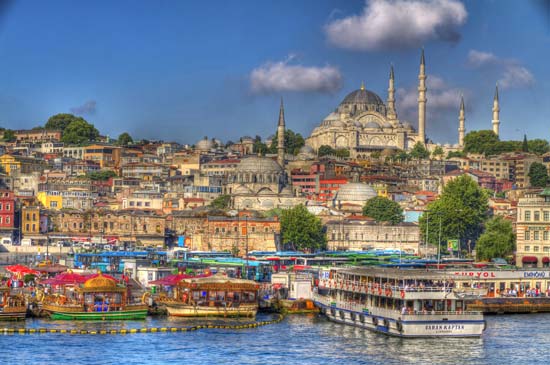
Which group conquered Constantinople?
Persians
Huns
Ottoman Turks
Carthage


Vocabulary: Social and Political system of the middle ages
Fief
Feudalism
Feudal Contract
Chivalry
Vocabulary: A grant of land given to a vassal
Fief
Feudal Contract
Chivalry
Vassal

Which group was the highest in the social hierarchy?
Knights
Serfs/Peasants
Kings/Queens
Lords/Ladies
What was the result of the First Crusade?
The crusaders captured and gained control of Jerusalem.
The crusaders were defeated and returned home.
The crusaders never made it to Jerusalem.
What religious leader from the Catholic Church helped to organize the First Crusade?
Stephen Harding
Pope Urban II
Saint Benedict
What Muslim leader reconquered Jerusalem after the 2nd Crusade?
William the Conqueror
Saladin
Richard I
Ibn Batuta


Where did the Bubonic Plague originate?
Northern Europe
South Africa
Central Asia
Middle East
What was a major effect of the Crusades?
Religious toleration for Jews
Economic control of North Africa
Increased influence of the Patriarch
Increased trade with Arab cultures
What Chinese dynasty established the first golden age of Chinese civilization and experienced the Yellow Turban Rebellion?
Shang Dynasty
Zhou Dynasty
Han Dynasty
Ming Dynasty
What Chinese dynasty occurred due to the invasion of the Mongols, and whose plans for invading Japan was thwarted due to typhoons?
Ming Dynasty
Qing Dynasty
Zhou Dynasty
Yuan Dynasty
What Chinese dynasty was the last native dynasty of China and was destroyed by inadequate responses to natural disasters?
Ming Dynasty
Shang Dynasty
Sui Dynasty
Qin Dynasty
Which of the following is true of the Han Dynasty?
It was the first Chinese Dynasty
It was when China was ruled by the Mongols
It was a golden age for Ancient China
It was when a meritocracy was first used
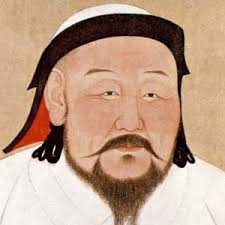
This Mongol ruler ____ united China for the first time in over 300 years
Kublai Khan
Hongwu
Yonglo
Ghengis Khan
Why did Zheng He go to the seas?
To look treasure and money
To trade and explore new trade routes
The emperor wants to show off their power and wealth
To capture people to work for them
To trade, explore new trade routes, and to show off their power
The word “Renaissance” means
New religion
Rebirth
Dark Ages
Be happy
The term Renaissance refers to the period from about
700 – 500 BCE
550 – 1000 AD
1000 – 1300 AD
1300 – 1600 AD
The Renaissance began in the city states of
France
Italy
Greece
England
Gutenberg facilitated the spread of Renaissance ideas by
Developing the printing press
Opening a school in Venice
Opening a school for sculptors
Learning with Leonardo da Vinci
Martin Luther’s statements criticizing the church are called the
Commandments
Perspectives
Thirty-Five Complaints
Ninety-Five Theses
The Church reacted to Luther’s criticisms by
Making him Pope
Adopting wide-spread reforms
Kicking him out of the Church (Excommunicating)
Cutting off his head
Why did Henry VIII (8th) break from the Catholic Church?
Selling indulgences
Executing Martin Luther
Named himself Holy Roman Emperor
Wanted to divorce his wife
Those who broke away from the Catholic Church became known as
Protestants
Renaissance Men
Jesuits
Humanists
How were the Protestants Reformation and the European Renaissance similar?
Discouraged the growth of the strong Monarches
Were led by the Military
Encouraged people to question Tradition
Supported the return of the Roman Empire
What was the Reformation?
A movement that led to the split of the church between Catholics and Protestants
A city in Italy where art Flourished from about 1350-1700 BC
A movement that found the origins of religions by tracing back in time
A rebirth of Culture, Art, and Literature

What were Indulgences
To break the rules of one's church or Faith
To make a change for the better
To make a donation to the Church in order to be given forgiven for sins
To be removed from a Church Community
Which of the following was one of Luther's main beliefs?
Someone who enjoyed worldly pleasures
Christians needed to be baptized again as adults
Good works were required for Salvation.
All people of Faith were equal
For what is the Medici Family famous?
For being Artist
For being Writers
For being rulers and supporters of the Arts
For being religious reformers
Which factor contributed to the beginning of the Renaissance in Italian cities?
occupation by foreign powers
interaction with Latin America
surplus of porcelain from Japan
location near important trade routes
What was one ideal of Renaissance humanism?
training as a knight and practicing chivalry
obeying divine right monarchy and the church
living apart from the world and taking monastic vows
investigating areas of interest and fulfilling one’s potential
Which period in European history is most closely associated with Leonardo da Vinci, Michelangelo, William Shakespeare, and Nicolaus Copernicus?
Early Middle Ages
Renaissance
Age of Absolutism
Enlightenment
17th-century scholars Nicolaus Copernicus and Galileo Galilei faced serious challenges to their scientific theories because their ideas
were based on the Bible
contradicted traditional medieval Christian beliefs
relied only on teachings from non-Christian cultures
were not supported by scientific investigations
Which statement about the Scientific Revolution in Europe is accurate?
The existence of natural laws was rejected.
Scientists questioned traditional beliefs about the universe.
New ideas supported the geocentric theory of Ptolemy.
The Bible was used to justify new scientific findings.
One similarity between Martin Luther, Henry VIII and Galileo is that they
argued against the establishment of a theocratic state
protested against the ideas of the Enlightenment
died during the Reign of Terror
challenged the teachings of the Catholic Church
A right, such as life and liberty, that a person is born wth
divine right
philosophes
natural rights
contract
Enlightenment thinker who believed in the natural rights of "Life, Liberty, and the right to Property".
Montesquieu
John Locke
Rousseau
How did the ideas of the Enlightenment philosophers most influence popular revolutions in France and in the United States?
by explaining that society could be improved through scientific discovery
by challenging the belief in the divine right of kings
by stressing the importance of military strength
by examining other countries as models of self-government
How are the Renaissance and the Enlightenment similar?
produced major cultural changes
limited technological advancements
encouraged traditional values
ignored individual achievements
Which radical revolutionary presided over the Reign of Terror?
Marie Antoinette
Eugene Delacroix
Maximilien Robespierre
Louis XIV

Time period in Europe during the 17th & 18th Centuries when Philosophers began applying the concept of reason to the political environment and challenged absolutism (unlimited government).
Scientific Revolution
Renaissance
Enlightenment
Middle Ages
The original goal of both the American and French Revolution was to....
To produce more food
To get rid of the monarchy rule
To create a new religion
To allow the people to become aristocrats
What was a major cause of the French Revolution?
inequalities in the tax structure
economic success of mercantilism
failure of the congress of Vienna
Continental System in Europe
Prior to the French Revolution, France was deep in debt because
money spent on the American Revolution
the monarchy's lavish spending
the 1st and 2nd estates did not pay taxes
all of the above
During the Reign of Terror, who was safe?
ABSOLUTELY NO ONE
THE KING
ROBESPIERRE
CITIZENS OF FRANCE
On July 14, 1789, French peasants stormed which French prison and armory?
French Armory
Fort Sumter
Bastille
Versailles
The first estate in pre revolutionary France was the
Clergy
Monarchy
Nobles
Bourgeoisie
Estate

