
NEW
Font size
 Worksheets
Spring 25 PE Review
Total questions: 30
Worksheet time: 1hrs 14mins


In preparation for an electrophoresis procedure, enzymes are added to DNA in order to
convert the DNA into gel
cut the DNA into fragments
change the color of the DNA
produce longer sections of DNA

A student performed a gel electrophoresis experiment. The results are represented in the diagram
below. Compared to the fragments at the top of the gel, the fragments at the lower end are
larger, and move slower
larger, and move faster
smaller, and move faster
smaller, and move slower

This technique used to analyze DNA involves the
synthesis of new DNA strands from subunits
separation of DNA fragments based on size
production of genetically engineered DNA molecules
removal of defective genes from DNA
have the ability to interbreed.
Evolution
Natural Selection
Extinction
Artifical Selection
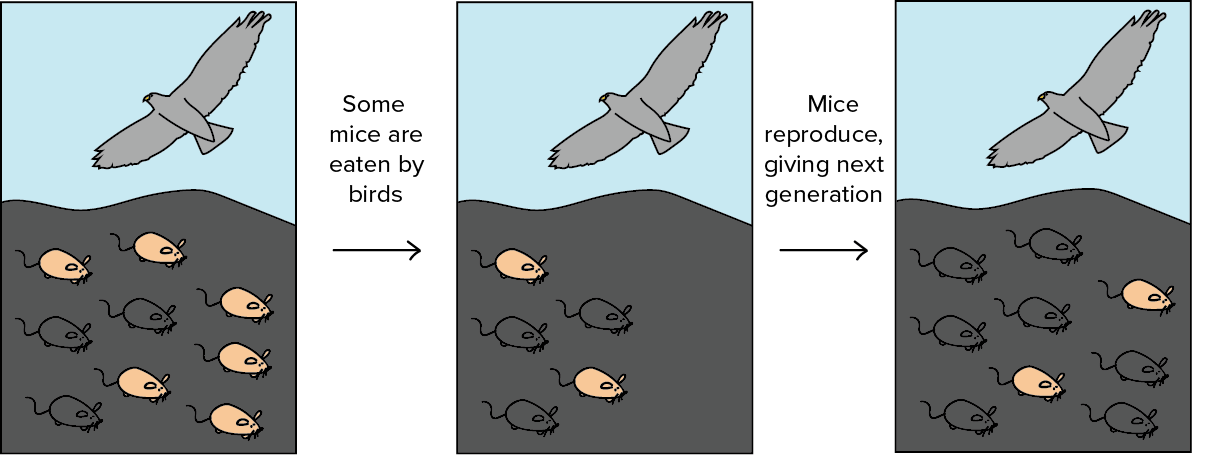
The light mice can reproduce more successfully than the dark mice
The hawks eat more dark mice than light mice because the dark mice taste better
The hawks eat more light mice than dark mice because they can see the light mice more easily
The hawks eat more dark mice than light mice because they can see the dark mice more easily
Before the industrial revolution the birds were eating more black moths. After the industrial revolution the birds started eating more white moths. Why
The birds thought the white moths tasted better.
There were not any black moths to eat
The white moths stood out on the dark trees so the birds could see them easier.

Where is the alligator and T. rex's common ancestor?
Point A
Point B
Point C
Point D
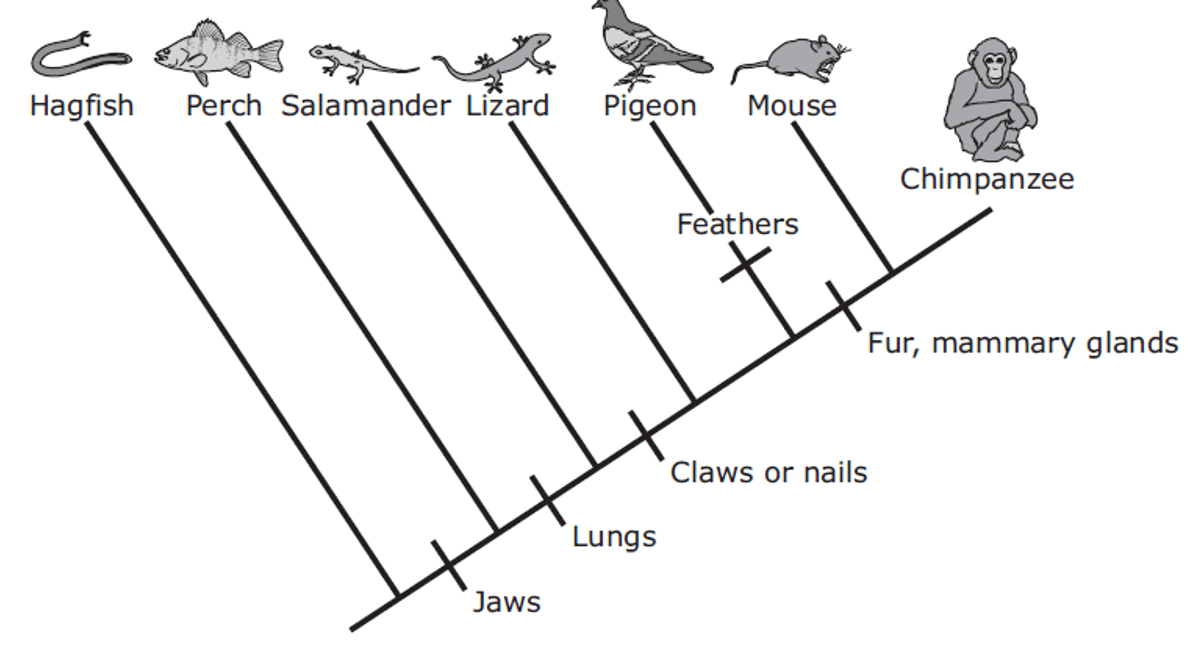
What is the purpose of a cladogram?
To map the ancestral relationships and shared traits of different organisms.
To trace the inherited traits of a single species over time.
To check the likelihood of an offspring having a particular trait.
To monitor mutations that arise among different populations.

What do both the squirrel and lion have in common that the other animals do not?
They are both vertebrates
They both have lungs
They are both mammals
They both lose their canine teeth.

Which letter represents the most recent common ancestor of sponges and mushrooms?
A
B
C
D
E

What point on the graph represents the carrying capacity?
A
B
C
D

Which type of growth is best illustrated by this rabbit population?
exponential
logistic
S-shaped
predator-prey

According to the graph, what is causing the deer population to decrease
They got sick
The wolf population is decreasing
The wolf population increased
They ran out of food

Predator population lags behind prey population because......
Increase in predators leads to decrease in prey
Increase in predators leads to increase in prey
Increase in predators leads to decrease in producers
Increase in producers leads to increase in prey

All energy in an ecosystem comes from the sun. This energy is passed through the ecosystem as organisms eat other organsims.
Ominvores
Herbivores
Detritivores
Flow of energy

The level in an Ecological pyramid that includes all the organisms that share the same place in a food chain.
Trophic Levels
Toxic Levels
KeKe Levels
Environmental Systems

Only 10% of the energy is passed on from one trophic level to the next. 90% is lost as heat due to cellular respiration or waste.
Tertiary Consumer
Biotic Factor
Abiotic Factor
10% Rule

If there are 50,000 Joules of Energy available at the producers level, how much will available in secondary consumer trophic level?
5000 Joules
5 Joules
50 Joules
500 Joules
A consumer that eats only producers or plants, usually a primary consumer.
Herbivore
Carnivore
Omnivore
Decomposer

