
Font size
 Worksheets
Chemistry of the Ocean
Total questions: 78
Worksheet time: 42mins
Water, with the molecular formula of H₂O meaning that there are__Hydrogen atoms and__Oxygen atoms.
1,2
2,1
5,4
4,5
Water bonds together with a covalent bond... what is a covalent bond?
Electrons transfer from one element to an other.
The two molecules share electrons.
What type of molecule is water?
Polar
Ionic
Covalent
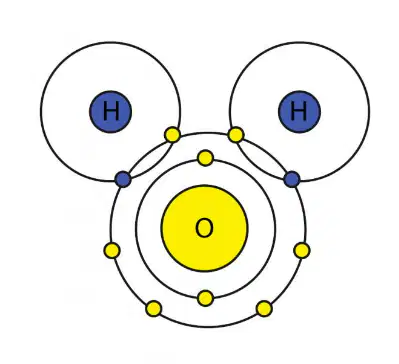
Which end is slightly more negative?
The hydrogen side
They are the same since water is neutral
The oxygen side

What type of bond bonds water to water?
Hydrogen
Covalent
Ionic
Oxygen
A hydrogen bond bonds__to__
positive water, negative water
negative water, positive water
positive water, positive water
negative, negative water
The ability to move through a substance
Viscosity
Surface tension
Cohesion
Heat Capacity
The ability to break the surface of the water
Viscosity
Surface tension
Cohesion
Adhesion
Water bonding to water
Viscosity
Surface tension
Cohesion
Adhesion
The amount of energy needed to raise the temperature of a substance
Viscosity
Heat Capacity
Cohesion
Adhesion
Water bonding to a surface or object
Viscosity
Heat Capacity
Cohesion
Adhesion
Gas is
Molecules are very spread apart
No hydrogen bonds
Requires a temperature above 100 degrees C
Hydrogen bonds are constantly being broken and reformed
Requires a temperature between 0 and 100 degrees C
Liquid is
Molecules are very spread apart
No hydrogen bonds
Molecules are relatively close together
Hydrogen bonds are constantly being broken and reformed
Requires a temperature between 0 and 100 degrees C
Solid is
Almost all molecules are bonded together
Requires a temperature below 0 degrees C
Molecules are relatively close together
Hydrogen bonds are constantly being broken and reformed
Requires a temperature between 0 and 100 degrees C
If there are 600 water molecules in a glass. What is the total number of hydrogen atoms in the glass? What is the total number of oxygen atoms in the glass?
1200 Hydrogen
600 Oxygen
600 Hydrogen
1200 Oxygen
Why is water considered to be a polar molecule?
It is cold
It has a slightly positive side and a slightly negative end
It is positively charged
It is negatively charged
Why does the oxygen atom in a water molecule have a slightly negative charge?
Because oxygen has fewer protons than hydrogen
Because oxygen is a negative atom
Because of the unequal sharing of the electrons.
Because of the unequal sharing of the protons.
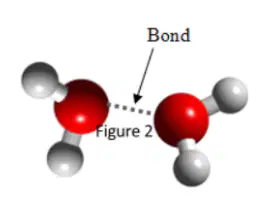
Why is this bond incorrect?
Both oxygen atoms have a positive charge.
The two water molecules have opposite charges.
Both oxygen atoms have a negative charge.
Only the hydrogen atom of water molecule can form bonds.
What is the name of the bond formed between water molecules?
Hydrogen
Covalent
As a substance is heated, its molecules vibrate
faster
slower
stay the same
Does the high heat capacity of water allow the ocean water temperature to be stable or unstable?
unstable
stable
During a hot summer day, the temperature of the water heats up much___than the temperature of the air.
faster
slower
same
Most animals in the ocean are cold blooded which means that their body temperature is __the temperature of the water.
higher
lower
equal to
What would happen to the animals living in the ocean is that ocean temperature was to rapidly change?
They would change along with it
They would adapt
They would not survive it
A liquid's tendency to resist flowing is
Viscosity
Buffers
Heat Capacity
Surface Tension
Hydrogen bonding makes water__ viscous.
more
less
same
Why are most microscopic marine animals floaters and not active swimmers?
Because water has a very low viscosity.
Because they are not strong enough to break the hydrogen bonds
Because they are less dense than water
Because they swim in the deep ocean
Would it be harder to swim through a pool of syrup or a pool of water? Why?
A pool of water because it is less viscous than syrup.
A pool of syrup because it is more viscous than water.
A pool of syrup because it is less viscous than water.
A pool of water because it is more viscous than syrup.
Which of the following is the correct Hydrogen bond?
Hydrogen bonding to Hydrogen
Hydrogen bonding to Oxygen
Oxygen bonding to Oxygen
Does cold water (not frozen) sink or float in warmer water? Why?
Sinks; because it is less dense than warm water
Floats; because it is more dense than warm water
Floats; because it is less dense than warm water
Sinks; because it is more dense than warm water
Which state of water forms the most hydrogen bonds?
Liquid
Gas
Solid
Which state of water forms the least hydrogen bonds?
Liquid
Solid
Gas
What is the temperature range where water will remain a liquid?
Between 32 and 212 degrees F
100 to 212 degrees
Below 32 degrees F
Above 100 degrees C
Why do cracks in pavement widen over time to become potholes during the winter?
Because heat causes them to expand
Because cold air gets in and causes the to expand
Because water gets in, freezes and expands
Because water melts the pavement
What is salt?
Any molecule that is made out of positively and negatively charged particles
Any covalently bound compound
Only NaCl
MgCl is considered a salt because the Mg loses an electron and the Cl gains an electron.
This means that Mg is___charged; and Cl is___charged.
positively; negatively
negatively; positively
negatively; negatively
positively; positively
What is the amount of salt dissolved in water known as?
Acid
Thermocline
Base
Salinity
The average salinity of ocean water is___per thousand.
35
1000
50
500
Why are the oceans salty and not most streams and lakes?
The oceans are the last pooling place for water, accumulating water that has weathered a lot of rock or has dissolved a lot of gas.
Due to the rule of constant composition.
The salt content in ocean rock is higher than land rock.
The types of ions dissolved in the water changes with depth.
True
False
MgCl is considered a salt because the Mg loses an electron and the Cl gains an electron. What is the charge on the Mg and the Cl?
Cl has a positive charge and Mg has a negative charge.
Mg has a positive charge and Cl has a negative charge.
Both Mg and Cl have a negative charge.
Both Mg and Cl have a positive charge.
If you boiled off all the water in 1500g of salt water sea water, how many grams of salt would you most likely end up with?
Around 525g
Around 35g
Around 52.5g
Around 52500g
Which of the following does NOT change as you dive deeper and deeper into the ocean?
The amount of salt dissolved in the water (salinity)
The amount of pressure
The temperature of the water
The type of ions dissolved in the water
Where do the ions contained in salt water come from?
The negative ions come from human pollution and the positive ions come from the Earth atmosphere
The positive ions come from human pollution and the negative ions come from the Earth atmosphere
Positive ions come from river runoff and negative ions come from volcanic emission and mid-ridges.
Negative ions come from river runoff and positive ions come from volcanic emission and mid-ridges.
What is the difference in salinity for surface water and deep water?
The water has the same salinity throughout
Deep water is saltier than surface water
Deep water has less salt than surface water.
Why are the oceans salty and not most streams and lakes?
The oceans are the last pooling place for water, accumulating water that has weathered a lot of rock or has dissolved a lot of gas.
The salt content in ocean rock is higher than land rock.
Due to the rule of constant composition.
what's the different between acid and base
Acid has pH less than 7, Has more H+ ions than OH- ions
Base has pH greater than 7, Has more OH- ions than H+
A solution that prevents sharp and sudden changes in pH.
Buffers
Heat Capacity
Viscosity
Surface Tension
Coffee is (a) times more acidic than ocean water.
Describe what happened to the pH of water as drops of HCl were added
decrease
increase
stay the same
Describe what happened to the pH of buffer as drops of HCl were added.
decrease
increase
stay the same
What is the initial pH of the seawater?
(a)
Based on the initial pH, seawater is a(n)
(a)
Based on the initial pH, seawater is a(n)
base
seawater
water
According to the data, which liquid acted more like the buffer solution?
base
seawater
water
According to the data, which liquid did fish act the most like?
base
seawater
water
Pollution in our air and ocean is causing the pH of seawater to decrease, making our oceans more acidic. Based on your data, will the pH of the fish’s body change if the pH of the seawater changes.
yes
no
What colors of light are given off by the sun?
Blue, Violet, Green
Yellow, Orange, Red
No color
All of the colors
What color gets absorbed 1st by water?
White
Red
Blue
Yellow
What color gets absorbed last by water?
What determines the color we see something to be?
Objects are the combination of the colors they reflect.
Objects are the combination of the colors they absorb.
Objects are what ever color of light there is the most of.
What color will an object appear, if the color of light they are isn't there?
They will appear white
They will appear what ever color of light there is the most of.
They will appear black
Why are many small prey organisms red?
Because they appear blue and blend in to the blue water.
Because fish are attracted to red.
Because they appear black with the absence of red light and can't be seen.
Because fish hate red things
What happens to the temperature of the water from the surface down to 200 m?
It goes down
It stays just about the same
It goes up
What happens to the temperature of the water from about 200 m down to 650 m?
It goes down
It stays just about the same
It goes up
What happens to the temperature of the water from about 650 m down to the sea floor?
It goes down
It stays just about the same
It goes up
The layer of water that shows a large amount of temperature change with depth is known as the
Thermocline
Temperature Profile
Deep Water
Surface Water
What happens to the pressure as you go deeper into the ocean?
It goes down
It stays just about the same
It goes up
___sound travels the farthest.
Slow moving
Fast moving
travel the farthest.
Low pitches
High pitches
Colder temperatures makes sound travel___ and ___
slower; farther
faster; farther
slower; not that far
faster; not that far
High pressures makes sound travel ___and___
slower; farther
faster; farther
slower; not that far
faster; not that far
The SOFAR zone is where sound travels
slowest; farthest
fastest; farthest
slowest; not that far
fastest; not that far
Above the SOFAR zone the___ is too high, and below the SOFAR zone the___is too high
temperature; pressure
pressure; temperature
Would whales want their song to travel farther distances? Why or why not?
No they wouldn't; Because they don't want to attract predators.
No they wouldn't; Because they like to be isolated.
Yes they would; to scare away predators.
Yes they would; To more easily communicate with other whales.
What will travel farther low frequency (slow moving) sound or high frequency fast moving sound?
high frequency
low frequency
Which properties of water affect the speed at which sound travels through water? Choose all that apply.
Pressure
Temperature
What is the SOFAR zone?
It is the region in the ocean where the pressure changes rapidly.
It is the region in the ocean where sound travels the slowest.
It is the region in the ocean where sound travels the fastest.
It is the region in the ocean where salinity changes the most rapidly.

