wayground logo

Free Printable Worksheets

Font size

S
M
L
XL
Worksheets

DO YOU REMEMBER????

Total questions: 95

Worksheet time: 51mins

Name
Class
Date
1.
The particles produced in volcanic eruptions are called ____.
a)
laccoliths
b)
pyroclastic material
c)
calderas
d)
volcanic stocks
2.
What type of volcano is built almost entirely from ejected lava fragments (pyroclastic material)?
a)
cinder cone
b)
composite cone
c)
shield volcano
d)
pahoehoe volcano
3.
5. What are the most explosive types of volcanoes?
a)
Shield
b)
Composite
c)
Cinder Cone
4.
what is the largest volcano?
a)
shield volcano
b)
cilicone volcaano
c)
compost volcano
5.
This type of volcano is made from MODERATELY EXPLOSIVE volcanoes
a)
composite
b)
cinder cone
c)
shield
6.
This type of volcano often occurs in clusters close to other volcanoes
a)
composite
b)
cinder cone
c)
shield
7.
The epicenter of an earthquake is
a)
The point below the surface where rock begins to break and the first motion occurs
b)
The seismic station closest to the earthquake
c)
The place where the greatest damage occurs
d)
The point on the surface directly above the focus
8.
The Richter scale measures:
a)
the amount of radon gas released
b)
the damage caused
c)
the strength of an earthquake
d)
the weight of tectonic plates
9.
An instrument that detects and measures earthquakes is a 
a)
seismogram
b)
focus seismic map
c)
focus
d)
seismograph 
10.
The focus of an earthquake is
a)
The point (below Earth's surface) where rock breaks
b)
The closest seismic station
c)
The place where the greatest damage occurs
d)
A fault
11.
Which kind of wave arrives at seismic stations second?
a)
P (primary)
b)
S (secondary)
c)
L (love)
d)
R (rayleigh)
12.
A break in the lithosphere along which movement has occurred is a(n)
a)
fault
b)
earthquake
c)
epicenter
d)
volcano
13.
The motion caused by earthquakes travels outward from the focus in the form of
a)
Electromagnetic waves
b)
Seismic waves
c)
Gravity waves
d)
Chemical energy
14.
We know there are two layers to the Earth’s core because...
a)
S Waves stop at the outer core
b)
P Waves bend as they reach inner core
c)
P Waves bend as they outer core
d)
All of the above
15.
These are the first waves released during an earthquake
a)
S waves
b)
Surface Waves
c)
P waves
d)
Love waves
16.
This is the area beneath the Earth's surface where the earthquake begins
a)
epicenter
b)
focus
c)
fault line
d)
tectonic plate
17.
You use a travel-time graph (difference in P and S Wave arrival times) to find:
a)
Distance to epicenter
b)
Distance to fault
c)
Distance to core
d)
Magnitude of an earthquake
18.
Many earthquakes happen along the borders of...
a)
countries.
b)
tectonic plates.
c)
earth layers.
d)
None of the above.
19.
Most earthquakes happen along _________________. 
a)
coasts
b)
faults
c)
deserts
d)
directions
20.
A tracing of earthquake motion that is created by a seismograph. This can be on a huge sheet of paper, shows P-waves.
a)
Seimogram 
b)
Seismic wave
c)
Carrollton 
d)
Deformed 
21.

Seismology is

a)

the branch of science that studies earthquakes.

b)

a scientist that studies earthquakes.

c)

the sudden return to elastically deformed rock to its original shape.

d)

is the machine that records an earthquake.

22.
Lava begins as
a)
water
b)
crust
c)
magma
d)
pumice
23.
Can volcanic eruptions effect climate?
a)
yes 
b)
no
24.
What is a volcano?
a)
A mountain that has lava all over it 
b)
A giant hill filled with magma
c)
A long high sea wave 
d)
A hole in the Earth where magma erupts
25.
An erupting volcano can cause...
a)
rain.
b)
other disasters like tsunamis, earthquakes, etc.
c)
stability in the earth's core.
d)
stability in the lithosphere.
26.
At what type(s) of plate boundaries do most volcanoes form?
a)
convergent and transform
b)
convergent and divergent
c)
divergent and transform
d)
ocean and mountain
27.
What is a weak spot in the Earth's crust where magma can come through to the surface?
a)
Earthquake
b)
Fault
c)
Volcano
d)
Mid-Ocean Ridge
28.
What type of volcano is shown above? 
a)
Composite
b)
Cinder Cone
c)
Shield
29.
What type of volcano is shown above? 
a)
Strato
b)
Cinder Cone
c)
Shield
30.
What type of volcano forms from only quiet eruptions?
a)
Composite
b)
Cinder Cone
c)
Shield
31.
What type of volcano is created from repeated explosive eruptions?
a)
Composite
b)
Cinder Cone
c)
Shield
32.
The viscosity of magma depends on its temperature and
a)
silicon content
b)
silica content
c)
mineral makeup
d)
magnetism
33.
A fault caused by rocks moving together
a)
normal fault
b)
reverse fault
c)
slip strike fault
34.

________________ pulls on crust which results in a normal fault.

a)

tension

b)

compressions

c)

stress

35.

Strike-slip fault has a ______________________ boundary.

a)

divergent

b)

convergent

c)

transform

36.

_______________ stress occurs at a normal fault.

a)

tension

b)

compression

c)

shearing

37.

_______________ stress occurs at a strike-slip fault.

a)

tension

b)

compression

c)

shearing

38.

Strike slip faults move by ____________________.

a)

pulling apart

b)

pushing together

c)

slipping past each other

39.

Shear stress is associated with what type of plate boundary?

a)

convergent

b)

divergent

c)

transform

d)

strike-slip

40.
The natural chemical or physical processes that breaks down rock on Earth's surface.
a)
weathering
b)
erosion
c)
deposition
d)
jackhammering
41.
The process by which water, ice, wind or gravity moves weathered rock and soil from one place to another.
a)
weathering
b)
erosion
c)
deposition
d)
dumptruck
42.
This type of weathering occurs when rock is physically broken down into smaller pieces of rock.
a)
mechanical weathering
b)
chemical weathering
c)
erosion weathering
d)
deposition
43.
This type of weathering occurs when rocks weaken then break down due to chemical changes in the composition of the rock.
a)
mechanical weathering
b)
chemical weathering
c)
erosion weathering
d)
deposition
44.
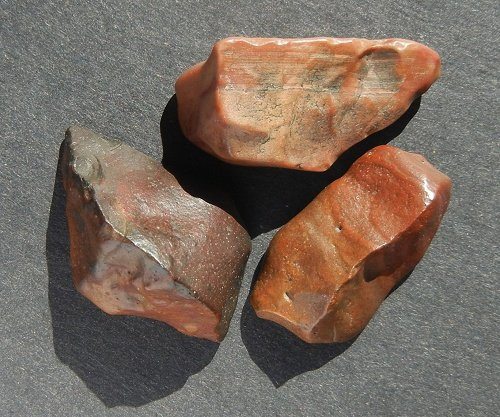
These rocks were made smooth by wind blowing smaller rock particles across their surface.  This is an example of:
a)
ice wedging
b)
chemical weathering
c)
acid rain
d)
abrasion
45.
These rocks were broken apart from the continuous freeze/thaw of water in the cracks of the rocks. This is an example of:
a)
ice wedging
b)
acid rain
c)
permeability
d)
abrasion
46.
This rock may chemically weather easily because is has many spaces or holes in it that allow water to seep through it, meaning it is:
a)
permeable
b)
abrasive
c)
erosion
d)
unchangable
47.
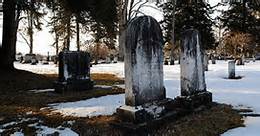
These gravestones have slowly broken down and turned a blackish color due to the action of:
a)
ice wedging
b)
abrasion
c)
acid rain
d)
mechanical weathering
48.
How might a weathered mountain appear different than an unweathered mountain?
a)
Weathered mountain would be taller.
b)
Weathered mountain would be rounder and less jagged.
c)
Weathered mountain would be more jagged and less rounded.
d)
Weathered mountain would have no trees.
49.
How is mechanical weathering different from chemical weathering?
a)
Chemical weathering happens over much shorter time frame than mechanical weathering.
b)
Chemical weathering changes the chemical composition of rocks; mechanical weathering does not.
c)
Chemical weathering occurs only in tropical climates; mechanical weathering occurs only in cool climates.
d)
Chemical weathering occurs only in the mountains; mechanical weathering occurs only on flat land.
50.
Weeds growing into the cracks in a sidewalk and the sidewalk begins to crumble is an example of:
a)
mechanical weathering
b)
chemical weathering
51.
Potholes forming in the road after a cold winter is an example of:
a)
mechanical weathering
b)
chemical weathering
52.
A metal statue slowly turning green after years of being outside is an example of:
a)
mechanical weathering
b)
chemical weathering
53.
Rocks along a riverbed that are smoothed from continuously moving water and sediment rubbing against them is an example of:
a)
mechanical weathering
b)
chemical weathering
54.
A piece of sandstone changing color (from brown to rusty red) from exposure to water and air is an example of:
a)
mechanical weathering
b)
chemical weathering
55.
The formation of stalactites and stalagmites in a cave as water mixed with carbon dioxide creates carbonic acid, which dissolves away the limestone, is an example of:
a)
mechanical weathering
b)
chemical weathering
56.
The formation of large cracks in the face of a mountain from ice wedging is an example of:
a)
mechanical weathering
b)
chemical weathering
57.
Acid rain wearing away the face of a marble gravestone or statue is an example of?
a)
mechanical weathering
b)
chemical weathering
58.
Exposure to rain and oxygen causes the metal minerals in rocks to rust and fall apart.  This is an example of:
a)
mechanical weathering
b)
chemical weathering
59.
Lichens (small green plants) growing on a large boulder release enzymes and other acids that slowly break the rock apart. This is an example of:
a)
mechanical weathering
b)
chemical weathering
60.

What is the process of moving sediments from location to another?

a)

Deposition

b)

Erosion

c)

Weathering

d)

Compaction

61.
What is sediment?
a)
the process of rocks being broken down and carried away
b)
bits of rock, sand, and silt caused by the weathering of rocks
c)
the top layer of the soil
d)
decaying plant or animal material 
62.
Which of these is an example of erosion
a)
Light Shinning onto a mountain
b)
Rain breaking down rock 
c)
Wind blowing away sediment
d)
All of the above
63.
What happens when weathering and erosion work together?
a)
New Mountains are created
b)
The climate changes overnight
c)
Metal objects become rusty
d)
They change the Earth's surface
64.
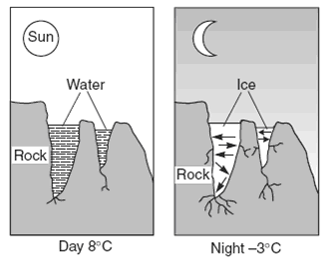
The diagrams  shows a natural process that weathers rock.
 Which statement best explains why this process results in weathering?
a)
frozen water acts as a solute
b)
water expands when it freezes
c)
the mass of water increases when it freezes
d)
frozen water dissolves most types of rock
65.
Which type of climate will have faster chemical weathering?
a)
Hot and Wet
b)
Cold and Dry
c)
Hot and Cold
d)
Cold and Wet
66.
How does freezing water cause the weathering of rocks?  The freezing water—
a)
keeps the rocks in place
b)
makes the rocks last longer
c)
expands cracks and breaks rocks
d)
causes rocks to fall in landslides
67.
What is the major cause of weathering and erosion to form canyons?
a)
wind
b)
ice
c)
glaciers
d)
moving water
68.
What is the correct order of the processes?
a)
they all happen at the same time
b)
erosion, weathering, deposition
c)
weathering, erosion, deposition
d)
weathering, deposition, erosion
69.
How do plants weather rocks?
a)
during photosynthesis
b)
when roots grow into cracks of rocks and expand the rock
c)
when the plant moves water from the roots to the leaves
d)
Plants don't weather rocks
70.
The ___________of a mountain weathers the fastest
a)
bottom
b)
middle
c)
top
d)
all parts weather the same
71.
Which agents  break down earth materials?
a)
wind only
b)
earthquakes and gravity
c)
ice and 007
d)
wind, water, and ice
72.
How does vegetation in the soil affect the rate of erosion?
a)
It doesn't affect erosion.
b)
It decreases erosion.
c)
It increases erosion.
73.

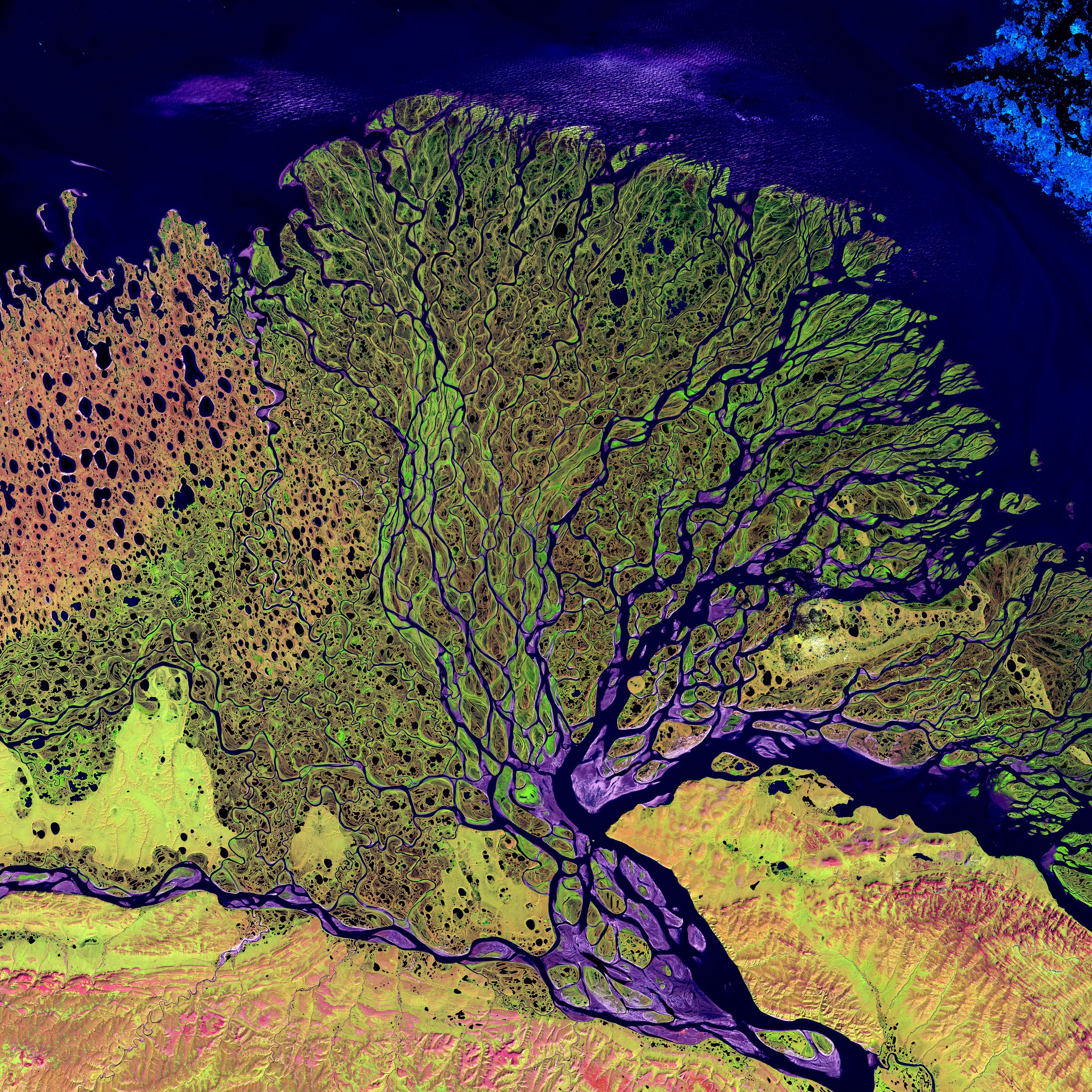
Deltas are mainly created by the process of -

a)

deposition

b)

weathering

c)

waves

d)

erosion

74.
Rain washing away soil from a hillside
a)
Weathering
b)
Erosion
c)
Deposition
75.

Renewable or nonrenewable?

a)

Renewable

b)

Nonrenewable

76.

Renewable or nonrenewable?

a)

Renewable

b)

Nonrenewable

77.

Renewable or nonrenewable?

a)

Renewable

b)

Nonrenewable

78.

Renewable or nonrenewable?

a)

Renewable

b)

Nonrenewable

79.

Renewable or nonrenewable?

a)

Renewable

b)

Nonrenewable

80.

How does recycling conserve natural resources?

a)

It allows us to re-use products instead of manufacturing new ones.

b)

It prevents garbage from being burned.

c)

It saves on the amount of fuel used by garbage trucks.

d)

It saves on the amount of plastic used to manufacture garbage bags.

81.

What is the key difference between renewable and non-renewable resources?

a)

All non-renewable resources pollute the environment; renewable resources don't.

b)

Non-renewable resources must be refined before humans can use them; renewable resources don't.

c)

Non-renewable resources exist in unlimited quantities; renewable resources don't.

d)

Non-renewable resources exist in limited quantities; renewable resources don't.

82.

Why are trees considered natural resources?

a)

Why are trees considered natural resources?

b)

Humans use them to produce paper, lumber, fuel, and other products.

c)

They are an important source of firewood for campfires.

d)

They grow back after they're cut down.

83.

Which is not a natural resource?

a)

Coal

b)

Plastic

c)

Trees

d)

Water

84.

Who was responsible for the formation of Yosemite National Park?

a)

Charles Darwin

b)

John Muir

c)

Tim and Moby

d)

Albert Einstein

85.

How much of the world's energy comes from renewable resources?

a)

Less than half

b)

More than half

c)

All

d)

None

86.

The gases produced by burning fossil fuels usually contain which element?

a)

Carbon

b)

Oxygen

c)

nitrogen

d)

hydrogen

87.

Why is burning fossil fuels bad for the environment?

a)

It destroys the ozone layer

b)

It adds harmful mercury to waterways

c)

The clouds it creates bring excess rain and flooding

d)

The gases emitted lead to global climate change

88.

How long does it take decaying organisms to transform into fossil fuels?

a)

Decades

b)

Millions of years

c)

Thousands of years

d)

Hundreds of years

89.

Why are the remains of ancient organisms buried so deeply within the earth? Choose the best answer.

a)

They were swallowed up by major earthquakes

b)

Most ancient organisms lived underground

c)

They were buried by the meteor strike that killed the dinosaurs

d)

They were buried by natural processes

90.

A fossil fuel that forms underground from partially decomposed plant materialliquid fossil fuel; oil

a)

natural resources

b)

Coal

c)

Petroleum

d)

fossil fuels

91.

liquid fossil fuel; oil

a)

natural resources

b)

Coal

c)

Petroleum

d)

fossil fuels

92.

Coal, oil, natural gas, and other fuels that are ancient remains of plants and animals.

a)

natural resources

b)

renewable resources

c)

nonrenewable resources

d)

fossil fuels

93.

a resource that cannot be replaced

a)

natural resources

b)

renewable resources

c)

nonrenewable resources

d)

fossil fuels

94.

A natural resource that can be replaced at the same rate at which the resource is consumed

a)

natural resources

b)

renewable resources

c)

nonrenewable resources

d)

fossil fuels

95.

Materials or substances such as minerals, forests, water, and fertile land that occur in nature and can be used for economic gain.

a)

natural resources

b)

renewable resources

c)

nonrenewable resources

d)

fossil fuels