
 Worksheets
ess1-2 3/15/24
Total questions: 201
Worksheet time: 3hrs 5mins
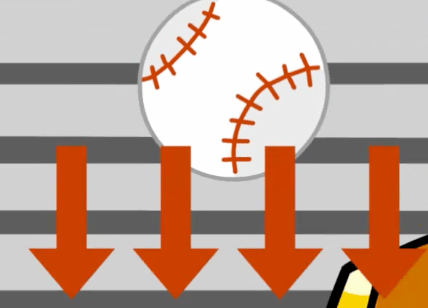
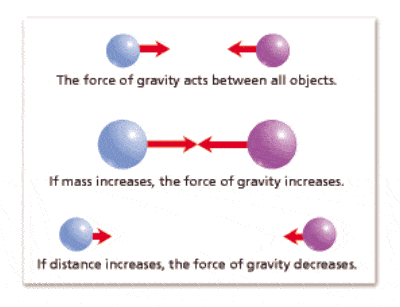

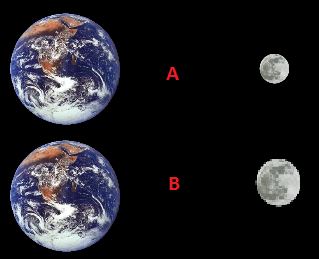
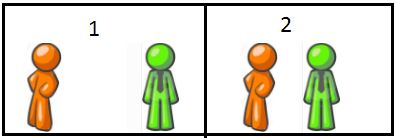
What is a force?
the force of gravity pulling down on an object
a push or pull on an object
the amount of matter in an object
If a star is 5 light years away from Earth, how long will it take light from this star to reach Earth?
10 light years
5 light years
10 years
5 years
An astronomical unit is based on the distance between what two astronomical bodies?
Earth and moon
Earth and Mars
Earth and sun
sun and moon
How does a light year compare to an AU?
AU is larger
light year is larger
light year is smaller
both are the same size
Which is the correct order for smallest to largest astronomical bodies?
universe, galaxy, solar system, star, planet
solar system, galaxy, planet, universe, star
star, planet, galaxy, solar system, universe
planet, star, solar system, galaxy, universe
Which of the following is NOT a characteristic that defines a planet?
orbits a star
clears orbital path
uniform round shape
similar composition
The largest distance would be between two
stars
planets
galaxies
solar systems
What is the reason most meteors never hit the ground?
Earth's atmosphere deflects them
Earth's magnetic field deflects them
Earth's atmosphere burns them up
moon's gravity pulls them away from Earth
A planet orbits a __________ and a moon orbits a __________.
planet, star
star, planet
moon, star
solar system, comet
Which of the following is the shape of our galaxy?
irregular
spiral
elliptical
quasar
What is at the center of a solar system?
a black hole
a large planet
a star
a nebula
What two factors affect gravitational pull?
mass, weight
weight, distance
mass, distance
mass, volume
What happens to an asteroid as it gets closer to Earth?
the mass increases
the mass decreases
the weight increases
the weight decreases
What causes the Earth to orbit the sun?
gravity, volume
inertia, distance
mass and weight
gravity and inertia
If two objects are 2 meters apart, how could you decrease the gravitational attraction?
make them heavier
move them closer
move them farther apart
What caused the formation of everything in the universe?
inertia
magnetism
gravity
nuclear attraction
What happens as a comet nears the sun?
it slows down
it forms a tail
its mass increases
its size increases
An irregular shaped rock mostly found between Mars and Jupiter.
meteoroid
asteroid
comet
dwarf planet
How does your mass and weight change when you go to the moon?
mass increases, weight decreases
mass and weight stay the same
weight increases, mass stays the same
mass stays the same, weight decreases
The tendency of an object to resist a change in motion is
mass
velocity
inertia
gravity
Which is closer to Earth, the nearest __________.
planet
star
galaxy
solar system
Another name for a shooting star is
asteroid
comet
meteor
meteorite
What astronomical object originates in the Oort cloud and has a long elliptical orbit?
comet
meteoroid
dwarf planet
asteroid
Some galaxies contain lots of dust and gas. This enables them to do what?
form black holes
form new planets
form new stars
form new asteroids
Which of the following does NOT describe the use of telescopes.
they detect EM waves
they work better in space
they detect distant sounds
What is considered a natural satellite of a planet?
comet
asteroid
moon
meteroid
All the inner planets
have at least one moon.
have thick atmospheres.
are rocky and have a solid outer layer.
are large.
All the outer planets are made mostly of
water ice.
metal and rock.
gas and liquid around the solid core.
a rocky surface.
Which planet is the solar system's largest?
Jupiter
Saturn
Neptune
Uranus
The majority of asteroids are found in a belt located between which two planets?
Earth and Mars
Mars and Venus
Mars and Jupiter
Jupiter and Saturn
Which of the following is a complete list of the inner planets?
Venus, Earth, Mars, and Jupiter
Mercury, Venus, Earth, and Mars
Jupiter, Saturn, Uranus, and Neptune
Mercury, Venus, Earth, and Jupiter
As the mass of objects increases, gravity
increases
decreases
stays the same
has rings that are the most obvious in appearance
Saturn
Jupiter
Uranus
Neptune
The force that causes two objects with mass to be attracted to one another is _________.
The force
The moon
Gravity
The sun
There are _____ planets in the solar system.
10-1=
3+7=
4+5=
7+1=
Saturn has many moons and rings because it has the most _______.
Orbits
mass
gravity
Personality
Which of these is the smallest?
Solar system
Galaxy
Universe
Which planet is the smallest in our solar system?
(a)
You are made of _______ from the universe.
Matter
Nothing
Star dust
Everything!!
When a planet rotates, it spins on its ______.
Toes
Axis
Merry-Go-Round
Orbit
A pie chart shows....
Parts of a whole
Percentages
Bars

Neptune is classified as a .....
Terrestrial planet
Gas giant

Earth is classified as a.....
Gas giant
Terrestrial planet
The (a) revolves around the Earth.
What is in the center of our solar system?
Mercury because its the closest.
Jupiter because it is the biggest.
The sun!
Earth because it is the most interesting.
The light we see on the moon at night is from the ______.
Earth
The moon's glowing personality.
The sun!
Which of these objects are involved in why we see different phases of the moon?
Moon
Earth
Sun
What keeps planets in orbit around the Sun?
the Sun's mass
the Sun's period of rotation
the Sun's gravitational force
the Sun's color
The planets in the solar system are so far apart that scientists measure the distances between them in
miles (mi)
kilometers (km)
astronomical units (AU)
inches (in)
All the inner planets
have at least one moon.
have thick atmospheres.
are rocky and have a solid outer layer.
are large.
All the outer planets are made mostly of
water ice.
metal and rock.
gas and liquid around the solid core.
a rocky surface.
Which planet is the solar system's largest?
Jupiter
Saturn
Neptune
Uranus
The majority of asteroids are found in a belt located between which two planets?
Earth and Mars
Mars and Venus
Mars and Jupiter
Jupiter and Saturn
The force of gravitational attraction between the Sun and Venus could be increased by reducing which of the following?
The distance between the Sun and Venus
the period of rotation of the Sun
The mass of the Sun and Venus
The speed of the orbit of Venus
Which of the following is a complete list of the inner planets?
Venus, Earth, Mars, and Jupiter
Mercury, Venus, Earth, and Mars
Jupiter, Saturn, Uranus, and Neptune
Mercury, Venus, Earth, and Jupiter
As the mass of objects increases, gravity
increases
decreases
stays the same
As the mass of objects decreases, gravity
increases
decreases
stays the same
As the distance between objects decreases, gravity
increases
decreases
stays the same
As the distance between objects increases, gravity
increases
decreases
stays the same
has an atmosphere that protects life
Mercury
Venus
Earth
Mars
Which planet has a sideways axis rotation?
Jupiter
Saturn
Uranus
Mercury
Mars has less gravity than Earth because Mars has __________ mass than Earth.
less
more
the same
Which would create the strongest gravity?
Two large planets close together
Two large planets far apart
Which two things affect gravity?
Mass and distance
Weight and distance
Weight and mass
Weight is a person's mass AND the force of gravity of the planet the person is on. A person would weigh more on Jupiter than on the Earth because . . .
Jupiter has more mass, and therefore more gravity
Jupiter has less mass, and therefore more gravity
Because of the balance between gravity and inertia all of the planets will...
stay in orbit around the sun.
all explode someday.
If a planet does not have enough inertia, what would happen to it?
It would fly off into space
It would get pulled into its star
What would happen to the planets if there was no gravity?
They would all crash into the sun.
They would all fly off into space because of inertia.
As objects gain mass what happens to gravity?
it increases
it decreases
no change
As objects move further apart what will happen to the gravity between them?
it decreases
it increases
no change
This force is acting on all matter all of the time.
gravity
magnetism
electricity
What are the characteristics of outer planets
far apart, gassy, lots of moons
close together, rocky, few moons
Gassy, lots of moons, close together
rocky, lots of moons, very distant
How hard gravity is pulling down on you is a measure of
weight
mass
height
length
A planet is gaseous with lots of moons, what is most likely true about that planet?
it is close to the sun
It close to other planets
it is far away from the sun
it is very small
Astronomers define planets using three things: If they have enough mass to be round, orbit the sun and what is the last one
cleared away all debris from their orbit
have an asteroid near them
have a moon
have an elliptical orbit
The sun's next phase of life will be
red giant
black hole
supernova
neutron star
The inner planets in order are
(a)
The outer planets in order are
(a)
This determine the life cycle of a star
its mass
its distance from the sun
how many moons it has
how close it is to other planets
What is the likely final phase in the life of a high mass star?
neutron star
red giant
white dwarf
black hole
Meteors are also called
meteoroids
meteorites
asteroids
shooting stars
The asteroid belt is between
(a)
Once a meteor hits the earth it goes by a different name
asteroid
meteorite
comet
meteoroid
These bodies take a long time to go around the sun and are made of gas and dust.
planets
asteroids
comets
meteors
What Law states that everything with mass has gravity and the force of gravity depends on the mass and distance between the objects?
Law of Universal Gravitation
Law of Superposition
Newton's Third Law
Law of Gravity
What role does gravity NOT play in the universe?
Keeps the planets in their orbits
Make the Moon orbit the Earth
Change the seasons
Make new stars and planets form
How did the Solar System form?
Planets collided with such intensity and heat to form the Sun
Gravity pulled particles of gas and dust together making larger and larger objects until stars and planets formed.
Meteors collided together over and over to form the planets
Form? They have always existed.
Why does the moon effect Earth's tides more than the Sun?
The Moon has more mass than the Sun
The planets between the Sun and Moon block gravity
The Earth's rotation forms the tides, not the moon.
The Moon is closer to Earth then the Sun
Which is NOT a benefit of Scientific models?
Used to for things too large and too small.
Not made of the same materials
Keep scientists out of danger.
Cheaper to experiment with.
Which is not a limitation of Scientific Models?
Cannot show every possible outcome
May lack detail
Not made of the original material
May be smaller or larger than what they represent
What is in the center of the Geocentric Universe?
The Sun
The Moon
The Earth
A black hole
What is in the center of the Heliocentric Universe?
The Sun
The Moon
The Earth
A black hole
Which scientist came up with new evidence for the current theory of the Solar System?
Aristotle
Nicolaus Copernicus
Albert Einstein
Ptolemy
What role does gravity play in our solar system?
Makes things float
Forms, moves, and keeps objects in orbit
Makes things go in a straight line


A group of stars that form a galaxy is called what?
cluster
planet
universe
gravity
Gravity attracts objects towards one another
True
False
Where is the sun located in the galaxy?
at the edge
within an outer arm
at the center
within the center body
Gravity is based on an object's _____________.
roundness
brightness
appearance
mass
What evidence supports the sun's location in the galaxy?
observation of globular clusters
measurement of brightness in the galaxy
composition of the stars in the galaxy
elliptical orbits of planets around the sun
What keeps the planets in orbit around the sun?
stars
heat
gravity
satellites
What galaxy are Earth and the solar system located?
Andromeda galaxy
Whirlpool galaxy
Inner Planet galaxy
Milky Way galaxy
Why do the planets in our solar system orbit the sun?
because the sun is the brightest
because the sun was there first
because the sun has the most mass
because nothing can orbit planets
What is true about the dark areas of the night sky?
Black holes make up the dark areas of the sky
Objects in the dark areas of the sky are too far to be seen
There is nothing located in the dark areas of the sky
Objects in the dark areas are moving too fast to be seen
This is the word that describes space and all the matter and energy in it.
universe
space
solar system
sun
Which of the following is the largest?
cluster
solar system
star
galaxy
Gravity is the force objects put on each other because of their ____________.
speed
mass
direction
location
Why is the Earth and other planets spherical?
erosion from asteroids hitting the surface
heat from the sun melted the object's surface
force of gravity is acting evenly in all directions around the center mass
pressure of the atmosphere acting evenly in all directions
What would happen if the mass of one object suddenly increased?
The mass of the other object would increase
The distance between the objects would increase
The gravitational force of the objects would remain constant
The gravitational force between 2 objects would increase
What force keeps the planets held in their orbit?
gravitational force
nuclear force
electrical force
magnetic force
If 2 planets of the same mass are in space and A is closer to the sun while B is farther away from the sun, which one will have a stronger gravitational field/force?
planet A
planet B
What might happen to a satellite if Earth's gravity suddenly disappeared?
The satellite would stop moving
The satellite would fall to Earth
The satellite would move into space in a straight line
The satellite would continue to orbit Earth
Which of the following choices are true about orbits?
All objects in space move in perfect, circular orbits
The size of an object determines the size of its orbit
The size of both the object and the object it orbits are equal
The force of gravity is what holds each object in its orbit
Which evidence describes how we know where Earth is located in the Milky way galaxy?
Globular clusters seen from telescopes tell us that our solar system is not near the center of the Milky way, but rather we are located in the outer arm
Our solar system is located in the center mass of the Milky way galaxy
Our solar system is located on the inner arm of the galaxy
Our solar system is not in the Milky Way galaxy
Which option shows objects in the correct order from smallest to largest.
universe, galaxy, solar system, planet
solar system, universe, galaxy, planet
planet, solar system, galaxy, universe
galaxy, planet, universe, solar system
True or False: Galaxies are moving toward one another and may collide in the future.
True
False
What object is much smaller than our sun, but has more than 4 times the mass of the sun and is so powerful that even light can't escape?
elliptical
asteroid
Andromeda
black hole
Finish this sentence correctly. A spiral galaxy is best described as a very large group of stars....
arranged in arms encircling a dense center
packed into a dense, spherical center
arranged into the shape of an elliptical disc
Choose the best definition for universe.
an extremely large group of stars in space
consists of the sun, 8 planets, and their moons
all space and the matter that space contains
The matter in an object, which affects gravitational forces
Gravitational force
Force
Mass
Weight
Gravitational forces are always
Attractive
Pushing
repulsive
objects
What affects the strength of gravity
Weight and Mass
Mass and Distance
Distance and Weight
Mass and Force
Why do the planets and other celestial objects in our solar system revolve around the Sun?
The Sun has the greatest mass of any object in the solar system and therefore the greatest gravity
The sun is the center of the universe
The sun is the brightest thing in space and everything is attracted to it.
The Sun has the greatest weight so everything pushes towards it
Large mass of stars
Solar System
Galaxy
Nebula
Milky Way
The gravitational force between two objects can be very small, unless which of the following is true?
The objects must be very far apart.
One of the objects must have a very large mass.
Both objects must have very large masses.
Both objects must be in the solid state of matter.
If you landed on Mars, what happens to your mass and weight? Remember the force of gravity on Mars is less than on Earth.
The mass decreases while the weight stays the same.
The mass stays the same while the weight increases.
The mass increases while the weight decreases.
The mass stays the same while the weight decreases.
Which piece of evidence best supports this statement: Gravity is felt between objects across a distance.
Heavier objects have less gravity acting on them.
An object at rest on the ground doesn’t respond to gravity.
The Moon orbits Earth due to a gravitational field.
Objects float freely in space where there is no gravity.
Gravity is responsible for which of the following characteristics of a galaxy?
The motion of the objects within it
The size of its largest stars
Its location within the universe
The color of light it emits
Which of the following best describes the formation of the solar system?
The Sun ejected rocky material which formed the planets due to magnetic attraction forces.
A rotating disk of gas and dust was drawn together by the force of gravity.
One very large planetary body broke apart into several smaller planets.
Several stars of different masses cooled and formed the planets and the Sun.
Earth and its solar system are a part of which of the following galaxies?
Three Musketeers
Snickers
Twix
Milky Way
Why do some planets have moons in our solar system?
They are close to the sun
They have enough gravity to hold a moon in orbit
They are special
All planets have moons
What force played a major role in the formation of the solar system?
Magnetism
Push
Pull
Gravity
How are the inner planets different from the outer planets in the solar system?
They are farther and made of rocks.
They are farther and made of gas
They are closer and made of gas.
They are closer and made of rocks
Which statement is true?
Only celestial objects exert a gravitational force
Gravity can both push and pull objects
Only Earth exerts a gravitational force.
All objects with mass exert a gravitational force.
The amount of matter in an object is
weight
mass
gravity
pressure
Which of the following has the
strongest gravitational pull?
Earth
Sun
Moon
Mars
As the distance between two objects
increases, the gravity between them
increases
decreases
stays the same
is zero
How are galaxies held together.
gas
dust
stars
gravitational attraction

How many stars are in a galaxy.
billions
thousands
hundreds
Ten

A
B
C
D

A
B
C
D
Which is the largest object in our solar system?
Moon
Mars
Venus
Sun


Hertzsprung-Russell Diagram shows the correct order of increasing surface temperature (coolest to hottest) for stars is?
Red, Yellow, White, Blue
Red, Yellow, Red, Yellow
Blue, White, Yellow, Red
Blue, Red, White, Yellow


