
 Worksheets
9BIONEETPRACSET001
Total questions: 188
Worksheet time: 3hrs 18mins
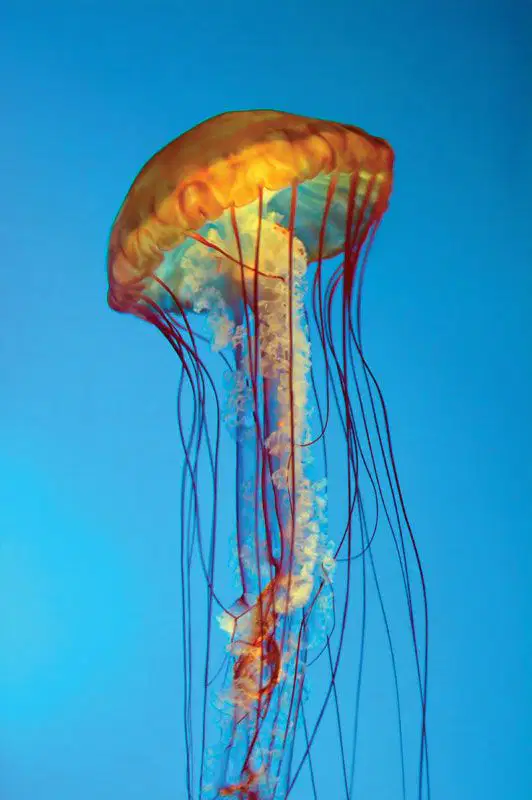
Cnidaria is characterised by
(A) nematoblasts (B) coelenteron
(C) tissue level of organisation (D) all of the above
A
B
C
D
Please write your name .

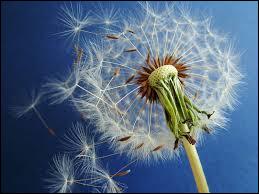
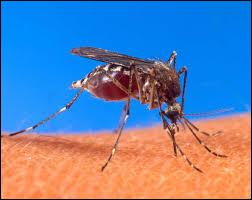

Heterotrophs- obtain food from other animals.
Observing the table above, Fungi and Animals are________?

In a wildlife sanctuary, which of the following vertebrate is not a mammal ?
Koala
Kangaroo
Giant Salamander
Whale

Which statement is false about the classification of the duck-bill platypus?


The mushroom shown in the photo belongs to the ______________ kingdom.
Fungus
Animal
Plant
Virus
What is the purpose of taxonomy?
To have many different common names for one species.
To prevent disease in organisms.
To have a universal way of classifying organisms into groups based on similarities or differences.
None of the above.
Tomato plants and oak trees belong to the ________________ kingdom.
Fungi
Plant
Protist
Animal
To know your score & question details with full response, please provide your WhatsApp number

Which of the following characteristics describes the kingdom of the organism shown?
It has chlorophyll and a cell wall.
It is made up of a single cell and it is microscopic.
It cannot make its own food but it can move from place to place.
It has no cells and it causes disease.
An organism has the following characteristics: cell wall, autotrophic, unicellular, and eukaryotic. What kingdom does it most likely belong in?
Animalia
Protista
Plantae
Eubacteria
Which types of bacteria does the Monera Kingdom consist of ?
Plantae and Fungi
Eubacteria and Archaebacteria
Protista
Animalia and Plantae


What kingdom is made up of decomposers like this bread mold?
Animal
Plant
Fungi
Protist
Monera
Worms with bodies segmented like rings or bands are the definition of which phylum?
Roundworms
Annelida.
Flatworms
Echinoderms
Annelida is divided into three classes, namely Oligochaeta, Poligochaeta, and Hirudinea. Which of the following statements is correct?
Oligochaeta is a worm with few hairs.
Poligochaeta is a worm with curly hair.
Hirudinea is a worm without hair.
Oligochaeta, poligochaeta both have a lot of hair.
__________ has cellular level of organisation.
Hydra
Jelly fish
Sponges
Amoeba

Is an example of _________ digestive system.
Complete
Incomplete
Well developed

Is an example of
Open circulatory system
Closed circulatory system
On the basis of embryonic development animals are classified into (Multiple options)
Acoelomate
Diploblastic
Triploblastic
Pseudocoelomate
Eucoelomate

Is an example _____________ symmetry.
Asymmetry
Radial Symmetry
Bilateral symmetry
Biradial symmetry
pseudocoelomic fluid in
the pseudocoelom acts as a (Multiple options)
hydrostatic skeleton
Allows free movement of
the visceral organs
Digestion process
For circulation of
nutrients.

Is an example of
Asymmetry
Radial symmetry
Bilateral symmatry
Biradial
Mesoderm is formed as scattered pouches between
the ectoderm and endoderm. Such organisms are called as
Acoelomate
Pseudocoelomate
Eucoelomate
Organ level of organisation appeared for the firs time in
Ctenophora
Porifera
Platyhelminthes
Aschelminthes
99% of organisms are
Invertebrates
Chordates
Primates
What is a cell?
Groups of similar types of cells that work together to carry out a specific task
Groups of different tissues working together to perform a particular job
Groups of different organs working together to complete a series of tasks
The smallest unit of life

What terms should replace X and Y in the table?
elements; compounds
abiotic; biotic
microscopic; macroscopic
natural; man-made
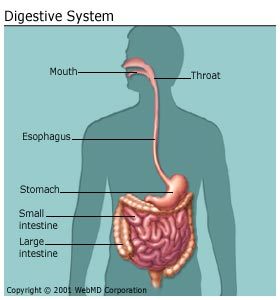
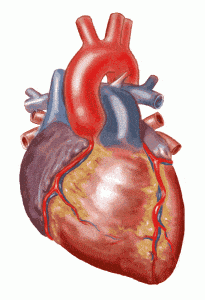
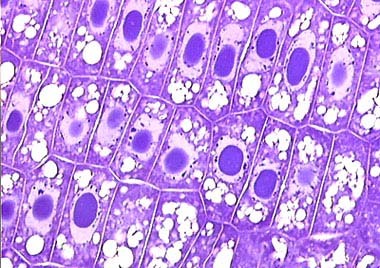

What are organs made out of?
cells
organisms
tissues
organ systems

Atom → molecule → organelle → cell→ tissue → organ
→ system → organism
→ population → community
→ ecosystem → biosphere.
Taxonomic System
Classification system
Levels of Organization
Periodic Table

Structures in a cell that have specialized jobs.
Similar concept to organs for the human body.
Tissue
Molecule
Atom
Organelles

The basic building block of living things, made up of organelles.
Tissue
Organelle
Cell
Atom

Groups of cells with similar functions.
Organs
Molecules
Tissues
Organelles

Group of tissues with similar functions.
Organelles
Cells
Tissues
Organs

Group of organs with similar functions.
Organism
Cell
Organ
System
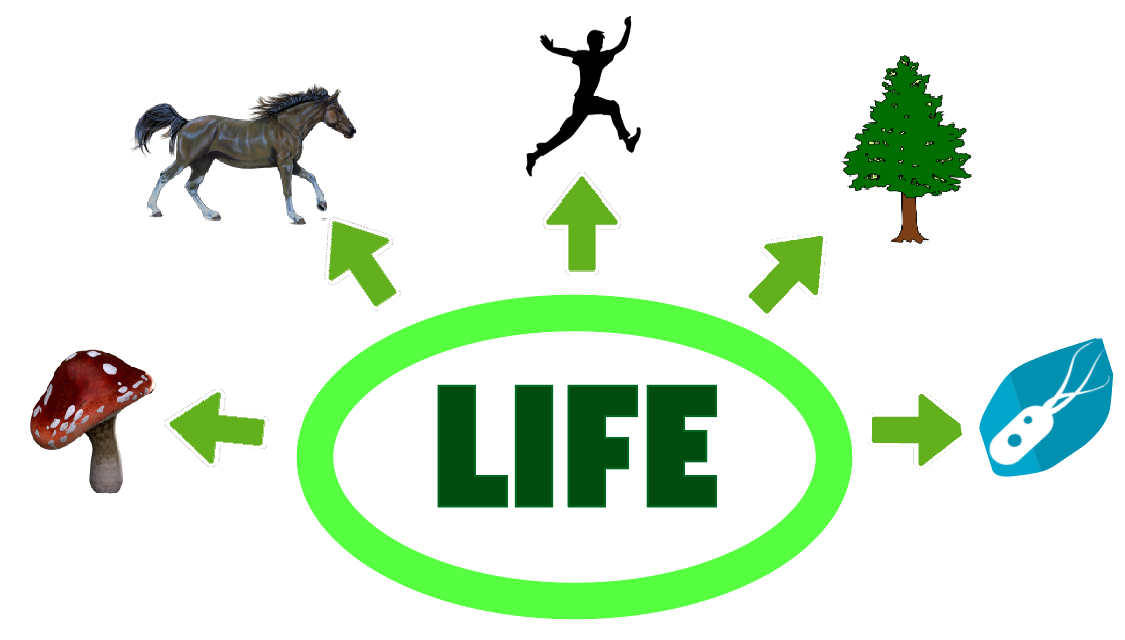
Any single living individual, and can refer to a single human, animal, plant,
Protista, bacteria, or fungi.
Community
Cell
Population
Organism

Organisms who are members of the same species in an ecosystem.
Organism
Population
Organ
Community

Group of populations in an area.
Organism
Ecosystem
Community
Biosphere

A biological community that includes various species and their physical environment (Biotic and Abiotic Factors).
Organism
Community
Biosphere
Ecosystem

Where life is found on earth.
Community
Habitat
Ecosystem
Biosphere
Which of the following kingdoms have organism with cells, tissues, organs and systems?
Animalia
Eubacteria
Archaebacteria
Protista


In what organelle is the genetic material found inside?
cell membrane
chloroplast
nucleus
ribosome

What organelle is called the "powerhouse" of a cell?
mitochondria
nucleus
cell wall
cell membrane
A large central vacuole is found in a _____ cell.
animal
plant

What is the structure that contains DNA and directs the cell?
endoplasmic reticulum
central vacuole
cell wall
nucleus

Identify the structure that is indicated by the arrow in the image.
cell wall
central vacuole
chloroplast
nucleus

The muscular tissue which function throughout the life
continuously without fatigue is
skeletal muscle
cardiac muscle
smooth muscle
voluntary muscle
Voluntary muscles are found in
alimentary canal
limbs
iris of the eye
bronchi of lungs

Bone matrix is rich in
fluoride and calcium
calcium and phosphorus
phosphorus and potassium
calcium and potassium

Which of the following helps in repair of tissue and fills up the space inside the organ?
tendon
adipose tissue
areolar tissue
cartilage

Fats are stored in human body as
cuboidal epithelium
adipose tissue
bones
cartilage

Cartilage is not found in
nose
ear
kidney
larynx

What type of epithelial tissue is in the picture?
Squamous
Cuboidal
Columnar
Transitional

What type of epithelial tissue is in the picture?
Squamous
Cuboidal
Columnar
Transitional
Which of the following projects a picture of a cuboidal epithelial tissue?


The cells present in bone are called....
Red blood cells
Platelets
Monocytes
Osteocytes
The connective tissue that connects bones at the joints is...
Cartilage
Bone
Ligament
Both cartilage and bone
This name means that there are multiple layers of cells
Simple
Stratified
Columnar
Pseudostratified
Which of the following is NOT a function of epithelial tissues?
covering exposed surfaces
lining internal passageways
producing glandular secretions
contracting to produce movement

Which connective tissue is shown on the picture?
Ligament
Tendon
Bone tissue
Cartilage
This type of muscle has no striations and is involuntary, which means that we cannot consciously control it.
skeletal
smooth
cardiac


Label A,B,C
A-Striated, B-Smooth , C-Cardiac
A-Cardiac, B-Striated , C-Smooth
A-Striated, B-Cardiac , C-Smooth
A-Smooth, B-Cardiac , C-Striated
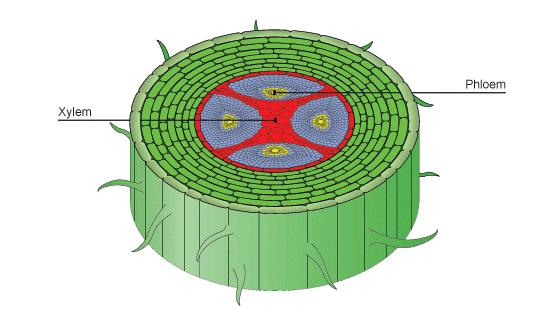
Specific type of plant tissue that transports water and minerals from the roots, through the stems, to leaves
vascular plant
nonvascular plant
xylem
phloem

Specific type of plant tissue that transports food (sugar) made in the leaves to the entire plant
vascular plant
nonvascular plant
xylem
phloem
Other than transporting water, what is a function of xylem?
making food
transporting food
helping support the plant
catching light
The flexibility in plants is due to a tissue called
parenchyma
chlorenchyma
collenchyma
sclerenchyma
Sieve tubes and companion cells are present in
xylem
phloem
cambium
cork
The size of the stem increases in the width due to
apical
intercalary
lateral
vascular bundle
Xylem and phloem are examples of
epidermal tissue
connective tissue
protective tissue
vascular tissue
A tissue whose cells are capable of dividing and re-dividing is called
complex tissue
permanent tissue
connective tissue
meristematic tissue
The only dead cells in phloem
companion
sieve
phloem fibres
phloem parenchyma
Packaging tissue
parenchyma
collenchyma
xylem
phloem
The nuclei of meristematic cells are
small
large
medium sized
no nucleus
Which of the following is an undifferentiated embryonic tissue found in the active growth regions of plants such as tips of roots and stems?
Parenchyma tissue
Collenchyma tissue
Meristematic tissue
Permanent tissue

What type of ground tissue is this?
Parenchyma
Schlerenchyma
Collenchyma


Which type of tissue supports and protects body structures as well as contains inorganic calcium salts?
areolar
hyaline cartilage
bone
dense irregular
The blood cells responsible for clotting are
erythrocytes (red blood cells).
leukocytes (white blood cells).
thrombocytes (platelets).
chondrocytes.
Blood plasma is?
The white cells in the blood
Pale yellow fluid
Platelets
Substance they use to clone people
What is the function of the nerve cells?
They are responsable of your defense mechanism.
They transmit signals or messages to other neurons, organs or glands.
They transmit substances to your endocrine system to produce hormones.

Dendrite - branched projections of the neuron cell body that _______________________ from other neurons
receive messages
get energy
receive nutrients
Skeletal muscle is:
Voluntary
Involuntary
Neither voluntary nor involuntary
Both voluntary and involuntary
All the muscle within the body has a relationship with the ______ system to produce movement and contraction.
Cardiovascular
Skeletal
Nervous
Respiration
Which type of muscle tires quickly during exercise?
skeletal muscle
breathing muscle
cardiac muscle
smooth muscle

The cells of the Nervous Tissue are called
Glial Cells
Neurons
Muscle Cells
Dendrites
The neuron has short, branched parts called
Axon
Dendrites
Nucleus
Nerve Cells
The nervous tissue is responsible for ____.
to produce a contraction that changes both the length and the shape of the cell.
It is responsible for coordinating and controlling many body activities
transport oxygen from the lungs to the tissues
______ is composed of Nervous Tissue.
Lungs
Brain
Eyes
Heart
The neuron has a single long-part called the ___.
Dendrites
Nerve fibers
Axon
Nerve Endings
Many nerve fibers combine together by connective tissue and form a _____.
Nerve
Nervous Tissue
Stimuli
Dendrite
Nerve impulse enables animals to move rapidly in response to ____.
Body parts
Myelin Sheath
Stimuli
Cytoplasm

Label the part E in the given picture.
Axon
Dendrite
Nucleus
Schwann Cell
A neuron consists of a ______ which comprises of Nucleus and Cytoplasm.
Nerve
Cell body
Nucleus
Spinal Cord

Name the part B in the following picture.
Axon
Dendrite
Cell Body
Axon Terminal

The organelle that is the control center of the cell and contains nearly all of the cell’s DNA:
Ribosome
Centriole
Nucleus
Rough Endoplasmic Reticulum

The organelle that assembles proteins in the cytoplasm:
Ribosome
Nucleus
Mitochondrion
Rough Endoplasmic Reticulum

The organelle where lipids are synthesized along with proteins and other materials that are exported from the cell:
Endoplasmic Reticulum
Golgi Apparatus
Vacuoles & vesicles
Nucleus

The organelle that modifies, sorts, and packages proteins and other materials from the ER for storage in the cell or release from the cell:
Endoplasmic Reticulum
Golgi Apparatus
Vacuoles and Vesicles
Ribosome

The organelles that store materials like water, salts, proteins, and carbohydrates, and the other one that stores and moves materials between cell organelles, as well as to and from the cell surface:
Cytoskeleton
Lysosomes
Chloroplast
Vacuoles and Vesicles

The organelle that breaks down lipids, carbohydrates, and proteins into small molecules that can be used by the rest of the cell:
Lysosome
Cytoskeleton
Golgi Apparatus
Chloroplast

The organelle that helps the cell maintain its shape and is also involved in movement:
Mitochondrion
Lysosome
Cytoskeleton
Cell Membrane

The organelle that captures the energy from sunlight and converts it into chemical energy stored in food during photosynthesis:
Chloroplast
Mitochondrion
Cell Wall
Nucleus

The organelle that converts the chemical energy stored in food molecules into compounds that are more convenient for the cell to use:
Cell Wall
Cell Membrane
Mitochondrion
Centrioles

The organelle that acts as a strong supportive wall that shapes and protects the cell:
Cell Membrane
Cell Wall
Cytoskeleton
Centrioles

The organelle that regulates materials entering and leaving the cell, as well as supporting and protecting it:
Cell Wall
Cell Membrane
Centrioles
Cytoskeleton

The organelle that organizes cell division:
Nucleus
Centrioles
Cytoskeleton
Ribosome
Which type of tissue supports and protects body structures as well as contains inorganic calcium salts?
areolar
hyaline cartilage
bone
dense irregular
The blood cells responsible for clotting are
erythrocytes (red blood cells).
leukocytes (white blood cells).
thrombocytes (platelets).
chondrocytes.
Blood plasma is?
The white cells in the blood
Pale yellow fluid
Platelets
Substance they use to clone people

Reticular
Blood
Adipose
Loose

blood
Hyaline Cartilage
bone
Adipose

Blue-Green algae belong to which of the following kingdoms?
Animal Kingdom
Plant Kingdom
Fungi Kingdom
Monera Kingdom

Dandelion belongs to which kingdom?
Animal Kingdom
Plant Kingdom
Fungi Kingdom
Monera Kingdom
Protista Kingdom

Euglena belongs to which kingdom?
Animal Kingdom
Plant Kingdom
Fungi Kingdom
Monera Kingdom
Protista Kingdom

What is the difference between a fungus and a plant?
Fungi are autotrophic and the plants are heterotrophic
Fungi are heterotrophic and the plants are autotrophic
Plants can move but fungi cannot move
Plants are multicellular and animals are unicellular
Identify the organism which doesn't have a prokaryotic nucleus .


All members of this kingdom are exclusively autotrophic and possess eukaryotic cell structure.
Animalia
Plantae
Monera
Protista

Identify the organism and its correct locomotory structures
A- euglena- cilia, B- Amoeba- psuedopodia
A- Paramoecium - Cilia , B- Euglena- Pseudopodia
A- Amoeba- pseudopodia , B- Euglena- Flagellum
A- Amoeba-cilia B- Euglena-Pseudopodia
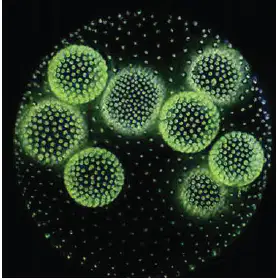
................... once called algae that live together in a colony. Each ...................... cell has two flagella. The flagella beat together to roll the body in water. ...................... cells have chlorophyll and make their own food by photosynthesis. ( Guess the Blank )
Amoeba
Bacteria
Volvox
Virus
A localized group of organisms that belong to the same species is
called a :
(a) Biosphere (b) Community
(c) Ecosystem (d) Population
d) Population
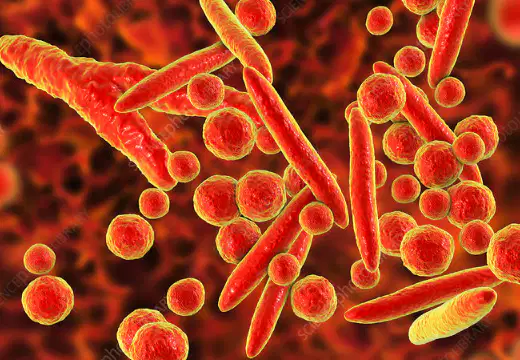
Smallest cells so far known are
(A) Bacteria (B) blue green algae
(C)PPLOs (D) human egg
A
B
C
D
A solution is said to be hypotonic when
(A) Concentration of medium is higher than that of the cell
(B) Concentration of medium is equal to that of the cell
(C) Concentration of medium is lower than that of the cell
(D) None of the above are correct.
A
B
C
D
Ribosome consist of –
(A) DNA and protein (B) RNA and protein
(C) RNA and amino acids (D)
RNA and DNA
A
B
C
D
The ATP synthesizing units of Mitochondria are
(A) Oxysomes (B) peroxysomes
(C) glyoxysomes (D) lysosomes
A
B
C
D
Golgi apparatus is made of
(A) Cisternae (B) vesicles
(C) golgian vacuoles (D) all of the above
A
B
C
D
In which cell Centriole is absent ?
(A) plant cell (B) Animal cell
(C) Both of above (D) None of above
A
B
C
D
The wall of cork cells are thickened by the deposition of
(A) cutin (B) suberin (C) lignin (D) pectin
A
B
C
D
In plants phloem tissues perform the function of
(A) conduction of water (B) conduction of food (C)
photosynthesis (D) mechanical support
A
B
C
D
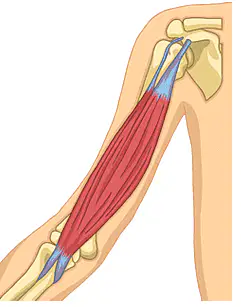
Tendon is a structure which connects
(A) a bone with another bone (B) a muscle
with a bone
(C) a never with a muscle (D) a muscle
A
B
C
D
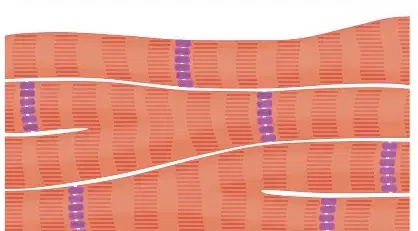
Intercalated discs are present in
(A) striated muscle (B) Unstriated muscle
(C) ) cardiac muscle (D) all of the above
A
B
C
D
Which of the following has an embryo but lacks vascular tissue ?
(A) Bryophyta
(B) Pteridophyta
(C) Gymnosperms
(D)angiosperms
A
B
C
D
According to binomial nomenclature, the scientific name of an organism
must consists of two words. these are
(A) species and tribe (B) genus and species (C) order and family
A
B
C
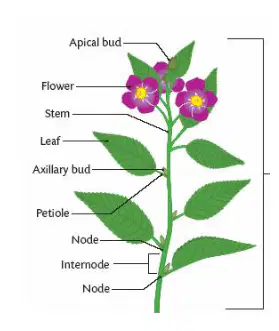
Flowering plants are included under
(A) cryptogams (B) phanerogams
(C) bryophytes (D)pteridophytes
A
B
C
D

