
 Worksheets
Osmosis and Diffusion
Total questions: 70
Worksheet time: 59mins
Select the 4 correct answers. A particle _____.
can be a solid.
can be a liquid.
can be a gas.
has random motion.
remains stationary.


Diffusion is the movement of molecules from an area of _____ concentration to an ______ concentration
High, low
Low, high
Low, low
High, high
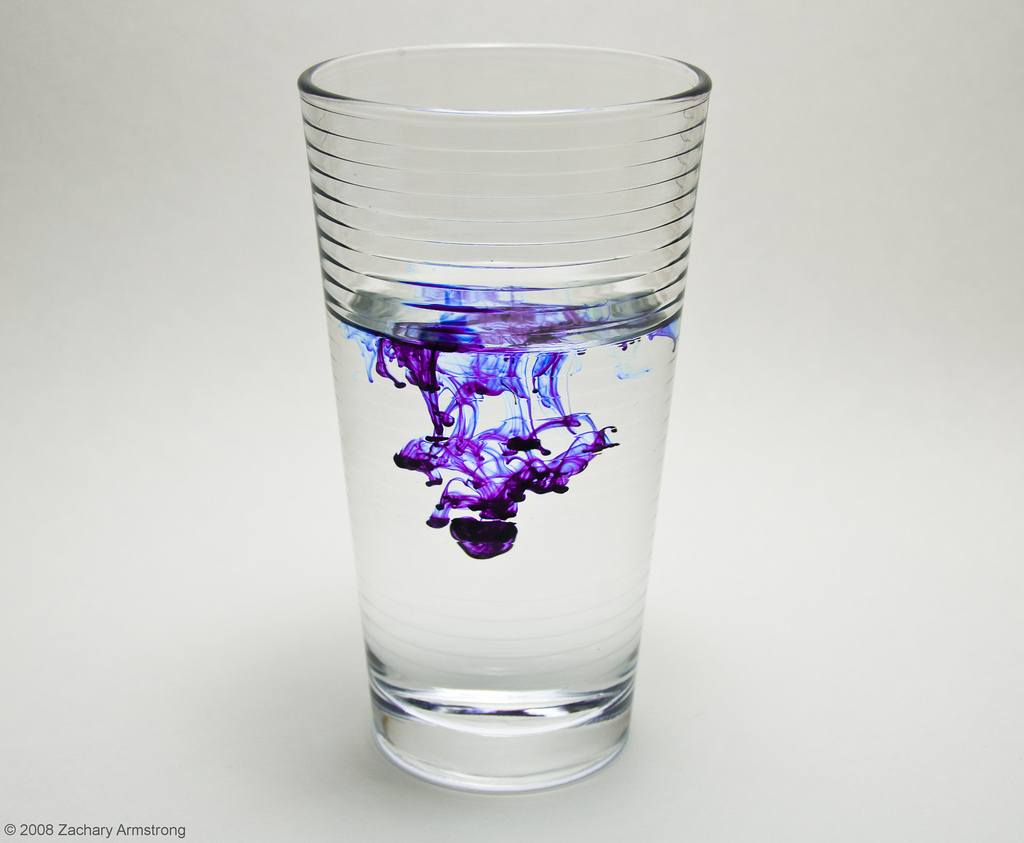
Where is there a low concentration of dye?
at the bottom of cup
in the color
at the top of cup
no concenteraion gradient
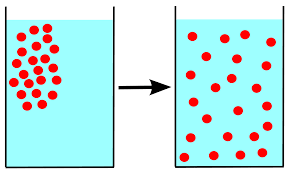
The picture below is an example of _________________.
osmosis
isotonic
diffusion
active transport
Diffusion occurs only in solids
True
False
How long does diffusion last?
Until the concentration of particles in the system is equal
Until a region in the system has a smaller concentration of particles than the other
Until a region in the system has a greater concentration of particles than the other
Until the particles disappear from the system
When does diffusion stop?
After a day and a night
When the particles are evenly spread out
When there are no particles left
When all the particles leave the system
What is thermal expansion?
The transfer of thermal energy between materials by the collisions of particles
Is a decrease in a material's size when temperature decreases
An increase in a material's size when temperature increases
diffusion of air freshener
Suppose that a container of liquid is heated so that thermal expansion occurs. Why might the liquid overflow after heating?
the volume of liquid contracts
the volume of liquid expands
the liquid remains the same volume
How does an increase in temperature affect diffusion?
Diffusion speeds it up
Diffusion slows it down
Diffusion has no effect


If the volume of a cell
increases when it is placed
in a solution, that solution is
said to be __________ to the
cell


Osmosis is the movement of _____ across a selectively permeable membrane.
food
energy
oxygen
water
What is Osmosis?
movement of water from equal concentrations
movement of water through a selectively-permeable membrane from high to low water concentration.
Movement of water high to low water concentration
movement of water through a selectively-permeable membrane from low to high water concentration.
What in the cell is selectively permeable?
cell membrane
cell wall
cytoplasm
nucleus

The diagram shows two chambers with different concentration of molecules separated by a selectively permeable membrane. Predict what will happen to the water molecules ?
move from B to A due to diffusion
move from B to A due to osmosis
move from B to A due to active transport
move from A to B due to osmosis
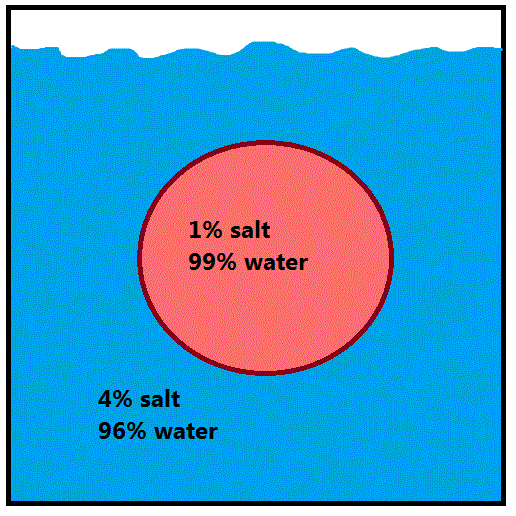
Where will the water go?
Into the cell
Out of the cell
Equally in & out - it's isotonic
There is no water

If the dots represent sugar what direction will the water flow?
Into the cell
Out of the cell
Both equally (equilibrium)

What will happen to the cell in the given solution?
Swell up
Shrink
Stay the same
Osmosis needs _____ energy.
zero
a lot of
10 kilowatts
some

If the percentage represents sugar, what direction will water flow?
Into the cell
Out of the cell
Into and out equally (equilibrium)
Which cell would water move into?


Which cell would water move out of?



