
 Worksheets
End of Term Revision
Total questions: 20
Worksheet time: 10mins
Which metal can be extracted from its oxide by heat alone?
lead
mercury
tin
zinc
Metallic bonding is a force of attraction between
negative ions and positive ions
a shared pair of electrons and two nuclei
positive ions and delocalised electrons
negative ions and delocalised electrons

This represents the
reduction of titanium atoms
reduction of titanium ions
oxidation of titanium atoms
oxidation of titanium ions
copper is a good conductor of electricity because
the atoms are free to vibrate
the atoms are in close contact
the atoms have the electron arrangement 2,8,18,1
electrons can move readily from one atom to the next
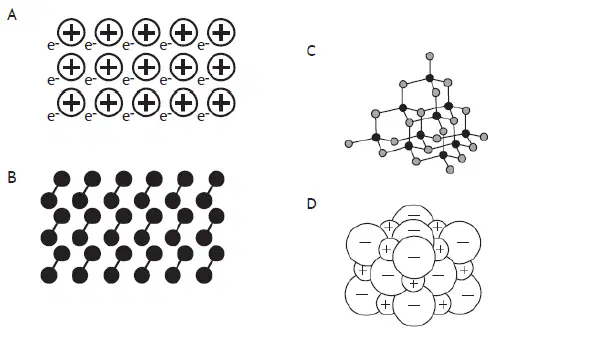
Which of these represents the structure of a metal?
A
B
C
D
Which of the following substances does not produce water when it reacts with dilute acid?
sodium hydroxide
magnesium
copper oxide
ammonia solution
Which salt cannot be prepared by a precipitation reaction?
barium sulfate
lead (II) sulfate
calcium chloride
silver chloride
hydrogen gas
burns with a pop
relights a glowing splint
turns damp pH paper red
turns limewater cloudy
A solution of accurately known concentration is more commonly known as a
correct solution
precise solution
standard solution
prepared solution
Which of the following metals is found uncombined in the Earth's crust?
aluminium
iron
lead
silver
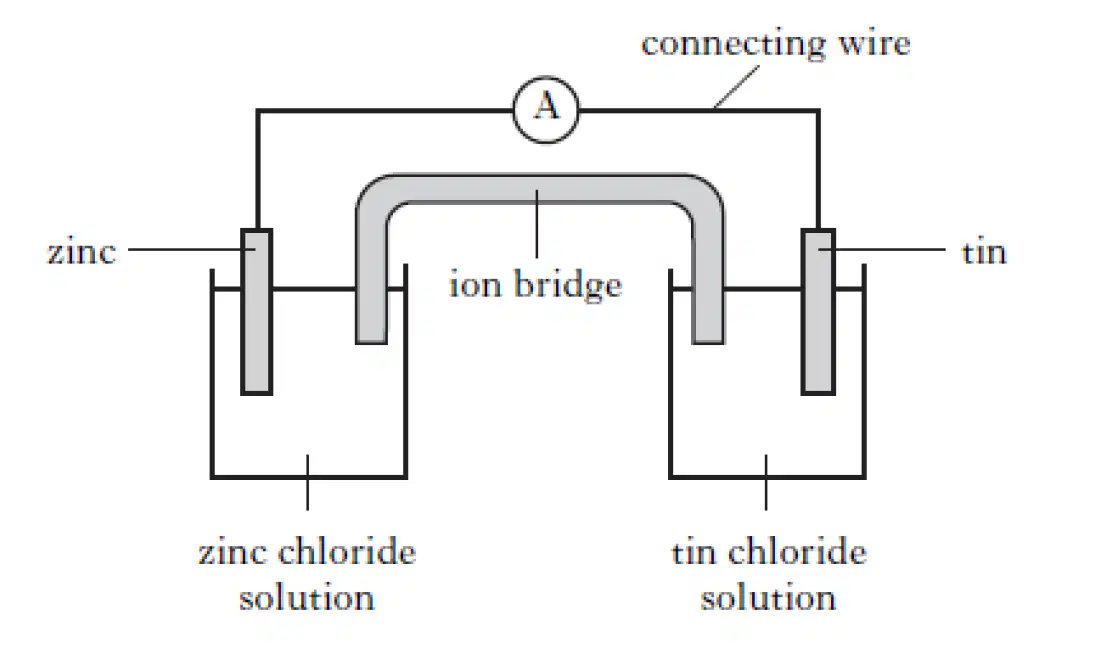
In this cell, electrons flow through
the solution from tin to zinc
the solution from zinc to tin
the wire from tin to zinc
the wire from zinc to tin

In which of the following reactions is a positive ion oxidised?
A
B
C
D
Which of the following elements usually exists as diatomic molecules?
helium
nitrogen
silicon
sulfur
Ionic compounds conduct electricity when molten because they have
ions that are free to move
delocalised electrons
metal atoms
a lattice structure
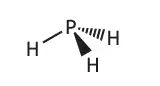
The shape of a molecule of phosphine, PH3, is
linear
angular
trigonal pyramidal
tetrahedral
In which of the following types of reaction is oxygen a reactant?
combustion
neutralisation
polymerisation
precipitation
What is the charge on the chromium ion in CrCl3?
1+
1-
3+
3-
Which compound would not neutralise hydrochloric acid?
sodium carbonate
sodium chloride
sodium hydroxide
sodium oxide
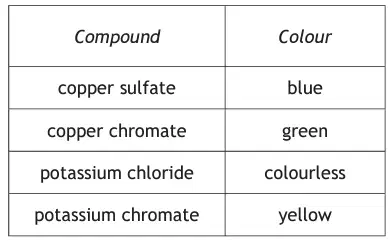
The colour of the chromate ion is
blue
green
colourless
yellow
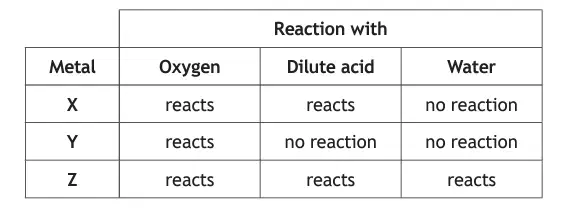
X, Y and Z are metals. Which of the following correctly shows the metals in order of increasing activity?
X Y Z
Y X Z
Z X Y
Z Y X

