
 Worksheets
6th grade Review 2024 #1
Total questions: 152
Worksheet time: 2hrs 24mins

What is a cell?
made up of one cell
consists of many cells
a basic unit of life
any living thing

What is an organism?
constant internal conditions that organisms maintain
any living thing
basic unit of life
having many cells
What are the Characteristics of Living things?
reproduce, grow, respond
constant internal conditions that organisms maintain
DNA, have cells, and use energy
any living thing

How many cells are in a multicellular?
(a)
What is homeostasis?
multicellular
internal conditions that organisms maintain
a basic unit of life
constant conditions that an organism maintains
How many cells does a unicellular organism have?
0 cells
only one single cell
2 or 3 cells
more than 5 cells
how many characteristics do living things have/need?
6
3
8
10
how are multicellular and unicellular different?
their name
one has multiple cells the other only has one single cell
the amount of cells
there is no difference
Multicellular organisms have more cells then unicellular organisms.
true
false
There are different types of cells including: Erythrocytes, Platelets, Vascular endothelial cells, etc
true
false




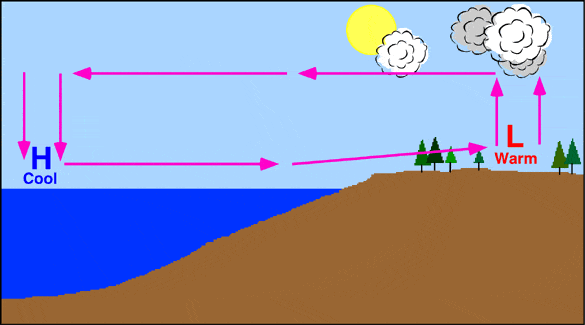
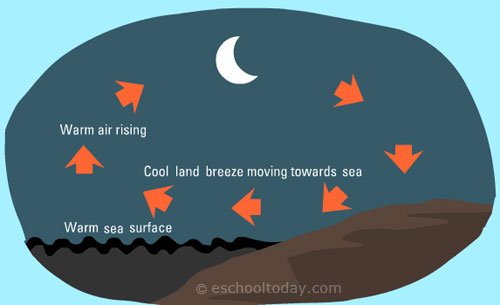


How is wind caused?
When air movies from areas of high to low pressure
when air movies from areas of low to high pressure
when there is a tornado
when clouds pass by


All of the factors listed are abiotic factors of this underwater ecosystem EXCEPT the
sunlight
water currents
fish population
water temperature

The average weather conditions of a region--
daily temperature
weather
climate
Land closer to the equator is
colder.
warmer.
dry.
Two factors that determine climate are
precipitation and temperature.
hurricanes and tornadoes.
humidity and pressure.
Nevada usually receives very little rainfall is an example of
climate
weather
Houston received three inches of rainfall last month is an example
weather
climate
A chemical change is different than a physical change because in a chemical change...
Chemicals are used
A new substance is formed and in a physical change no new substance is formed
Molecules do not physically touch
The change can be seen but in a physical change it cannot
One clue of a chemical change is the formation of a precipitate. A precipitate is formed when...
Two liquids react and a gas is produced
A solid dissolves in a liquid
One liquid dissolves in another
Two liquids react and a solid is formed
Some chemical reactions require a substance called a catalyst. The main purpose of a catalyst is...
To warm up the reaction
To speed up the reaction
To create more reactants
To stop the reaction
An element and an atom are different but related because...
A particular element is made up of many different types of atoms
A molecule is the same as an atom
An element is made up of all the same type of atom
An element is smaller than an atom
The density of an object is...
The mass divided by the volume D = m/v
The volume divided by the mass D = v/m
The same as its weight
The same as the size of the object
If two objects have the same volume but one has a greater mass, the one with greater mass...
Has a lower density
Has a higher density
Will float
Will sink
If you cut a wooden block in half, each half would have...
Half the density of the original piece
Twice the density of the original piece
The same density as the original piece
No density at all
Density is a characteristic property of a substance. This means that the density of water
Stays the same regardless of the volume
Changes depending on the volume
Is greater for a greater amount of water
Is less for a smaller amount of water
An object will float in a liquid if it is...
More dense than the liquid
Less dense than the liquid
Lighter than metal
Shaped like a ball
A tiny piece of sand is very light but sinks in water. This is because...
Sand is a solid
Sand is less dense than water
There is more water than sand
Sand is more dense than water
When a thermometer is heated, the red liquid inside the thermometer moves up. This is mainly because...
The red liquid is thin
The molecules of the liquid move faster and get a little further apart
Hot liquid is lighter
The glass of the thermometer gets hot
Nails rusting is a...
Physical Change
Chemical Change
Water boiling is a...
Physical Change
Chemical Change
Fireworks are a...
Physical Change
Chemical Change
Crushing a soda can is a...
Physical Change
Chemical Change
Breaking a window is a...
Physical Change
Chemical Change
Baking a cake is a...
Physical Change
Chemical Change
Making lemonade is a...
Physical Change
Chemical Change
Ice melting is a...
Physical Change
Chemical Change
Lighting a match is a...
Physical Change
Chemical Change
Slicing bread is a...
Physical Change
Chemical Change

(6.6A) Why are these materials (copper and aluminum) good choices for cooking and electricity?
Nonmetals are poor conductors of heat and electricity.
Metals are good conductors of heat and electricity.
Nonmetals are good insulators of heat and electricity.
Metalloids are semiconductors of electricity.

(6.6A) How would you classify Sample 3 on the table above?
Metal
Nonmetal
Metalloid
Compound

(6.6B) A balance and a graduated cylinder are used to determine the density of a mineral sample. The sample has a mass of 16.8 g and a volume of 3.3 cm³ . What is the density of the mineral sample?
0.2 g/cm³
5.1 g/cm³
55.44 g/cm³
20.1 g/cm³

(6.6B) A balance and a graduated cylinder are used to determine the density of a mineral sample. The sample has a mass of 20.3 g and a volume of 4.7 cm³ . What is the density of the mineral sample?
0.23 g/cm³
95.41 g/cm³
4.3 g/cm³
15.6 g/cm³

(6.8C) A bus travels 40 km in 30 minutes. What is the average speed of the bus?
80 km/h
70 km/h
60 km/h
50 km/h

(6.8C) A bus travels 80 km in 30 minutes. What is the average speed of the bus?
120 km/h
140 km/h
160 km/h
180 km/h

(6.5A) Which substance represented in this equation is classified as an element?
C₄H₁₀
CO₂
H₂O
O₂
(6.5A) Which of the following substances is an element?
CH₄
Fe₂
CO₂
H₂O
(6.5C) Which of the following would indicate the formation of a new substance?
A liquid turns to a solid.
A sample of metal melts.
Bubbles and fizzing occur.
A solid is dissolves in a liquid.

(6.5C) What evidence would indicate that a new substance is produced?
The tablets dissolve in water.
The water becomes cloudy.
The water level increases slightly.
Bubbles are given off.

(6.8A) According to the above diagram, at what point would the roller coaster car have the greatest kinetic energy and the least potential energy?
3
4
5
6

(6.8A) According to the above diagram, at what point would the roller coaster car have the greatest kinetic energy and the least potential energy?
A
B
C
D
(6.6C) The appearance of the surface of a mineral when it reflects light is known as ―
streak
luster
conductivity
hardness
(6.6C) Which of the following best describes luster?
The mass of an object.
The way light reflects off an object.
The texture of an object.
The density of an object.

(6.8D) Which description of motion is best represented by this graph?
The speed of the car is decreasing.
The speed of the car is increasing.
The speed of the car is constant.
The speed of the car is zero.

(6.8D) Which statement below best describes the motion of the car?
The car is stopped for two minutes, travels at a constant speed for two minutes, and then stops.
The car is stopped for two minutes, increases its speed over two minutes, and then stops.
The car travels at a constant speed for two minutes, increases its speed over two minutes, and then travels at a constant speed for two more minutes.
The car increases its speed for two minutes, travels at a constant speed for two minutes, and then increases its speed over the next two minutes.

(6.8D) What is a valid conclusion that the student can make about the runner’s motion?
The average speed of the runner remained constant as the runner covered more distance.
The average speed of the runner increased as the runner covered more distance.
The average speed of the runner decreased as the runner covered more distance.
The average speed of the runner increased and then remained constant as the runner covered more distance.

(6.8D) Which graph below best represents the motion of the dog in terms of distance from home over time?


(6.8E) Why does a ball fall back down to Earth when you throw it up into the air?
Friction
Air Resistance
Gravity
Momentum

(6.8E) Why type of force is Sally experiencing as she goes down the slide?
Friction
Air Resistance
Gravity
Inertia
What is the order of the planets?
Earth, Venus, Mercury, Jupiter, Saturn, Neptune, Mars, Uranus
Mercury, Venus, Earth, Mars, Jupiter, Saturn, Uranus, Neptune.
Uranus, Neptune, Earth, Mars, Mercury, Venus, Jupiter, Saturn
Mars, Venus, Earth, Jupiter, Mars, Saturn, Neptune, Uranus
Everything we touch is made of…
Atoms
Air
Carbon
Magic
Why does the Earth have seasons?
The Earth is tilted.
The Earth moves closer to and farther away from the Sun
What happens when a cold front approaches?
Warm air is pushing under cold air and you can expect humid weather and lower temperatures.
Warm air is pushing under cold air and you can expect humid weather and higher temperatures.
Warm air rises, cools, and causes rain and possible thunderstorms.
Cold air is pushed over warm air causing rain and possible thunderstorms.
What is an ecosystem?
How living and non-living organisms interact with each other
The study of living organisms
How creatures live and survive in the area around them
The study of dead organisms and how they are decomposed
What is a lunar eclipse?
The Earth between the sun and the moon.
The Moon between the sun and the Earth.
The Moon between the sun and Jupiter.
The Earth between the sun and Mercury.
The states of matter are...
Solid, liquid, gas
Solid, melting, gas
Freezing, melting, condensation, evaporation

Is this a correct representation of the moon phases?
Yes
No

Is this model of the universe to scale?
Yes, because the planets are in order.
Yes, because the planets are proportionate to each other.
No, because the planets are not in order.
No, because the planets are not proportionate to each other.
In what phase of the water cycle does water lose density?
Evaporation
Condensation
Precipitation
Collection
If there was a drought, what effect would happen in the ecosystem?
All the animals would thrive and populations would grow.
There would be a decrease in some of the populations in the ecosystem.
The populations would stay the same.
Every population would be effected and the populations would decrease.

This is an example of what type of relationship between organisms?
Predation
Commensalism
Mutualism
Competition

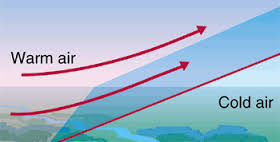
What type of front is this?
Warm front
Cold front
Stationary front
Occluded front
What are the characteristics of a planet?
It has to independently orbit the sun, it has to have enough mass to use its gravity to make it into a somewhat spherical shape, and it has to be large enough to dominate its orbit.
It has to be solid, orbit the sun, and have a moon.
It has to orbit a star, be somewhat spherical, not be a moon, and be able to almost dominate its own orbit
Why does the moon maintain its orbit around the Earth?
Inertia
It doesn’t orbit the Earth, the Earth orbits the moon.
The Earth’s gravitational pull keeps the moon in orbit.
A single drop of water is made of approximately 1,670,000,000,000,000,000,000 molecules of water. When that same drop of water is heated it disappears. What happened to those molecules?
The molecules are broken down to their smaller atoms hydrogen and oxygen and become part of the air.
The molecules separate and become part of the air but remain water molecules
They are destroyed and no longer exist
Are turned into energy
Atoms in a solid move…
Quickly
Slowly
average
They aren't moving at all.
What causes the seasons?
The distance between the Earth and the sun at different times of the year.
Earth’s tilt changes.
They just happen.
Earth’s tilt
Both wolves and mountain lions prey on mule deer. What type of interaction does this describe?
Predation
Commensalism
Mutualism
Competition
Gravity takes effect during which phase of the water cycle?
Evaporation
Condensation
Precipitation
Collection

In order, what is the blue line and the red line?
Warm front and cold front
Cold front and warm front
Cold front and occluded front
Warm front and occluded front
What causes Earth’s poles to be much cooler than the Equator? Select all that apply.
Unequal heating of the Earth from the Sun
Climates
The Earth is tilted
Water evaporates near the poles

What does this illustration show?
Predators/Prey
Flow of energy
Animals in the Arctic ecosystem
What animals eat what animals
What type of weather is associated with low pressure?
Clear skies
Storms
High clouds
Fog
Gravity and Inertia cause the Earth to orbit around the sun.
True
False

What information does this graph tell you about the bunny population?
There probably is also a rise and fall in the predator population.
The bunnies love hopping around.
There might be a drought during the fall of the population.
The population is a normal one.
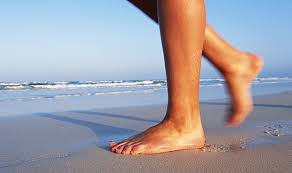
Feet touching hot sand
conduction
convection
radiation
Macaroni boiling in a pot of water
conduction
convection
radiation
Energy from the sun travels to the Earth's surface through??
conduction
convection
radiation

Convection currents happen when hot air rises because it is less dense and then pushes cold air down because it is more dense. What property of air is this showing?
number of protons
density
number of electrons
pH level
From where does the energy that powers the movement of air in the atmosphere and water in the ocean come?
convection and natural gas
radiation and natural gas
convection and radiation
conduction and coal

Look at the diagram of Earth's energy budget, What percentage of Earth’s energy is reflected back into space? (Hint: need to do some math)
51%
6%
30%
15%

Look at the picture of the Earth's Energy Budget. What absorbs the most of the incoming solar radiation?
Clouds and rising air
Land and oceans
Earth's atmosphere
Earth's mountains

Look at the diagram. How much of the incoming solar energy is ABSORBED by land and oceans?
51%
3%
64%
20%

What is step 1 of the water cycle?
condensation
precipitation
evaporation
runoff

Look at this picture of the water cycle. At which number does most of the evaporation occur?
1
4
2
3
Where is water created in the water cycle?
condensation
It changes its state of matter(solid, liquid, gas).
precipitation
evaporation
Evaporation is...
the change of the state of matter from the gas phase into the liquid phase.
a type of vaporization that occurs on the surface of a liquid as it changes into the gas phase.
Condensation is...
the change of the state of matter from the gas phase into the liquid phase.
any product of the condensation of atmospheric water vapor that falls under gravitational pull from clouds.
Condensation is...
the process of water movement through a plant and its evaporation from aerial parts, such as leaves, stems and flowers.
the change of the state of matter from the gas phase into the liquid phase.
Transpiration is...
the change of the state of matter from the gas phase into the liquid phase.
the process of water movement through a plant and its evaporation from aerial parts, such as leaves, stems and flowers.
Which natural disaster gets its energy from warm ocean water?
tornado
hurricane
Which natural disaster has a funnel shape?
hurricane
tornado
Which state is more likely to have a tornado?
Florida
Oklahoma
Which large body of water is least likely to produce a hurricane that eaches the United States?
Pacific Ocean
Atlantic Ocean
Warmer air...
sinks beneath cooler air.
rises above cooler air.
Cooler air...
sinks beneath warmer air.
rises above warmer air.
Which is more dense, cooler air, or warmer air?
cooler air
warmer air
Warm air is...
more dense than cooler air.
less dense than cooler air.
Cooler air is...
less dense that warmer air.
more dense than warmer air.
Warmer water currents begin...
near the equator.
near the polar zones.
Ocean water currents flowing from the polar zones usually...
rise above warmer ocean water currents.
sink beneath warmer ocean water currents.
Compared to the polar zones, the equator receives...
less direct sunlight.
more direct sunlight.
More direct sunlight means...
more energy.
less energy.
The North Pole is located at...
0° North Latitude
0° South Latitude
90° North Latitude
90° South Latitude
The equator is located at...
90° Latitude
0° Latitude
Where does the air get its energy?
Energy is transferred directly to the air from the sun.
Energy is transferred to the air from land and water surfaces.
The outer layer of a plant cell is called the...
cell membrane.
cell wall.
The outer layer of an animal cell is called the...
cell membrane.
cell wall.
The mitochondria is like a...
factory.
power station.
The ribosome is like a...
factory.
power station.
The nucleus of a cell is like...
a factory.
a power station.
a control center.

