wayground logo

Free Printable Worksheets

NEW

Font size

S
M
L
XL
Worksheets

HM Unit 8 Test

Total questions: 55

Worksheet time: 50mins

Name
Class
Date
1.
What does the term echinoderm mean?
a)
tube feet
b)
star shaped
c)
spiny skin
d)
stomach foot
2.
What echinoderm is this?
a)
sea lily 
b)
sea urchin 
c)
sea cucumber 
d)
sand dollar 
3.
all have radial symmetry
a)
univalve
b)
bivalve
c)
head-footed
d)
echinoderms
4.
Which part of the Mollusk body is specialized for burrowing, feeding, and movement?
a)
trochophores
b)
visceral mass
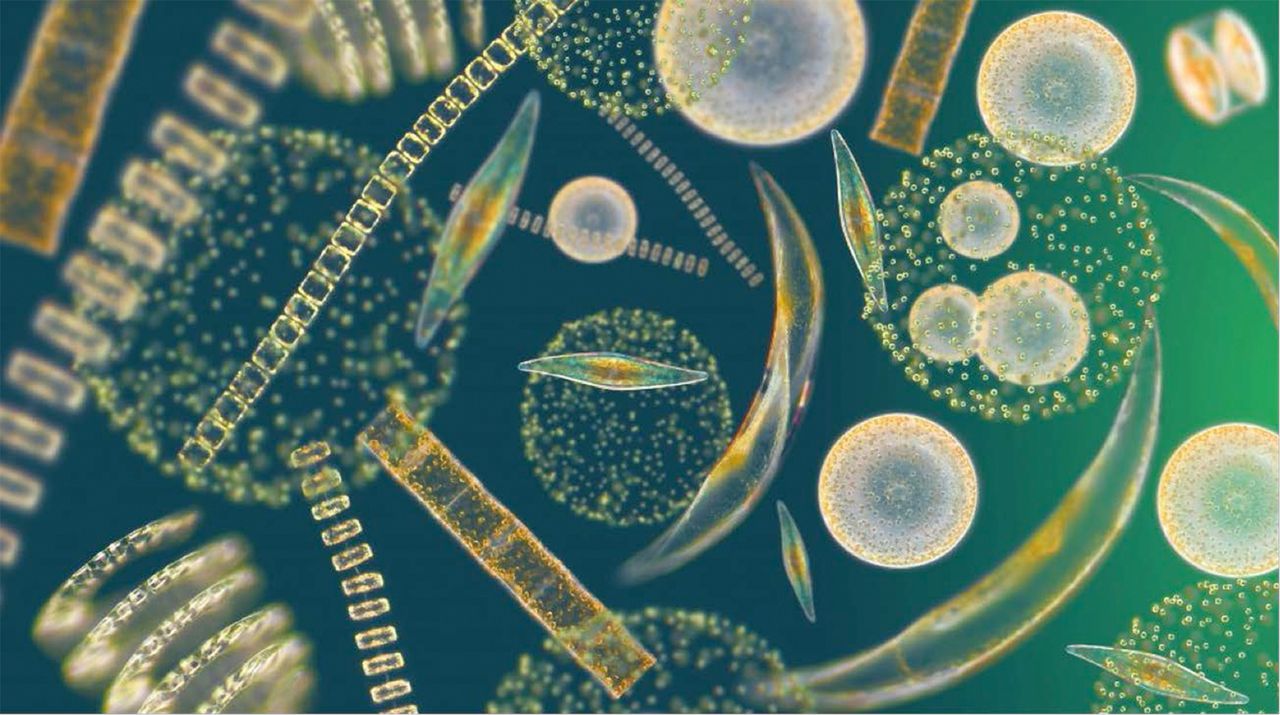
c)
mantle
d)
foot
5.
What type of symmetry do MOST mollusks have?
a)
Bilateral
b)
Radial
c)
Circular
d)
Asymmetrical
6.
Which class of Mollusks include clams, oysters, and mussels?
a)
Gastropods
b)
Bivalves
c)
Cephalopods
7.
Which class of Mollusks include squid, cuttlefish and octopus?
a)
Gastropods
b)
Bivalves
c)
Caphalopods
8.
Which class of Mollusks includes snails, slugs, or nudibranches?
a)
Cephalapods
b)
Bivalves
c)
Gastropods
9.
All arthropods have segmented bodies, jointed appendages, and ________________. 
a)
tails
b)
lungs
c)
wings
d)
an exoskelton
10.
Which of the following is a correct description of the polyp body form?
a)
It is sessile and the tentacles and mouth point downward.
b)
It is sessile and the mouth and tentacles point upward.
c)
It is mobile and the tentacles and mouth point downward.
d)
It is mobile and the tentacles and mouth point upward.
11.
To which group of mollusks does this animal belong?
a)
Class Gastropoda
b)
Class Bivalvia
c)
Class Cephalopoda
d)
Class Polyplacophora
12.
Which is not a main class within the phylum of mollusca?
a)
crustacean 
b)
cephalopod
c)
gastropod
d)
bivalve
13.
What form is this organism?
a)
Polyp
b)
Medusa
c)
Comb jelly
d)
Coral
14.
Why do arthropods have to shed their exoskeletons?
a)
it wears out
b)
they don't shed
c)
it limits the size they can grow
d)
to go from water to land environments
15.
The only type of crustacean that attaches to a substrate and is not free-swimming is the
a)
copepod
b)
brine shrimp
c)
barnacle
d)
hermit crab
16.
Cephalopods move quickly by
a)
using jet propulsion
b)
creeping on their muscular foot
c)
digging into the sand
d)
waving their tentacles to swim
17.
The function of the Mollusk's radula is to
a)
reproduce
b)
obtain food by scraping or tearing
c)
remove oxygen from the water
d)
remove ex
18.
What phylum are crustaceans a part of?
a)
Arachnids
b)
Arthropods
c)
Animals
d)
Invertebrates
19.
How does a starfish obtain its food?
a)
diffusion across its skin
b)
By using a radula
c)
Dropping its stomach into its prey
d)
filter feeding
20.
Which mollusk group does this represent?
a)
Class Gastropoda
b)
Class Bivalvia
c)
Class Cephalopoda
d)
Class Polyplacophora
21.
All arthropods have segmented bodies, jointed appendages, and ________________. 
a)
tails
b)
lungs
c)
wings
d)
an exoskelton
22.
I am spiny and have a water vascular system with tube feet.  I am a sea cucumber.
a)
Cnidarian
b)
Echinoderm
c)
Mollusk
d)
Annelid
23.
Sponges use pores to 
a)
move from place to place.
b)
filter food from the water.
c)
defend themselves.
d)
clean themselves
24.
What does cephalopod mean?
a)
head foot
b)
stomach foot
c)
having two shells
d)
soft bodied
25.
What produces the shell of a Mollusks?
a)
stomach
b)
radula
c)
mantle
d)
gills
26.
The hard part of the mouth in squid is called the
a)
Beak
b)
Radula
c)
Tentacle
d)
Arm
27.

Many echinoderms get around using...

a)

Fins

b)

Tube feet

c)

Tentacles

d)

Flagella

28.
What are some characteristics of Gastropods?
a)
mucus for ease of movement. The radula is  tongue-like structure for feeding
b)
tentacles for moving/feeding,jet propulsion for movement,good vision/large brains
c)
5 arms and radial symmetry
d)
jointed legs and fused head and chest
29.
What characteristics do Bivalves have?
a)
They have 2 shells held together by very tough muscles, filter feeders and the ability to make pearls 
b)
jet propulsion, tentacles, advanced eyes and large brains
c)
asymmetrical body structure
d)
tube feet and radial symmetry
30.
Where do Bivalves live?
a)
Ocean only
b)
Fresh water only
c)

land

d)
marine and freshwater
31.
Characteristics of Crustaceans?
a)
two pairs of antennae, mouthparts for crushing/grinding food, pair of appendages attached to each segment
b)
5 part body, spiny skin, tubed feet
c)
3 body parts (head, chest, abdomen), 3 pairs of legs most have wings*most go through metamorphosis
d)

hard carapace, gills, free swimming young, tasty seafood! 

32.
Characteristics of echinoderms?
a)
5 part body, spiny skin, tubed feet, water vascular system, fluid filled tubes for moving and feeding and breathing
b)
fused head and chest, 8 legs
*everywhere*3 body parts (head, chest, abdomen)*3 pairs of legs*most have wings*most go through metamorphosis
c)
hard shell or no shell, radula for feeding, large foot for moving
d)
include the species: crabs, shrimp, barnacles
33.
Echinoderms live where?
a)

marine environments

b)
fresh water
c)
everywhere
d)
under decaying logs and mosit ground
34.
The most intelligent of all invertebrates?
a)
sea stars
b)
ants
c)
octopus
d)
fish
35.

Aggregating sea anemone are...

a)

Invertebrates

b)

Vertebrates

c)

a type of fungi

d)

a kind of fish

36.

Sponges are in phylum

a)

Cnidaria

b)

Porifera

c)

Chordata

d)

Echinodermata

37.

Sponges have true tissue differentiation (muscle tissue, stomach tissue, etc).

a)

True

b)

False

38.

Sponges obtain food through

a)

filter feeding

b)

trapping

c)

predation

d)

scavenging

39.

Sponges generate a current through their bodies using

a)

Flagella on their choanocytes

b)

Flagella on their amebocytes

c)

Flagella on their ostia

d)

Flagella on their osculum

40.

Sponges feed on

a)

plankton & other suspended material

b)

water

c)

calcium carbonate

d)

the sun

41.

Sponges are ______, meaning they cannot move.

a)

Sessile

b)

Locomotive

c)

Bipedal

d)

Tetrapodal

42.

The tails on choanocytes are called

a)

flagella

b)

collar cells

c)

plankton

d)

detritus

43.
Mollusk's tongue-like strip covered with teeth that point backwards is called the 
a)
gills
b)
beak
c)
visceral mass
d)
radula
44.

Which group of cephalopods has ability to flatten its body to fit in small spaces and change skin to blend with surroundings?

a)

Nautilus

b)
Squid
c)
Octopuses
45.
What is the radula used for?
a)
Locomotion
b)
Feeding
c)
Swimming
d)
Digging
46.
What echinoderm is this? 
a)
sand dollar
b)
sea urchin 
c)
sea star
d)
brittle star
47.
What phylum do echinoderms belong to?
a)
Cnidaria
b)
Porifiera
c)
Echinodermata
d)
Chordata
48.

What is the process of regeneration?

a)

When an animal sheds its exoskeleton.

b)

When an animal can clean the ocean floor.

c)

When an animal can regrow a body part.

d)

When an animal recycles plastic bottles and cans.

49.

A copepod is

a)

phytoplankton

b)

zooplankton

50.
Zooplankton are grouped into which kingdom?
a)
Monera
b)
Protista
c)
Plantae
d)
Animalia
51.
Plankton that uses photosynthesis:
a)
Phytoplankton
b)
Zooplankton
52.
Which is a kind of phytoplankton?
a)
 lion’s mane jellyfish
b)
sea butterfly 
c)
algae
d)
copepod 
53.
What are tiny organisms that float near the surface of the water?
a)
plankton
b)
organisms
c)
abiotic factor
d)
insects
54.
What are Plankton?
a)
They are small plants and animals.
b)
They are any plants or animals that drift with the currents of the ocean.
c)
They are only microscopic animals.
d)
They are only microscopic plants.
55.

green pigment

a)

fucoxanthin

b)

chlorophyll

c)

carotenoids

d)

phycoblins