
 Worksheets
STAAR Review
Total questions: 80
Worksheet time: 3600secs

Look at the picture. What is the position of the Sun?
A
B
C
Two wires carrying electricity can create a spark if they come too close together. This spark can start a fire. Wires carrying electricity are usually covered with plastic to keep them from starting a fire. Why does the plastic keep electricity from starting a fire?
Plastic is softer than wire.
Plastic conducts electricity.
Plastic is a good insulator.
Plastic can melt when heated.
Erosion is one of the processes involved in the formation of sedimentary rock. Which of these best describes the process of erosion?
Pieces of rock or soil are carried from one place to another.
Sediment grains fall to the bottom of a lake to form sedimentary layers.
Pressure compacts layers of sediment and turns them into rock.
Rocks are broken into smaller pieces that remain in the same location.
Which activities on the list are examples of the use of mechanical energy?
-
1. A toaster heating bread
2. A cell phone charging
3. A tree limb falling to the ground
4. Tomato plants absorbing sunlight
5. A canoe floating down a river
6. Sharks chasing a school of fish
-
Activities 3, 5, and 6
Activities 1, 4, and 6
Activities 2, 4, and 5
Activities 1 and 2
A student puts four objects in a bucket filled with water. The objects are listed below:
-
Plastic ball
Glass marble
Metal paper clip
Wood block
-
Which two objects are most likely less dense than the water?
Wood block and metal paper clip
Plastic ball and glass marble
Metal paper clip and glass marble
Wood block and plastic ball
What would most likely happen to the carbon dioxide–oxygen cycle if Earth's large forests were all cut down?
There would be more carbon dioxide in the atmosphere because fewer plants would be using it to produce their own food.
The remaining plants would stop producing carbon dioxide, and animals would use less oxygen.
The remaining plants would produce more oxygen, and animals would produce less carbon dioxide.
There would be more oxygen in the atmosphere because fewer plants would be using it to produce their own food.
In which state of matter do molecules move the slowest?
solid
liquid
gas
all of the above

According to the energy pyramid, which of the following will most likely happen to the other organisms if all the harvest mice die?
The number of hawks would increase, and the number of insects would increase.
The number of hawks would decrease, and the number of insects would increase.
There would be no change in the rest of the chain.
The number of hawks would increase, and the number of insects would decrease.
Which of the following food chains shows the correct energy flow from left to right?
grass > rabbit > owl
owl > rabbit > grass
rabbit > owl > grass
grass > owl > rabbit
People don't eat grasses, but grasses are still important to people. In relation to the food chain, why are grasses important to people?
Grass surfaces are safer than concrete.
People eat organisms that eat the grasses.
People use grass surfaces for recreation.
Grass fields can't hide dangerous animals.
A ball was rolling fast and then slowed. Which most likely caused the ball to slow?
heat
wind
friction
momentum
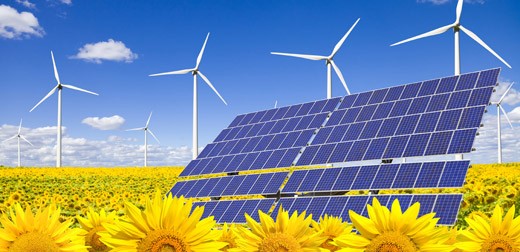
__________ is an energy resource that will not run out in the next several hundred years.
Nonrenewable Energy Resource
Renewable Energy Resource
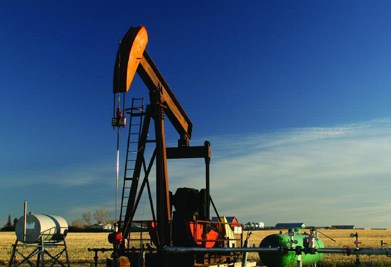
__________ is an energy resource that will run out in the next several hundred years.
Nonrenewable Energy Resource
Renewable Energy Resource
What is coal made of?
water
decomposed animal and plant remains
electricity
all of the above
Monahans Sandhills State Park in Texas has almost 4,000 acres of sand dunes. Some of the dunes are as tall as a six-story building.
The dunes in the park are formed by —
strong winds
rainstorms
earthquakes
tornadoes
The Smiths notice a bird flying into a window. The bird flies into the window because light -
reflects from the window
travels through the window
refracts around the window
reflects around the window
In a grassland ecosystem, if the population of eagles suddenly decreased, what will most likely be the effect on the rest of the ecosystem?
The ecosystem will become overpopulated with snakes.
There will be a decrease in the population of snakes in the ecosystem.
The nutrition of the soil in the ecosystem will decrease.
More types of plants will begin growing in the ecosystem.
Which organism gets all its energy from the sun?
consumer
producer
decomposer
no living organism

A student placed a pencil in a cup of water. The pencil appears broken because light-
bends when it passes through water
reflects the pencil on the water's surface
always travels in a straight line
makes the water in the glass evaporate

What do we call the tool that separates white light into the colors of the visible spectrum?
microscope
prism
graduated cylinder
tuning fork
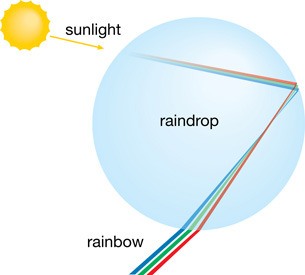
Light bending as it passes through a raindrop is an example of...
Reflection
Refraction
An object that blocks all of the light from passing through is...
transparent
clear
opaque
translucent
Which statement best describes the relationship between humans and plants in the carbon dioxide–oxygen cycle?
Humans depend on oxygen released into the air by plants, and plants depend on carbon dioxide that humans release into the air.
Plants produce carbon dioxide as a product of photosynthesis and release it into the air to provide energy for humans.
Plants depend primarily on energy supplied by oxygen for photosynthesis, a process which releases carbon dioxide needed by humans.
Humans and plants use gases in the air and the energy of sunlight to produce their own food.

A teacher gives a student four clear, sealed containers. Each container holds a different substance. The student records some observations about the substance in each container. Based on these observations, which container most likely holds only gas?
Container 3
Container 1
Container 4
Container 2

The picture below shows sedimentary rock in layers. How were these rocks formed?
heat and pressure applied to granite
sediment was deposited slowly over time
magma from a volcano
lava was rapidly cooled
All of the following are true about fossil fuels EXCEPT:
They are renewable resources.
They are the remains of dead plants and animals.
They were formed over a long period of time.
They often contribute to pollution of the atmosphere.
Energy produced from sunlight is called ______ energy and is considered a ______ resource.
solar, renewable
geothermal, nonrenewable
hydroelectric, renewable
solar, nonrenewable
A whale fossil is found in the middle of the desert. What is the best explanation for this?
The desert was once an ancient sea.
A big wave washed the bones far into the desert.
The whale fossil was moved there by people.
It was mistaken to be a whale fossil.

In which circuit below is Bulb A on, but Bulb B off?
B
A
D
C
Mary has a light bulb and several pieces of copper wire. What else does Mary need to convert electrical energy into light energy?
battery
switch
insulator
buzzer
Nancy notices that the straw in her glass of water appears to be shifted underneath the water. This is an example of:
light scattering
reflection
light absorption
refraction

Bell 1 only
Bells 1 & 4 only
Bells 3 & 4 only
Bells 1,2,3, 4

It obtains energy from producers
It returns nutrients to the soil
It preys on other organisms
I provides energy to consumers

electrical and thermal
mechanical and electrical
thermal and mechanical
light and sound
Which list contains only processes that lead to the formation of fossil fuels?
organism growth, burial, compaction
formation of faults, burial, glacier formation
erosion, burial, earthquakes
organism growth, burial, volcano eruptions

The cycle of the four seasons
The aging of a star
The passing of a year
The cycle of day and night
The amount of space something takes up
density
mass
matter
volume
The ability of a metal to allow heat or electricity to pass through it.
mass
conductivity
density
insulator
What is one way matter changes states?
heat is added
matter loses mass
it doesn't change
by doing nothing

Measured with a balance, what is being determined?
Volume
Mass
Different materials placed together, but each keeps its own properties...
Mixture
Solution

Lemonade is an example of a...
Solution
Mixture
Which of the following is a nonrenewable resource?
biomass
milk
coal
water


Look at the picture. What is the position of the Sun?
A
B
C

Which one is an Inherited Trait
A person driving a car
A human watching T.V
Scar
Color of your hair
Show the process of Weathering
Movement of Sediment From one place to another.
Deposition of sediments in a location.
The Breaking Down of Rocks.
Wet Sediments

Which one is less dense than water
Glass Marble
Oil
Honey
Syrup
What is a acquired trait
A Scar
Color of hair
Freckles
Liking to swim
What is a decomposer
Worm
Grass
Trees
Fox

What is algae?
Producer
Consumer
Decomposer
Primary consumer
Which Fact is true
The sun revolves around the earth every 24 hours.
The sun rotates on it's axis every 24 hours.
The moon Revolves around the sun.
The sun Revolves around the earth.

What happens at 100 Degrees Celsius
Freezing Point
Boiling Point

Which Object is Magenetic
Iron
Copper
Rubber
Felt
In the formation of fossil fuels you need all of the following EXCEPT...
Heat from the earths crust.
Tides from the ocean
Deposition of sediments
movement of sediments

A predator is an animal that is hunted as food.
True
False
Which one of these are soluble in water?
Oil
Syrup
Salt
Sand
Show the process of erosion.
Depositing of sediments from one location to another.
Movement of sediments.
Breaking down of rocks into sediment
What is an animal that eat ONLY Plants Called?
Herbivore
Omnivore
Consumer
Carnivore

Look at the flow chart and complete the missing link.
condensation
cooling
compaction
melting

Fill in the blank in the chart.
geothermal
natural gas
water
animals

Below is a chart of how we get our power in the United States. What conclusion can we reach from this information?
The majority of our power comes from nonrenewable resources.
We rely heavily on solar and wind energy.
We are decreasing our use of renewable resources.
Most of our power comes from hydroelectric plants.
Wind energy is advantageous because it produces little or no pollution. A disadvantage to wind energy is:
It is nonrenewable.
Electricity is only produced when the wind is blowing.
It causes major disruption to the local ecosystem.
It is very expensive to continually produce electricity.

