Worksheets
CSC 209 Graphics and Visual Computing MIDTERM EXAM
Total questions: 47
Worksheet time: 47mins
A (a) is made up of a collection of objects specified in world coordinates
When we display a scene only those (a) within a particular window are displayed
Because drawing things to a display takes time we (a) everything outside the window
A world-coordinate area selected for display is called a (a)
An area on a display device to which a window is mapped is called a (a) .
The (a) defines what is to be viewed
the (a) defines where it is to be displayed.
In computer graphics terminology, the term (a) originally referred to an area of a picture that is selected for viewing.
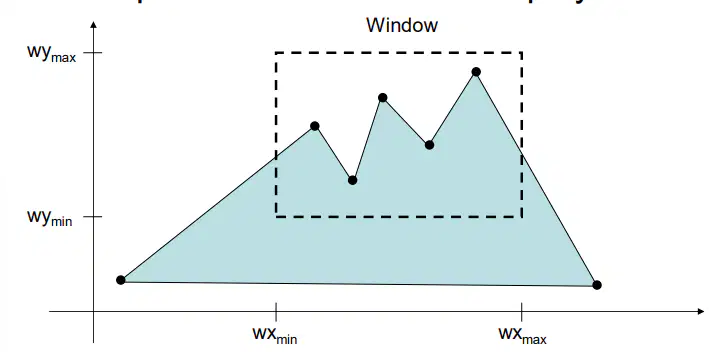
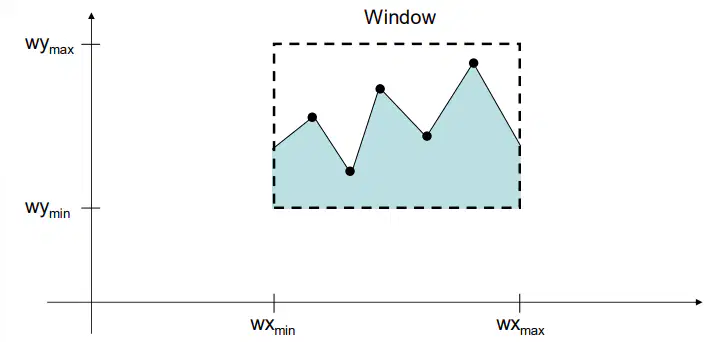
Any procedure that identifies those portions of a picture that are either inside or outside of a specified region of a space is referred to as a (a)
The region against which an object is to clipped is called a (a) .
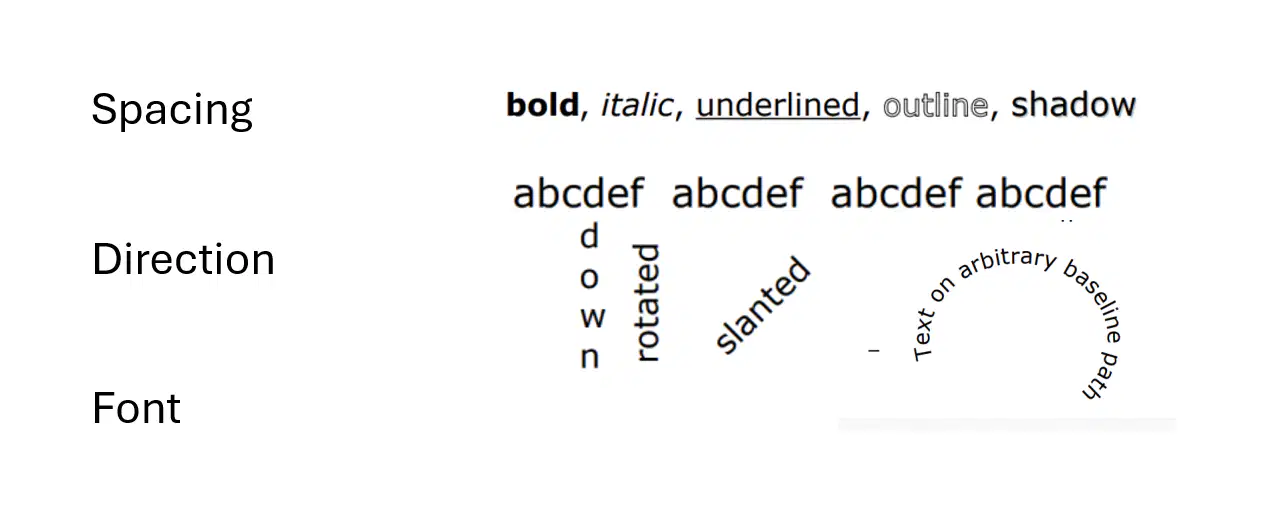
(a) is a graphics giant and includes amongst his a c h i e v e m e n t s the invention of the head m o u n t e d d i s p l a y .

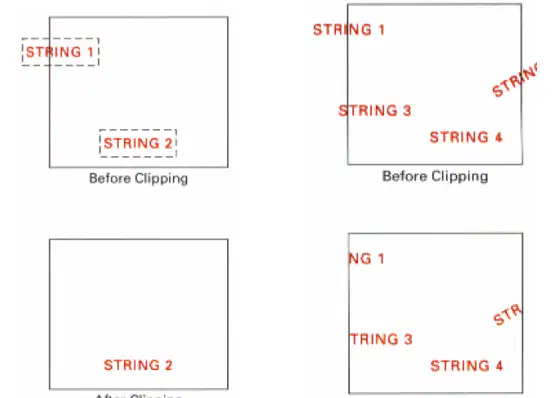
Identify the process of this graphics
(a)
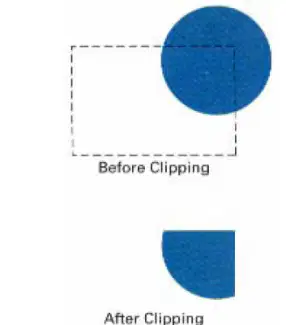
Identify the process of this graphics
(a)
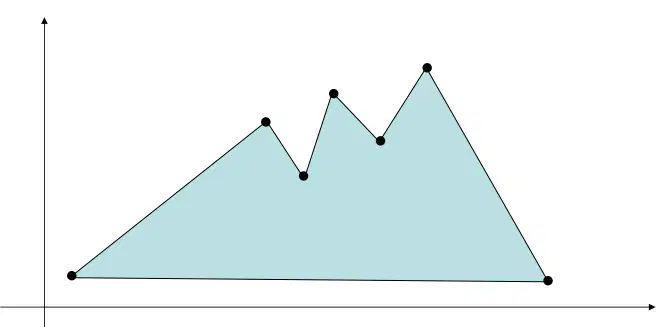
procedures will involve nonlinear equations, however, and this requires more processing than for objects with linear boundaries
(a)
Lines that cannot be identified as completely inside or outside the window may or may not cross the window interior
True
False
The four window borders create nine regions
(a)
Every end-point is labelled with the appropriate region code
(a)
Lines completely contained within the window boundaries have region code [0000] for both end-points so are not clipped
(a)
Any lines with 1 in the same bit position for both end-points is completely outside and must be clipped
(a)
We can perform inside/outside test for lines using logical operators.
(a)
Lines that cannot be identified as completely inside or outside the window may or may not cross the window interior
(a)
To check if a line crosses a particular boundary we compare the appropriate bits in the region codes of its end-points
True
False
What do you call this display
(a)
What do you call this display
(a)
What do you call this display?
(a)
the user will interact with the graphics, resulting in two-way communication between the user and the graphics
(a)
The user is unable to interact with the graphics
(a)
The following are examples of non-interactive graphics except
video games
videos
movies
images
The following are examples of interactive graphics except
simulators
video games
user interface
movies
branch of computer science that explores methods for creating and manipulating visual content digitally.
(a)
the use of paintbrush program that allows artist to draw pictures on a screen of a video monitor
Graphics Presentation
Paint systems
Word Processing, Spreadsheet and Desktop publishing
Computer Aided Design (CAD)
Operator, client, system server
(a)
the drawing is merely a representation of the geometric properties of the object being designed or analyzed.
Type of interaction
Role of Picture
Logical or Temporal Relationship
the images can be represented in either 2Dor 3D form
(a)
helps in producing images by sending a series of graphics output commands
An application system
A graphics system
A user
A Graphics System is composed of the following except
Processor
Memory
Frame buffer
Output and input devices
CRT
row by row, i.e. scan line by scan line, typically 50 to 80 Hz
CRT
non-interlaced
interlaced
the electron beam is swept across the screen, one row at a time from top to bottom.
Raster scan System
Random Scan
Cartography
Weather Maps
the electron beam is directed only to the part of the screen
Raster Scan System
Random Scan
Cartography
Weather Maps
-Geodesic images.
Engineering drawings
Medical imaging
Photo Enhancement
Satellite Imaging
The use of character images in publishing - replacing the hard type of the past.
(a)
the simple geometric functions that are used to generate various Computer Graphics required by the User.
(a)
To describe structure of basic object is referred to as (a) .

The line attributes is (a)
Draw a line connecting Line attributes

Draw a line connecting Area Fill Attributes
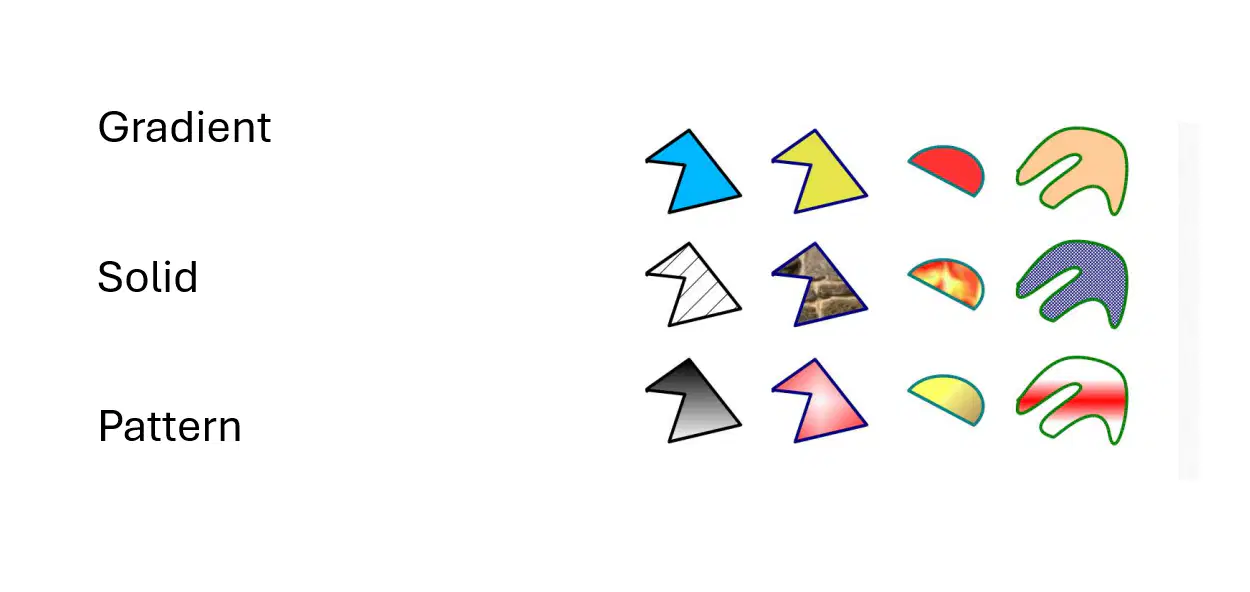
Draw a line connecting character attributes