
Font size
 Worksheets
Earth's Changes
Total questions: 102
Worksheet time: 2hrs 35mins
How are Sedimentary Rocks formed?
Cooling and Hardening
Heat and Pressure
Compacting and Cementing
Melting
In what kind of rock can fossils be found?
Sedimentary Rocks
Igneous Rocks
Metamorphic Rocks
Granite
How are fossils created?
Traces of organisms get turned into stone.
Dead organisms are quickly buried for millions of years.
Animals get trapped.
All of the above
How are fossils created?
Traces of organisms get turned into stone.
Dead organisms are quickly buried for millions of years.
Animals get trapped.
All of the above
What are the 3 main fossil fuels?
Coal, Oil, and Gasoline
Coal, Oil, and Natural Gas
Electricity, Gasoline, Petroleum
Coal, Oil, Non-renewable Resources
Some students made a model to show one of the first steps in the formation of sedimentary rock. The students pour 2 cm of light-colored sand into a clear plastic box. Then they add 1 cm of gravel. Finally, they pour 2 cm of dark-colored sand on top of the gravel. Which characteristic of sedimentary rock does this model best show?
Sedimentary rock is made of layers.
Sedimentary rock is cemented bits of rock.
Sedimentary rock is often limestone.
Sedimentary rock is common in Texas.
What changes buried organic matter into fossil fuels?
Industrial Pollution
Ocean Currents
Volcanic Activity
Heat and Pressure

Which layer formed first?
Rock Layer W
Rock Layer X
Rock Layer Y
Rock Layer Z
Sedimentary rocks form when broken bits of other rock are deposited and then -
buried and squeezed and cemented together
melted by the heat of the Earth's core
completely dissolved in the salt water of the ocean
used by humans as a natural resource

The Appalachian Mountains used to be pointed like the Rockies. What process lead to the roundedness of their peaks?
Weathering
Deposition
Lightning Strikes
Mining of the rock
The process in which materials eroded by water, wind, or ice are dropped in a new place.
Weathering
Erosion
Deposition
Landform
The movement of weathered materials on Earth's surface by wind, water, or ice.
Weathering
Erosion
Deposition
Landform
Features on the surface of Earth such as mountains, hills, dunes, oceans, and rivers
Weathering
Erosion
Deposition
Landforms
The breakdown of rock into smaller particles from the effects of wind, water, and ice.
Weathering
Erosion
Deposition
Landform
Small pieces of rock
Sediments
Rapid
Glacier
Canyon
A large body of ice that flows downhill over land very slowly
Delta
Canyon
Glacier
Sand dune

What is this picture an example of?
erosion
deposition
freezing

This landform changed to this, because of
weathering wind
weathering deposition
weathering erosion

Sea Arches are a result of
wind weathering
water erosion
deposition of sediment

What is MOST likely to cause a sand dune to move from place to place?
rushing rivers
blowing winds
freezing water
weathering rock

The build-up of land by the settlement of sediment and soil in a new location is_______?
weathering
sediment
deposition
erosion

A large, slow-moving, long-lasting accumulation of snow and ice that develops on land is called a_______?
deposition
weathering
glacier
sediment
Plants prevent soil erosion by-
holding dirt in place with their roots
providing food for herbivores
the process of photosynthesis
releasing water into the atmosphere through transpiration
Bio is ?
all rocks
all air
all life
all water
Geo means ?
rock,ground
water, ice
air,gasses
life,a live
Hydro means ?
rock,ground
water, ice
air,gasses
life,a live
Atmo means ?
rock,ground
water, ice
air,gasses
life,a live
What is the process of moving sediments from location to another?
Deposition
Erosion
Weathering
Compaction

Wind blowing sand from one location to another
Weathering
Erosion
Deposition
What is sediment?
the process of rocks being broken down and carried away
bits of rock and sand caused by the weathering of rocks
the top layer of the soil
decaying plant or animal material
What causes erosion
wind
water
gravity
all choices are correct
What is the breakdown of the Earth’s crust into sediment called?
weathering
raining
erosion
compacting
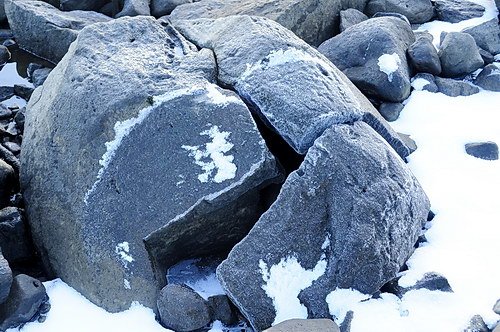
How does freezing water cause the weathering of rocks? The freezing water—
keeps the rocks in place.
makes the rocks last longer.
expands cracks and breaks rocks.
causes rocks to fall in landslides.

A cliff formed near the ocean. Which statement best describes how this cliff formed?
Warm air melted the rock.
Sun rays evaporated the rock.
Ocean waves washed away rock.
Plant roots pushed away the rock.

What causes the greatest erosion effect on our beaches?
Waves
Gravity
Glaciers
Wind

Layers of sediment forming at the bottom of the ocean floor is an example of
Weathering
Erosion
Deposition
Awesome Science
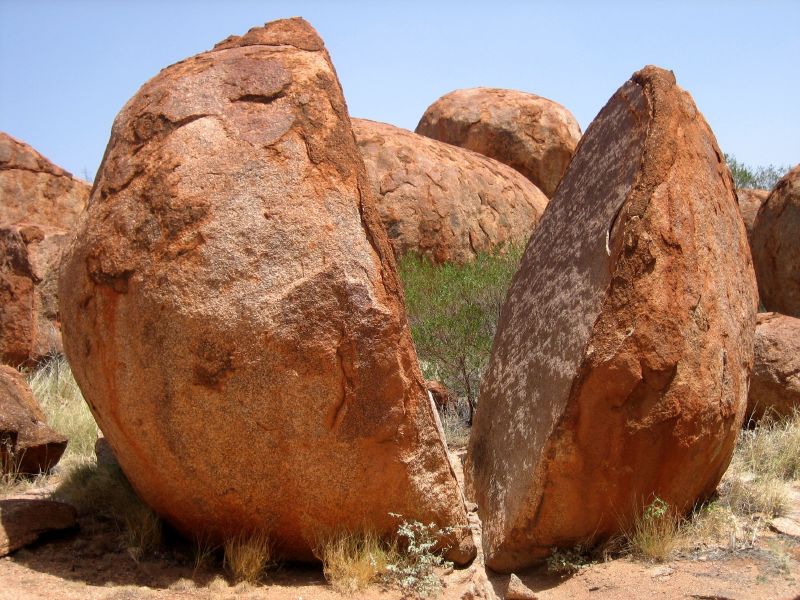
What is the wearing away or breaking down of rocks called?
Deposition
Erosion
Glaciers
Weathering
Putting pressure on sediments underground is called . . .
cementation
compaction
weathering
erosion
When sediments stick together its called . . .
cementation
compaction
deposition
erosion
Which diagram models the process of compaction leading to the formation of sedimentary rock?


True or false: Fossil Fuels are renewable?
True
False
Coal, oil, natural gas formed over millions of years from deposition of organic matter.
Sedimentary Rock
Fossil Fuels
Natural Resources
Renewable Resources
Where can the oldest layer be found?
The top layer
The middle layer
They are all the same age
The bottom layer
An instrument that constantly records ground movements.
p-wave
odometer
balanced scale
seismograph
A fracture in Earth's lithosphere along which blocks of rock move past each other
canyon
delta
fault
epicenter
The outermost, solid layer of the Earth.
mantle
crust
inner core
fault line
An opening in the Earth's crust which allows hot magma, volcanic gas, or ash to escape
epicenter
volcano
focus
geyser
Which of the following is a true statement about tectonic plates?
all tectonic plates are located at Earth's core
They're located approximately 10 meters below the surface of the ocean
They're located in the molten layer beneath Earth's crust
All of Earth's landmass rests on tectonic plates
What can you infer from the fact that tectonic plates are always moving around?
new volcanoes form every few years
the shape and location of the continents have changed over time
tectonic plate activity probably caused the last ice age
earthquakes will continues long after hurricanes and tsunamis have stopped

What is this instrument called?
Richter Scale
barometer
electrograph
seismograph
A scientist that studies the Earth and its processes
paleontologist
geologist
archaeologist
biologist
When rocks break down, they break into smaller ____________, or pieces of rocks and minerals.
deltas
weathering
drops
sediments
The process that moves weathered rocks is called
erosion
gravity
layering
deposition
When a volcano no longer erupts, the lava inside cools and forms
metamorphic rock
ash
cinders
igneous rock
The Mississippi River deposits soil as it empties into the Gulf of Mexico. This shows an example of
weathering
erosion
deposition
landscaping
Changes in the Earth's crust can be slow or fast. Which of these is the BEST example of a slow change?
volcanic eruption
weathering
landslide
earthquake
Mr. Gonza owns a large farm in southwestern Georgia. This year, he plans to leave several fields fallow (without crops). What should Mr. Gonza do to prevent soil erosion on the empty fields?
plant grass (vegetation) to hold the soil
water the empty fields regularly
fertilize the soil throughout the growing season
plow the soil deeply and regularly
The Sahara Desert in Africa has a landscape of huge sand dunes. This landscape is constantly changing. Which force in nature causes this constant change of the desert landscape?
earthquakes
hurricanes
lightning strikes
wind storms

What type of event will occur at this boundary?
tornado
earthquake
volcanic eruption
mountain building
Which type of rock forms from extreme heat and pressure?
metamorphic
igneous
organic
sedimentary
Breaks in the crust called __________ form where plates meet.
mountains
rift valleys
faults
trenches
Lava is found
after a volcano erupts
on the inside of a volcano
both inside and outside of a volcano
at the epicenter
When inside a volcano or inside of the earth's crust, the hot liquid that can cool to form rocks is called __________.
lave
magma
extrusive
liquefaction

A rock formed from sediments of other rocks is a(n)
Metamorphic Rock
Sedimentary Rock
Extrusive Rock
Igneous Rock
As lava cools and crystallizes, what type of rock will form?
Sedimentary
Metamorphic
Igneous


what is the rock cycle.
molten rock that is stored underground.
rock material that forms where rocks are broken down into smaller pieces.
a process that changes one type of rock into another type of rock.

This layer is completely made up of liquid iron and nickel.
Crust
Mantle
Outer Core
Inner Core
This layer is a solid ball of iron and nickel.
Crust
Mantle
Outer Core
Inner Core


This type of boundary occurs when tectonic plate move together.
covergent
divergent
transform
none of the above

This is the type of boundary that occurs when tectonic plates move apart.
convergent
divergent
transform
none of the above

This type of boundary occurs when tectonic plates slide past one another.
convergent
divergent
transform
none of the above
Which of the following is found mainly around transform boundaries?
mountains
earthquakes
volcanoes
rift valley
When two continental crusts slam into each other which of the following is the prominent feature formed?
mountains
earthquakes
volcanoes
rift valley
What is a fault?
The boundaries or edges of plate tectonics
A hole in the Earth where lava comes out
Divergent Plate Boundaries
Transform Plate Boundaries

