
 Worksheets
long cia 1 science
Total questions: 106
Worksheet time: 3hrs 27mins
Which example describes a situation in which a material is NOT changing into another substance?
smoke from a fire
a metal bike rusting
baking cookies in the oven
rocks breaking into pieces
Gerry has an iron nail. Which of these changes to the nail results in a new material with different characteristics?
bending the nail with pliers
wrapping the nail with copper wire
leaving the nail outside in the rain for a few weeks
hammering the nail into the wall
During the fall, a big pile of dry leaves had collected near the playground. After a few months, the pile of leaves is smaller, wet and slimy, and the leaves are all stuck together. What change best explains what happened to the leaves?
burning
decaying
melting
rusting
A nail rusting.
physical
chemical
A banana rotting.
physical
chemical
A group of students weighed a sealed jar full of heavy cream. Then they shook the jar until the cream separated, and then they weighed the jar again. Which of the following would BEST describe its weight?
The jar will have gained weight because some liquid changed to a solid.
The jar will have gained weight because shaking added energy to it.
The jar will have lost weight because of friction from shaking the liquid
The jar will have kept the same weight because it did not gain or lose any matter.

A student is comparing the mass of a model airplane to its parts. She places the completed model airplane on one side of the balance. Which picture BEST shows the direction of the pointer when the parts are added to the other side of the balance?


A jeweler melts gold to make jewelry. As the gold melts, the mass
increases.
decreases.
is destroyed.
stays the same.
Which is a way that a piece of paper can go through a chemical change?
fold the paper in half
soak the paper in water
burn the paper with fire
cut the paper with scissors
Which BEST explains why a metal ice cream scoop works more efficiently than a plastic ice cream scoop when dipped in warm water prior to scooping the ice cream?
The metal heats more quickly than the plastic
The plastic heats more quickly than the metal
The metal insulates against heat
The plastic conducts heat
Why is copper often used to line the bottom of cookware?
Copper cools quickly
Copper is inexpensive
Copper is a good insulator
Copper is a good conductor
Which container used for cooking food would BEST conduct heat?
A container made of foam
A container made of glass
A container made of metal
A container made of plastic
Why are pots used for cooking made of metal?
Metal is an excellent conductor of heat
Metal makes the handle look attractive
Metal is a poor conductor of heat
Metal is natural and inexpensive
Johnny tore a sheet of paper into pieces. How does the mass of all the pieces compare to the mass of the sheet before it was torn?
The total mass of the pieces would be greater than the mass of the whole sheet
The total mass of the pieces would be less than the mass of the whole sheet.
The total mass of the pieces would be more than twice the mass of the whole sheet
The total mass of the pieces would be the same as the mass of the whole sheet
One type of cold remedy is an effervescent tablet that breaks down in water. When the tablet is placed in water, it forms gas bubbles. In this example, the formation of a gas
is a physical property
occurs when adding water to acid
is a sign of a chemical change
occurs when the water boils
Physical and chemical properties can be used to classify substances. Which of these shows a chemical property?
Silver melts
Magnesium burns
Sulfur is a yellow solid
Aluminum conducts heat
A type of cold pack has two separate sections inside. One section contains a liquids and then other section contains a powder. When the cold pack is squeezed, the section that holds the liquid breaks. When the liquid combines with the powder, the pack becomes very cold. Which is the BEST explanation why the temperature of the pack decreases when the liquid and powder combine?
A mixture forms
A solution forms
A chemical change occurs
Thermal energy is used

Renee has two candles that have the same shape and length. One candle is made of beeswax, and the other is made of paraffin wax. Renee lights the candles and measures their length every twenty minutes. The table below shows her measurements. | Time (minutes) | Length of Paraffin Wax Candle (centimeters) | Length of Beeswax Candle (centimeters) | |----------------|--------------------------------------------|----------------------------------------| | 20 | 30 | 30 | | 40 | 26 | 28 | | 60 | 22 | 26 | Which kind of wax would make a longer-lasting candle?
paraffin wax, because the paraffin wax candle melted faster than the beeswax candle
paraffin wax, because the paraffin wax candle melted slower than the beeswax candle
beeswax, because the beeswax candle melted faster than the paraffin wax candle
beeswax, because the beeswax candle melted slower than the paraffin wax candle
Which is an example of a new substance being formed?
ice melting and becoming liquid
metal changing shape when heated
wood burning and turning to ash
water evaporating into the air

Kendal has two cups. The table below lists the color and weight of each cup. Cup Color | Weight (ounces) blue | 4.0 yellow | 6.0 Kendal puts 2.0 ounces of sand into the blue cup, and 2.0 ounces of water into the yellow cup. How does the change in the blue cup’s total weight compare to the change in the yellow cup’s total weight?
The yellow cup’s total weight changed more than the blue cup’s total weight.
The change in total weight for these cups cannot be determined.
The blue cup and yellow cup experienced the same change in total weight.
The blue cup’s total weight changed more than the yellow cup’s total weight.

Tommy wondered, “Does the temperature of a metal wire affect its length?” Tommy’s science teacher helped him carry out an investigation to test his question. They followed the steps below. 1. Get a 20-centimeter-long piece of metal wire. 2. Heat the center of the wire with a small candle. 3. Measure the length of the wire every five minutes. The table below shows their measurements. | Time (minutes) | Length (centimeters) | |---------------|---------------------| | 5 | 22 | | 10 | 24 | | 15 | 26 | Which claim do the measurements support?
Heating the wire increases the wire’s length.
Heating the wire decreases the wire’s length.
Long wires heat up faster than short wires.
Short wires heat up faster than long wires礁
A pot containing 500 mL of water is brought to a boil. Later, the pot contains 400 mL of boiling water. Why is there a difference in the amount of water in the pot?
The water gained mass as it boiled.
100 mL of water was added to the pot.
The water contained salt that evaporated.
100 mL of water changed into water vapor.
Oliver has an ice cube and a cup of liquid water. What could Oliver do to show that the ice cube and liquid water are the same substance?
chill the liquid water until it freezes
put the ice cube into a different cup
measure the temperature of the water
weigh the ice cube and the liquid water
What happens to the weight of a sheet of paper when the sheet of paper is shredded?
The total weight of the shredded pieces is less than the weight of the sheet of paper.
The total weight of the shredded pieces is greater than the weight of the sheet of paper.
The total weight of the shredded pieces equals the weight of the sheet of paper.
The total weight of the shredded pieces cannot be determined once the sheet of paper is shredded.
Which of the following best describes what happens to the weight of an object after it is heated?
The weight increases.
The weight decreases.
The weight remains the same.
The weight fluctuates.
If you mix vinegar and baking soda, what evidence would suggest a new substance is formed?
The mixture changes color.
The mixture produces bubbles.
The mixture becomes colder.
The mixture remains unchanged.
What happens to the state of water when it is cooled to 32°F?
It becomes a gas.
It becomes a solid.
It remains a liquid.
It becomes plasma.
When two substances are mixed and the temperature of the mixture increases, what can be inferred?
A new substance is NOT being formed.
The substances are dissolving.
The substances are reacting chemically.
The substances are cooling down.
What is the effect of heating on the length of a metal rod?
It shortens because it contracts.
It lengthens because it expands.
It remains the same.
It bends.

Answer question below.
A
B
C
D
If you dissolve sugar in water, what type of change occurs?
Physical change
Chemical change
Nuclear change
No change

Answer the question below.
A
B
C
D

Answer the question below.
A
B
C
D

Answer the question below.
A
B
C
D
Which one is NOT an Insulator?


What type of matter makes good conductors?
Gases
Nonmetals
Metals
What type of matter makes good insulators?
people
nonmetals
metals
Why are insulators important?
They help conduct electricity efficiently.
They protect us from electric shocks and help keep heat in or out.
They are used to create magnetic fields.
They increase the speed of electrical currents.
What material in a phone charger acts as an insulator?
Copper wire
Plastic around the cord
Rubber casing
Aluminum foil
Can you name a common insulator found in homes?
Rubber mats
Copper wires
Wooden planks
Glass bottles
A material that lets electric current pass through it.
insulators
conductors
circuits
What are some examples of insulators?
silver, iron, cooper
metal spoon, penny, aluminum
rubber, glass, wood
gold, wire, nails
Is an aluminum foil a conductor or insulator?
conductor
insulator
Which group of materials are all insulators?
two forks, wire, paperclips
wooden chopsticks, rubber bands, electrical tape
string, craft sticks, aluminum foil
plastic tweezers, wire, yarn,
Miguel is packing popsicles for a picnic. In which type of container would
it be best for Miguel to store his popsicles?
aluminum
copper
paper
plastic

Which part of the object shown is a conductor and which is an insulator?
the rubber casing is the insulator and the copper inside is a conductor
the rubber casing is a conductor and the copper wire is the insulator
the copper wire is the insulator and the rubber casing is the insulator
the copper wire is the conductor and the rubber casing is the conductor


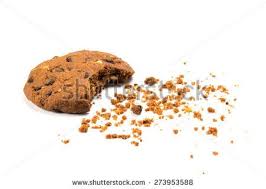
The Law of Conservation of matter states that the total amount of matter ______________ after it undergoes change.
disappears
stays the same
weighs less
explodes
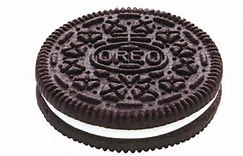
An oreo cookie weighs 20 grams. It gets crushed into crumbs for a recipe. How much do its crumbs weigh?
15 grams
25 grams
20 grams

15 grams of sugar are dissolved into 300 grams of water. what is the mass of the mixture?
15
315
285
300
Sarah and Jake were each given a ball of clay that has a mass of 400 grams. Both students used all their clay to make an object. Sarah rolled hers into a ball, and Jake made a long, skinny rope. What is the mass of the clay figures now?
Sarah's weighs more because it is round
Jake's weighs more because it is long
There is no way of knowing
They figures would have equal masses.
Emily determined the mass of a sealed can filled with crushed ice. The ice slowly melted in the can, and no water vapor escaped as it melted.
After the ice melted, what is the best prediction about the mass of the can with water?
The mass of the can filled with ice would have a greater mass than the can with water after the ice had melted.
The mass of the can filled with ice would have a smaller mass than the can with water after the ice had melted.
The mass of the can filled with ice would have the same mass as the can with water after the ice had melted.
It is impossible to determine which can had more mass without more information about the ice and the can.
A student added two 5 g of ice to a 20 g container. After the ice melted, what was the total weight of the container and the melted ice?
5 g
15 g
30 g
100 g

This picture of the mirror shows an example of--
precipitation
transpiration
evaporation
condensation

This picture shows -
evaporation
condensation
precipitation
transpiration
What is the source of energy for the Water Cycle?
Ocean
Wind
Moon
Sun
Jack noticed that a puddle was gone that was there on his walk to school. What happened to the puddle?
It evaporated
It melted
It condensed
The process of water that is added to the atmosphere from plants is called
Condensation
Evaporation
Precipitation
Transpiration
The sun is the source of energy for the water cycle.
True
False
Condensation occurs when water vapor_____________.
heats up and becomes liquid water
cools off and becomes liquid water
freezes and becomes ice
rains on the land
Which of the following weather tools measures rainfall?
barometer
wind vane
anemometer
rain gauge
Which of the following are forms of precipitation? Click ALL that apply.
Rain
Snow
Dew
Hail
Which of the following is an example of condensation?
Water boiling on a stove
Puddles on the sidewalk after a hard rain
water droplets on the outside of a cold drink
Snow falling in Colorado





What change occurs at Point B in the water cycle?
A gas changes to a liquid.
A liquid changes to a gas.
A solid changes to a liquid.
A gas changes to a solid.
The Sun drives the water cycle by doing which of the following?
Rotating on its axis
Giving off light for plants.
Keeping Earth in orbit.
Providing heat for evaporation

The diagram shows a model of the water cycle created by a group of science students. What part of the model represents cloud formation in the water cycle?
Tiny drops of water forming at the top of the bottle.
Drops of water running down the side of the bottle.
The lamp shining on the bottle and the water.
Water sitting in the bottom of the bottle.
Which of the following is an example of condensation?
Water boiling on a stove
Puddles on the sidewalk after a hard rain
water droplets on the outside of a cold drink
Snow falling in Colorado
The process when plants release water vapor from their leaves is called _____________.
precipitation
evaporation
transpiration
condensation

Water is changing from a gas to a solid.

Boston, Massachusetts, contains a high
amount of moisture. Which of the
following best explains why there is a
high amount of moisture in the air?
Boston is far north of the equator.
What is precipitation?
Water that evaporates from the surface of the Earth
Rain, snow, sleet, or hail that falls from clouds in the sky
The process by which water vapor turns into liquid water
The flow of water on the Earth's surface into bodies of water
What is the role of the sun in the process of evaporation?
The sun cools down the water
The sun provides heat that turns water into water vapor
The sun absorbs the water vapor
The sun has no role in the process of evaporation
What is evaporation?
The process of a solid changing directly into a gas
The process of a gas changing into a liquid
The process of a liquid changing into a solid
The process of a liquid changing into a vapor or gas
What is the water cycle?
The process of heating water for domestic use
The constant movement of water through the land, air, oceans, and living things
A method of purifying water for drinking
The cycle of water being used and recycled in a household

When water vapor cools and _________, dew forms.
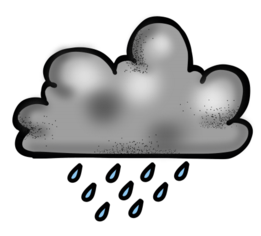
how does cooling and condensation impact the water cycle
What is the original source of most of the energy that people use?
Energy that reaches Earth’s surface by radiation from the Sun.
Energy that reaches Earth’s surface by convection from the Sun.
Energy that reaches Earth’s surface by radiation from Earth’s core.
Energy that reaches Earth’s surface by conduction from Earth’s core.
plants dying and withering
precipitation
condensation
transpiration
a pool's water levels have decreased
because of condensation
because of evaporation
because of precipitation
Water droplets are on the grass and on cups
air temperature cooled
air temperature has warmed
what fuels the water cycle and increases evaporation?
sun
clouds
precipitation
run off
Which term names the continuous movement of water through Earth's environment?
water collection
water cycle
percolation
groundwater cycle

