
 Worksheets
SB Evolution Reveiw
Total questions: 65
Worksheet time: 1hrs 19mins


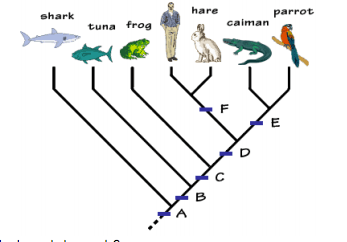

What type of structure does this image illustrate?
Homologous structures
Analogous structures
Vestigial structures
Genetic differences between organisms of the same species.
variation
behavior
adaptation
environment
What word describes a trait that helps an organism survive in its environment?
natural selection
mutation
camouflage
adaptation
Almost all adaptations started off as?
selective breeding
physiological
structural
mutations
Why are advantageous or beneficial traits more likely to be passed onto offspring?
Because those traits make them more likely to survive and reproduce.
Because those traits come from dominant alleles.
Because those traits come from recessive alleles.
Because those traits are acquired phenotypes.

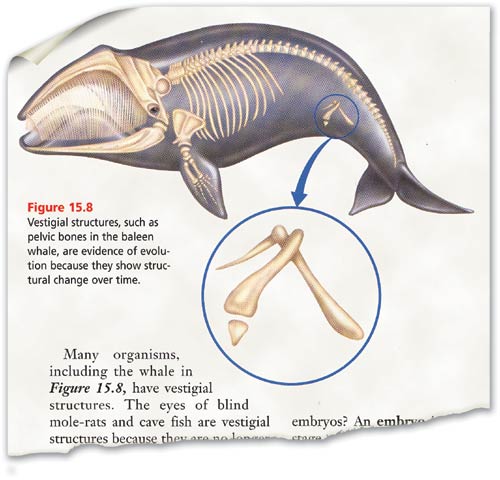
Structures with the same bone structure but different functions (jobs) suggest that organisms share a common ancestry. What are these structures called?
vestigial structures
homologous structures
adaptive radiation
fossil

Two organisms that are closely related but not clones would have...
very similar DNA sequences
exactly the same DNA sequences
no proteins in common
completely different DNA sequences
In a population of ladybugs, black bugs are more successful in escaping predators. Overtime, this gene becomes more popular in the population and the ladybug population loses its red color. This is an example of?
Natural Selection
Mutation
Genetic Drift
Gene Flow
A lion gets chased off from his pride, then joins another pride. He mates with a lioness and make 6 lion cubs. This is an example of?
Natural Selection
Mutation
Genetic Drift
Gene Flow
A hurricane wipes out half the population of blue jays in Cape Hatteras, North Carolina. This is an example of?
Natural Selection
Mutation
Genetic Drift
Gene Flow
Lamarck’s ideas about evolution include the concept that differences among the traits of organisms happen as a result of
increases in population size.
the actions of organisms as they use or do not use body structures
an unchanging local environment
the natural variations already present within the population of organisms

Based on the image, why are these similar looking birds now considered different species, even though they have a common ancestor?
all these birds could swim, so they went to different continents to evolve
their environments changed over time, so they had to adapt to those environment
the birds acquired the new traits while trying to adapt to their new environments
there were fewer species of birds in the past, now there are more
Occasionally a mutation produces a bird with a new characteristic. What determines whether this bird will be the beginning of a new species?
The bird must dominate the other birds and reduce their ability to reproduce
The bird must be able to live in the usual environment for that fish
The mutation must provide some type of advantage for the bird
The mutation must make the bird very different from other fish
What do we call similar structures that were passed down from a common ancestor?
vestigal structures
variable structures
homologous structures
fossil structures
What is speciation?
when a population reaches a balance and change is no longer occuring
when populations move away from each other
when species begin to pass on acquired traits and change their behavior
when two species can no longer interbreed
Which can be used as evidence for evolution (change over time)?
Fossils
Homologous Structures
Embryo Similarities
Biochemical Analysis
All are examples of evidence of evolution

Wrote "Principles of Geology". Geologic events that occurred in the past will continue to occur in the future.
Malthus
Hutton
Lyell
Lamarck
Wallace

One of the first theories of evolution. Organisms can acquire traits over their lifetime.
Malthus
Hutton
Lyell
Lamarck
Wallace

Stated earth is millions of years old.
Malthus
Hutton
Lyell
Lamarck
Wallace
What do scientists know about an undisturbed sequence of rocks based on superposition?
Older rocks are on top of younger
Younger rocks are on top of older
Older rocks have eroded away
Younger walks get deposited and do not stay


scientist who's classification system we still use today
Carl Linnaeus
Aristotle
John Ray
Charles Darwin
the smallest/most specific taxonomic group
species
genus
kingdom
phylum

According to the cladogram, which of the following is NOT a derived characteristic?
light bones
Allosaurus
down feathers
3-toed foot; wishbone
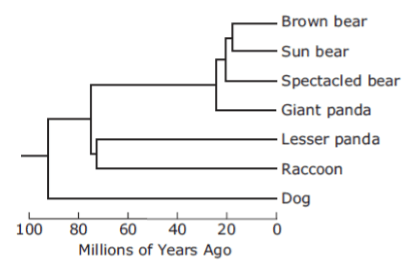
Who is the closest relative to the brown bear?
Giant panda
Dog
Lesser panda
Sun bear

Which organism is the most distantly related to all the others?
Raccoon
Dog
Giant Panda
Sun Bear

Which group of animals on this tree are most closely related to birds?
Saurischian dinosaurs
Ornithischian dinosaurs
Crocodiles
None of these are related to birds
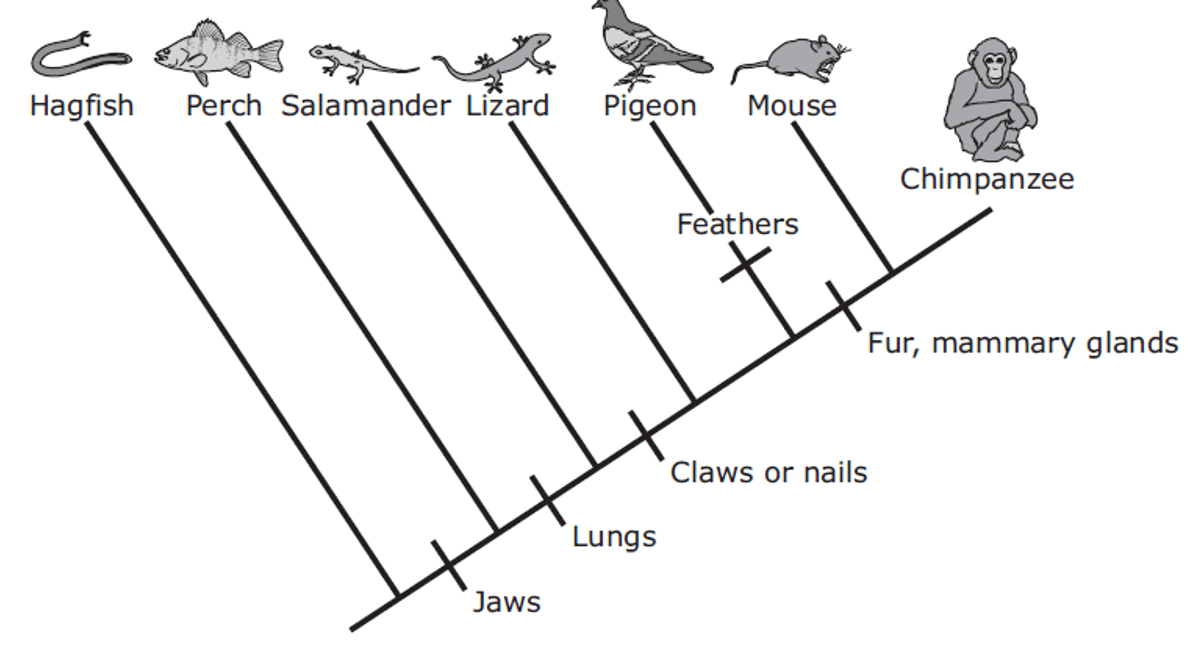
All the animals to the right of the salamander would have the common characteristic of...
Fur
Claws or nails
Lungs
Jaws
When unrelated species evolve similar characteristics because they live in similar
environments
Divergent Evolution
Speciation
Convergent Evolution
Punctuated equilibrium
A number of different species arise from one common ancestor
- New environments caused differences to evolve in populations
Convergent Evolution
Divergent Evolution
Coevolution
Gradualism
Occurs when two populations of organisms form a specialized relationship and thus change in response to each other
Convergent Evolution
Punctuated equilibrium
Coevolution
Speciation
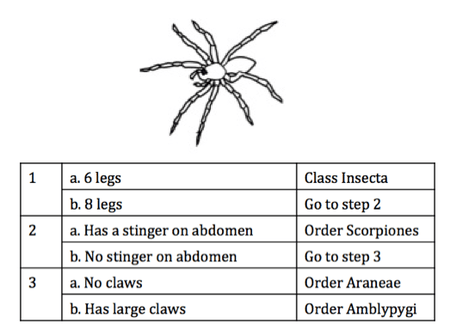
What is the order of classification? (largest to smallest)
(a)
Binomial nomenclature is a 2-name naming system based on
Family genus
Class order
genus species
Genus species

selective pressure exerted by humans on populations in order to improve or modify particular desirable traits
natural selection
artificial selection

Two organisms that are closely related would have...
very similar DNA sequences
no proteins in common
exactly the same DNA sequences
completely different DNA sequences

Similar DNA sequence between different organisms indicating a common ancestry or evolutionary origin.
morphology
Embryology
Molecular Homology
Adaptation

Similar embryological development in different organisms indicating a common ancestry or evolutionary origin.
Molecular Homology
Morphology
Adaptation
Embryology

What are the 3 domains of life?
Animals, bacteria and Plants
Bacteria, fungi and Archaea
Bacteria, Archaea and Eukarya
Archaea, Bacteria and Animals

